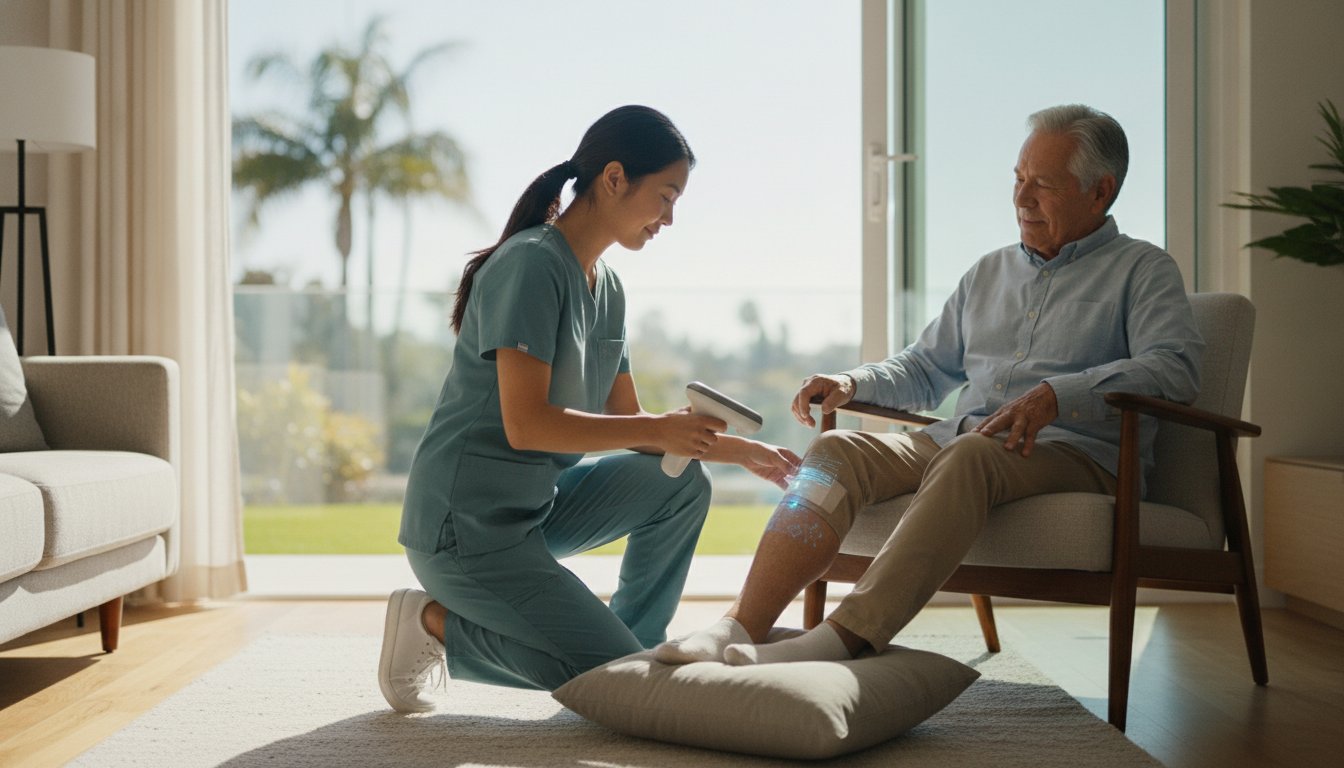
What if the most sophisticated regenerative technology in modern medicine didn't require a grueling trip to a hospital? You likely understand that for an elderly patient or someone with limited mobility, the journey to a clinic is often as taxing as the injury itself. These logistical hurdles, combined with the persistent fear of facility-acquired infections, can create a cycle of stress that stalls your recovery. By integrating hospital-grade protocols into a residential setting, advanced chronic wound treatment at home has evolved into a precision-led discipline that prioritizes both clinical excellence and your personal comfort.
We view a non-healing wound as a complex biological puzzle that requires a visionary strategy rather than a simple bandage. This guide explores how mobile regenerative medicine and professional oversight are redefining the recovery roadmap to ensure faster healing times and the avoidance of severe complications. You'll discover how the latest breakthroughs in bio-engineered skin substitutes and mobile diagnostics allow you to master your health journey from the sanctuary of your own home, ensuring no detail of your long-term vitality is overlooked.
Key Takeaways
- Identify the critical 30-day threshold that signals when a wound transitions from a simple injury to a complex clinical concern.
- Explore how advanced regenerative therapies, like amniotic membrane grafts, rebuild tissue from the comfort of your own residence.
- Master the logistical benefits of professional chronic wound treatment at home to avoid the infection risks and physical strain of clinic visits.
- Learn how to optimize your body's internal healing environment using precise nutritional strategies that support collagen synthesis.
- Discover the seamless coordination between mobile specialists and home health agencies that ensures a comprehensive, data-driven recovery plan.
Defining Chronic Wounds: When 'At Home' Care Needs a Specialist
Healing isn't just a passive event; it's an active, highly coordinated physiological performance. When your skin sustains an injury, the body initiates a rapid sequence of inflammation, tissue formation, and remodeling. However, for many individuals, this process stalls. Understanding what is a chronic wound requires looking beyond the surface of the skin to the systemic factors that prevent repair. While a standard scrape might resolve in days, a non-healing ulcer remains trapped in a state of persistent inflammation, often due to compromised blood flow or metabolic imbalances. When this happens, standard first aid is no longer enough.
For seniors in Southern California, the "wait and see" approach is often a dangerous strategy. A minor nick on the foot or a small pressure spot can quickly escalate into a limb-threatening infection if the underlying biology isn't addressed. Conditions like diabetes or poor circulation (edema) act as barriers to recovery, turning simple injuries into chronic risks. Seeking professional chronic wound treatment at home isn't just about convenience; it's about deploying advanced medical strategies before a manageable issue becomes a surgical emergency.
Common Types of Chronic Wounds Treated at Home
Diabetic Foot Ulcers (DFU) are among the most deceptive injuries we treat. Because of neuropathy, you might not feel the initial damage, allowing a minor blister to evolve into a deep-tissue threat before it's even noticed. In Glendale and Los Angeles assisted living settings, we frequently manage pressure injuries that have progressed from stage 2 to stage 4. These require more than just repositioning; they need specialized cellular therapy. Additionally, venous and arterial ulcers highlight the undeniable link between vascular health and skin integrity. If your circulation is compromised, your skin cannot rebuild itself without external clinical support.
The 30-Day Rule: When to Call a Mobile Wound Specialist
Timing is the most critical variable in regenerative medicine. If a wound shows no reduction in size, produces persistent drainage, or emits a foul odor after four weeks, the healing cycle has likely failed. Traditional home health dressings are designed for protection, not necessarily for jumpstarting a stalled biological process. Complex cases require sharp debridement or bio-engineered scaffolds that standard nursing visits might not provide. We utilize a precise clinical benchmark to guide our interventions: A non-healing wound is any physiological injury that fails to demonstrate significant progress through the stages of healing within a 30-day timeframe. When you hit this mark, professional chronic wound treatment at home becomes the most effective path toward avoiding hospitalization or amputation.
Professional vs. DIY: The Spectrum of Chronic Wound Treatment at Home
Home remedies like honey or aloe vera are often praised in wellness circles, but for a non-healing ulcer, these "kitchen remedies" are clinically insufficient. They lack the potency to penetrate deep tissue or address the bacterial biofilms that stall recovery. Transitioning to professional chronic wound treatment at home means moving from passive protection to active intervention. It's the difference between merely covering a problem and strategically resolving the underlying biological failure.
When you shift from basic dressings to medical-grade protocols, you're choosing a path of precision. This transition requires sophisticated tools and the expertise of specialists who understand how to manipulate the wound microenvironment. By bringing hospital-grade technology into the residential setting, we eliminate the risks of cross-infection and the physical toll of clinic travel, allowing your body to focus its energy entirely on repair.
Bedside Wound Evaluations and Assessments
A successful outcome begins with high-level data. When a board-certified specialist arrives at your bedside, they conduct a comprehensive clinical assessment that mirrors the capabilities of a top-tier wound center. We utilize specialized diagnostic equipment to evaluate tissue health and vascular flow. This process often includes wound culture and sensitivity testing to identify the specific bacterial strains present at the source. By pinpointing the exact pathogen, we can tailor a treatment plan that targets the root cause of stagnation, ensuring that every step of your recovery is informed by scientific rigor.
Advanced Procedures Performed in Your Living Room
The most significant breakthrough in 2026 is the ability to perform complex procedures directly in your living room. Sharp debridement is a critical first step in this journey. By precisely removing necrotic tissue and disruptive biofilms, we reset the cellular clock and allow healthy tissue to communicate effectively. This procedure aligns with the expert consensus on chronic wound treatment, which emphasizes the necessity of a clean wound bed for any successful regeneration attempt.
For many patients, managing edema in legs is equally vital to the healing process. Compression therapy helps manage vascular insufficiency, ensuring that oxygen-rich blood reaches the injury site to fuel cellular growth. We also deploy Negative Pressure Wound Therapy (NPWT), or "Wound VACs," which apply controlled sub-atmospheric pressure to draw out excess fluid and stimulate granulation tissue. During your initial mobile wound care consultation, you'll receive a personalized roadmap that integrates these advanced medical protocols into your daily life, ensuring no detail of your long-term health is overlooked.
Regenerative Medicine: Amniotic Grafts and Skin Substitutes at Home
Regenerative medicine marks the transition from passive wound management to active biological recovery. While traditional bandages merely shield an injury from the environment, advanced chronic wound treatment at home now incorporates cellular and tissue-based products (CTPs) that function as living medicine. These bio-engineered skin substitutes act as a microscopic lattice, providing the structural support necessary for your body’s own cells to anchor, migrate, and replicate. By introducing these scaffolds at the bedside, we move beyond simply covering a wound to fundamentally curing the underlying tissue failure.
This sophisticated approach is particularly transformative for complex cases that have resisted traditional interventions. For many patients, these technologies have become the gold standard for diabetic ulcer treatment, offering a level of precision that was previously only available in specialized hospital settings. By deploying regenerative therapies early, we can jumpstart dormant healing processes and significantly reduce the risk of long-term complications.
The Benefits of Amniotic Allografts
Amniotic membrane grafts are a cornerstone of modern regenerative care, prized for their natural anti-inflammatory and anti-microbial properties. These grafts are rich in essential growth factors and cytokines that suppress pain and minimize scarring by modulating the body's inflammatory response. Amniotic grafts provide a biological blueprint that instructs the body to organize new tissue correctly rather than forming disorganized scar tissue. To maximize the efficacy of these grafts, it's vital to follow established nutritional guidelines for wound healing, ensuring your internal chemistry is optimized to support this advanced cellular therapy. When the body is properly fueled, these grafts act as a powerful catalyst for physical excellence and rapid recovery.
Accessing Advanced Skin Substitutes in Southern California
Healix360 bridges the gap between clinical breakthroughs and residential convenience by bringing hospital-grade skin substitute technology directly to homes in Glendale and Los Angeles. This mobile model ensures that high-achievers and elderly patients alike can access elite care without the physical tax of clinic travel. As a Medicare Part B provider, we facilitate access to these regenerative grafts under professional medical supervision, making life-changing outcomes attainable within a residential setting. This proactive strategy doesn't just heal skin; it protects your long-term vitality and serves as a critical defense in amputation prevention, keeping you at the center of your own health journey.

Managing the Healing Environment: Nutrition, Lifestyle, and Complications
True recovery requires more than just clinical intervention; it demands a total-body optimization strategy. Think of your body as a high-performance engine that needs the right fuel and environmental conditions to rebuild damaged structures. When you engage in chronic wound treatment at home, you're not just managing a site of injury; you're orchestrating a complex physiological repair. By adopting a "Visionary Strategist" approach, we look beyond the surface to ensure your internal chemistry is perfectly aligned for tissue regeneration.
Collagen synthesis is the foundation of new tissue, yet it cannot occur in a vacuum. Your body requires a precise balance of protein, Vitamin C, and Zinc to manufacture the building blocks of skin. Without these macro and micronutrients, even the most advanced grafts will struggle to integrate. Furthermore, managing comorbidities like diabetes is non-negotiable, as blood sugar control often dictates the success of surgical wound care and long-term recovery outcomes.
The Bio-Chemistry of Healing
Hydration is a critical, yet often overlooked, component of the healing process. Water ensures that your blood remains fluid enough to transport oxygen and nutrients to the smallest capillaries at the wound site. When hydration levels drop, tissue perfusion suffers, and the repair process slows to a crawl. Blood sugar monitoring remains the most powerful metric in your arsenal. Clinical observations frequently show that 180 mg/dL serves as a biological tipping point; once glucose levels exceed this mark, the body's immune response and cellular repair mechanisms begin to stall. Additionally, the practice of offloading—removing physical pressure from the injury—is essential to allow micro-circulation to return and prevent tissue starvation.
Identifying Infection Before It Spreads
Recognizing red flags such as cellulitis or gangrene is a life-saving skill for any patient or caregiver. While some redness and warmth are normal signs of inflammation, rapid spreading or a change in skin color to dark purple or black indicates a medical emergency. We utilize mobile wound culture testing to identify specific pathogens at the bedside, allowing us to intervene before a localized infection escalates into sepsis. This proactive stance ensures that your recovery remains on track and that any complications are addressed with surgical precision. While the home provides a superior healing environment, professional oversight ensures you're never navigating these risks in isolation. To begin optimizing your recovery environment, you can schedule a bedside evaluation with our visionary care team.
The Healix360 Advantage: Mobile Wound Care in Los Angeles & Glendale
The clinic burden is a relic of a fragmented healthcare system. By transitioning sophisticated chronic wound treatment at home to the bedside, we restore autonomy to the individual and eliminate the logistical strain of facility visits. This mobile model ensures that high-achievers and their families don't have to choose between clinical excellence and the sanctuary of their own residence. We bring the full capabilities of a wound care center directly to you, providing a level of precision that traditional home health visits often lack. By focusing on the lived experience of the patient, we bridge the gap between laboratory data and daily quality of life.
Coordination is the glue that holds a successful recovery plan together. We function as a specialized extension of your existing care team, partnering seamlessly with home health agencies, case managers, and primary care physicians to ensure a unified strategy. This collaborative approach ensures that no detail of your systemic health is overlooked. As a Medicare Part B provider, Healix360 navigates the complexities of insurance to make advanced regenerative medicine both accessible and transparent. Our commitment to Southern California’s long-term health ensures that every patient has a clear, actionable roadmap toward total-body vitality and sustained mobility.
Personalized Treatment Plans for LA County Residents
Precision medicine requires a deep understanding of the individual's unique biological landscape. Our network of board-certified specialists serves Glendale, Beverly Hills, and the broader Los Angeles area, tailoring every regenerative strategy to your specific lifestyle goals. Whether you are recovering from a traumatic injury or managing a complex ulcer, we prioritize physical excellence through data-driven protocols. Initiating this journey is straightforward; you can request a comprehensive mobile wound care consultation to begin your bedside assessment and personalized recovery plan.
The Future of At-Home Wound Management
Proactive prevention is the hallmark of a visionary strategist. We believe that the future of chronic wound treatment at home lies in early intervention and the seamless integration of high-tech diagnostics. This philosophy ensures that minor issues never escalate into systemic failures, protecting your long-term independence. For high-achievers who view their health as their most valuable asset, mobile care is the superior choice for maintaining a life of physical excellence. Take the first step toward healing today by inviting elite clinical expertise into your home environment, where your recovery is our primary objective.
Securing Your Path to Long-Term Vitality
Mastering your recovery is a strategic choice rather than a passive waiting game. We've explored how identifying the 30-day stagnation threshold allows for timely intervention with regenerative technologies like amniotic membrane grafts. By optimizing your internal chemistry through precise nutrition and managing comorbidities, you create the ideal environment for tissue repair. Choosing professional chronic wound treatment at home represents the intersection of elite science and residential comfort, ensuring your recovery remains a proactive journey toward physical excellence.
As a Medicare Part B provider, Healix360 brings board-certified wound specialists and deep regenerative medicine expertise directly to your bedside. You don't have to navigate complex healing journeys alone or in a sterile hospital setting. Our visionary approach ensures that every detail of your long-term health is meticulously managed within the sanctuary of your own home. We translate the latest clinical breakthroughs into a clear, actionable roadmap tailored to your unique lifestyle goals.
Schedule Your Advanced Mobile Wound Assessment with Healix360 Today to begin your personalized roadmap to healing. You deserve a partner who values precision as much as you value your mobility. Take the first step toward a restored quality of life today.
Frequently Asked Questions
Is chronic wound treatment at home covered by Medicare?
Medicare Part B covers professional wound care services delivered in a residential setting. As a credentialed provider, Healix360 facilitates access to advanced interventions like sharp debridement and regenerative grafts. Most patients find that Medicare covers 80 percent of the cost after their annual deductible is met, while supplemental insurance or Medigap plans often address the remaining balance. This ensures that elite clinical care remains financially attainable for those who prioritize their long-term health.
Can deep bedsores or stage 4 pressure ulcers really be treated at home?
Hospital-grade protocols now allow for the management of stage 4 pressure ulcers directly at the patient's bedside. We utilize mobile negative pressure wound therapy and bio-engineered scaffolds to rebuild tissue in even the most complex injuries. By deploying these advanced technologies in a residential environment, we eliminate the physical strain of facility transport and reduce the risk of cross-contamination. This precision-led approach provides a visionary roadmap for recovery without requiring a clinical stay.
What is the difference between a home health nurse and a mobile wound specialist?
A home health nurse focuses on essential daily maintenance and standard dressing changes, whereas a mobile wound specialist is a board-certified clinician authorized to perform technical procedures. Specialists provide the high-level diagnostic oversight needed for chronic wound treatment at home, including sharp debridement and the application of cellular therapies. While your home health agency manages routine care, our specialists provide the surgical expertise and regenerative strategies required to jumpstart a stalled healing process.
How often does a mobile wound care specialist need to visit?
Visit frequency is determined by the specific biological needs of your wound and the complexity of the treatment plan. Most patients receive a specialist evaluation once per week to perform necessary debridement or to monitor the integration of amniotic grafts. This steady cadence allows us to analyze real-time data and adjust your personalized recovery strategy as your body begins its remodeling phase. Regular oversight ensures that no detail of your healing journey is overlooked.
What are skin substitutes, and are they safe for elderly patients?
Skin substitutes are bio-engineered scaffolds that act as a microscopic lattice for your body's own cells to anchor and replicate. These products are exceptionally safe for elderly patients because they are minimally invasive and designed to harmonize with human biology. By providing a biological blueprint for repair, these substitutes help avoid the need for traditional skin grafts or more aggressive surgical interventions. They represent the gold standard in modern amputation prevention and long-term vitality.
How do I know if my leg swelling (edema) is causing a venous ulcer?
Persistent leg swelling often indicates vascular insufficiency, which can lead to skin breakdown if left unmanaged. If you notice skin that appears tight, discolored, or "weeping" fluid around the ankles, your circulation may be failing to support tissue integrity. We conduct bedside vascular assessments to determine if compression therapy is necessary to restore healthy blood flow. Proactive management of edema is a critical step in preventing minor swelling from escalating into a chronic ulcer.
What should I do if I suspect my surgical wound is opening (dehiscence)?
Surgical dehiscence requires immediate professional intervention to stabilize the site and prevent deep-tissue infection. If you observe any separation of the wound edges or an increase in drainage, you should request a specialist evaluation right away. We utilize mobile diagnostic tools and regenerative scaffolds to support the body's natural re-bonding process. Addressing dehiscence early allows us to implement a visionary strategy that secures the surgical site and protects your recovery timeline.
Does Healix360 serve my area in Southern California?
Healix360 provides elite mobile wound care services throughout Los Angeles County and the surrounding regions. Our board-certified specialists are active in Glendale, Beverly Hills, and the San Fernando Valley, bringing hospital-grade technology to residences across Southern California. We coordinate closely with local home health agencies and primary care physicians to ensure a seamless experience. If you are located within our service area, we can initiate a bedside consultation to begin your journey toward physical excellence.


