
The physical exhaustion following a radiation session is often made worse by the stinging sensation of skin that has begun to peel and blister. For many patients in Southern California, the prospect of sitting in traffic for a follow-up wound appointment is simply overwhelming. Finding effective at-home care for radiation burns in cancer patients Ventura County is essential to maintaining your quality of life during treatment. We understand that the confusion over safe topical agents and the fear of infection can create unnecessary stress when you're already focused on your recovery. This guide offers a professional perspective on managing radiation dermatitis through a combination of daily self-care and advanced mobile clinical interventions. This approach ensures that your healing environment remains as comfortable and stable as possible. You'll discover how to protect your skin's integrity and learn when specialized treatments, such as amniotic membrane grafts or bio-engineered skin substitutes, can be delivered directly to your bedside to support rapid recovery without the need for clinical travel.
Key Takeaways
- Understand the clinical grading system of radiation dermatitis to identify when skin changes require professional medical assessment.
- Establish a daily skin-care routine using specific hygiene practices and textile choices that minimize friction on sensitive treatment areas.
- Explore the benefits of receiving specialized at-home care for radiation burns in cancer patients Ventura County, including access to regenerative medicine.
- Learn the administrative steps for securing a referral and verifying Medicare Part B coverage for mobile wound care services.
- Discover how mobile specialists bring advanced clinical treatments, such as bio-engineered skin substitutes, directly to your residence for optimal healing.
Understanding Radiation Burns (Radiation Dermatitis) During Cancer Treatment
Radiation dermatitis is a clinical condition that occurs when ionizing radiation used for cancer treatment causes localized damage to skin cells. While radiation is designed to target malignant tissues, it inevitably affects the healthy cells within the treatment field. This damage isn't always immediate; in fact, many patients find that radiation burns appear several weeks after their final treatment session. For those seeking at-home care for radiation burns in cancer patients Ventura County, understanding the progression of this condition is the first step toward effective management. The clinical presentation varies significantly based on the cumulative dose of radiation and the patient's individual skin sensitivity.
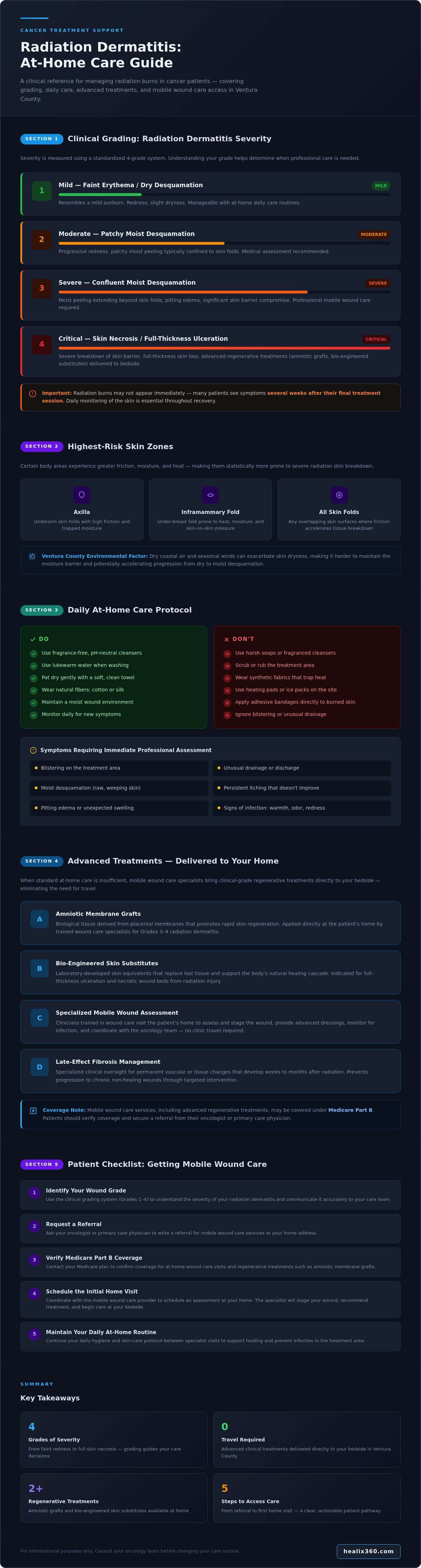
The severity of radiation dermatitis is measured using a standardized clinical grading system:
- Grade 1: Faint erythema (redness) or dry desquamation, often resembling a mild sunburn.
- Grade 2: Moderate to progressive erythema; patchy moist desquamation, typically confined to skin folds.
- Grade 3: Confluent moist desquamation in areas outside of skin folds; pitting edema or swelling.
- Grade 4: Skin necrosis or full-thickness ulceration, representing a severe breakdown of the skin barrier.
Patients in Ventura County often face unique environmental factors. The dry coastal air and seasonal winds characteristic of the region can exacerbate skin dryness. This environmental stress makes it harder for the skin to maintain its moisture barrier, potentially accelerating the transition from dry to moist desquamation.
The Biological Impact of Radiation on Skin Integrity
Radiation therapy works by disrupting the DNA of rapidly dividing cells. Because skin cells naturally regenerate at a high rate, they're particularly susceptible to this disruption. When DNA is damaged, cells lose their ability to replicate, leading to a thinning of the skin layers. This process triggers an acute inflammatory response characterized by warmth, redness, and swelling. It's vital to distinguish between acute radiation injury, which occurs during or shortly after treatment, and late-effect tissue damage. Late-effect damage can involve fibrosis or permanent changes to the skin’s vascular structure, requiring specialized clinical oversight to prevent chronic wound formation.
Common Symptoms to Monitor in Ventura County
Effective at-home care for radiation burns in cancer patients Ventura County requires vigilant daily monitoring of the treatment site. Early symptoms often include persistent itching, localized dryness, and a "sunburn-like" appearance that doesn't fade. As the condition progresses, you might notice moist desquamation, where the top layer of skin sloughs off, leaving a raw, weeping surface. Blistering and unusual drainage are clinical signs that the skin's integrity is compromised. You should pay close attention to skin folds, such as the axilla or inframammary fold, where friction and moisture levels are highest. These areas are statistically more prone to breakdown and require specialized attention to prevent infection.
Immediate At-Home Care for Radiation Burns
Establishing a meticulous hygiene routine is the first step in managing at-home care for radiation burns in cancer patients Ventura County. To maintain the skin's integrity, you should use only fragrance-free, pH-neutral cleansers specifically designed for sensitive or compromised tissue. Harsh soaps often strip essential lipids, which can lead to increased dryness and stinging. When you clean the area, use lukewarm water and avoid any scrubbing or rubbing. It's better to employ a "pat dry" technique with a clean, soft towel. This method prevents mechanical trauma to the fragile dermis, which is already weakened by the cumulative effects of radiation therapy.
Your choice of clothing also impacts the healing environment. Natural fibers like cotton or silk are preferred because they allow the skin to breathe and minimize friction. Synthetic materials can trap heat and moisture, potentially leading to further skin breakdown. It's equally important to protect the treated area from temperature extremes. You shouldn't use heating pads or ice packs on the radiation site, as the skin's thermal regulation is often impaired. Additionally, avoid applying adhesive bandages or medical tape directly to the burned area. The removal of these adhesives can cause significant tissue tearing and delay the recovery process.
Topical Management and Safe Product Selection
Maintaining a moist wound environment is a clinical priority for supporting cellular repair. Hydrogel-based dressings or specialized moisture-retaining lotions are often recommended to soothe the skin and protect the wound bed. However, you must be careful about the products you choose. Many over-the-counter options contain alcohols or metals that can irritate the skin or interfere with your treatment. For example, metal-based creams, like silver sulfadiazine, should be avoided unless they're explicitly prescribed by your medical team. Always clear any topical product with your oncologist before you apply it to ensure it won't contraindicate your ongoing radiation plan.
When DIY Care Is No Longer Sufficient
Consistent at-home care for radiation burns in cancer patients Ventura County is effective for mild cases, but some wounds require professional intervention. You should watch for "red flags" like a fever, a foul odor, or redness that spreads beyond the treatment field. These symptoms suggest a localized or systemic infection that needs immediate attention. Non-healing radiation ulcers often require more than basic ointments. If your skin continues to decline, you might need advanced surgical wound care to manage the transition from acute injury to a chronic state. Our specialists coordinate with your oncology team to provide these interventions at home, so you don't have to worry about the stress of travel. You can consult our clinical team to determine if your wound requires advanced mobile support.
When Standard Care Fails: Advanced Wound Treatments at Home
Standard topical management sometimes fails to resolve severe radiation dermatitis, especially when the tissue has lost its natural ability to regenerate. In these instances, clinical intervention becomes necessary to prevent permanent tissue loss or systemic infection. Specialized at-home care for radiation burns in cancer patients Ventura County now incorporates regenerative medicine, which utilizes advanced biological materials to restart the healing process. These interventions, including amniotic membrane grafts and bio-engineered skin substitutes, provide the necessary biological signals to repair damaged tissue and rebuild the skin's structural integrity. These procedures are performed safely at your bedside, eliminating the physical strain of clinical visits during oncological treatment.
Regenerative therapies are particularly effective for Grade 3 and Grade 4 burns where the skin's natural healing capacity is exhausted. Bio-engineered skin substitutes serve as a temporary scaffold that mimics the natural extracellular matrix. These materials provide a framework for your own cells to colonize and rebuild the dermis. By delivering these advanced technologies directly to homes across Ventura County, we bridge the gap between daily hygiene and hospital-level surgery. This mobile approach ensures that complex radiation ulcers receive aggressive clinical management in a stable, comfortable environment.
Amniotic Membrane Grafts for Radiation Ulcers
Amniotic tissue is naturally rich in essential growth factors and cytokines that actively reduce localized inflammation. These grafts act as a biological barrier, protecting the wound while promoting rapid cellular migration to the site of the injury. The application process is entirely painless and can be completed during a routine mobile medical visit. For more clinical details on these protocols, you can review our guide to advanced skin substitute treatments. This technology is a cornerstone of modern wound management for patients whose skin has been severely compromised by high-dose radiation.
The Role of Sharp Debridement in Burn Recovery
Healing cannot occur in the presence of necrotic or devitalized tissue. Sharp debridement involves the precise removal of dead skin cells that may harbor bacteria or act as physical barriers to new tissue growth. Our specialists perform this procedure at the bedside to prepare a healthy wound bed for subsequent grafts. We understand that patients often have concerns regarding discomfort during clinical procedures. We utilize localized pain management strategies to ensure the process is well-tolerated, allowing for thorough wound preparation without the need for a hospital operating room. Proper debridement is essential for preventing the transition of an acute radiation burn into a chronic, non-healing wound.
Navigating Mobile Wound Care in Ventura County: A Patient’s Checklist
Securing professional at-home care for radiation burns in cancer patients Ventura County requires a structured approach to ensure clinical efficacy and administrative compliance. While the technology for regenerative healing is readily available, the transition from self-management to professional intervention follows a specific medical pathway. This checklist helps patients and caregivers manage the logistics of bringing advanced wound specialists to their bedside.
- Step 1: Request a referral. Your primary oncologist or radiation therapist should provide a referral for specialized wound management. This ensures that all bedside interventions are fully integrated with your ongoing cancer treatment plan.
- Step 2: Verify Medicare Part B coverage. Most advanced mobile wound services are billed as professional medical consultations. Confirming your coverage early helps you understand the scope of available treatments, including regenerative grafts.
- Step 3: Prepare the home environment. Create a clear, well-lit space near the patient's bed. This allows the specialist to perform detailed assessments and clinical procedures, such as sharp debridement, with the necessary precision.
- Step 4: Coordinate ongoing dressing changes. While specialists manage advanced procedures, daily wound maintenance often involves collaboration with home health agencies or family caregivers to maintain the moist wound environment required for healing.
Medicare and Insurance Logistics for Ventura Residents
Understanding how mobile services are billed is essential for Ventura County residents. Mobile wound care is typically categorized as a professional medical consultation rather than a standard home health visit. This distinction is vital because it allows patients to access board-certified specialists even if they don't meet the strict "homebound" criteria required for other services. To qualify for advanced interventions like amniotic membrane grafts, medical documentation must usually show that the wound has been present for a specific duration without significant improvement under standard care. You can find more information on navigating mobile wound care logistics to ensure your treatment is fully covered.
Collaborating with Your Oncology Team
A multidisciplinary approach is necessary to prevent skin complications from interrupting your cancer treatment. Mobile wound specialists maintain constant communication with your oncology team, providing detailed progress reports and clinical photographs after each visit. This level of coordination ensures that your oncologists are aware of your skin's integrity, which helps in making informed decisions about your radiation schedule. By addressing severe burns at home, we reduce the physical stress of travel and lower the risk of hospital readmissions. This collaborative model supports your overall recovery by keeping your care focused and consistent. To initiate a professional assessment, you can request a mobile wound evaluation to determine the most appropriate clinical intervention for your specific needs.
Specialized Mobile Wound Care for Ventura County Cancer Patients
Healix360 serves as the premier provider of mobile advanced wound care across Southern California, specializing in the complex needs of oncological patients. We bring board-certified specialists directly to your residence, ensuring that at-home care for radiation burns in cancer patients Ventura County meets the highest clinical standards. Our model is built on the belief that patients undergoing intensive cancer treatments shouldn't have to endure the physical and emotional burden of traveling to a wound center. By delivering hospital-grade interventions to your bedside, we maintain the continuity of your healing process while prioritizing your comfort and safety. This approach is particularly vital for those whose immune systems are compromised or whose mobility is limited by their primary treatment.
Our clinical team is equipped to manage a wide spectrum of radiation-induced skin injuries using the latest advancements in regenerative medicine. Our services range from sharp debridement and amniotic membrane grafts to bio-engineered skin substitutes and Negative Pressure Wound Therapy (NPWT). This comprehensive approach allows us to address wounds at any stage of the grading system, from moderate inflammation to severe ulceration. By utilizing mobile technology and advanced biological materials, we provide a level of care that was previously only available in specialized surgical environments.
Why Ventura County Families Choose Healix360
Families throughout the region, including those in Oxnard, Thousand Oaks, and Simi Valley, rely on our patient-first model to eliminate the stress of medical transport. Radiation dermatitis is frequently complicated by other mobility-related issues, and our specialists are trained to treat co-occurring conditions such as bed sores and ulcers. This integrated care ensures that all aspects of your skin health are managed by a single, expert team that coordinates directly with your Ventura County oncology center. Our presence in the local community means we're familiar with the regional healthcare landscape and can work seamlessly with your existing providers.
Getting Started with Your In-Home Consultation
Scheduling your initial bedside evaluation is a straightforward process designed to provide immediate clinical support. When you contact our team, we'll coordinate with your healthcare providers to streamline the transition to mobile care. To ensure your first visit is as productive as possible, please have your insurance cards, a current medication list, and a brief history of your wound's progression ready for review. Our specialists will conduct a thorough assessment, develop a personalized treatment plan, and begin the necessary interventions to support tissue repair. Taking proactive steps today is the most effective way to prevent infection and ensure that your radiation burns don't lead to long-term complications.
Securing Advanced Healing for Radiation Dermatitis at Home
Effectively managing skin integrity during oncological treatment requires a strategic transition from basic hygiene to clinical intervention when standard care is no longer sufficient. Providing at-home care for radiation burns in cancer patients Ventura County involves a structured approach that prioritizes patient comfort and specialized medical expertise. By integrating daily moisture management with advanced mobile treatments like amniotic membrane grafts, you can prevent minor irritation from developing into chronic, non-healing ulcers. This multidisciplinary coordination ensures your healing environment remains stable without the physical toll of frequent clinical travel.
Healix360 is a Medicare Part B provider staffed by board-certified wound specialists who bring expert mobile regenerative medicine directly to your bedside. You don't have to navigate the complexities of wound recovery alone while managing your primary cancer treatment. We provide the clinical rigor and specialized tools necessary to restore your skin's health in the comfort of your own home. Schedule a Professional Bedside Wound Evaluation in Ventura County to ensure your recovery receives the specialized attention it requires. We're dedicated to supporting your journey toward a full and comfortable recovery.
Frequently Asked Questions
Is at-home care for radiation burns covered by Medicare in Ventura County?
Mobile medical consultations and specialized treatments for radiation dermatitis are generally covered under Medicare Part B. Healix360 is a Medicare-compliant provider, meaning that professional wound assessments and procedures such as sharp debridement are billed as clinical services. This coverage ensures that patients in Ventura County can access advanced regenerative medicine without the burden of out-of-pocket costs typically associated with private pay mobile services.
Can amniotic membrane grafts be applied at home for radiation ulcers?
Amniotic membrane grafts can be safely applied at the patient's bedside by our board-certified specialists. This regenerative technology is a core component of at-home care for radiation burns in cancer patients Ventura County when standard topicals fail to promote healing. The application is a painless, non-surgical procedure that introduces essential growth factors directly to the ulcer site. This bedside approach eliminates the need for hospital-based skin graft surgeries.
How often does a mobile wound specialist need to visit?
The frequency of visits depends on the clinical grade of the burn and the specific treatment plan. Initially, a specialist may visit once a week to perform bedside evaluations and necessary procedures like debridement or graft application. As the wound stabilizes, the interval between visits may increase. We coordinate with your existing home health agency to ensure that daily dressing changes are performed correctly between our professional clinical assessments.
What is the difference between a radiation burn and a standard thermal burn?
Thermal burns result from external heat sources damaging skin layers instantly. In contrast, radiation dermatitis is a clinical condition caused by ionizing radiation disrupting the DNA of skin cells. This damage often occurs deep within the tissue and may not become visible for weeks after the final treatment. Because the underlying vascular structure is often compromised, radiation burns typically require more specialized regenerative interventions than standard thermal injuries to achieve full closure.
Can I use aloe vera or vitamin E on my radiation burn?
You should never apply aloe vera, vitamin E, or any over-the-counter ointments without first consulting your oncology team. While these products are common for household burns, some ingredients can interfere with radiation therapy or cause further irritation to sensitized skin. For effective at-home care for radiation burns in cancer patients Ventura County, we recommend using only pH-neutral, fragrance-free cleansers and clinical-grade hydrogels that have been specifically approved for your treatment field.
What happens if a radiation burn becomes infected?
An infected radiation burn requires immediate clinical intervention to prevent systemic complications. Our specialists perform wound culture and sensitivity testing at the bedside to identify the specific pathogen. Treatment typically involves targeted antibiotics and sharp debridement to remove infected or necrotic tissue. If left untreated, localized infections can lead to cellulitis or sepsis, which may necessitate an interruption in your life-saving cancer treatments or require emergency hospital admission.
Do I need a doctor’s referral for Healix360 mobile services?
Yes, a referral from your primary oncologist or treating physician is required to initiate our mobile wound care services. This ensures that our specialized interventions are fully integrated with your broader cancer treatment plan. Once a referral is received, we conduct a comprehensive bedside evaluation to determine the most appropriate regenerative therapies. This collaborative approach allows us to maintain a high standard of care while providing maximum convenience for the patient.
How long does it take for a Grade 3 radiation burn to heal?
Healing times for Grade 3 radiation dermatitis vary based on the patient's overall health and the use of advanced interventions. While standard healing can take several weeks, the use of amniotic membrane grafts or bio-engineered skin substitutes can significantly accelerate the process. These regenerative technologies provide the biological scaffold necessary for new tissue growth. Consistent adherence to a professional treatment plan is the most reliable way to ensure a predictable and timely recovery.


