
For many patients with limited mobility, a minor scrape that begins to throb and redden isn't just a nuisance; it's a source of profound anxiety regarding the risks of sepsis or amputation. You likely understand the difficulty of transporting a loved one to a clinic, especially when you aren't certain if the situation warrants an emergency visit. It's common to feel confused about which ointments are effective and when a professional evaluation becomes a medical necessity.
Deciding on the right infected wound treatment at home requires a balance of clinical observation and prompt action. This guide provides the medical clarity you need to manage minor complications safely while recognizing the critical warning signs that require expert attention. You'll learn how to identify specific infection symptoms and which first-aid steps are appropriate for stabilizing a wound before complications arise.
We will also outline the transition from basic home care to advanced clinical intervention. From understanding the role of topical antibiotics to exploring how mobile specialists deliver sharp debridement and regenerative skin substitutes at your bedside, this article ensures you have a comprehensive plan for recovery. Our goal is to provide the professional guidance necessary to prevent serious complications without the stress of unnecessary travel.
Key Takeaways
- Identify the "Classic Five" clinical signs of infection, including erythema and edema, to differentiate between normal inflammatory healing and active bacterial growth.
- Follow 2026-standard protocols for infected wound treatment at home by using saline solution or mild, fragrance-free soap to avoid damaging delicate healing tissue.
- Recognize why biofilm and underlying conditions like diabetes often render standard first-aid measures ineffective for chronic or non-healing wounds.
- Understand the role of sharp debridement and wound culture testing in removing necrotic tissue and identifying the specific pathogens causing a persistent infection.
- Discover how mobile wound care provides access to advanced regenerative therapies and board-certified specialists without the difficulty of transporting the patient to a clinic.
Recognizing the Signs of an Infected Wound
Every healing journey begins with a natural inflammatory phase. During this stage, the body sends white blood cells to the injury site, which often causes minor redness and warmth. However, when the bacterial load exceeds what the immune system can manage, the site transitions into a clinical infection. Distinguishing between these two states is the first step in successful infected wound treatment at home.
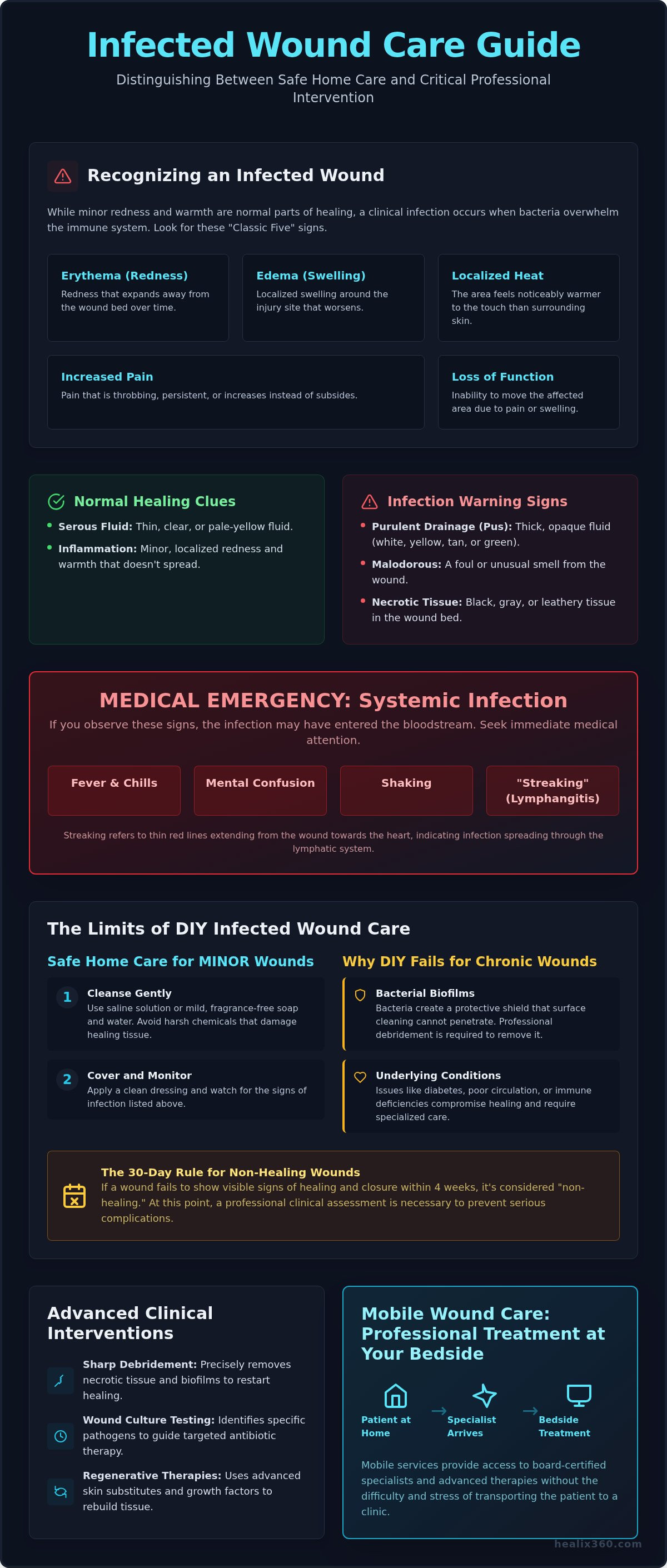
Medical professionals rely on the "Classic Five" signs to identify localized infection. These indicators include erythema, which is redness that expands away from the wound bed, and edema, or localized swelling. You may also notice localized heat, increased pain or throbbing, and a loss of function in the affected area. If a patient cannot move a finger or put weight on a foot due to wound pain, the infection has likely progressed significantly.
The type of fluid draining from the injury provides critical diagnostic clues. While thin, clear serous fluid is a normal byproduct of healing, purulent drainage is not. This thick, opaque "pus" signals that the body is fighting a significant bacterial presence. If the discharge is malodorous, it often indicates the presence of anaerobic bacteria or decaying tissue that requires professional intervention.
Systemic symptoms represent the most dangerous stage of an infection. Fever, shaking chills, and sudden mental confusion are signs that the bacteria may have entered the bloodstream. These are medical emergencies. At this point, the focus shifts from local care to preventing sepsis and systemic organ failure.
Visual Indicators of Worsening Infection
One of the most urgent visual signs is "streaking," or lymphangitis. These thin red lines extending from the wound toward the heart indicate that the infection is moving through the lymphatic system. You should also monitor for necrotic tissue. This dead material appears black, gray, or leathery and serves as a primary harbor for bacteria. While normal exudate is clear, infected exudate appears cloudy, tan, or green, suggesting a high bioburden that prevents healthy tissue growth.
When a Wound is Considered 'Non-Healing'
Many patients struggle with chronic wounds that simply refuse to close. Clinicians typically use the "30-day rule" to determine if a wound has stalled. Stagnant wounds are dangerous because they lack the robust blood flow and immune activity found in acute injuries, making them highly susceptible to secondary infections. A non-healing wound is one that fails to progress through the expected phases of repair within four weeks. If your efforts at infected wound treatment at home haven't resulted in visible closure within this timeframe, a specialized clinical assessment is necessary to prevent long-term complications.
The Limits of DIY Infected Wound Care
While basic first aid is sufficient for minor abrasions, attempting infected wound treatment at home for chronic or complex injuries often proves ineffective. The primary reason for this failure is the biological complexity of non-healing wounds. Unlike a fresh cut, a chronic wound is an environment where bacteria have established sophisticated defense mechanisms that standard soap and water cannot penetrate. Relying solely on home supplies when a wound has entered a clinical state of infection can lead to a false sense of security while the underlying condition worsens.
The Danger of Bacterial Biofilms
Biofilms are protective layers created by bacterial colonies. These structures act as a physical shield, protecting the bacteria from both the patient's immune system and topical treatments. Surface cleaning is insufficient because it only addresses the superficial layer of the wound bed. To truly restart the healing process, specialized wound debridement is required to mechanically disrupt these biofilms. Clinical wound bed preparation involves removing this microscopic barrier, a task that requires professional instruments and expertise beyond the scope of home first-aid kits.
Underlying Health Factors in Glendale & LA Patients
For many residents in Southern California, systemic health issues complicate the recovery process. Specialized diabetic ulcer treatment differs significantly from standard first aid because it must account for compromised blood flow and impaired cellular response. Similarly, persistent leg edema creates high pressure in the tissues, which prevents oxygen-rich blood from reaching the infection site. Elderly patients with fragile, "paper-thin" skin are at even higher risk. In these cases, a minor infection can spread through the dermal layers with alarming speed, bypassing the body's natural defenses.
Reliance on over-the-counter topical antibiotics like Neosporin is another common pitfall. While these products are useful for preventing infection in minor scratches, they're often ineffective for deep-seated clinical infections. They cannot reach the bacteria embedded deep within the tissue. Patients with neuropathy face an additional danger. Because they lack feeling in the affected area, they might adopt a "wait and see" approach, unaware that the infection is worsening beneath the surface. If you're managing a complex condition, a professional bedside wound evaluation can prevent these hidden issues from escalating into life-threatening complications.
Safe Steps for Managing a Minor Wound at Home
Effective infected wound treatment at home begins with modern clinical standards rather than outdated home remedies. While historical advice often suggested using hydrogen peroxide or rubbing alcohol, 2026 medical guidelines emphasize avoiding these substances. Harsh antiseptics are cytotoxic; they destroy the healthy fibroblasts and keratinocytes required for tissue repair. Instead, utilize a sterile saline solution or a mild, fragrance-free soap to irrigate the area without damaging the fragile wound bed.
Maintaining a moist healing environment is essential for cellular migration and rapid closure. A common misconception is that a wound needs to "breathe" by being left open to the air. In reality, an exposed wound bed dries out, leading to cell death and a higher risk of secondary environmental contamination. A proper dressing should maintain a balanced moisture level, creating a stable barrier that supports the body's natural repair mechanisms.
Proper Cleaning and Dressing Techniques
To manage a minor, non-chronic injury safely, follow this clinical protocol:
- Wash your hands thoroughly with antimicrobial soap before touching the area.
- Gently irrigate the wound with saline to remove surface debris and bacteria.
- Pat the surrounding skin dry with sterile gauze, ensuring the wound bed remains slightly damp.
- Apply a sterile barrier dressing appropriate for the amount of drainage present.
You must change the dressing immediately if you observe saturation, where fluid leaks through the secondary layer, or if the bandage shifts and exposes the injury. Frequent monitoring is vital. We recommend taking daily photos under consistent lighting to objectively document the healing trajectory and identify subtle changes in tissue color or size.
Monitoring for the 'Tipping Point'
Establishing a clear baseline is critical for recognizing when infected wound treatment at home is no longer sufficient. Clinicians often use the "24-hour rule" to monitor the spread of redness. Use a skin-safe marker to outline the current border of erythema around the wound. This allows you to track whether the inflammation is receding or expanding beyond the initial perimeter.
If the redness crosses that marker within a 24-hour period, or if you notice an increase in localized heat and throbbing, the infection has likely bypassed your initial first-aid efforts. At this stage, transitioning to professional mobile wound care is the safest course of action. A specialist can perform a bedside assessment to determine if the wound requires advanced intervention to prevent it from becoming a chronic, non-healing ulcer.
Why Chronic Wounds Require Advanced Clinical Intervention
When a wound fails to respond to standard infected wound treatment at home, it often enters a chronic state where localized care is no longer sufficient. Chronic wounds are frequently trapped in a persistent cycle of inflammation caused by necrotic tissue and multi-species bacterial colonies. Breaking this cycle requires advanced clinical tools that go beyond the capabilities of over-the-counter supplies. Clinical intervention focuses on a biological reset, utilizing specialized diagnostics like wound culture and sensitivity testing. This diagnostic process identifies the exact pathogens present, allowing for targeted treatment rather than a broad, often ineffective approach.
For wounds presenting with significant exudate, Negative Pressure Wound Therapy (NPWT), commonly known as a Wound VAC, is utilized. This technology uses controlled suction to remove excess fluid, reduce edema, and pull wound edges together. By maintaining a closed, protected environment, NPWT creates the ideal conditions for cellular growth and tissue granulation.
Clinical Debridement vs. Home Cleaning
Surface cleaning with saline can remove loose debris, but it cannot address devitalized or necrotic tissue. Sharp debridement is the gold standard for removing this non-viable material, which acts as both a food source for bacteria and a physical barrier to healing. Board-certified specialists perform this procedure safely at the bedside, ensuring the removal of infected tissue while preserving healthy structures. Professional debridement also includes clinical-grade pain management, providing physical relief and psychological comfort for patients who may fear the discomfort of traditional clinical settings.
Regenerative Medicine and Skin Substitutes
If a wound remains stagnant despite proper cleaning and debridement, regenerative therapies offer a path to closure. Bio-engineered skin substitutes accelerate healing by introducing essential growth factors directly into the wound bed. These advanced materials are particularly effective in infection-prone environments where the body's natural regenerative capacity is compromised. Amniotic membrane grafts are a key component of this approach, as they help reduce inflammation and the risk of scarring. Amniotic grafts provide a biological scaffold that recruits the body's own cells to repair deep tissue damage.
By bringing these hospital-grade technologies directly to the home, specialists eliminate the risks and logistical burdens associated with transporting fragile patients to a clinic. If your current efforts at infected wound treatment at home have stalled, it is time to request a bedside wound evaluation to prevent further deterioration and promote active recovery.
Mobile Wound Care: Professional Treatment at Your Bedside
Mobile wound care serves as the essential middle ground between basic infected wound treatment at home and the high-intensity environment of an inpatient hospital. For many patients in Los Angeles and Glendale, the logistical burden of visiting a specialist clinic can often delay necessary care. Mobile services eliminate transportation costs and the physical strain of moving a patient with limited mobility. By receiving treatment in the domestic environment, patients also avoid high-density waiting rooms, which significantly reduces their exposure to hospital-acquired infections.
Healix360 operates as a Medicare Part B provider. This status ensures that clinical bedside visits and advanced treatments are accessible to eligible seniors and patients managing chronic conditions. We maintain a collaborative approach, working directly with home health agencies, case managers, and family members. This coordination ensures that the personalized treatment plan is executed seamlessly within the patient's existing care structure, prioritizing clinical outcomes and patient comfort.
The Healix360 Advantage in Southern California
Our network of board-certified specialists serves a wide geographic area, including Glendale, Beverly Hills, and the Greater Los Angeles region. We bring advanced clinical capabilities directly to the bedside, ranging from sharp debridement to the application of regenerative amniotic membrane grafts. Each treatment plan is tailored to the specific constraints and requirements of the patient's home environment. This specialized focus allows us to manage complex infected wound treatment at home with the same rigor found in a hospital wound center.
How to Start Your In-Home Treatment Plan
Initiating professional mobile care is a straightforward process designed to minimize stress for the caregiver and patient. The first step involves booking a comprehensive bedside evaluation where a specialist assesses the wound's status and the patient's overall vascular health. To prepare for the initial visit, please have a current list of medications and insurance information ready for review. This information helps our team coordinate with your primary physician and any existing home health services. If you're concerned about a non-healing or deteriorating injury, contact Healix360 today to schedule a bedside wound assessment and begin a specialized path to recovery.
Securing a Path to Successful Wound Healing
Managing the complexities of a non-healing injury requires a balance of diligent observation and clinical expertise. While basic hygiene is sufficient for minor abrasions, recognizing the "Classic Five" signs of infection is critical to preventing systemic complications. When a wound stalls for more than 30 days or exhibits persistent biofilm, standard infected wound treatment at home must transition into specialized clinical care to ensure the tissue's long-term viability.
Healix360 bridges the gap between home comfort and hospital-grade intervention. As a Medicare Part B provider, we deploy board-certified wound specialists who utilize advanced mobile regenerative technology to treat chronic ulcers at your bedside. Our team performs essential procedures like sharp debridement and amniotic membrane grafting, eliminating the logistical stress and infection risks associated with traditional clinic visits. We coordinate directly with your existing care team to deliver a seamless recovery experience.
Taking the first step toward professional intervention can prevent the escalation of serious medical issues. Schedule a Bedside Wound Evaluation with Healix360 Specialists today to receive the expert care your recovery deserves. We are committed to helping you regain your mobility and peace of mind through specialized, accessible healthcare.
Frequently Asked Questions
Is it safe to treat an infected wound at home without a doctor?
Home management is only appropriate for minor, acute injuries that show immediate improvement. If a wound exhibits clinical signs of infection like expanding redness or purulent drainage, it requires a professional evaluation. Attempting infected wound treatment at home for chronic ulcers often leads to complications like sepsis. Board-certified specialists can assess the wound bed at your bedside in Southern California to determine if advanced clinical intervention is necessary for safe recovery.
What is the best ointment for an infected wound at home?
While over-the-counter antibiotic ointments are effective for preventing infection in minor scratches, they're often insufficient for treating established clinical infections. Deep-seated bacteria and biofilms require prescription-strength antimicrobials or mechanical removal. A specialist uses wound culture and sensitivity testing to identify the specific pathogens present. This diagnostic approach allows for targeted treatment rather than relying on generic ointments that may not penetrate the protective bacterial layers of a chronic wound.
Does Medicare cover mobile wound care services in California?
Medicare Part B typically covers mobile wound care services when they're deemed medically necessary. As a Medicare-compliant provider in Southern California, Healix360 bills for professional consultations and advanced procedures performed at your location. This coverage includes bedside evaluations, sharp debridement, and the application of regenerative skin substitutes. We coordinate with your insurance payer to ensure that these essential medical services are accessible without the logistical burden of visiting a traditional wound center.
How can I tell if my wound infection is spreading to my blood?
Systemic involvement is a critical medical emergency that requires immediate attention. You should monitor for "red streaking" extending from the wound site, which indicates the infection is moving through the lymphatic system. Other warning signs include high fever, shaking chills, rapid heart rate, and sudden mental confusion. These symptoms suggest the infection may be entering the bloodstream. If these signs appear, you must seek emergency services rather than continuing any form of home care.
What happens if an infected wound is left untreated?
An untreated infection can rapidly progress from a localized issue to a life-threatening condition. The bacteria may invade deeper tissues, leading to cellulitis, abscess formation, or osteomyelitis, which is an infection of the bone. In severe cases, the resulting tissue necrosis can necessitate surgical amputation to save the patient's life. Early intervention by a specialist is the most effective way to disrupt the infection cycle and prevent the onset of systemic sepsis.
Can a wound specialist perform debridement in my home?
Our board-certified specialists regularly perform sharp debridement at the patient's bedside throughout Greater Los Angeles and Glendale. This procedure involves the precise removal of devitalized or infected tissue that prevents healthy granulation. By performing this in the home environment, we eliminate the need for hospital transport while maintaining clinical standards. This essential intervention disrupts bacterial biofilms and prepares the wound bed for advanced healing therapies like amniotic membrane grafts or bio-engineered skin substitutes.
What is the difference between a home health nurse and a mobile wound specialist?
Home health nurses typically provide general medical monitoring and dressing changes under a physician's orders. In contrast, mobile wound specialists are advanced practitioners with board certification in wound management. They possess the clinical authority to perform surgical procedures like sharp debridement and apply regenerative technologies. While home health agencies provide valuable support, Healix360 specialists provide the high-level clinical interventions required to manage chronic, non-healing wounds that fail to progress with standard nursing care alone.
How long does it take for an infected diabetic ulcer to heal with professional care?
The healing trajectory for a diabetic ulcer depends on the patient's circulation and blood sugar management. While infected wound treatment at home often stalls due to poor vascularity, professional intervention using Negative Pressure Wound Therapy or amniotic membrane grafts can significantly reduce closure time. Most patients see measurable improvement within the first few weeks of specialized care. Our specialists focus on aggressive infection control and regenerative medicine to achieve stable closure and prevent recurrence.


