
A caregiver in Santa Monica notices a persistent red spot on a loved one's sacrum that doesn't disappear after turning. This subtle change often signals the start of a high-stakes battle against pressure injuries. When preventing skin breakdown in bedridden patients Los Angeles families must act quickly to avoid clinical complications. You likely feel the weight of this responsibility every day. The physical exhaustion of constant repositioning is real, as is the fear that a simple skin tear could lead to a dangerous infection.
We understand that managing home care while navigating chronic conditions is a complex task. By reading further, you will master the clinical protocols and advanced mobile medical strategies necessary to protect bedridden loved ones from pressure injuries in Southern California. Our goal is to provide the medical authority and practical tools you need to maintain skin integrity and peace of mind through professional oversight.
This guide outlines a comprehensive daily prevention checklist and clarifies exactly when a skin change becomes a medical emergency. You'll also learn how to coordinate with mobile specialists who provide bedside evaluations and Medicare-compliant treatments directly in your home. Specialized clinical support is now more accessible than ever for those who cannot easily travel to a traditional wound center.
Key Takeaways
- Identify the "Pressure-Shear-Moisture" triad to understand how specific environmental forces compromise skin integrity and lead to deep tissue damage.
- Implement a daily five-step clinical protocol, including the "Rule of 30" for repositioning, to aid in preventing skin breakdown in bedridden patients Los Angeles families manage at home.
- Recognize the clinical indicators that signal a need for advanced regenerative interventions, such as amniotic membrane grafts, before a minor spot becomes a chronic wound.
- Navigate Medicare Part B reimbursement rules to secure professional bedside wound evaluations and specialist treatments without the logistical burden of hospital transport.
- Coordinate with board-certified mobile specialists to ensure your loved one receives hospital-grade clinical oversight and personalized treatment plans in a home setting.
Why Bedridden Patients in Los Angeles Face High Risks of Skin Breakdown
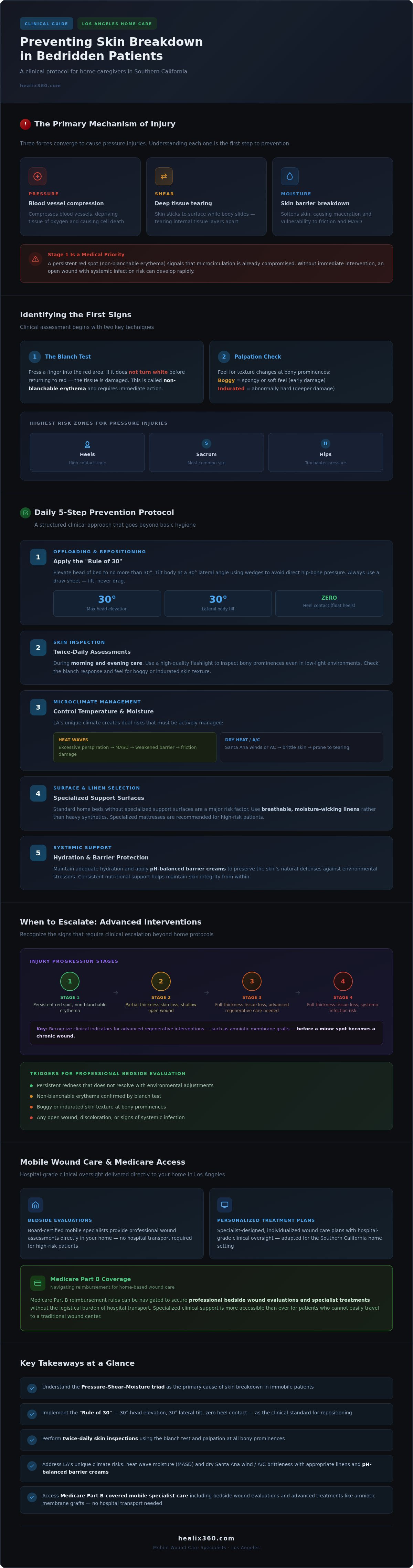
Skin breakdown occurs when prolonged pressure or friction damages the skin and the delicate tissues beneath it. For those tasked with preventing skin breakdown in bedridden patients, Los Angeles caregivers must understand that this is a clinical progression, not a random occurrence. The "Pressure-Shear-Moisture" triad represents the primary mechanism of injury. Pressure compresses blood vessels, depriving tissue of oxygen; shear occurs when skin sticks to a surface while the body slides, tearing deep tissue; and moisture softens the skin, making it vulnerable to maceration.
In the specialized field of mobile wound care, we often see how pressure ulcers (bedsores) develop rapidly when these three forces converge. A Stage 1 injury, characterized by a persistent red spot, is a medical priority. It indicates that the microcirculation is already compromised. Without immediate intervention, this area can quickly progress to an open wound, increasing the risk of systemic infection and long-term complications.
Identifying the First Signs of a Pressure Injury
Clinical assessment begins with the "blanch test." If you press a finger into a red area and it doesn't turn white (blanch) before returning to red, the tissue is likely damaged. This is known as non-blanchable erythema. You should also palpate the skin to detect changes in texture. "Boggy" skin feels spongy or soft, while "indurated" skin feels abnormally hard. In Southern California home care settings, the most common areas for these injuries are the heels, sacrum, and hips, especially when patients spend long periods in standard home beds without specialized support surfaces.
Environmental Risk Factors in Southern California
The local climate plays a significant role in skin health. During Los Angeles heat waves, excessive perspiration creates a moist environment that leads to moisture-associated skin damage (MASD). This moisture weakens the skin's barrier, making it more susceptible to the friction caused by repositioning. Conversely, the dry heat of Santa Ana winds or constant air conditioning can make the skin brittle and prone to tearing.
Managing these microclimates is essential for preventing skin breakdown in bedridden patients. Los Angeles homes often experience significant temperature fluctuations that caregivers must actively monitor and address. We recommend using breathable, moisture-wicking linens rather than heavy synthetics. Proper hydration and the use of pH-balanced barrier creams can help maintain the skin's natural defenses against the unique environmental stressors of the region. If you notice persistent redness despite these environmental adjustments, a professional bedside evaluation is necessary to prevent further tissue loss.
Daily 5-Step Protocol for Preventing Bedsores at Home
Preventing skin breakdown in bedridden patients Los Angeles requires a structured, clinical approach that goes beyond basic hygiene. Caregivers must implement a consistent daily protocol to mitigate the physical and environmental risks associated with long term immobility. This five step process focuses on mechanical offloading, vigilant assessment, and systemic support to maintain skin integrity.
Mastering the Art of Offloading and Repositioning
The "Rule of 30" is the clinical standard for repositioning. This involves elevating the head of the bed to no more than 30 degrees to prevent the patient from sliding down. Simultaneously, the body should be tilted at a 30 degree lateral angle using wedges or pillows to avoid direct pressure on the trochanter (hip bone). Shear is the mechanical force that occurs when the skin remains stationary against a surface while the underlying bone and muscle slide, causing internal tissue damage. To avoid this, always use a draw sheet to lift rather than drag a patient during transfers. Floating the heels by placing a pillow under the calves ensures that the heels have zero contact with the mattress, effectively eliminating pressure in that high risk area.
Perform skin inspections twice daily, ideally during morning and evening care. Use a high quality flashlight to inspect bony prominences even in low light environments, as subtle changes in skin color can be difficult to see in standard room lighting. If a red spot persists, seeking a bedside wound evaluation from a mobile specialist can prevent progression to a Stage 3 or 4 ulcer.
Moisture management is the third critical step. Use pH balanced cleansers and apply moisture barrier creams to protect the skin from urine and fecal matter. Incontinence associated dermatitis (IAD) significantly increases the risk of pressure injury by softening the skin's protective layers.
Clinical Nutrition for Skin Integrity
Nutritional optimization is a clinical requirement for tissue maintenance. Collagen synthesis depends on adequate intake of Arginine, Vitamin C, and Zinc. Without these micronutrients, the body cannot repair the micro tears that occur during daily movement. Dehydration is a common trigger for skin breakdown in elderly LA residents, especially during warmer months. Brittle, dehydrated skin loses its elasticity and tears under minimal stress. If a patient has a non healing wound or showing signs of significant weight loss, consult a dietitian to develop a high protein nutritional plan.
The final step involves evaluating support surfaces. Medicare categorizes pressure redistribution mattresses into Group 1 (static foam or gel overlays) and Group 2 (powered alternating pressure or low air loss mattresses). Understanding Medicare home health services coverage is vital when determining which support surfaces are reimbursable for home use based on the patient's clinical risk level and the presence of existing injuries.
Advanced Clinical Strategies: When Basic Turning Isn't Enough
While a consistent daily protocol is essential, preventing skin breakdown in bedridden patients Los Angeles caregivers manage often requires higher level clinical intervention. Standard dressings and turning schedules may not suffice for patients with compromised microcirculation or systemic comorbidities like diabetes. Proactive medical consultations with a board certified wound specialist can identify high risk areas before they progress to full thickness injuries. These specialists bring hospital grade technology directly to the bedside, ensuring that clinical oversight isn't delayed by the logistics of transport.
Regenerative Medicine at the Bedside
Modern wound care utilizes regenerative technologies to reinforce compromised skin and stimulate cellular repair. Amniotic membrane grafts and bio-engineered skin substitutes provide a scaffold of essential growth factors and cytokines that trigger the body's natural healing response. These advanced materials are particularly beneficial for diabetic or vascular patients whose skin integrity is chronically fragile. Early application of these substitutes can stabilize a "stalled" Stage 1 or Stage 2 injury, preventing it from deepening into muscle or bone. For more detailed information, explore our guide on Advanced Skin Substitute Treatments in Southern California.
For complex cases involving excessive fluid or poor circulation, Negative Pressure Wound Therapy (NPWT) serves as a powerful clinical tool. This mobile technology uses controlled suction to remove excess exudate and promote localized blood flow. Enhancing perfusion is a critical requirement for managing deep tissue injuries that mechanical offloading alone cannot resolve. By stabilizing the wound environment, NPWT reduces the risk of further tissue loss in high pressure areas.
Sharp Debridement and Infection Control
Effective prevention and management sometimes require the removal of non-viable tissue that hinders healing. Sharp debridement is a precise bedside procedure where a specialist removes necrotic or sloughy tissue that harbors bacteria and prevents healthy skin growth. Removing this biological burden is a clinical requirement to prevent systemic infection or sepsis. It's a foundational step in transforming a chronic, non healing area into a healthy wound bed capable of closure.
Our mobile specialists also conduct wound culture and sensitivity testing directly in the home. This diagnostic step identifies specific pathogens, allowing for targeted antibiotic therapy rather than broad spectrum guesswork. Additionally, specialized compression therapy is utilized for patients with leg edema to improve venous return. Reducing fluid buildup in the lower extremities decreases the internal pressure that often leads to skin breakdown in Southern California's bedridden population.
Navigating Mobile Wound Care and Medicare in Los Angeles
Accessing specialized medical care shouldn't require the logistical challenge of transporting a non-ambulatory patient to a traditional clinic. The mobile medical model bridges this gap by bringing a fully equipped wound clinic directly to residences in Glendale, Beverly Hills, and the greater Los Angeles area. This approach is instrumental in preventing skin breakdown in bedridden patients Los Angeles families support at home, as it ensures clinical interventions occur in a stable environment without the physical trauma of ambulance transfers.
Consistent bedside oversight by a specialist significantly reduces hospital readmissions. When a board-certified professional monitors a high-risk area weekly, they can adjust treatment plans in real-time. We work closely with home health agencies (HHAs) and case managers across LA County to ensure a seamless continuum of care. This collaboration ensures that the daily nursing tasks align with the advanced clinical protocols established by the wound specialist.
Understanding Medicare Part B for In-Home Visits
Many families are confused by the difference between standard home health and specialist visits. Medicare Part A typically covers home health services, such as general nursing and physical therapy, which are often time-limited. In contrast, Healix360 operates as a Medicare Part B provider. This means our professional wound assessments and treatments are reimbursed as specialist consultations, similar to an office visit but performed at the bedside. This distinction allows patients to receive advanced regenerative therapies and sharp debridement without exhausting their home health benefits.
Our team coordinates directly with your existing primary care physician to maintain a unified medical record. We provide detailed clinical notes after every visit to ensure your doctor remains informed of the patient's progress. For a deeper understanding of these clinical pathways, refer to our Comprehensive Guide to Bed Sores & Ulcer Treatment. If you're ready to arrange professional oversight, you can schedule a bedside wound evaluation today to secure specialized clinical support.
The Logistics of Bedside Care in Southern California
Receiving care at home in Southern California is designed to be efficient and non-intrusive. Our specialists utilize portable technology, including high-resolution digital imaging and mobile debridement kits, to perform comprehensive evaluations. To prepare for the first consultation, caregivers should have a current medication list and insurance information ready. A clear workspace near the patient's bed allows our team to perform necessary procedures with the same precision found in a hospital setting. This mobile capability ensures that residents from Santa Monica to Pasadena receive the highest standard of wound management without leaving their bedrooms.
Why Healix360 is the Choice for Bedridden Patient Care in LA
Healix360 stands as a specialized provider for families who require more than standard home health services. Our network consists of board-certified specialists who focus exclusively on mobile wound management. By bringing advanced regenerative medicine, such as amniotic membrane grafts and bio-engineered skin substitutes, directly to the bedside, we eliminate the risks associated with transporting immobile patients. This clinical focus is vital when preventing skin breakdown in bedridden patients Los Angeles residents trust to our care. We prioritize patient comfort and clinical outcomes through a methodical, evidence-based approach.
Personalized Wound Care Treatment Plans
Effective wound management requires moving beyond generic, one-size-fits-all protocols. Every patient presents a unique clinical picture influenced by their mobility level, nutritional status, and underlying comorbidities. We develop personalized treatment plans that align with specific patient goals, whether that involves stabilizing a high-risk area or managing a complex chronic wound. Bedside education is a core component of our service; we empower family caregivers with the knowledge needed to maintain skin integrity between specialist visits. For more information on our specific service areas and clinical standards, see our guide on Expert Mobile Wound Care in Los Angeles & Glendale.
Scheduling Your Bedside Evaluation
Getting started with professional oversight is a straightforward process designed to minimize administrative stress. We accept direct contact from families as well as referrals from primary care physicians, home health agencies, and hospital discharge planners. Our specialists serve residents in private homes, assisted living communities, and skilled nursing facilities throughout Southern California. By choosing a dedicated mobile provider, you ensure your loved one receives hospital-grade protection in the safety of their own environment.
The coordination with facility staff and case managers is seamless. We provide the documentation necessary for Medicare compliance while ensuring all stakeholders are informed of the treatment trajectory. This integrated approach is a clinical requirement for preventing skin breakdown in bedridden patients Los Angeles families manage within various care settings. Securing a bedside evaluation is the first step toward professional wound management and long-term skin health.
Securing Long-Term Skin Integrity for Your Loved One
Effective skin management requires a combination of meticulous daily care and advanced clinical oversight. You now understand how to implement the Rule of 30 and the importance of professional interventions like amniotic membrane grafts when standard methods aren't enough. When preventing skin breakdown in bedridden patients Los Angeles caregivers must prioritize early detection and expert evaluation to avoid the complications of chronic wounds. Proactive steps taken today can prevent significant clinical challenges tomorrow.
Healix360 is here to support your efforts as a dedicated Medicare Part B Provider. Our Board-Certified Wound Specialists bring mobile regenerative technology directly to your home, ensuring that your loved one receives hospital-grade care without the stress of travel. We coordinate with your existing medical team to provide a seamless, personalized treatment plan focused on comfort and clinical integrity. Our mission is to provide accessible, high-standard care that fits your specific home environment.
Take the next step in protecting your loved one's health today. You can Schedule a Bedside Wound Assessment with Healix360 to secure the professional oversight they deserve. Your commitment to their care, paired with our clinical expertise, creates the best possible environment for maintaining skin health and peace of mind.
Frequently Asked Questions
Does Medicare cover mobile wound care visits in Los Angeles?
Yes, Medicare Part B covers professional medical consultations for wound care in residential settings. Unlike Part A, which covers temporary home health services, Part B covers specialist bedside evaluations and treatments as outpatient medical services. Healix360 is a Medicare Part B provider serving Southern California. This ensures patients receive expert care without the burden of clinic transport, allowing for consistent monitoring of chronic or non-healing wounds.
What is the difference between a pressure ulcer and a bedsore?
There is no clinical difference; "bedsore" is the colloquial term for what medical professionals call a pressure ulcer or pressure injury. Both describe localized damage to the skin and underlying soft tissue resulting from prolonged pressure. Clinical terminology has shifted toward "pressure injury" to reflect that damage can occur even when the skin is intact. Preventing skin breakdown in bedridden patients Los Angeles requires identifying these injuries across all four stages.
Can skin breakdown be reversed if caught at Stage 1?
Yes, a Stage 1 pressure injury can often be stabilized and prevented from progressing if the pressure is immediately removed. Stage 1 is characterized by non-blanchable redness. Caregivers must implement strict offloading protocols and moisture management. While we don't promise a 100% cure, early intervention with a mobile specialist can help maintain skin integrity and prevent the development of open wounds or deep tissue damage in high-risk patients.
How often should a bedridden patient be turned to prevent ulcers?
The clinical standard is to reposition a bedridden patient at least every two hours while in bed. If the patient is seated in a chair, repositioning should occur every 15 minutes. Consistent movement is the most effective mechanical method for preventing skin breakdown in bedridden patients Los Angeles families manage at home. Using specialized pressure redistribution surfaces can assist but does not replace the necessity of manual turning and skin inspection.
What are amniotic grafts, and are they available for home use?
Amniotic membrane grafts are regenerative medical products derived from donated placental tissue that stimulate cellular repair in chronic wounds. These grafts are available for bedside application through mobile specialists like Healix360. They provide a scaffold of growth factors that help close non-healing or high-risk ulcers. This advanced technology is delivered directly to patients' homes or assisted living facilities across Southern California, providing a clinical alternative to hospital-based wound centers.
When is a 'red spot' considered a medical emergency for a bedridden patient?
A red spot becomes a medical priority when it is non-blanchable, meaning the color doesn't fade when pressed, or if it's accompanied by systemic symptoms. If the area feels warm, appears boggy, or if the patient develops a fever, you should seek immediate clinical evaluation. These signs indicate significant tissue distress or potential infection. Mobile specialists provide bedside evaluations to determine if advanced treatments like sharp debridement or specialized dressings are required.
Do I need a doctor's referral for Healix360 mobile services?
While we often work with referrals from primary care physicians, you can contact Healix360 directly to initiate a bedside wound evaluation. We coordinate with your existing healthcare team, including home health agencies and case managers, to ensure a unified treatment plan. Our board-certified specialists provide the necessary documentation for Medicare compliance, making the process seamless for families in Glendale, Santa Monica, and throughout Los Angeles County.
How can I manage moisture and incontinence to prevent skin breakdown?
Effective moisture management involves using pH-balanced cleansers and high-quality moisture barrier creams after every incontinence episode. Prolonged exposure to moisture softens the skin, making it more susceptible to friction and shear. Using breathable incontinence briefs and moisture-wicking linens is essential in the Southern California climate. Consistent hygiene protocols help prevent moisture-associated skin damage, which is a common precursor to more severe pressure injuries in bedridden populations.


