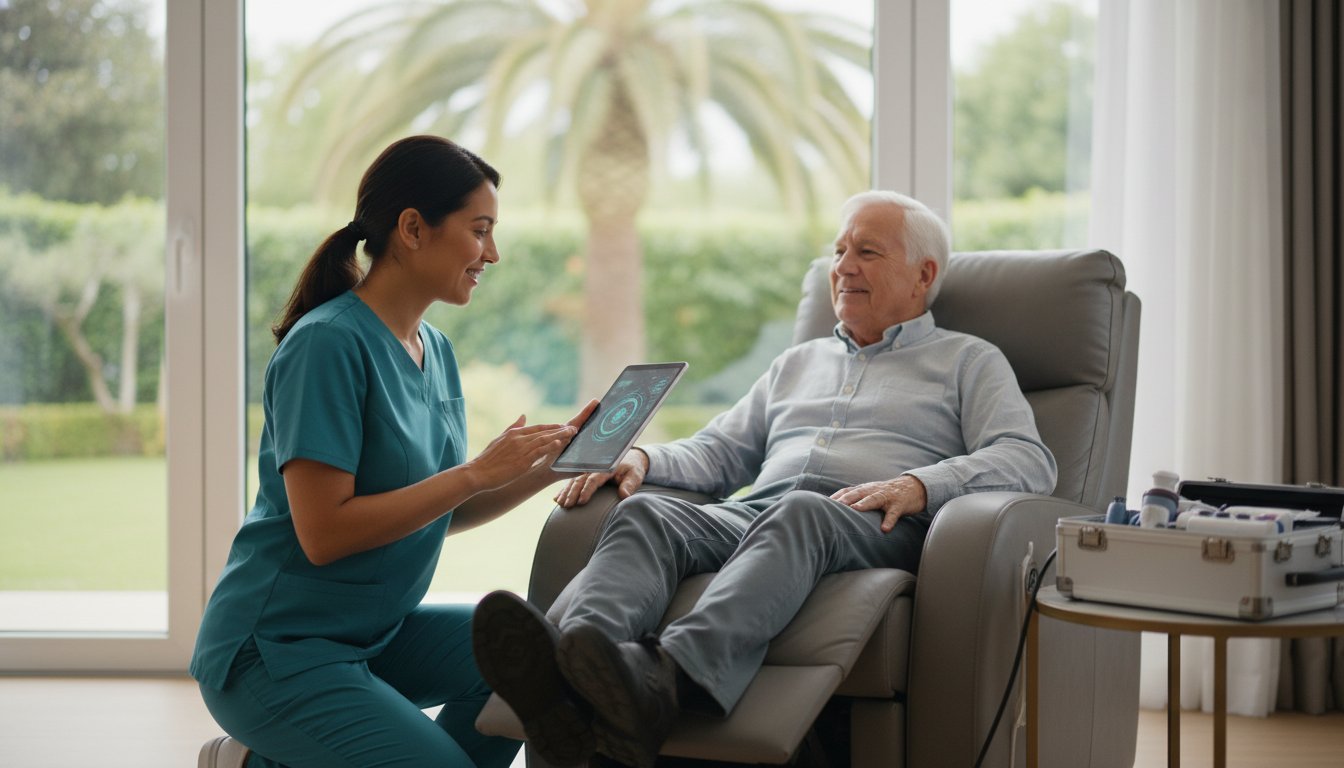
What if the most significant barrier to your recovery isn't the biological complexity of a wound, but the physical trauma of the journey to treat it? For families managing limited mobility, the "transport trap" often turns a routine clinical visit into an exhausting ordeal that can cost upwards of $800 per trip in specialized transport fees. You already know that the sheer exertion of moving a non-ambulatory loved one can compromise their fragile health and increase the risk of hospital-acquired infections. This guide demonstrates how specialized at-home wound care for non-ambulatory patients Orange County utilizes regenerative bedside technology to eliminate these risks while accelerating the healing process. We'll examine the 20% Medicare Part B coinsurance requirements for 2026, explain the integration of bio-engineered skin substitutes within your home environment, and outline a clear path toward faster wound closure without ever leaving your front door. By merging clinical rigor with the comfort of your own home, we ensure that your health optimization remains the priority, not the logistics of the commute.
Key Takeaways
- Identify how bedside clinical evaluations prevent the physical trauma and "transport trap" associated with traditional wound center visits.
- Explore the transition of regenerative technologies, such as amniotic membrane grafts, from hospital settings directly to your living room.
- Distinguish between general home health nursing and the advanced clinical interventions provided by board-certified wound specialists.
- Navigate the 2026 insurance landscape to maximize coverage for at-home wound care for non-ambulatory patients Orange County while minimizing out-of-pocket costs.
- Implement a data-driven recovery plan that focuses on total-body optimization and long-term vitality rather than just surface-level healing.
The Transport Trap: Why At-Home Wound Care is Vital for Non-Ambulatory Patients
Mobility is often viewed as a binary state, yet for those managing chronic tissue damage, it's a critical biomarker of recovery potential. For non-ambulatory patients, the simple act of leaving the house is a complex medical event. When a patient is unable to walk or transition without significant assistance, traditional clinical visits become more than just an inconvenience. They become a source of physiological stress that can actively stall the healing process. Utilizing The Transport Trap: Why At-Home Wound Care is Vital ensures that the patient's environment remains optimized for cellular repair. By choosing at-home wound care for non-ambulatory patients Orange County, families can protect the integrity of the wound bed from the unnecessary trauma of travel.
The Physical Toll of Clinic Visits
Moving a patient with a Stage 4 pressure ulcer involves significant clinical risk. Every transfer from a bed to a gurney, and then to a vehicle, introduces shear forces that can tear delicate, newly granulated tissue. These micro-traumas are often invisible but result in measurable delays in wound closure. Crowded waiting rooms also present a secondary threat through exposure to hospital-acquired infections (HAIs). For a patient with a compromised immune system, a three-hour round trip to a clinic can lead to days of exhaustion and elevated cortisol levels, which directly inhibit the body's inflammatory response. The Transport Trap is the cycle of physical decline caused by the systemic stress of seeking care in a traditional facility.
Financial and Caregiver Burden in OC
The logistics of non-emergency medical transport (NEMT) in Southern California are notoriously grueling and expensive. In 2026, the out-of-pocket costs for a single round-trip gurney transport in Orange County can range from $300 to over $800, depending on the level of assistance required. These costs aren't always fully covered by standard insurance, leaving families to bridge the gap. Beyond the financial impact, the emotional weight on caregivers is immense. Coordinating these trips requires hours of planning and often results in missed work or caregiver burnout. By opting for Advanced Mobile Wound Care in Southern California, you eliminate the need for these expensive logistics. This proactive approach to at-home wound care for non-ambulatory patients Orange County allows the clinical team to meet the patient where they are most comfortable, ensuring wound stability is never sacrificed for the sake of a commute. Bedside evaluations maintain a consistent healing trajectory by keeping the patient in a controlled, low-stress environment.
Regenerative Bedside Technology: Bringing the Wound Center to the Living Room
Biology doesn't stop at the clinic door. Advanced healing requires the same high-tech intervention at home that was once reserved for specialized surgical suites. Mobile specialists now perform sharp debridement safely at the bedside, removing devitalized tissue to prepare the wound bed for advanced healing. This precision-focused approach ensures that at-home wound care for non-ambulatory patients Orange County is not just a convenience, but a clinical upgrade. By integrating hospital-grade technology into your living room, we eliminate the physiological stress of travel while targeting the specific biomarkers of tissue repair. With the global wound care market projected to reach approximately $24 billion in 2026, the shift toward mobile regenerative medicine is a verified standard of modern care.
Amniotic Allografts and Skin Substitutes
Unlike traditional gauze that merely covers a wound, bio-engineered skin substitutes act as active scaffolds. These stem-cell-derived therapies trigger the body's natural healing cascade, providing the necessary growth factors to close chronic diabetic and venous ulcers. You can explore our specific protocols for Advanced Skin Substitute Treatments in Southern California to understand how these grafts accelerate recovery. These treatments are often vital for wounds that haven't responded to standard care for 30 days or more. We utilize amniotic membrane grafts to reset the wound's environment, moving it from a chronic, stalled state into an active healing phase that mirrors the body's peak performance.
Mobile Negative Pressure Wound Therapy (NPWT)
Portable Wound VAC systems represent a major leap in mobile wound management. These devices apply controlled sub-atmospheric pressure to the wound site, which helps reduce edema and pull wound edges together. Mobile experts monitor these systems during weekly visits, ensuring that safety protocols are strictly followed in a residential setting. This technology is particularly effective for surgical dehiscence and deep pressure injuries that require constant exudate management. In 2026, we're seeing the integration of smart dressings with biosensors that track pH and moisture in real-time to detect infection early. Understanding Insurance and Medicare Coverage for Mobile Wound Care is essential for families looking to utilize these advanced tools effectively. If you're ready to optimize your recovery environment, our team can help you coordinate a bedside evaluation today to build your personalized roadmap to wellness.
Comparing Mobile Specialist Care vs. Standard Home Health Agencies
Standard home health agencies are the backbone of recovery, yet their scope of practice often restricts them to basic dressing changes and medication oversight. In contrast, at-home wound care for non-ambulatory patients Orange County through a specialized provider introduces board-certified expertise directly to your bedside. This distinction is critical for complex cases. While a Registered Nurse (RN) might monitor a wound's progress, a wound specialist possesses the authorization and equipment to perform sharp debridement and apply amniotic membrane grafts. We don't replace your existing home health agency. Instead, we partner with them to provide a higher tier of clinical intervention that standard protocols simply don't cover.
Efficiency in this field is measured by "Days to Closure." In the specialized environment of Healix360, we prioritize rapid tissue regeneration through data-driven treatment plans. By visiting more frequently and utilizing advanced bedside diagnostics, we aim to close wounds faster than traditional outpatient models. This accelerated timeline is essential for non-ambulatory patients whose overall health depends on maintaining skin integrity and preventing systemic infection. Our collaborative model ensures that your existing case managers and therapists are always in the loop, creating a seamless continuum of care.
The Specialist Advantage for Chronic Wounds
Chronic conditions like diabetic ulcers and Stage 3 or 4 bedsores require more than simple observation. They demand active biological intervention. Specialists perform bedside wound culture and sensitivity testing to identify specific pathogens, which prevents the "trial and error" approach to antibiotics that often leads to resistance. You can find more detail on these advanced interventions in our Comprehensive Guide to Bed Sores & Ulcer Treatment. This level of precision is what defines high-end medical care in 2026, ensuring that infection control is proactive rather than reactive.
A 360-Degree View of Longevity
We view every patient as a complete biological system. True healing involves vascular optimization and proactive prevention rather than just treating a "hole in the skin." For instance, Managing Edema in Legs is often the missing piece in venous ulcer recovery. By addressing these underlying biomarkers and circulatory issues, we move beyond reactive treatment toward a lifestyle of longevity and peak performance. Our role as visionary health architects is to translate complex biological data into a clear, actionable roadmap for your total-body wellness.

Insurance and Medicare Coverage for Mobile Wound Care in Orange County
Accessing elite medical technology shouldn't be a financial enigma. For those seeking at-home wound care for non-ambulatory patients Orange County, understanding the 2026 insurance framework is the first step toward securing transformative care. Most patients are pleasantly surprised to learn that mobile wound care specialists operate under Medicare Part B as a professional service. This means your treatment is billed similarly to an in-office specialist visit rather than a restricted home health "episode." For patients with Original Medicare Part B, there is a 20% coinsurance for medically necessary services once the annual deductible is met. While CMS recently withdrew planned changes to Local Coverage Determinations (LCDs) for skin substitutes originally scheduled for January 1, 2026, rigorous documentation remains essential to prove medical necessity for these high-value regenerative therapies.
To qualify for these bedside services, a patient must meet the "homebound" criteria. In 2026, this definition remains focused on individuals for whom leaving the home requires a considerable and taxing effort. For non-ambulatory patients, this status is typically self-evident. Private PPO plans and secondary insurance providers in Southern California often mirror Medicare's lead, recognizing that bedside debridement and bio-engineered scaffolds are more cost-effective than the $1,500 to $3,000 expense of an emergency department visit for wound complications. Additionally, the California Department of Health Care Services (DHCS) updated its contracted advanced wound care list on January 1, 2026, which impacts how specific medical supplies and units are reimbursed for those with dual eligibility.
Medicare Part B vs. Part A
It's vital to distinguish between the nursing care provided by home health agencies (Part A) and the specialized clinical interventions of a wound provider (Part B). Mobile specialist visits are professional encounters that focus on advanced procedures like amniotic grafts and sharp debridement. To ensure these are covered, our team provides the precise clinical documentation required, detailing the wound’s dimensions, tissue quality, and the specific functional goals of the treatment. This clarity ensures that at-home wound care for non-ambulatory patients Orange County remains accessible and scientifically rigorous, protecting you from unexpected costs while providing peak performance medical tools.
Facility-Based Care (ALF/SNF)
We don't just visit private residences. Healix360 actively coordinates with facility managers at Assisted Living (ALF) and Skilled Nursing Facilities (SNF) across Orange County. When a resident is non-ambulatory, facility staff often struggle to provide the specialized debridement needed for Stage 3 or 4 pressure injuries. By referring residents to our mobile team, facility managers can offer hospital-grade wound care on-site, significantly reducing the risk of hospital readmissions. If you're managing care for a loved one in a facility, you can verify your Medicare-compliant wound care eligibility with our clinical coordinators to begin the enrollment process.
Selecting a Mobile Wound Specialist: Why Healix360 is the Choice for OC Families
Selecting a clinical partner for a non-ambulatory family member is a high-stakes decision that dictates the trajectory of their recovery. Healix360 operates as a visionary health architect in Southern California, moving beyond the limitations of traditional, reactive medicine. We offer at-home wound care for non-ambulatory patients Orange County that prioritizes both clinical excellence and the patient's long-term vitality. By choosing a local specialist who understands the specific logistics of the OC healthcare landscape, you replace the friction of travel with a data-driven roadmap designed for your home environment. Our team serves as an elite guide, translating complex biological data into a clear path for healing.
Our methodology integrates the latest breakthroughs in biotechnology to ensure peak performance of the body's natural repair mechanisms. We utilize amniotic allografts and bio-engineered skin substitutes that were once only accessible in elite hospital settings. In 2026, the integration of smart wound dressings with embedded biosensors allows our team to monitor pH and moisture levels in real-time, catching signs of infection before they become systemic threats. This precision-focused approach ensures that at-home wound care for non-ambulatory patients Orange County is optimized for the individual's unique biomarkers, bridging the gap between laboratory science and daily quality of life.
The Healix360 Difference
Our board-certified specialists provide a level of expertise that standard home health agencies aren't equipped to match. You won't wait weeks for a clinic slot; we bring the wound center's capabilities directly to your bedside. For those recovering from complex procedures, our Advanced Surgical Wound Care in SoCal provides a seamless transition from hospital discharge to home-based stability. This immediate access to regenerative breakthroughs like sharp debridement and amniotic membrane grafts is what sets our structured care plans apart from basic nursing care.
Empowering Caregivers
We believe that transformative healing is a partnership between the clinician and the family. Our specialists spend time educating caregivers on the nuances of skin health and pressure redistribution to prevent recurrence and maintain holistic wellness. This proactive prevention strategy is a core pillar of our identity as your lifestyle optimization partner. You can restore your loved one's quality of life and eliminate the trauma of medical transport starting today. Experience a 360-degree view of wound healing with Healix360 and take the first step toward a personalized roadmap to longevity.
Secure Your Path to Advanced Recovery
Clinical excellence is no longer tethered to a hospital address. By eliminating the physical trauma and financial weight of medical transport, you allow your body to focus its resources entirely on cellular repair. We've explored how at-home wound care for non-ambulatory patients Orange County leverages regenerative breakthroughs like amniotic membrane grafts to trigger natural healing biomarkers. As a dedicated Medicare Part B Provider, Healix360 ensures that these high-tier interventions remain accessible while maintaining the 20% coinsurance for medically necessary services after your 2026 deductible is met. Our Board-Certified Wound Specialists act as your visionary health architects, translating complex diagnostic data into a personalized roadmap for longevity.
Don't let the logistics of a clinic visit compromise your clinical outcomes. You can bypass the transport trap and access the latest advancements in Specialists in Regenerative Medicine & Amniotic Grafts from the comfort of your living room. Take the first step toward a transformative recovery today and Request a Bedside Wound Evaluation in Orange County. Your journey to peak performance and skin integrity is our priority.
Frequently Asked Questions
Is at-home wound care covered by Medicare for non-ambulatory patients in Orange County?
Yes, Medicare Part B covers medically necessary at-home wound care for non-ambulatory patients Orange County as a professional service. Patients with Original Medicare typically pay a 20% coinsurance after meeting their annual deductible. Our team manages the complex documentation required to prove medical necessity for advanced interventions like amniotic allografts and negative pressure wound therapy.
How do mobile wound specialists differ from standard home health nurses?
Wound specialists are board-certified providers authorized to perform advanced clinical procedures like sharp debridement and the application of bio-engineered skin substitutes. While standard home health nurses provide vital monitoring and basic dressing changes, they don't typically have the specialized scope of practice required for regenerative wound management. We partner with your existing nursing agency to provide this higher tier of clinical expertise.
Can advanced treatments like skin substitutes be applied at the bedside?
We bring hospital-grade regenerative technology directly to your living room. Bio-engineered skin substitutes and amniotic membrane grafts are applied at the bedside to trigger the body's natural healing biomarkers. This eliminates the "transport trap" and the associated $300 to $800 costs of non-emergency medical transport in Southern California while maintaining a sterile and controlled healing environment.
What Orange County cities does Healix360 serve for mobile wound care?
Healix360 provides comprehensive coverage across the entire Orange County landscape, including Irvine, Newport Beach, Mission Viejo, and Huntington Beach. Our mobile teams are strategically positioned to reach non-ambulatory patients in both private residences and care facilities. We ensure that elite medical care is accessible to high-achievers and their families throughout the Southern California region.
How often will a wound specialist visit a non-ambulatory patient at home?
Most personalized treatment plans involve a specialist visit once per week to perform debridement or apply advanced grafts. This cadence allows us to monitor the wound's healing trajectory and make data-driven adjustments to the care plan. For complex Stage 4 pressure injuries, we may increase visit frequency to ensure maximum wound stability and prevent secondary complications.
What happens if a wound shows signs of infection between scheduled visits?
We utilize smart dressings with biosensors that track pH and moisture to detect signs of infection in real-time. If you notice increased exudate or redness, you can contact our clinical team for an immediate assessment. We perform bedside wound culture and sensitivity testing to identify specific pathogens, allowing us to coordinate targeted antibiotic therapy with your primary physician without a hospital visit.
Do I need a doctor’s referral to start mobile wound care services?
Yes, a physician's referral is necessary to establish medical necessity for insurance reimbursement and to ensure integrated care. We work closely with your primary care doctor or hospital discharge planner to streamline the enrollment process for at-home wound care for non-ambulatory patients Orange County. This partnership ensures that your wound management plan aligns perfectly with your overall health optimization goals.
Can Healix360 treat pressure ulcers (bedsores) in an assisted living facility?
We frequently provide specialized wound management for residents within Assisted Living and Skilled Nursing Facilities. Our team coordinates with facility managers to perform bedside evaluations and advanced procedures on-site, which helps reduce the $1,500 to $3,000 cost of emergency room visits for wound complications. This approach allows facility residents to receive elite clinical care without the stress of external transport.


