
Pain isn’t a reliable warning sign when peripheral neuropathy reduces sensation. A cut, blister, pressure spot, or infection may develop without causing discomfort, making routine visual checks essential. At-home wound care for patients with peripheral neuropathy starts with looking, not waiting for pain.
If you find a wound and aren’t sure what to do, this guide explains how to check and protect less-sensitive skin, which changes need prompt medical assessment, and how to follow your clinician’s instructions. Daily checks and a clear plan can help you notice changes sooner.
You’ll learn practical steps for checking feet and skin, reducing the risk of injury, and recognizing warning signs such as spreading redness, swelling, drainage, or a wound that isn’t improving. When travel is difficult, clinician-led wound care at home can provide an assessment and an individualized treatment plan, with communication among patients, caregivers, and existing care teams.
Key Takeaways
- Peripheral neuropathy can dull protective sensation and has causes beyond diabetes, so visible changes matter even when there’s no pain.
- A consistent at-home wound care for patients with peripheral neuropathy routine can help you notice skin changes early, including in areas that are easy to overlook.
- Learn how to distinguish intact skin from a new wound or concerning change, and when urgent warning signs call for prompt medical attention.
- An in-home wound assessment can help clarify a wound’s condition and support an individualized plan coordinated with your existing care team.
- Prepare for an assessment by noting the wound’s timeline, observed changes, medications, and relevant health history.
Why Peripheral Neuropathy Makes At-Home Wound Care Different
Peripheral neuropathy is damage or dysfunction in nerves outside the brain and spinal cord. It can change how a person senses touch, pressure, temperature, or pain, especially in the feet. Diabetes is one possible cause, but neuropathy can also be associated with other health conditions, medications, or other factors. The cause and degree of sensory change vary from person to person.
When sensation is reduced, regular visual skin checks can reveal injuries that pain may not. This is central to at-home wound care for patients with peripheral neuropathy: a lack of discomfort doesn’t show whether skin is intact or a wound is minor.
How Reduced Sensation Can Hide a Foot or Skin Injury
A person with neuropathy may not notice a shoe rubbing against the heel, repeated pressure beneath the foot, or heat from a surface. A blister, cracked skin, or small cut can go unnoticed, and may worsen if pressure or friction continues. Not everyone with neuropathy develops an ulcer, but skin damage can also be harder to spot on the sole or between the toes.
A diabetic foot ulcer is one example of a wound associated with diabetes-related foot risks, including neuropathy. Any possible injury deserves attention, even if it doesn’t hurt. Look for visible changes rather than relying on pain as the signal to act.
Who Should Help With Daily Skin Checks?
Inspect both feet and any other areas where sensation is reduced in good light. A mirror can help you see the soles and heels if bending or reaching is difficult. Check pressure points, between the toes, and near any dressing. If vision, balance, or mobility makes a thorough inspection challenging, ask a caregiver to help look for changes and bring them to your attention.
Diabetes can add foot-related risks, but not everyone with neuropathy has diabetes, and diabetes does not make every skin change an ulcer. For more information about diabetes-related wound treatment, see the separate diabetic-ulcer treatment guide.
Regular checks help you notice changes early, but they don’t replace clinical assessment. If you find a new wound or a change in the skin, contact your treating clinician for individualized guidance. Don’t assume it is minor because there’s no pain.
A Safe At-Home Routine for Checking and Protecting Skin
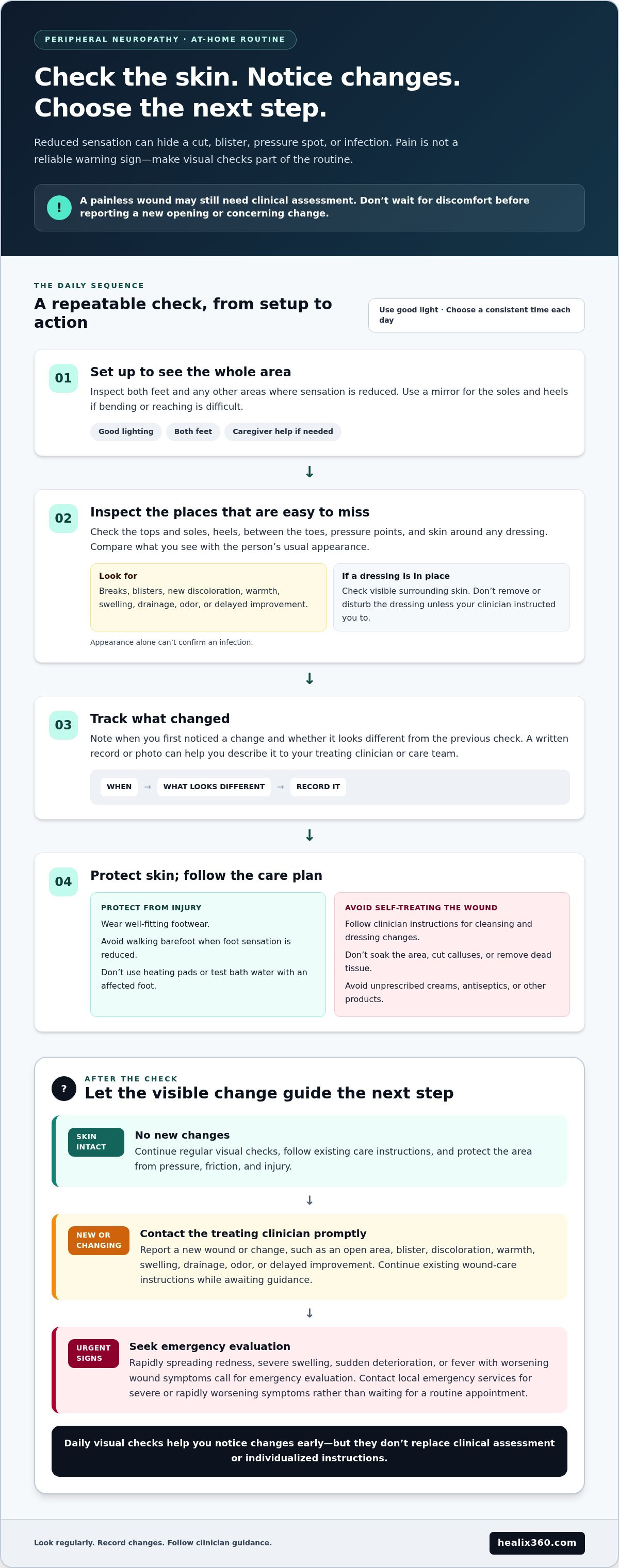
A simple, repeatable check makes changes easier to notice. Choose a consistent time each day, use good lighting, and inspect both feet and any other areas affected by reduced sensation. If a dressing is in place, check the visible surrounding skin without removing or disturbing the dressing unless your clinician has instructed you to do so.
How to Inspect Skin and Existing Wounds
Check the tops and soles of the feet, heels, between the toes, pressure points, and skin around dressings. Look for breaks, blisters, new discoloration, swelling, drainage, or a change in the wound or nearby skin. Compare what you see with the person’s usual appearance. A visual change can be important, but appearance alone can’t confirm an infection.
Note when you first noticed a change and whether it looks different from the previous check. A written record or photo can help you describe changes to the treating clinician or care team. For broader information on managing peripheral neuropathy, Mayo Clinic offers guidance on diagnosis and treatment.
Protect Skin Without Trying to Treat the Wound Yourself
Wear well-fitting footwear and avoid walking barefoot when foot sensation is reduced. Don’t use heating pads or test bath water with an affected foot. Reduced temperature sensation can make it harder to recognize excessive heat before skin is injured.
If your clinician has given wound-care instructions, follow them for cleansing and dressing changes. Cleanse gently and apply a clean dressing only as directed. Avoid soaking the area, cutting calluses, removing dead tissue, or applying unprescribed creams, antiseptics, or other products. These steps can injure skin or interfere with the treatment plan.
Daily checklist: Inspect the skin, protect it from pressure and injury, and report new or changing wounds promptly to your treating clinician. This routine supports at-home wound care for patients with peripheral neuropathy, but it doesn’t replace individualized clinical instructions. If travel is difficult or a wound needs assessment, an in-home wound assessment and care plan can bring evaluation and care to you.
Home Care or Clinical Assessment? How to Choose the Right Next Step
Use the skin’s appearance and changes over time to guide what to do next. With reduced sensation, pain isn’t a dependable measure of severity. A painless wound may still need clinical assessment, so don’t wait for discomfort before reporting a new opening or concerning change.
| What you observe | Next step |
|---|---|
| Skin is intact, with no new changes | Continue regular visual checks and follow any existing care instructions. Protect the area from pressure, friction, and injury. |
| A new wound or change, such as an open area, blister, discoloration, warmth, swelling, drainage, odor, or delayed improvement | Promptly contact the treating clinician for individualized direction. Continue existing wound-care instructions while you await guidance. |
| Rapidly spreading redness, severe swelling, sudden deterioration, or fever with worsening wound symptoms | Seek emergency evaluation. Contact local emergency services for severe or rapidly worsening symptoms rather than waiting for a routine appointment. |
Changes That Need Prompt Clinical Attention
Report a new open area or a wound that is changing, including increased drainage, a new odor, discoloration, or surrounding skin that feels warmer or looks more swollen. A wound that isn’t improving as expected also deserves review. Don’t use a fixed number of days to decide when to seek help; the right timing depends on the wound and the person’s health. Only a clinician can assess the wound and determine whether infection is present.
When Symptoms Require Emergency Help
Rapidly spreading redness, severe swelling, sudden deterioration, or fever alongside worsening wound symptoms calls for emergency evaluation. Don’t wait for a scheduled wound-care visit if symptoms are severe or progressing quickly. These signs can’t be diagnosed remotely, and emergency clinicians can assess the situation directly.
For at-home wound care for patients with peripheral neuropathy, the distinction is straightforward: intact skin calls for continued monitoring, a new wound or change calls for prompt clinical advice, and severe or rapidly worsening symptoms call for emergency help. If you’re uncertain which category fits, contact the treating clinician promptly and describe what you see, when it began, and how it has changed.
What a Clinician-Led Wound Assessment at Home Can Include
A clinician-led assessment looks beyond the visible wound. The clinician may consider its location and appearance, the surrounding skin, how long it has been present, observed changes, relevant medical history, and factors that could affect care. Peripheral neuropathy is part of the picture, but treatment decisions also depend on the wound’s characteristics and the patient’s overall health.
For people who find travel difficult, mobile wound care brings specialist assessment to a home or residential care setting. Healix360 provides mobile advanced wound care in Southern California, with individualized plans that can be coordinated with the patient’s existing clinician and care team.
How Mobile Wound Care Fits Into Ongoing Care
An in-home visit allows a specialist to evaluate a wound where the patient lives and discuss practical care needs with the patient and, when relevant, family, facility staff, or home health teams. This communication helps keep those involved informed about the assessment and care plan. Mobile wound care complements ongoing care from the patient’s other treating clinicians; it doesn’t replace that broader care.
For more on the in-home approach, see the Southern California mobile wound-care guide.
How Treatment Is Matched to the Wound
Assessment findings guide whether additional evaluation or a particular treatment may be appropriate. Depending on the wound and clinical judgment, care may include wound culture and sensitivity testing, sharp debridement, compression therapy, negative pressure wound therapy, or a graft or bio-engineered skin substitute. These are clinician-selected options, not routine steps for every wound. Neuropathy alone doesn’t determine which treatment is suitable.
The clinician can explain the plan and coordinate relevant updates with the patient’s existing care team. If diabetes-related foot wounds are a concern, the separate diabetic-ulcer treatment guide offers more focused information.
When a wound needs specialist review or travel is a barrier, an in-home assessment can provide a practical next step. Learn more about mobile wound care assessments at home and how individualized wound-care planning can support ongoing care.
How to Take the Next Step With At-Home Wound Care
Preparing a few details before a wound assessment can help the clinician understand what has changed and how the wound fits into your overall health. This is especially useful when reduced sensation makes it difficult to identify exactly when an injury began. If you’re arranging at-home wound care for patients with peripheral neuropathy, include a caregiver in the preparation when they help with daily checks or dressing care.
What Patients and Caregivers Can Prepare
Gather the information you have available. You don’t need to measure or diagnose the wound yourself. A clear timeline and description of observed changes can help guide the assessment.
- Wound timeline: Note when the wound was first seen, or when you first noticed a change.
- Changes observed: Describe any change in size, drainage, odor, color, or surrounding skin, and when it occurred.
- Health information: Have a current medication list and relevant medical history available, including conditions that may affect wound care.
- Questions: Write down concerns about dressing instructions, mobility, pressure relief, and coordination with the existing care team.
Keep the current dressing in place unless your clinician has instructed you to remove or change it. If it becomes loose, wet, or soiled, follow the instructions you’ve already received or contact the treating clinician for individualized guidance. Avoid adding products or changing the wound-care routine on your own.
Arrange Specialized Wound Care at Home
Healix360 provides mobile wound assessments and individualized treatment planning in Southern California. An in-home visit is a practical option when getting to an appointment is difficult. Care planning may also include communication with family members, residential care staff, or home health teams, as appropriate.
Healix360 is a Medicare Part B provider, but coverage and patient responsibility depend on applicable plan rules, medical requirements, and individual eligibility. Medicare or other insurance coverage isn’t guaranteed, so patients should review their specific benefits and circumstances.
Clear records and questions help make an assessment more useful, but you don’t need to have every detail resolved before seeking guidance. For specialized wound assessment and planning at home, explore Healix360 mobile wound care.
Make Skin Checks Part of Your Care Routine
Peripheral neuropathy can make pain an unreliable signal, so regular visual checks and prompt attention to changes are essential. Inspecting skin consistently, protecting it from pressure and injury, and reporting a new wound to a clinician are practical foundations of at-home wound care for patients with peripheral neuropathy.
Seek emergency evaluation for severe or rapidly worsening symptoms. For other new or changing wounds, a clinician can assess the affected area and recommend care based on the wound and your overall health. You don’t need to manage that decision alone, especially if travel to an appointment is difficult.
Healix360 provides mobile advanced wound care in homes and residential care settings, including individualized assessments and treatment planning for chronic and non-healing wounds. The care team can also coordinate with families and existing care teams when appropriate.
Take the next step toward an in-home wound assessment. Explore Healix360 mobile wound care and learn how clinician-led support can help you move forward with a clear plan.
Frequently Asked Questions
Can peripheral neuropathy make a foot wound painless?
Yes. Peripheral neuropathy can reduce the ability to feel pain, pressure, or temperature, so a cut, blister, or sore may not hurt. The absence of pain doesn’t reliably indicate that an injury is minor. Inspect the skin visually and contact the treating clinician about a new wound or concerning change, even if it feels painless.
How often should someone with peripheral neuropathy check their feet?
Check both feet every day, using good lighting to inspect the soles, heels, between the toes, and pressure points. Also look at the skin around any dressing and other areas where sensation is reduced. If vision or mobility makes a full check difficult, use a mirror or ask a caregiver to help. Report new or changing wounds to the treating clinician.
What should I put on a wound at home if I have neuropathy?
Follow the wound-care instructions provided by your clinician. If cleansing or dressing changes are part of your plan, do them as directed and use only recommended products. Keep an existing dressing in place unless your clinician tells you otherwise. Avoid soaking the wound, cutting calluses, removing dead tissue, or applying unprescribed creams or antiseptics, which may injure skin or interfere with care.
When should a neuropathy-related wound be assessed by a clinician?
Contact the treating clinician promptly about a new open area or changes such as increased drainage, odor, discoloration, warmth, swelling, or delayed improvement. A painless wound can still need assessment. A clinician can examine it and determine whether infection is present. Seek emergency evaluation for severe or rapidly worsening symptoms, including rapidly spreading redness or fever with worsening wound symptoms.
Can wound care be provided at home for someone with peripheral neuropathy?
Yes. Mobile wound-care clinicians can assess and treat wounds in a patient’s home or residential care setting. Healix360 provides mobile advanced wound care in Southern California, with individualized assessments and treatment planning for chronic and non-healing wounds. In-home specialist care is a practical option when travel is difficult and can be coordinated with family members and the patient’s existing care team.
Does Medicare cover at-home wound care for peripheral neuropathy?
Coverage may be available, but peripheral neuropathy alone doesn’t guarantee Medicare payment for wound care. Coverage and patient responsibility depend on the service, applicable requirements, and individual eligibility. Healix360 is a Medicare Part B provider, but coverage isn’t guaranteed. Patients should review their specific Medicare benefits and circumstances. An individualized assessment helps establish the wound-care needs that may be relevant to coverage.


