
What should you do when a pilonidal cystectomy wound drains, hurts, or looks different between follow-up appointments? If you’re recovering in Riverside, uncertainty can make routine dressing care feel difficult. Safe at-home care for pilonidal cystectomy wound Riverside starts with your operating surgeon’s instructions, because care depends on how the wound was closed and how it’s healing.
It’s understandable to want clear guidance on cleaning the area, changing dressings, and recognizing changes that need clinical attention. This guide explains how to follow your surgeon’s wound-care plan, what symptoms to report promptly, and why surgical follow-up remains essential. General guidance can’t replace instructions tailored to your procedure, so check with your surgical team before changing your care routine.
If dressing care or transportation is a challenge, mobile wound-care support may be worth exploring as a supplement to follow-up with your surgeon. Healix360 provides in-home wound assessments and personalized care planning. Confirm directly whether service is available at your Riverside address, whether your wound is within scope, and what referral and coverage requirements apply. The sections ahead cover practical home-care considerations, warning signs, and questions to ask when exploring support.
Key Takeaways
- Your surgeon’s procedure and care plan determine how to manage the surgical site. Additional wound care doesn’t replace surgery or your surgeon’s guidance.
- Consider wound changes in context. Track details to share with your clinical team rather than judging drainage, odor, redness, or pain on your own.
- Use this guide to prepare for at-home care for pilonidal cystectomy wound Riverside, including gathering discharge paperwork, medication information, and follow-up contacts.
- Routine surgical follow-up remains essential, even if another clinician assesses your wound. Clear coordination helps keep care aligned with your surgeon’s plan.
- Mobile wound assessment may be a supplemental option. Confirm Healix360’s Riverside availability, suitability for your wound, referral requirements, and coverage directly.
Pilonidal cystectomy wound care at home in Riverside: what recovery involves
After surgery, the wound’s appearance, drainage, and care needs depend on the procedure your surgeon performed and the plan they provided. A site closed with sutures may require different dressing and bathing instructions from one left open to heal. Your health and your clinician’s assessment also shape care, so there isn’t one timeline or routine that applies to everyone.
Pilonidal cystectomy wound care means caring for the surgical site during recovery and attending recommended follow-up. It supports healing after surgery, but it doesn’t replace the operation or care from your surgical team. For general background on the condition, see Pilonidal disease. For specific directions, rely on your discharge paperwork and clinical team rather than general online advice.
If you’re looking for at-home care for pilonidal cystectomy wound Riverside, first establish who is directing your postoperative care. Mobile wound assessment may be an additional resource, but it should complement, not replace, routine surgical follow-up. Healix360 offers mobile wound assessments and personalized wound-care planning. Confirm directly whether it currently serves your Riverside address and can assess your specific wound.
Why cystectomy wound instructions differ from patient to patient
Your surgeon’s technique and whether the incision was closed or left open affect how it should be protected and monitored. Use your discharge paperwork as the primary reference for dressing changes, bathing, and other wound-care steps. Don’t substitute a routine found online for those directions. If paperwork is missing, instructions conflict, or a step is hard to carry out, contact the surgical team for clarification before changing your routine.
Who should coordinate care after surgery?
Your operating surgeon or surgical team is the main contact for recovery questions and concerns about the incision. With your consent, a family caregiver can help organize discharge instructions, note questions, and track follow-up appointments. If you’re considering a mobile assessment, ask whether the provider can evaluate this type of surgical wound, what referral information is required, and how findings can be shared with your surgical team. Confirm local availability with Healix360 directly.
How a pilonidal cystectomy wound heals and which changes need attention
Healing varies with the procedure, whether the wound was closed or left open, individual health factors, and your clinician’s assessment. Drainage, odor, redness, and pain should be considered in context rather than judged on their own. Compare changes with your discharge instructions, and contact your surgical team if you’re unsure what you’re noticing means.
Keep your surgeon’s care plan as the main reference for at-home care for pilonidal cystectomy wound Riverside. General information can help you prepare questions, but it can’t determine whether a specific wound change needs treatment.
Questions to ask about drainage, discomfort, or wound appearance
Tell your surgeon about changes that are new, worsening, or concerning to you. Note when each change began and whether it is improving or worsening. If you’re concerned about drainage, odor, redness, increasing pain, swelling, or a wound edge separating, ask the surgical team how to proceed. Don’t squeeze or probe the site, or remove material from it yourself.
When to contact the surgeon or seek urgent help
Follow your discharge paperwork for symptoms that need prompt attention and instructions for reaching the surgical team after hours. Seek professional advice promptly if symptoms worsen or you’re concerned about infection or wound separation. If symptoms are severe or rapidly worsening, seek emergency evaluation or contact emergency services. Don’t wait for a home wound-care visit. Healix360 is not an emergency or urgent-care provider.
If you’re considering mobile wound assessment as additional support, confirm directly with Healix360 mobile wound care whether your Riverside address is served, whether your wound is within the service scope, and what referral requirements may apply. Any assessment should support, not replace, coordination with your surgical team.
Surgeon follow-up or mobile wound care in Riverside: how to decide
These care options serve different purposes. Your operating surgeon or surgical team remains responsible for procedure-specific follow-up and should guide decisions about the incision. When appropriate, a mobile wound-care clinician may provide an additional assessment at home, with findings coordinated with the surgical team. Mobile care doesn’t replace scheduled surgical checks or emergency evaluation.
For patients with limited mobility or difficulty arranging transportation, an in-home assessment may be worth asking about. Whether it fits your situation depends on your wound, symptoms, care plan, and the provider’s scope. Searching for at-home care for pilonidal cystectomy wound Riverside doesn’t guarantee a local visit is available. Confirm service to your exact address before making plans.
When surgeon-led follow-up may be the right next step
Contact the operating team with questions about how the procedure was performed, planned wound checks, or a change in your recovery. Ask before changing the dressing routine or adding a treatment, since the team can account for your surgical instructions. Follow its guidance on whether a concern can be discussed by phone, needs a clinic visit, or requires urgent evaluation.
What to verify before arranging mobile wound care
Before scheduling, check that the provider serves your Riverside-area address and can assess a pilonidal cystectomy wound. Ask what clinician credentials and services apply to your case, whether a referral is needed, and how assessment findings will be shared with your surgeon and existing care team. Confirm appointment availability directly to determine whether this option meets your needs.
Verify insurance coverage for the specific service with both the provider and your payer. Coverage can depend on your plan and the care recommended. Don’t assume participation in a health program means a particular visit is covered. A clear plan should identify who to contact with wound questions, who coordinates follow-up, and what to do if symptoms change.
- Surgeon-led follow-up: Best suited to planned postoperative checks and questions tied to the operation and its instructions.
- Mobile wound assessment: A possible supplemental option when an in-home evaluation is clinically appropriate and locally available.
If symptoms are severe or rapidly worsening, seek emergency care rather than waiting for a scheduled appointment or home visit. Healix360 provides mobile wound assessments, but Riverside availability, wound suitability, referral requirements, and individual coverage must be confirmed directly.
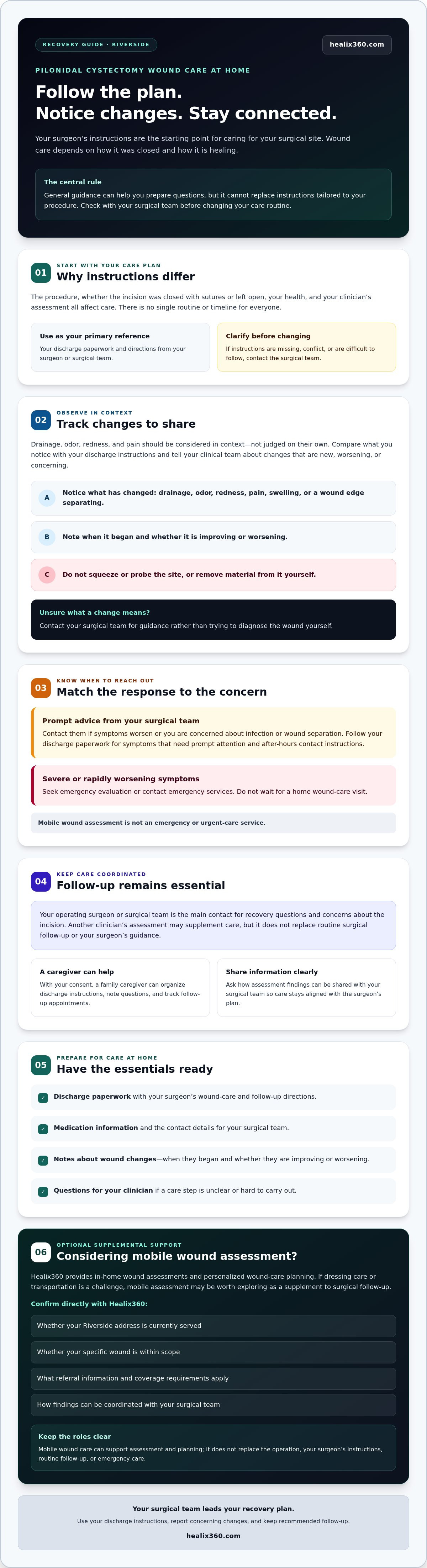
Preparing for Pilonidal Cystectomy Wound Care at Home
Preparing in advance can make a wound-care discussion more useful and help keep instructions organized. Your surgical team’s directions remain the priority, including any guidance about dressings, cleaning, or bathing. Use this checklist to prepare, not as a substitute for your personalized care plan.
For at-home care for pilonidal cystectomy wound Riverside, gather these items before a scheduled assessment or call:
- Your discharge paperwork, including the surgeon’s wound-care instructions.
- The procedure date, surgeon’s name, and timing of the next follow-up appointment.
- A current medication list, known allergies, and relevant medical conditions.
- A short record of changes or concerns, including when each began and whether it has changed.
Write down questions as they come up. Describe what you’ve noticed without trying to diagnose the wound or alter your care routine. If reaching or checking the site is difficult, don’t attempt anything that feels unsafe. Ask the surgical team how to proceed.
Information to have ready before a wound assessment
Keep key details together so you can refer to them during the discussion. Note the date of surgery, the instructions you received, and when follow-up is planned. Include medications, allergies, and health conditions that may be relevant. With your consent, a caregiver can help organize these records, remember questions, or join the conversation, particularly if mobility makes appointments or wound care challenging.
Questions to ask during a home-care visit
Before the discussion ends, make sure you know who is responsible for each part of the plan. Ask:
- Which clinician should I contact if I notice a change, and how do I reach my surgical team after hours?
- Who provides dressing instructions, and how will assessment findings be shared with my surgeon?
- When should follow-up happen, and where will the assessment and next steps be documented?
- What should I do if I can’t follow an instruction as written?
Ask the clinician to explain any recommended next steps and confirm that they align with your surgeon’s plan. If you’re considering mobile support, ask Healix360 about a mobile wound assessment. Before relying on a visit, confirm whether your Riverside address is served, whether this wound type is within scope, and what referral or coverage requirements apply.
Explore Healix360 mobile wound care for pilonidal surgery recovery in Riverside
Travel can be challenging during recovery, particularly if sitting or moving comfortably is difficult. Mobile wound care may offer an additional way to have a surgical site assessed at home, but it doesn’t replace your operating surgeon’s follow-up or instructions. If you’re seeking at-home care for pilonidal cystectomy wound Riverside, first confirm whether a suitable service is available for your address and wound.
Healix360 provides mobile wound assessments and personalized wound-care planning in Southern California. Confirm directly whether its clinicians can assess a pilonidal cystectomy wound at your Riverside address. A clinician may coordinate findings with the surgical team when appropriate, but discuss and arrange this rather than assuming it will happen.
What Healix360’s mobile wound-care role may include
If the wound and circumstances are within the service’s scope, a mobile assessment may help a clinician evaluate the surgical site and develop an individualized wound-care plan. The specific assessment and recommendations depend on clinical appropriateness. Healix360 doesn’t perform pilonidal cystectomy surgery, and a mobile assessment isn’t a substitute for the operating surgeon’s care or emergency evaluation. Don’t assume a particular treatment, product, healing result, or visit schedule in advance.
How to ask about Riverside eligibility and next steps
When contacting Healix360, have the patient’s address, surgery date, surgeon’s details, and discharge instructions available. These details can help frame your questions, but they don’t establish eligibility. Ask directly:
- Does the service cover this exact Riverside-area address?
- Can the team assess a wound after pilonidal cystectomy, and what is within its scope?
- Is a referral required, and what information must the referring clinician provide?
- How could findings be coordinated with the surgeon or existing care team?
- What scheduling and payer-specific coverage details should be confirmed before deciding?
Confirm coverage for the specific service with both the provider and your health plan. Healix360 reports Medicare Part B participation, but that doesn’t establish coverage for an individual patient or visit. Keep planned surgical follow-up in place while you explore additional support.
For further context on mobile surgical wound support, read the Southern California surgical wound-care guide and the mobile wound-care specialist guide. Use them as general information, then verify Riverside availability, referral needs, and individual coverage directly with Healix360 before making care arrangements.
Move Forward With a Clear Wound-Care Plan
Recovery guidance should start with your operating surgeon’s instructions. The procedure and your individual circumstances shape wound care, so use your discharge plan and contact the surgical team if directions are unclear or changes concern you. For at-home care for pilonidal cystectomy wound Riverside, remember that a mobile wound assessment may supplement, but never replace, routine surgical follow-up or emergency care.
Healix360 provides mobile wound assessments and personalized wound-care planning, with care coordination involving healthcare facilities and families. Before arranging support, confirm that your Riverside address is served, that your wound is within the team’s scope, and whether a referral is needed. Healix360 reports Medicare Part B participation, but coverage depends on the individual service and should be verified with the provider and payer.
Contact Healix360 to ask about mobile wound-care availability in Riverside and discuss address eligibility, referral requirements, and coverage. With clear instructions and the right clinical contacts, you can take the next steps in recovery with greater confidence.
Frequently Asked Questions
How do I care for a pilonidal cystectomy wound at home?
Follow the written instructions from your surgeon or surgical team, because dressing, cleaning, and bathing guidance depends on the procedure and your wound. Keep discharge paperwork nearby and contact the team if directions are missing, unclear, or difficult to follow. For at-home care for pilonidal cystectomy wound Riverside, general online advice should not replace your personalized postoperative plan.
Is drainage from a pilonidal cystectomy wound normal?
Drainage needs to be assessed in context, so its presence alone doesn’t determine whether there is a problem. The procedure, wound appearance, other symptoms, and how the site is changing all matter. If drainage is new, worsening, or concerning to you, note when it began and contact your surgical team for guidance. Don’t squeeze or probe the wound or remove material yourself.
When should I call my surgeon after pilonidal cystectomy?
Contact your surgeon or surgical team promptly about worsening symptoms, concerns about possible infection, or a wound that appears to be separating. Follow your discharge instructions for urgent concerns and after-hours contact. If symptoms are severe or rapidly worsening, seek emergency evaluation or contact emergency services rather than waiting for a scheduled visit or home assessment. A mobile wound-care provider is not an emergency service.
Can a wound-care specialist visit my home in Riverside?
A home wound assessment may be an option, but availability depends on your address and whether the provider can assess your specific wound. Healix360 provides mobile wound assessments and personalized wound-care planning in Southern California. Contact the company to confirm service to your Riverside address, suitability for a pilonidal cystectomy wound, referral requirements, and scheduling before relying on a visit.
Do I still need follow-up with my surgeon if I receive home wound care?
Yes. Keep the follow-up appointments recommended by your operating surgeon, even if another clinician assesses the wound at home. The surgical team remains your main source for questions specific to the operation and its recovery plan. Ask how assessment findings will be communicated and who is responsible for wound-care instructions, so additional care supports rather than replaces surgical follow-up.
Does Medicare cover at-home care for a pilonidal cystectomy wound?
Coverage for a particular home wound-care service can’t be assumed based on a provider’s participation alone. Healix360 reports Medicare Part B participation, but individual coverage depends on the service and applicable payer requirements. Before arranging care, ask Healix360 and your plan whether the proposed assessment or treatment is covered, whether a referral is needed, and what costs may apply.
What should I have ready for a home wound-care assessment?
Gather your discharge paperwork, surgery date, surgeon’s details, and scheduled follow-up information. Prepare a current medication list, allergies, relevant health conditions, and notes about changes you’ve observed, including when they began. Write down questions about instructions and care coordination. If you want support or have mobility limitations, a caregiver may join the discussion with your consent.


