
When an HS abscess is painful and draining, even changing a dressing can be difficult, and traveling to a clinic may add another burden. In-home wound care for hidradenitis suppurativa may offer wound assessment and dressing support when clinically appropriate. It does not treat the underlying inflammatory disease or replace medical evaluation when needed.
It’s understandable to want quick relief. Still, squeezing or trying to drain an abscess yourself can cause harm. This article covers safe steps to take while arranging care, signs that an abscess needs prompt medical assessment, and when a dermatologist, another clinician, or emergency services may be appropriate. Fever, rapidly spreading redness, or feeling acutely unwell warrants prompt medical attention.
You’ll also learn how mobile wound care may complement HS treatment when travel is difficult. Healix360 provides mobile wound assessments in Southern California, but its listed services don’t specifically identify HS care. Contact the provider to ask whether an HS-related wound is within its clinical scope and whether an in-home assessment is available in your area.
Key Takeaways
- Learn how temporary home care can support an HS abscess while you follow your clinician’s wound-care instructions.
- Understand how dermatology, wound assessment, home health, and emergency care serve different needs.
- See how in-home wound care for hidradenitis suppurativa may complement disease-directed care when a home assessment is clinically appropriate.
- Prepare for an assessment by gathering your care history, current treatments, allergies, and notes about wound changes.
- Find out what to ask Healix360 about clinical fit, Southern California availability, referral needs, and insurance details.
What an HS abscess is, and what in-home wound care can address
Hidradenitis suppurativa (HS) is a chronic inflammatory skin condition that can cause painful, recurring lumps and abscesses, often in areas where skin rubs together. Some people develop tunnels beneath the skin or scars over time, though these features don’t occur in everyone. The Hidradenitis suppurativa overview provides general background, but a qualified clinician should assess symptoms and confirm a diagnosis.
Plain-language definition: An HS abscess is a painful, inflamed collection beneath the skin that may open and drain. This description explains the term, but appearance alone can’t confirm that a particular lump or wound is caused by HS.
How HS abscesses differ from a one-time skin infection
HS is a long-term inflammatory condition, so lesions may recur in the same or nearby areas. That pattern differs from a single episode of a skin infection, although the two can look similar and may need different care. Other skin conditions can also resemble an abscess. A clinician can consider the location, symptoms, history, and changes over time rather than relying on appearance alone.
Managing HS is different from caring for an open or draining wound. A dermatologist or the patient’s established clinician guides diagnosis and disease-directed management. Wound care may address the condition of an open area and help plan appropriate wound support, but it doesn’t replace HS treatment.
What an in-home wound assessment may, and may not, include
When traveling during a painful flare is difficult, an in-home assessment may reduce the burden of getting a wound evaluated, if the service is clinically appropriate and available. Healix360 lists mobile wound assessments and personalized wound-care plans among its services. Confirm directly whether an HS-related wound fits that scope.
An assessment may focus on the wound and help determine a suitable care plan. Don’t assume it includes diagnosing HS, draining an abscess, managing medication, or performing a particular procedure. Before arranging care, ask about the clinician’s qualifications and the visit’s scope. Mobile wound care is not dermatology or emergency care, and it should not delay either when needed. If symptoms call for urgent medical assessment, seek appropriate medical care rather than waiting for an in-home wound visit.
Safe at-home care for HS abscesses & medical advice
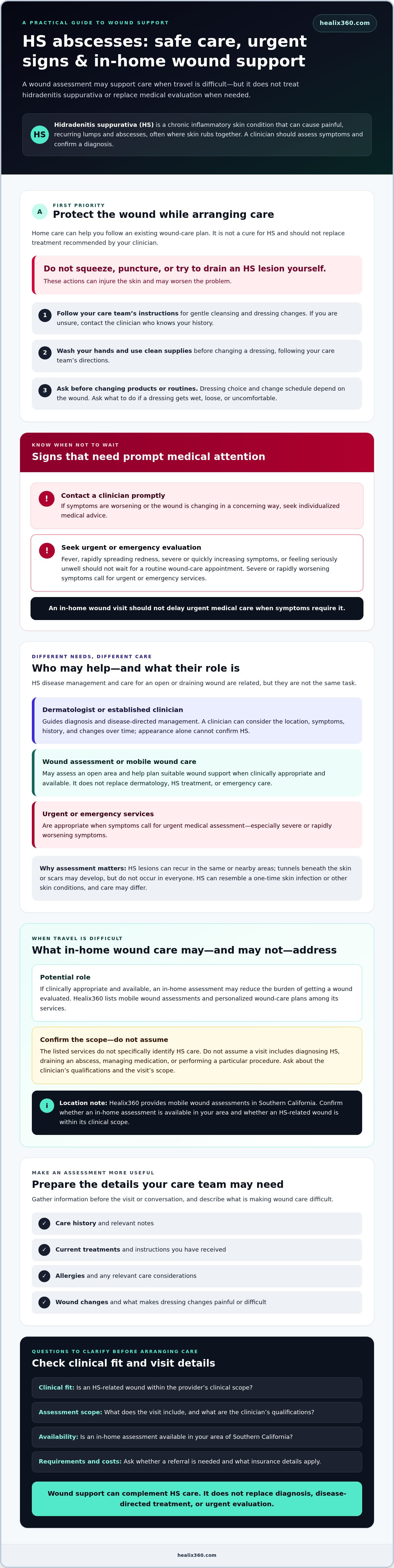
Home care can help you follow an existing wound-care plan while arranging appropriate medical advice. It isn’t a cure for hidradenitis suppurativa (HS), and it shouldn’t replace treatment recommended by your clinician. If you’re unsure what to do, contact the clinician who knows your history rather than trying a new treatment based on appearance alone.
Don’t squeeze, puncture, or try to drain an HS lesion yourself. These actions can injure the skin and may worsen the problem. Follow the instructions you’ve received for gentle cleansing and dressing changes. The American Academy of Dermatology’s guidance on at-home self-care for HS offers general information, but your own care plan should guide decisions about an active wound.
Dressing and hygiene questions to discuss with a clinician
Before changing a dressing, wash your hands and use clean supplies, following your care team’s instructions. Ask which dressing is appropriate for the wound’s location and amount of drainage, and what to do if it becomes wet, loose, or uncomfortable. Dressing needs vary, so don’t assume a particular product, topical treatment, or change schedule is suitable without guidance.
If changes are painful or difficult to manage, tell your clinician. Explain what makes the process challenging and ask whether your current plan needs review. This is a practical question to raise during routine follow-up or when discussing in-home wound care for hidradenitis suppurativa, if an assessment is clinically appropriate.
When an HS flare needs prompt or emergency evaluation
Contact a clinician promptly for individualized advice if symptoms are worsening or the wound is changing in a concerning way. Fever, rapidly spreading redness, severe or quickly increasing symptoms, or feeling seriously unwell should not wait for a routine wound-care appointment. Seek urgent or emergency medical evaluation for severe or rapidly worsening symptoms.
Routine follow-up is for a stable wound and planned care. Fever, rapidly spreading redness, worsening symptoms, or feeling seriously unwell calls for prompt medical advice. Severe or rapidly worsening symptoms call for urgent or emergency services. A mobile wound visit is not emergency care and shouldn’t delay that evaluation.
For a non-emergency wound concern, ask Healix360 whether its mobile wound assessments may fit your needs. Its listed services don’t specifically identify HS care, so confirm clinical suitability and availability directly through Healix360’s wound-care information.
Dermatology, home health, or mobile wound care: which fits the need?
The right service depends on your concern: whether this is HS, how the condition should be managed, or how an open wound should be assessed. These roles can complement one another, but they aren’t interchangeable. Use the guide below to identify where to start, then confirm the next step with a qualified clinician.
| Care option | Best suited to | Important limit |
|---|---|---|
| Dermatology or established treating clinician | Questions about recurring flares, diagnosis, and disease-directed HS management. | Keep this clinician central to decisions about HS treatment. |
| Primary wound assessment | Evaluating an open or draining wound and considering a wound-care plan, if the provider confirms it’s within scope. | A wound assessment doesn’t necessarily diagnose HS or manage the underlying disease. |
| Home health | Care delivered at home when appropriate to the person’s care plan and the services available. | Ask the referring clinician and agency what care is included and who coordinates it. |
| Emergency care | Severe or rapidly worsening symptoms that need urgent medical evaluation. | Don’t wait for a routine mobile wound-care visit when emergency assessment may be needed. |
When dermatology should remain central to HS care
Recurring lesions, uncertainty about the diagnosis, or questions about controlling HS itself are reasons to consult a dermatologist or the clinician already managing your condition. They can guide disease-directed care and help coordinate other services. For general guidance on dermatologist-recommended self-care, the American Academy of Dermatology provides information for people living with HS. A wound-care provider does not replace a dermatologist or prescribe HS treatment as part of a wound assessment.
When to ask about a mobile wound assessment
A mobile assessment may be worth asking about if dressing changes, drainage, or travel during a flare makes wound evaluation difficult. Healix360 lists mobile wound assessments and personalized wound-care plans, but its listed services don’t specifically identify HS care. Confirm directly whether the wound is within the provider’s clinical scope, whether your location is served, and what the assessment can address. The Southern California mobile wound care specialist guide offers more information about mobile wound care in the region.
Think of in-home wound care for hidradenitis suppurativa as a possible complement to your existing HS care, not a replacement. If symptoms are severe or worsening rapidly, seek urgent or emergency evaluation instead of waiting for a routine mobile visit.
Preparing for an in-home assessment in Southern California
A little preparation can help the care team understand what’s happening and whether an in-home wound assessment is appropriate. Describe the concern, share relevant care history, and confirm that the provider can serve both the wound and your exact location. This is especially useful when pain, drainage, or travel makes a clinic visit challenging.
Information to have ready when contacting a provider
Before you call, note when the lesion began and what has changed. Describe any drainage, pain, or other changes you’ve observed, and have instructions from your current clinician available. A concise history can help the provider determine whether your request fits its assessment services.
- List your dermatologist and other clinicians involved in your care.
- Write down current medications, treatments, and allergies. Don’t stop or change treatment on your own.
- Describe the wound’s location and any changes since it first appeared.
- Have insurance information available so you can ask about eligibility and potential patient responsibility.
For general background on what a mobile wound-care visit may involve, review the in-home wound care visit expectations. The actual scope of an assessment depends on the provider and your clinical needs.
Questions to ask before booking
Healix360 lists mobile wound assessments and personalized wound-care plans, but its services don’t specifically identify HS-related wounds. Before arranging in-home wound care for hidradenitis suppurativa, contact the provider to confirm whether it can assess this type of wound and whether your address is within its current service area. Ask who would conduct the assessment, what the visit includes, whether a referral is needed, and how follow-up is handled.
Coverage shouldn’t be assumed. Ask both the provider and your insurer to verify benefits and any patient responsibility for the specific service before care is arranged. Healix360 identifies as a Medicare Part B provider, but coverage for an individual assessment must be confirmed.
With these details, you can discuss the next step with your existing clinician and decide whether a mobile assessment may complement your HS care. To ask Healix360 whether an HS-related wound and your location fit its services, contact Healix360 about an in-home assessment.
How to explore Healix360 in-home wound care for HS-related needs
Healix360 lists mobile wound assessments and personalized wound-care plans for patients in home and care-facility settings in Southern California. These services may be worth asking about if travel or dressing care is difficult, but Healix360 does not specifically list hidradenitis suppurativa care. First confirm whether an HS-related wound is clinically within scope and whether service is available at your location.
What Healix360's listed services may contribute
If a wound assessment is appropriate, it may help evaluate the wound and inform a care plan. Sharing relevant information with family caregivers or your existing care team may also support continuity, with your consent and as appropriate. The assessment is not a substitute for dermatology. Your dermatologist or established clinician should continue to guide HS diagnosis, medication decisions, and disease-directed care. Healix360 does not provide emergency care, and no particular HS treatment or outcome should be assumed.
A practical referral and follow-up plan
Before requesting an assessment, gather your current clinician’s instructions, a list of medications and allergies, and notes about when the wound began and how it has changed. Ask your treating clinician whether a wound assessment could complement your current plan and whether a referral is needed. When speaking with Healix360, confirm:
- Whether it accepts referrals for HS-related wounds and considers your specific concern within its clinical scope.
- Whether your exact location is served and an assessment is available for this need.
- Who would conduct the assessment, what the visit includes, and how follow-up is coordinated with your existing care team.
- What insurance information is required, and whether the provider and your insurer can verify eligibility, coverage, and any patient responsibility for the specific service.
These checks help clarify whether in-home wound care for hidradenitis suppurativa may complement your existing care. If you’d like to explore that possibility, contact Healix360 about in-home wound care and ask whether your wound and location fit its services.
For HS diagnosis and disease management, contact your established dermatologist or treating clinician. If you have severe or rapidly worsening symptoms, fever, or feel seriously unwell, seek urgent or emergency medical evaluation rather than waiting for a routine wound assessment.
Choose the Right Next Step for Your Care
HS abscess care has two distinct parts: managing the underlying condition with your dermatologist or established clinician, and caring for an open or draining wound when appropriate. Follow your clinician’s wound-care instructions, avoid trying to drain a lesion yourself, and seek prompt medical advice for concerning changes. Severe or rapidly worsening symptoms call for urgent or emergency evaluation, not a routine mobile wound visit.
In-home wound care for hidradenitis suppurativa may be worth exploring when travel or dressing care is difficult, but it should complement, not replace, disease-directed care. Healix360 lists mobile wound assessments and personalized wound-care plans for people in home and facility settings in Southern California. Its services don’t specifically identify HS care, so confirm clinical suitability, local availability, referral requirements, and insurance details directly.
To ask whether an HS-related wound may fit the provider’s scope, contact Healix360 about in-home wound-care options. Keep your established HS clinician involved in diagnosis and treatment, and seek urgent help for warning signs. A clear plan with the right care team can make the next step more manageable.
Frequently Asked Questions
Can an HS abscess be treated at home?
Home care may provide temporary support for an HS abscess, but it doesn’t cure hidradenitis suppurativa or replace a clinician’s treatment plan. Follow existing instructions for gentle cleansing and dressing changes, and use clean hands and supplies. Don’t squeeze or puncture the lesion. If you’re unsure how to care for it, or symptoms change, contact your clinician for individualized guidance. In-home wound assessment may be an option if clinically suitable.
Should I drain a hidradenitis suppurativa abscess myself?
No. Don’t squeeze, puncture, or attempt to drain an HS abscess yourself. Doing so can injure the skin and may worsen the wound. Follow your clinician’s instructions for cleansing and dressings, and ask the clinician managing your HS what to do if pressure, pain, or drainage changes. If symptoms are severe or rapidly worsening, seek urgent or emergency medical evaluation rather than waiting for a routine wound-care visit.
When should I seek medical care for an HS abscess?
Contact a clinician promptly if an abscess is worsening or you’re concerned about a change. Fever, rapidly spreading redness, severe or rapidly worsening symptoms, or feeling seriously unwell calls for urgent medical attention. Seek urgent or emergency evaluation for severe or rapidly worsening symptoms, and don’t wait for a mobile wound-care visit. For a stable concern, your dermatologist or established treating clinician can advise on diagnosis and next steps.
Can a wound-care specialist treat hidradenitis suppurativa?
A wound-care specialist may assess an open or draining wound and help plan wound care if it falls within the provider’s clinical scope. That differs from diagnosing HS or managing its underlying disease. A dermatologist or your established treating clinician should guide HS diagnosis and disease-directed treatment, including medication decisions. Ask a wound-care provider what its assessment includes and how it can coordinate with your existing care team.
Can I get in-home wound care for an HS abscess in Southern California?
Possibly, but the provider must confirm that the wound and your location fit its services. Healix360 lists mobile wound assessments and personalized wound-care plans for patients in home and facility settings in Southern California, but HS-specific care isn’t identified in its listed services. Contact the provider to ask whether it accepts referrals for HS-related wounds, whether your exact area is served, and whether a referral is needed.
Does Medicare cover in-home wound care for hidradenitis suppurativa?
Coverage for an individual in-home assessment or wound-care service can’t be assumed. Healix360 identifies as a Medicare Part B provider, but that doesn’t establish coverage for a particular HS-related service. Before arranging care, ask Healix360 and your insurer to verify eligibility, whether the specific service is covered, any referral or documentation requirements, and your potential financial responsibility. Confirm these details for your own plan and care needs.
What should I do if an HS abscess is draining?
Follow your clinician’s existing instructions for gentle cleansing and dressing changes, and use clean hands and supplies. Don’t squeeze the area or try to stop drainage by puncturing or manipulating the lesion. Ask your clinician which dressing suits the wound’s location and drainage, and what to do if the dressing becomes wet or loose. Contact a clinician about concerning changes; seek urgent care for fever, rapidly spreading redness, or feeling seriously unwell.


