
A first wound-care visit is often about understanding the wound before deciding what care may be appropriate. It’s reasonable to feel uncertain about the examination, whether a dressing change may hurt, or what information the clinician will need. Knowing what to expect during the first in-home wound consultation can help you feel prepared and take part in decisions about care.
The initial consultation is an assessment and a chance to discuss a plan, not an automatic procedure. A wound care specialist may review the patient’s health history and medications, examine the wound, and explain possible next steps. If the area is tender or you’re concerned about discomfort, tell the clinician before the examination or any dressing care begins.
This guide explains what may happen during the visit, which records and supplies to have ready, and what questions can clarify the proposed care plan. It also covers how findings may inform treatment options and how to discuss coordination with family members, caregivers, home health partners, or other clinicians. A little preparation can help you focus on understanding the assessment and planning follow-up together.
Key Takeaways
- Learn what to expect during the first in-home wound consultation, from assessment to discussion of possible next steps.
- Understand which wound details a clinician may evaluate and why the assessment can differ from patient to patient.
- Find out why a first visit may include appropriate care or focus on assessment and planning instead.
- Use a checklist to gather medication and allergy information, relevant records, referral details, and notes about prior treatment.
- Know what to clarify about follow-up and coordination with caregivers, facilities, or other clinicians.
What happens during a first in-home wound consultation?
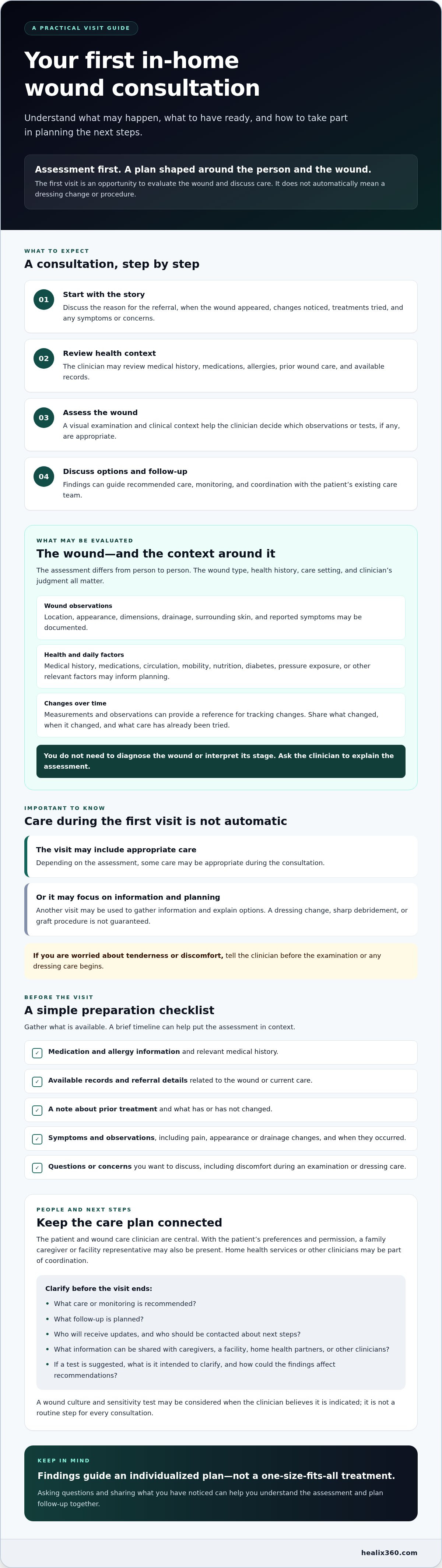
A first in-home wound consultation is an initial clinical visit to assess the wound, understand the patient’s health context, and discuss appropriate next steps. The clinician considers the wound alongside factors such as medical history and prior care, rather than judging it by appearance alone. The assessment depends on the wound type, the patient’s history, the care setting, and the clinician’s judgment.
The visit is for evaluation and planning. It doesn’t guarantee a dressing change, sharp debridement, or graft procedure. Some care may be appropriate during the consultation; another visit may focus on gathering information and explaining options. A clinician can discuss the biological stages of repair and how wounds heal to explain why treatment choices depend on the wound’s condition.
Findings guide an individualized plan, not a one-size-fits-all treatment. The plan may include recommended care, monitoring, and coordination with the patient’s existing care team.
Who may be present during the home visit?
The patient and wound care clinician are central to the visit. Depending on the setting and the patient’s preferences, a family caregiver or facility representative may also be present. With the patient’s permission, a family member can share the wound’s history, describe changes they have noticed, or help ask questions. If home health services or other clinicians are involved, coordination may connect the consultation with care already underway.
What the clinician may review first
The conversation may start with the reason for referral, when the wound appeared, treatments tried so far, and any changes the patient or caregiver has noticed. The clinician may also review relevant medical conditions, medications, allergies, and available records. A brief timeline, including when symptoms changed and what care has already been tried, can help put the assessment in context.
Before the visit ends, clarify who will receive updates and how follow-up will be coordinated. If a home health agency, care facility, family caregiver, or referring clinician is involved, ask what information can be shared and whom to contact about next steps. This helps everyone understand their role while recognizing that care arrangements vary.
How the wound assessment works and what the clinician may evaluate
A wound assessment combines visual examination with clinical context. The clinician may observe the wound and surrounding skin, ask about symptoms, and consider relevant health factors. The specific observations or tests depend on the wound, the patient’s history, and clinical judgment. Not every patient needs the same assessment.
Depending on the wound, documentation may include its location, appearance, dimensions, drainage, surrounding skin, and reported symptoms. Measurements and observations provide a reference point for tracking changes over time. The clinician may also consider circulation, mobility, nutrition, diabetes, pressure exposure, or other factors that could inform care planning.
What wound details might be documented?
The wound type and location shape which details matter most. For example, the clinician may focus on different features for a surgical wound than for a pressure injury. Photographs may be considered for documentation when appropriate consent and practice protocols are in place. Patients and caregivers don’t need to diagnose a wound or interpret its stage. Ask the clinician to explain those assessments.
How symptoms and medical history inform the assessment
Share what you’ve noticed, including pain, changes in appearance or drainage, previous wound care, and any symptoms that concern you. Diabetes, vascular conditions, reduced mobility, pressure exposure, and medications may inform the clinician’s assessment and care planning. Describing what changed and when can provide useful context.
A wound culture and sensitivity test may be considered if the clinician believes it’s indicated. It isn’t a routine step for every consultation. Ask what a test is intended to clarify and how the findings may affect recommendations.
For general context about what to expect at the first visit for home health, Banner Health describes an initial review of health needs and care planning. A wound consultation is specific to the wound and the patient’s clinical circumstances. If you’re considering a mobile evaluation in Southern California, learn more about Healix360’s in-home wound care and discuss whether it fits your care needs.
Will the first wound consultation include treatment or a procedure?
Possibly, but treatment isn’t automatic. Some first visits may include appropriate wound care, while others focus on assessment and planning. Recommendations depend on the wound, the patient’s history, clinical findings, and professional judgment. The consultation is a chance to understand the options, not a promise that a particular procedure will take place.
Sharp debridement, grafts, compression therapy, and negative pressure wound therapy are not routine first-visit steps for every patient. The clinician considers whether an option is appropriate for the specific wound and can explain the reasoning. If a procedure is proposed, ask questions and discuss whether to proceed before care begins.
How the care plan is matched to the wound
Depending on the assessment, a plan may address dressing approaches, monitoring, or specialist treatments. Amniotic membrane grafts and bio-engineered skin substitutes may be considered in selected cases, but they aren’t suitable or necessary for every wound. For more background, see this guide to advanced skin substitute treatments. Ask how a proposed option relates to the findings and what alternatives may be appropriate.
Comfort, consent, and questions about procedures
Examination or wound care may cause discomfort, and the experience varies. Tell the clinician about pain, sensitivity, or concerns before care begins. You can ask what will happen before the wound is touched, cleaned, dressed, or treated. For a proposed procedure, ask about its purpose, alternatives, expected sensations, and potential risks.
Useful questions include:
- What is the goal of this treatment for my wound?
- Are there other reasonable options, including waiting or continuing the current plan?
- What sensations or side effects should I expect, and what should I report?
- Can you explain each step before it begins?
Consent should follow a clear discussion, and you can raise questions before deciding. To learn more about care delivered in the home, explore mobile wound care services.
How to prepare for an in-home wound consultation
A little preparation can help the clinician understand the wound’s history and the patient’s current care. You don’t need to change the wound or gather every possible record. Keep following existing instructions, and contact the care team if you’re unsure what to have ready. This practical preparation can make what to expect during the first in-home wound consultation clearer for patients and caregivers.
Records and information to have ready
Gather what’s available rather than delaying the visit to track down missing paperwork. A short written timeline can show when the wound began, what has changed, and which treatments have already been tried. For a post-surgical wound, relevant discharge instructions may also provide useful context.
- A current medication list and information about allergies
- Relevant medical records, referral details, and prior wound-care notes, if available
- Discharge instructions or home health care information related to the wound
- Notes about when the wound appeared, changes noticed, previous treatments, and questions to ask
For additional preparation specific to post-surgical wounds, see this in-home surgical wound care guide.
Make the home setting ready for an assessment
Choose a well-lit, accessible area where the clinician can reach the wound safely and privately. Before the visit, tell the care team about mobility or transfer needs, communication preferences, or other considerations that may affect the assessment. A caregiver can help share information or support the patient if the patient wishes.
Keep existing dressings in place unless a treating clinician has given different instructions. Don’t remove a dressing, apply new products, or change prescribed wound care to prepare for the visit. If you’re unsure how to manage the dressing before the consultation, ask the treating clinician for guidance.
A scheduled consultation isn’t a substitute for urgent medical attention. If symptoms are severe or rapidly worsening, seek urgent medical care rather than waiting for the appointment. For non-urgent questions about arranging an in-home wound evaluation in Southern California, you can learn about Healix360’s mobile wound care and confirm the appropriate next steps.
What happens after the consultation, and how to arrange mobile wound care
After the assessment, the clinician may explain the findings, discuss recommended next steps, and describe what changes to monitor. If reassessment is appropriate, ask when it should happen and how it will be arranged. Follow-up recommendations vary with the patient’s needs and clinical findings. Knowing what to expect during the first in-home wound consultation also means leaving with a clear understanding of whom to contact with questions.
With the patient’s permission and when relevant, the care team may coordinate with a home health agency, care facility, family caregiver, or referring clinician. Clarifying who will receive updates helps support communication among the people involved in care.
Questions to ask before the visit ends
Before the visit wraps up, make sure the findings and next steps are clear. You might ask:
- What did the assessment find, and what does the proposed plan involve?
- Are there treatment alternatives, and what monitoring will be needed?
- Which changes should prompt a call to the care team or another clinician?
- Who should we contact with care questions, and how will the next visit or update be arranged?
If a recommendation is unclear, ask the clinician to explain its purpose and how it relates to the assessment. Patients and caregivers should know which instructions to follow and whom to contact if questions arise.
Coverage and local service logistics
Healix360 provides mobile wound care in homes and care facilities within its Southern California service area. Confirm current coverage boundaries and appointment availability directly rather than assuming a nearby city or facility is included. Referral requirements and scheduling processes may also vary, so ask what information is needed to determine whether an evaluation can be arranged.
Healix360 is a Medicare Part B provider, but that doesn’t guarantee coverage for an individual consultation or treatment. Eligibility and benefits depend on individual circumstances. Before care begins, verify coverage, referral requirements, and any possible patient responsibility with Healix360 and the relevant payer.
To ask about arranging care, contact Healix360 about current availability, whether a referral is needed, and how to verify insurance benefits. Confirming these details can help you understand the logistics before deciding on next steps.
Take the Next Step With a Clear Plan
Knowing what to expect during the first in-home wound consultation can ease uncertainty. The visit begins with an individualized assessment, and treatment or procedures aren’t automatic. Bringing relevant health information and asking about findings, options, and follow-up can help patients and caregivers understand the proposed plan.
Healix360 provides mobile wound care in homes and care-facility settings within its Southern California service area, with a care team that includes board-certified specialists. Healix360 is a Medicare Part B provider, but coverage and eligibility depend on individual circumstances. Confirm service availability, referral requirements, and insurance benefits before arranging care.
Contact Healix360 to ask about an in-home wound consultation, including availability and insurance verification. A conversation with the team can help you understand the next steps and feel prepared to participate in care.
Frequently Asked Questions
What happens during the first in-home wound consultation?
The clinician reviews the wound and relevant health context, then discusses appropriate next steps. Depending on the wound and patient history, the assessment may include observations about its location, appearance, dimensions, drainage, surrounding skin, or symptoms. The exact evaluation varies, and treatment isn’t automatic. Healix360 provides mobile wound consultations in homes and care facilities within its Southern California service area. Ask what the findings mean and how follow-up will be coordinated.
How should I prepare for an in-home wound care visit?
Gather medication and allergy information, relevant records, referral details, and prior treatment notes if available. A brief timeline of when the wound began and changes you’ve noticed can also help. Choose a well-lit, accessible area for the assessment and tell the care team about mobility or communication needs. Keep existing dressings in place and follow current care instructions unless a treating clinician advises otherwise.
Will the clinician change the dressing or treat the wound during the first visit?
Possibly, but a dressing change or procedure isn’t guaranteed. Some consultations may include appropriate wound care; others focus on assessment and planning. Recommendations depend on the wound, medical history, clinical findings, and the clinician’s judgment. Sharp debridement, grafts, compression therapy, and negative pressure wound therapy aren’t automatic first-visit steps. Ask what a proposed treatment is intended to do, what alternatives exist, and what to expect before consenting.
Is a wound assessment painful?
It can cause discomfort, but the experience varies with the wound and the type of examination or care involved. Tell the clinician if the area is tender, if you’re experiencing pain, or if you’re worried about a dressing change or procedure. Ask the clinician to explain each step before it begins and discuss expected sensations. Don’t assume a procedure will be part of the consultation; the clinician will assess what’s appropriate.
What should I ask at my first wound consultation?
Ask what the assessment found and how those findings inform the recommended plan. Clarify the purpose of any proposed treatment, available alternatives, expected sensations, and what changes should prompt a call. It’s also useful to confirm whom to contact with care questions, who will receive updates, and how follow-up or reassessment will be arranged. If a recommendation isn’t clear, ask the clinician to explain it in terms you understand.
Does Medicare cover an in-home wound consultation?
Healix360 is a Medicare Part B provider, but that doesn’t guarantee coverage for a particular consultation or treatment. Eligibility and benefits depend on individual circumstances. Before arranging care, verify coverage, referral requirements, and any potential patient responsibility with Healix360 and your payer. If you live in Southern California, also confirm that your location is within the current service area, ask about appointment availability, and find out what information is needed to determine coverage.
Can a family member or caregiver be present during the consultation?
Yes, a family member or caregiver may be present if the patient wants their support and gives permission for them to participate. They can help share the wound’s history, describe changes they’ve observed, take notes, or ask questions. In assisted living or skilled nursing settings, a facility representative may be involved when appropriate. Healix360 can coordinate with families, facilities, and home health partners as relevant to the patient’s care and authorized communication.
When should I seek urgent care instead of waiting for a wound consultation?
Seek urgent medical attention if symptoms are severe or rapidly worsening rather than waiting for a scheduled wound consultation. A mobile wound consultation isn’t an emergency service. If you believe the situation is an emergency, contact emergency services or go to an emergency department. For non-emergency concerns about wound care or a scheduled evaluation in Southern California, contact the treating clinician or care team for guidance on appropriate next steps.


