
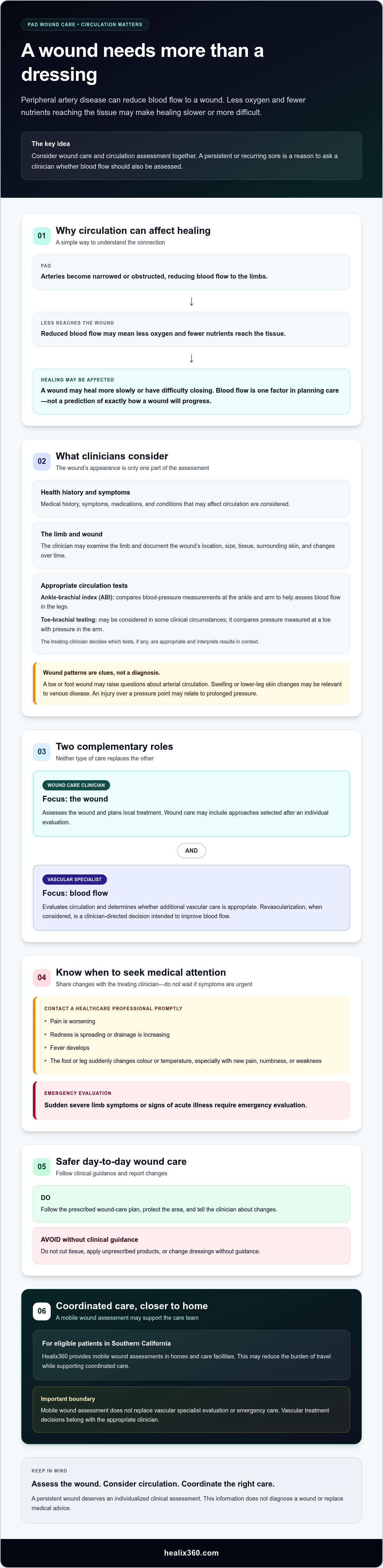
A wound can receive careful dressing changes and still struggle to heal when blood flow is restricted. For wound care for patients with peripheral artery disease, treating the wound is only part of the picture: reduced circulation can limit the oxygen and nutrients needed for healing. If a sore is slow to close or keeps returning, ask whether circulation should also be assessed.
Wound care and vascular evaluation have different, complementary roles. A wound care clinician can assess the wound and plan local treatment. A vascular specialist can evaluate blood flow and determine whether additional vascular care is appropriate. Neither replaces the other.
This guide explains why blood-flow assessment matters, what wound-care approaches may be considered after an individual evaluation, and how care can be coordinated with vascular specialists and other members of the care team. It also covers warning signs that call for prompt medical attention and practical next steps. For eligible patients in Southern California, Healix360 provides mobile wound assessments in homes and care facilities, which may reduce the burden of travel while supporting coordinated care.
Key Takeaways
- Wound care for patients with peripheral artery disease should be considered alongside circulation assessment, since dressings alone don’t address reduced arterial blood flow.
- Clinicians use a patient’s history, examination, wound findings, and appropriate testing to decide whether vascular evaluation is needed.
- Follow the prescribed wound-care plan, protect the area, and report changes. Don’t cut tissue, apply unprescribed products, or change dressings without clinical guidance.
- Seek prompt medical attention for concerning wound changes, and use emergency services for urgent or severe symptoms.
- For eligible patients in Southern California, mobile wound assessment may support coordinated care at home or in a care facility, but it doesn’t replace vascular specialist or emergency evaluation.
How Peripheral Artery Disease Changes Wound Healing
Peripheral artery disease (PAD) develops when arteries become narrowed or obstructed, reducing blood flow to the limbs. When less blood reaches a wound, less oxygen and fewer nutrients may reach the tissue, making healing more difficult or slower. Peripheral artery disease can also be associated with skin ulcers. A wound that lingers deserves assessment of both the wound and circulation. Reduced blood flow doesn’t determine how a wound will progress, but it is an important factor in planning care.
Arterial wounds, venous ulcers, and pressure injuries have different underlying causes and may need different approaches. A wound on a toe or foot can raise questions about arterial circulation. Swelling and changes on the lower leg may be relevant to venous disease, while an injury over a pressure point may be linked to prolonged pressure. These patterns offer clues, not a diagnosis. Wound care for patients with peripheral artery disease should account for the whole clinical picture, not appearance alone.
Why wounds on the feet and lower legs need careful assessment
Location, size, surrounding skin, and changes over time help clinicians evaluate a wound, but none confirms its cause by itself. Some people with PAD may have persistent pain, changes in skin or tissue, or a wound that heals slowly. Others may experience different symptoms, particularly when other health conditions affect sensation or circulation.
Diabetes, a history of smoking, and other medical conditions can influence risk and affect what a clinician looks for. Assessment therefore considers a person’s health history and symptoms alongside the wound, rather than relying on a visual check alone.
When a wound may need prompt medical attention
Contact a healthcare professional promptly if pain is worsening, redness is spreading, drainage is increasing, or fever develops. Sudden changes in a foot or leg’s colour or temperature also warrant urgent attention, especially with new pain, numbness, or weakness. Sudden severe limb symptoms or signs of acute illness require emergency evaluation.
Keep track of changes and share them with the treating clinician. This article can’t diagnose a wound or replace individualized medical advice. If you’re unsure how quickly to act, contact the treating clinician or seek urgent medical guidance rather than waiting for routine wound care.
How Clinicians Assess Circulation and a PAD-Related Wound
Assessment looks beyond the wound itself. A clinician may review medical history, symptoms, medications, and conditions that affect circulation, then examine the limb and document the wound’s location, size, tissue, and surrounding skin. Perfusion means blood reaching the body’s tissues. Because reduced perfusion may affect healing, wound appearance alone can’t establish whether circulation is adequate.
Clinicians consider findings together to determine whether additional evaluation is appropriate. The government health resource MedlinePlus describes slow-healing sores on the toes, feet, or legs as a possible PAD symptom. This can help patients and caregivers understand why a persistent wound should be discussed with a clinician, but it can’t determine the cause of an individual wound.
What ankle-brachial and toe-brachial tests can help assess
An ankle-brachial index (ABI) compares blood-pressure measurements at the ankle and arm to help assess blood flow in the legs. In some clinical circumstances, a clinician may also consider toe-brachial testing, which compares pressure measured at a toe with pressure in the arm. Whether either assessment is appropriate depends on the patient’s circumstances and the clinical question. The treating clinician decides which tests, if any, are needed and interprets the findings in context.
When vascular specialist evaluation may be considered
If the history, examination, wound course, or test results raise concern about impaired circulation, the clinician may coordinate evaluation with a vascular specialist. That specialist can assess whether vascular treatment is appropriate. Revascularization, a procedure intended to improve blood flow, is a clinician-directed treatment decision. It is separate from wound care and isn’t provided by Healix360.
Wound-care and vascular teams may coordinate according to the patient’s needs. Wound clinicians focus on evaluating and managing the wound; vascular specialists assess circulation and related treatment options. Communication between teams helps ensure wound treatment is considered alongside the circulation question, rather than treated as a substitute for it.
For eligible patients in Southern California, Healix360’s mobile wound assessment services provide bedside wound evaluation in a home or care facility and can support coordination with healthcare partners. This may reduce travel for some patients, while vascular evaluation remains with the appropriate clinician. In wound care for patients with peripheral artery disease, knowing who is assessing the wound and who is evaluating blood flow helps patients and caregivers follow the plan and raise unanswered questions.
Comparing Wound Care and Circulation-Focused Treatment Options
For wound care for patients with peripheral artery disease, wound treatment and circulation care address different concerns. A dressing can protect and help manage a wound, but it can’t correct an arterial blood-flow problem. Depending on the individual’s findings and needs, clinicians may consider wound-focused care as well as vascular evaluation.
| Care focus | Purpose | Examples |
|---|---|---|
| Wound management | Protect and manage the wound and surrounding tissue. | Individualized cleansing and dressing plans; clinician-selected debridement, culture testing, or advanced wound products. |
| Circulation evaluation | Assess whether blood flow may be affecting the limb or wound. | Clinical review and appropriate vascular assessment, with referral when indicated. |
| Clinician-directed vascular treatment | Address an arterial blood-flow problem when a vascular clinician determines treatment is appropriate. | Vascular interventions, which may include revascularization. |
These approaches can be coordinated, but they aren’t interchangeable. Vascular treatment is not wound care, and local wound treatment doesn’t restore arterial flow. No single option is appropriate for every wound or patient.
Wound treatments clinicians may consider
The cleansing and dressing plan is individualized to wound characteristics and clinical findings. Sharp debridement, which removes selected tissue, requires clinical assessment and isn’t automatically appropriate for every wound. Culture testing or advanced options, such as grafts and bio-engineered skin substitutes, may be considered selectively after assessment. The treating clinician determines whether an option fits the wound and patient.
Why compression requires extra caution when PAD is possible
Compression is often used in venous wound care, but its suitability depends on circulation assessment, particularly when arterial disease is possible. Don’t start, stop, or change compression without guidance from the treating clinician. For more context on leg swelling and circulation, see this guide to managing leg edema and vascular health.
Ask the care team how wound management relates to circulation evaluation, who is responsible for each part of the plan, and which changes should be reported. This helps keep local wound treatment aligned with any needed vascular care.
Safer Day-to-Day Wound Care for Patients and Caregivers
Between appointments, follow the wound-care plan provided by the treating clinician. Keep the wound protected and handle dressings only as instructed. Don’t cut or remove tissue, apply products that haven’t been recommended, or change the dressing routine without clinical guidance. This avoids unplanned changes to care while the wound and circulation are being assessed.
A simple record can help the care team understand what has changed. Note observations such as increased drainage, changes in surrounding skin, or new or worsening pain. Share when you first noticed the change and any related symptoms. Follow any instructions your clinician has given for documenting the wound; there’s no need to create a measurement schedule unless the care team recommends one.
What to monitor between clinician visits
- Wound: Notice changes in size or appearance and whether drainage has started or increased.
- Surrounding skin: Look for spreading redness or changes in colour or temperature.
- Pain and wellbeing: Report increasing pain, new discomfort, or changes in how the person feels overall.
These observations can’t diagnose the wound or determine its severity. Share new or worsening symptoms promptly with the treating clinician and ask what to do next.
When to contact a clinician or seek emergency care
Contact the treating clinician promptly about a worsening wound, new drainage, or increasing pain. Routine follow-up is appropriate only while the condition remains stable and the care plan’s instructions are being followed. Sudden severe symptoms, rapidly changing skin, or signs of systemic illness require emergency evaluation. In the United States, call 911 for an emergency. Don’t wait for a mobile wound-care visit.
In wound care for patients with peripheral artery disease, day-to-day observation supports communication with the care team, but it doesn’t replace clinical assessment. If you’re uncertain whether a change is urgent, contact a healthcare professional for guidance rather than trying to determine the cause yourself.
For eligible patients in Southern California, Healix360 provides mobile wound assessments in homes and care facilities, with care coordinated with families and healthcare partners. Mobile wound care is not emergency care and doesn’t replace evaluation by a vascular specialist. Information about mobile wound assessment is available from Healix360.
Coordinating PAD Wound Care With a Mobile Specialist
For eligible patients in Southern California, a bedside wound assessment can bring specialized wound care into a home or care facility and may reduce the burden of travel. It can also support communication among the patient, family, facility staff, and healthcare partners. This is one part of coordinated care: a mobile wound specialist evaluates and manages the wound, while questions about arterial circulation or vascular treatment remain with the appropriate clinician.
Good coordination helps everyone work from the same information. Share the current wound-care plan and report changes, such as new drainage or increasing pain, to the care team. A mobile wound specialist may communicate observations and treatment recommendations with the patient’s existing clinicians, as appropriate. Mobile wound care doesn’t replace emergency evaluation or assessment by a vascular specialist.
What to prepare for a mobile wound-care assessment
Before the visit, gather information that can help the specialist understand the patient’s history and current care:
- A current medication list and relevant diagnoses.
- Available records from previous wound evaluations or treatment.
- Questions about the wound plan, follow-up, circulation assessment, and which changes require prompt action.
Patients and caregivers can also identify who should receive updates, such as a family member, facility staff member, or healthcare partner. The specialist may coordinate with the patient’s existing clinicians, but a wound assessment doesn’t independently establish whether blood flow is adequate.
How Healix360 may fit into coordinated wound care
Healix360 provides mobile wound assessments and individualized treatment planning in Southern California homes and care facilities. Based on the assessment, a clinician may consider wound-care options such as sharp debridement, wound culture testing, or selected advanced treatments. These options aren’t appropriate for every wound; decisions depend on the individual’s clinical findings. Healix360 doesn’t provide vascular surgery or emergency services.
For wound care for patients with peripheral artery disease, a practical care pathway is to coordinate wound management with the patient’s other clinicians and direct circulation concerns to the appropriate vascular provider. Learn more about advanced mobile wound care in Southern California.
For information about Healix360’s mobile wound care, visit explore Healix360 mobile wound care.
Wound Care for Patients With Peripheral Artery Disease: Next Steps
For wound care for patients with peripheral artery disease, a clear care plan considers the wound and whether reduced circulation may affect healing. Keep the wound-care team informed about changes, and make sure questions about blood flow reach the appropriate clinician. Wound specialists and vascular providers can coordinate care while addressing distinct parts of the patient’s needs.
Healix360 offers mobile wound-care visits in homes and care facilities and coordinates with families and healthcare partners. The company is a Medicare Part B provider, but coverage depends on eligibility and applicable requirements. Confirm current coverage and whether services are available for the patient’s circumstances.
To find out whether an in-home wound assessment may fit your care needs, contact Healix360 about mobile wound care. Keep emergency concerns with emergency services and circulation questions with the appropriate vascular clinician.
Frequently Asked Questions
Can a PAD-related wound heal without improving blood flow?
It may, depending on the wound, the degree of circulation impairment, and the patient’s overall health, but healing can’t be predicted from the diagnosis alone. Reduced blood flow may make healing more difficult, so clinicians consider circulation alongside wound treatment. A clinician can assess whether further vascular evaluation is appropriate and coordinate care as needed. Don’t assume a wound is healing safely just because it looks stable.
How do clinicians check circulation in a foot or leg wound?
Clinicians consider medical history, symptoms, a physical examination, and the wound’s location and condition. They may use appropriate tests to assess blood flow, such as an ankle-brachial index, which compares blood-pressure measurements at the ankle and arm. In some circumstances, toe-brachial testing may also be considered. The clinician decides which assessment is appropriate and whether vascular specialist evaluation is needed.
Is compression therapy safe for someone with peripheral artery disease?
It depends on the person’s circulation and clinical findings. Compression is often used for venous conditions, but a clinician should assess whether it’s suitable when PAD is present or suspected. Don’t start, stop, or adjust compression on your own. Ask the treating clinician to explain the plan and whether circulation assessment is needed before making any changes to a prescribed treatment.
What happens if a PAD-related wound is not healing?
Contact the treating clinician if the wound isn’t improving, worsens, develops new drainage, or becomes more painful. The care team can review the wound plan and consider whether additional assessment, including evaluation of circulation, is needed. Wound treatment alone may not address impaired arterial blood flow. Wound care for patients with peripheral artery disease may therefore involve coordination between wound-care clinicians and a vascular specialist.
When should a patient with PAD seek emergency care for a wound?
Seek emergency evaluation for sudden severe limb symptoms, rapidly changing skin colour or temperature, or signs of serious illness. In the United States, call 911 for an emergency rather than waiting for a routine appointment or mobile wound-care visit. For worsening pain, spreading redness, new or increasing drainage, or fever without sudden severe symptoms, contact a healthcare professional promptly for guidance.
Can a mobile wound-care specialist treat a patient at home in Southern California?
Healix360 provides mobile wound-care visits in homes and care facilities in Southern California, subject to eligibility and current service availability. A specialist can assess the wound and develop an individualized wound-care plan while coordinating with families and healthcare partners. Mobile wound care doesn’t replace emergency evaluation or vascular specialist care. Ask Healix360 whether an in-home assessment is available for the patient’s location and circumstances.
Does Medicare cover mobile wound care for patients with peripheral artery disease?
Coverage depends on the patient’s eligibility, the specific service, and applicable Medicare requirements, so it can’t be guaranteed based on a PAD diagnosis alone. Healix360 is a Medicare Part B provider, but that doesn’t mean every service or patient is covered. Before care begins, confirm current coverage details and any applicable requirements with Medicare and the provider.


