
Why does a surgical incision or perianal breakdown refuse to close, even when you follow standard dressing instructions to the letter? If you live with inflammatory bowel disease, the relentless cycle of persistent drainage, pain, and exhausting travel to outpatient clinics can quickly erode your quality of life. Successfully treating non-healing wounds in Crohn's disease patients at home requires recognizing that tissue repair cannot advance until local wound bed barriers and systemic inflammation are addressed in tandem.
You likely share the common fear of recurrent hospital admissions and valid confusion over whether immunosuppressive medications are hindering tissue regeneration. This clinical guide explains precisely why Crohn's arrests the natural wound healing cascade and outlines practical daily protocols to protect fragile peri-wound skin. You will also discover when standard home dressings are no longer sufficient, identifying how mobile advanced wound specialists deliver restorative bedside therapies to help you achieve lasting closure.
Key Takeaways
- Understand how systemic immune dysregulation and micronutrient malabsorption arrest the normal cellular repair cascade in Crohn's disease.
- Implement evidence-based cleansing and moisture-balancing strategies essential for treating non-healing wounds in Crohn's disease patients at home.
- Differentiate between complex wound presentations, such as enterocutaneous fistulas and inflammatory ulcers, to avoid contraindicated procedures.
- Recognize the clinical thresholds for introducing advanced cellular tissue products, bio-engineered skin substitutes, and negative pressure wound therapy.
- Learn how to access board-certified mobile wound care specialists across Southern California for comprehensive bedside treatment under Medicare Part B.
Why Crohn's Disease Causes Non-Healing Chronic Wounds
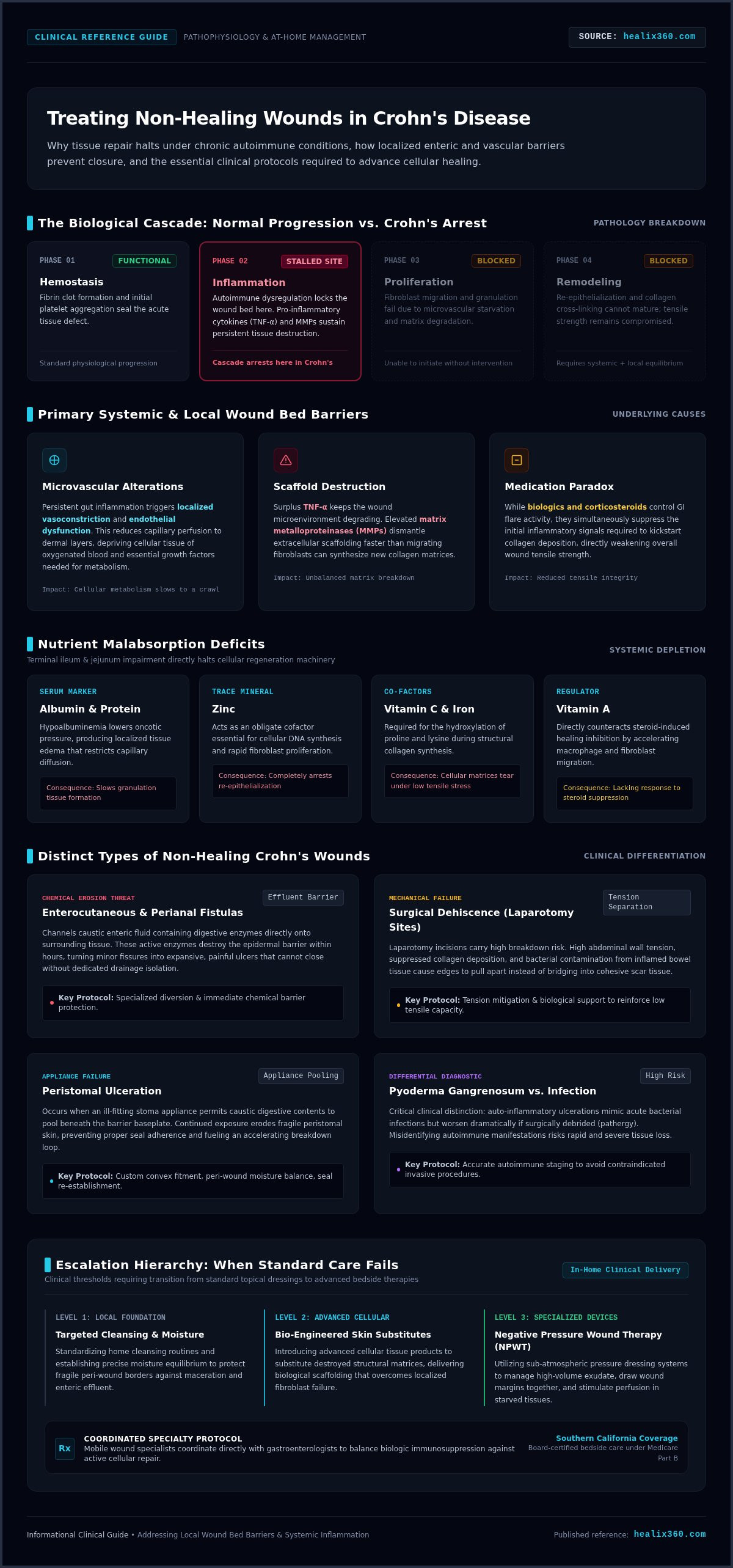
Wound healing follows a strict biological sequence: hemostasis, inflammation, proliferation, and tissue remodeling. In a healthy body, this cascade moves forward predictably. In patients diagnosed with Crohn's disease, the process stalls abruptly. Chronic autoimmune dysregulation disrupts the transition out of the inflammatory phase, converting standard surgical incisions, fistulotomy sites, or spontaneous cutaneous lesions into recalcitrant ulcers. Managing and treating non-healing wounds in Crohn's disease patients at home requires a firm grasp of both systemic and localized biological barriers.
Microvascular alterations further complicate recovery. Persistent gut inflammation triggers localized vasoconstriction and endothelial dysfunction. This reduces capillary perfusion to surrounding dermal layers, starving injured tissue of oxygenated blood and essential growth factors. Without adequate microcirculation, cellular metabolism slows to a crawl.
The Role of Systemic Inflammation and Biologics in Tissue Repair
Elevated levels of pro-inflammatory cytokines, specifically tumor necrosis factor-alpha (TNF-α), maintain the wound microenvironment in a persistent state of degradation. Elevated matrix metalloproteinases destroy extracellular scaffolding faster than fibroblasts can manufacture new matrix. While biologic therapies and corticosteroids are essential for controlling gastrointestinal disease activity, they suppress the inflammatory signals needed to kickstart collagen deposition. This pharmaceutical suppression weakens wound tensile strength. Because systemic medication adjustments alter healing capacity, mobile wound specialists coordinate directly with the patient's gastroenterologist to balance systemic disease control against local tissue repair.
Nutritional Deficiencies and Impaired Cellular Regeneration
Severe nutrient malabsorption directly starves the regenerative machinery. When disease activity impacts the terminal ileum or jejunum, the body struggles to assimilate baseline macronutrients and micronutrients necessary for structural recovery. Key nutritional deficits that stall wound closure include:
- Serum Albumin and Protein: Hypoalbuminemia lowers oncotic pressure, producing localized tissue edema that compromises capillary diffusion and slows granulation tissue formation.
- Zinc: Serves as an obligate cofactor for DNA synthesis and cellular proliferation; low serum zinc arrests re-epithelialization.
- Vitamin C and Iron: Essential for the hydroxylation of proline and lysine during collagen synthesis, without which cellular matrices tear under low tensile stress.
- Vitamin A: Directly counteracts steroid-induced wound inhibition by stimulating macrophage migration and fibroblast differentiation.
Topical ointments alone cannot overcome systemic biological deficits. Successfully treating non-healing wounds in Crohn's disease patients at home demands targeted nutritional repletion alongside direct, advanced clinical wound interventions.
Types of Non-Healing Wounds Common in Crohn's Disease
Crohn's disease does not produce a single, uniform type of skin lesion. Instead, patients encounter diverse cutaneous breakdowns, each demanding a distinct clinical rationale. Treating non-healing wounds in Crohn's disease patients at home requires accurate categorization before applying any dressing. Enterocutaneous and perianal fistulas, for instance, channel caustic enteric fluid directly onto the skin. The digestive enzymes in this effluent break down the epidermal barrier within hours, transforming minor fissures into extensive, painful wounds that resist closure without specialized drainage isolation.
Surgical Dehiscence and Peristomal Complications
Laparotomy incisions and stoma relocation sites carry an elevated risk of surgical site breakdown. High abdominal tension, bacterial contamination from underlying bowel inflammation, and suppressed collagen deposition often cause the surgical edges to pull apart. Peristomal ulcers develop when an ill-fitting appliance allows digestive contents to pool beneath the baseplate, rapidly eroding vulnerable tissue. To explore comprehensive post-operative management, learn more about recovery protocols in our guide to advanced surgical wound care.
Recognizing Pyoderma Gangrenosum vs. Infectious Ulcers
Distinguishing autoimmune manifestations from typical bacterial infections protects patients from severe tissue loss. Pyoderma gangrenosum is a reactive neutrophilic dermatosis, not a primary skin infection. Confusing the two leads to detrimental interventions. Clinical hallmarks include:
- Violaceous, Undermined Borders: The perimeter of the ulcer displays a characteristic bluish-purple, ragged rim that advances rapidly as neutrophils destroy healthy dermis.
- Extreme, Disproportionate Pain: Patients experience severe, debilitating pain that far exceeds the visual severity of the initial lesion.
- The Pathergy Phenomenon: The condition worsens following minimal physical trauma. Aggressive scrubbing, tight packing, or sharp surgical debridement causes rapid ulcer enlargement.
Because debridement is strictly contraindicated in active pyoderma gangrenosum, clinical differentiation is vital. Established medical protocols, such as those outlined in Mayo Clinic's guidance on Pyoderma gangrenosum treatment, prioritize systemic immunosuppression and gentle, non-adherent topical barriers. When navigating complex, atypical ulcerations that stall recovery, partnering with our mobile wound specialists ensures diagnostic precision right at your bedside, preventing painful, avoidable setbacks.
Step-by-Step Home Protocol for Managing Crohn's Wounds
A disciplined, aseptic routine forms the foundation of clinical wound management outside the hospital setting. When treating non-healing wounds in Crohn's disease patients at home, caregivers and patients must prioritize tissue preservation over aggressive mechanical cleaning. Healing tissue is exceptionally fragile, and standard over-the-counter wound care practices often inflict unintentional trauma on granulating margins.
Gentle Cleansing and Periwound Skin Protection
Never irrigate chronic Crohn's wounds with harsh antiseptics such as hydrogen peroxide or povidone-iodine. These solutions are cytotoxic, destroying newly forming fibroblasts and fragile capillary buds. Instead, gently irrigate the wound bed using sterile normal saline or a dedicated non-cytotoxic wound cleanser under low pressure.
- Shield the Margins: Apply a dimethicone or zinc-oxide barrier film to intact skin within two inches of the wound perimeter to prevent maceration from persistent moisture.
- Track Fluid Output: Record daily changes in drainage color, volume, and consistency. A transition from clear serous exudate to thick, cloudy, or foul-smelling fluid is often the first indicator of a developing tract or deep pocket.
Selecting the Appropriate Primary and Secondary Dressings
Moisture balance directly dictates dressing selection. Chronic wounds fail to close when saturated by uncontrolled exudate or starved of biological moisture.
- High-Exudate Wounds: Deploy calcium alginate or hydrofiber dressings for moderate to heavily draining incisions. These materials bind fluid into a cohesive gel, preventing leakage onto peri-wound skin.
- Stalled Granulation: Apply collagen matrix dressings or medical-grade honey sheets to supply structural scaffolding and down-regulate localized surface bioburden.
- Gentle Fixation: Secure secondary absorptive pads exclusively with soft silicone tapes, non-adherent wraps, or tubular elastic netting. Standard medical adhesives easily strip fragile skin, creating new entry portals for infection.
Red Flag Symptoms Requiring Urgent Clinical Evaluation
Standard home hygiene protocols must pause if acute pathological complications develop. Contact a physician or specialized wound clinician immediately if you encounter any of the following warning signs:
- Systemic signs of infection, such as a spiking fever, rigors, or generalized weakness.
- Rapidly spreading erythema, warmth, or hard induration expanding beyond the immediate wound borders.
- Unexpected feculent or purulent drainage escaping through a healing surgical incision.
- A sudden, rapid enlargement of the wound edges within a 48-hour window, which may indicate acute necrosis or pathergy.
Advanced In-Home Clinical Treatments When Standard Care Fails
When an ulceration or dehisced incision shows no measurable reduction in surface area after thirty days, standard topical dressings have reached their therapeutic ceiling. Cellular senescence and entrenched bacterial biofilms keep tissue trapped in a stalled, non-healing state. Successfully treating non-healing wounds in Crohn's disease patients at home then requires advanced clinical modalities delivered directly to the patient's bedside by specialized mobile clinicians.
Bedside Debridement and Diagnostic Microbiological Testing
Selective sharp debridement systematically excises devitalized, non-viable slough and disrupts mature bacterial biofilms. This mechanical reset converts a stagnant chronic wound bed into an acute, vascularized environment capable of cellular proliferation.
Before performing debridement, board-certified wound specialists rigorously screen for active pyoderma gangrenosum. If neutrophilic dermatosis is present, sharp debridement is strictly avoided to protect the patient from pathergic wound enlargement. When occult infection is suspected, clinicians obtain bedside wound culture and sensitivity testing. These quantitative swabs identify precise microbiological pathogens, enabling targeted systemic antibiotic therapies in direct coordination with the patient's gastroenterologist.
Regenerative Cellular Matrices and Skin Substitutes
When granulation stalls despite effective wound bed preparation, advanced biologics supply the missing biological architecture. Amniotic membrane allografts deliver concentrated reservoirs of anti-inflammatory cytokines and growth factors that calm localized tissue destruction. In conjunction, bio-engineered skin substitutes provide structural extracellular matrices that encourage rapid host cell migration across the defect. Review these regenerative options in our clinical guide to skin substitute treatments.
For high-output surgical defects or deep tissue gaps, mobile specialists deploy portable Negative Pressure Wound Therapy (NPWT). Continuous, controlled sub-atmospheric pressure removes excessive drainage, decreases localized interstitial edema, and stimulates microvascular perfusion. If standard home protocols have failed to progress your wound toward closure, schedule an advanced bedside evaluation to access specialized clinical therapies without the physical strain of clinic travel.
Accessing Mobile Wound Care for Crohn's Patients in Southern California
Living with inflammatory bowel disease involves managing systemic fatigue, unexpected flare-ups, and debilitating physical discomfort. When dealing with an unhealed surgical site or enterocutaneous fistula, commuting to an outpatient wound clinic across Southern California traffic can be exhausting. Treating non-healing wounds in Crohn's disease patients at home eliminates this logistical burden. Board-certified clinicians arrive directly at your residence, providing hospital-grade care without requiring you to leave your recovery environment.
The Convenience of In-Home Specialized Medical Care
Bedside consultations offer measurable clinical advantages beyond convenience. For immunocompromised patients receiving maintenance biologics or corticosteroids, frequent visits to crowded healthcare facilities substantially elevate exposure to community-acquired pathogens. Mobile care removes this hazard while preserving physical energy needed for metabolic recovery.
Specialized mobile providers serve patients residing in private homes, assisted living facilities, and skilled nursing centers throughout Los Angeles, Orange, Riverside, and San Bernardino counties. Bedside teams handle complex procedural interventions, including bedside debridement, negative pressure adjustments, and wound cultures, while maintaining rigorous infection-control standards. Explore how these individualized treatment pathways work in our comprehensive overview of mobile wound care services.
Navigating Insurance Coverage and Treatment Initiation
Accessing specialized mobile care is a structured, fully covered clinical pathway. Under Medicare Part B, mobile wound visits and qualifying procedures are recognized benefits when delivered to eligible patients at home. Regional private insurance providers also offer established coverage frameworks for bedside interventions.
Key administrative and clinical touchpoints include:
- Medicare Part B Compliance: Evaluations, diagnostic culturing, and physician-led procedures qualify for direct bedside coverage without requiring facility admissions.
- Interdisciplinary Coordination: Detailed clinical progress notes, objective wound measurements, and photographic documentation are routed directly to your treating gastroenterologist and colorectal surgeon after every visit.
- Agency Collaboration: Mobile clinicians partner closely with active home health nursing teams, ordering specialized dressings and establishing precise daily protocols between specialist visits.
You don't have to navigate stagnant tissue repair alone or endure exhausting travel while coping with chronic illness. Schedule a comprehensive bedside evaluation through Healix360 Advanced Mobile Wound Care to bring specialized regenerative modalities directly to your door.
Take Control of Your Recovery with Specialized Bedside Care
Living with inflammatory bowel disease presents enough daily physical demands without the added exhaustion of managing an unhealed incision or fistulotomy site. Successfully treating non-healing wounds in Crohn's disease patients at home requires a deliberate approach that respects impaired tissue biology. Standard topical dressings cannot overcome chronic cytokine activation, tissue ischemia, or micronutrient depletion on their own. When progress stalls, introducing regenerative technologies remains essential to restart cellular repair.
You don't need to navigate painful clinic commutes or risk exposure to hospital-acquired infections to receive hospital-grade medical intervention. As a trusted Medicare Part B provider, Healix360 delivers board-certified wound specialists directly to residences across Southern California. Our teams perform selective debridement, apply bio-engineered skin substitutes and amniotic membrane allografts, and manage portable negative pressure therapy right at your bedside while coordinating seamlessly with your gastroenterology team.
Restore your comfort and accelerate your healing trajectory today. Request a bedside clinical evaluation with Healix360 to give your body the advanced clinical support it needs to close complex wounds for good.
Frequently Asked Questions
Can a non-healing wound cause a Crohn's disease flare-up, or does the flare cause the wound?
Active gastrointestinal flares usually trigger cutaneous wounds rather than the reverse. Systemic surges in inflammatory cytokines, coupled with flare-induced malnutrition, impair cellular regeneration across dermal tissues. However, if a chronic wound develops a secondary bacterial infection or deep abscess, the resulting physiological stress can destabilize immune balance, potentially worsening intestinal inflammation and creating a self-reinforcing cycle of disease activity.
Is it safe to perform sharp debridement on wounds in patients with Crohn's disease?
Sharp debridement is safe for devitalized surgical incisions and chronic pressure injuries, but it is strictly contraindicated in active pyoderma gangrenosum. Inducing sharp trauma on a neutrophilic ulcer triggers severe pathergy, rapidly expanding the wound margins. Board-certified specialists conduct thorough bedside differential assessments before instrumenting any lesion, ensuring selective debridement occurs only on clinically indicated, non-reactive tissue.
How do biologic medications like infliximab or adalimumab impact surgical wound recovery?
Anti-TNF biologics dampen the pro-inflammatory signaling required to launch early fibroblast proliferation and collagen cross-linking. While this immunosuppression can slightly delay primary incision closure, maintaining gastrointestinal remission remains critical for systemic nutrition and recovery. Mobile specialists collaborate directly with your treating gastroenterologist to coordinate therapy timing, ensuring biologic regimens and topical regenerative treatments align safely.
What are the earliest clinical signs of peristomal pyoderma gangrenosum at home?
Peristomal pyoderma gangrenosum typically begins as small, tender pustules or dusky erythematous nodules under the ostomy barrier. These micro-lesions quickly coalesce into a painful, irregular ulcer with characteristically undermined, violaceous edges. Patients frequently report burning pain that feels entirely disproportionate to the small size of the initial abrasion, signaling an inflammatory dermatosis rather than standard appliance leakage.
Does Medicare Part B cover mobile advanced wound care visits and skin grafts at home?
Yes, Medicare Part B covers in-home specialist visits and eligible clinical procedures for qualified patients across Southern California. When treating non-healing wounds in Crohn's disease patients at home, Medicare benefits apply directly to bedside diagnostic evaluations, selective sharp debridement, and cellular tissue products like amniotic membrane allografts or bio-engineered skin substitutes without requiring admission to an inpatient facility.
How often should dressing changes be performed on highly exudative Crohn's fistulas?
Dressing changes depend on exudate volume, typically ranging from once daily to every three days. Highly draining enterocutaneous tracts require advanced primary dressings, like calcium alginates or hydrofibers, that lock drainage into a cohesive gel. If exudate strikes through the secondary pad within twelve hours, clinicians reassess the protocol or initiate portable negative pressure therapy to protect vulnerable peri-wound skin from maceration.
When should an in-home patient with a non-healing wound seek emergency hospital care?
Seek emergency emergency medical care if you develop systemic red-flag signs like a high fever, severe chills, sudden tachycardia, or acute mental confusion. Locally, rapidly spreading erythema extending more than two inches from the wound margin, ascending red streaks, sudden severe swelling, or frank feculent drainage escaping through a previously closed abdominal incision require immediate evaluation to rule out deep fascial space infection or peritonitis.


