
Does preparing for a mobile wound nurse visit mean turning your home into a clinic? Not at all. If you’re wondering how to prepare your home for a mobile wound nurse visit, focus on creating a clear, comfortable space and gathering information that helps the clinician understand the wound and the patient’s care needs.
It’s understandable to wonder what room setup or equipment is needed, or to worry about forgetting a medication, a change in the wound, or a question you meant to ask. You don’t need to reorganize your home or have every detail memorized. A clean, well-lit, accessible area and a few useful notes can help keep the visit focused on evaluation and care planning.
This practical checklist covers how to prepare the space, which medication and wound history details to gather, and how to involve a caregiver while respecting the patient’s comfort and privacy. You’ll also learn what to confirm before the appointment and what to review afterward, so you can approach an in-home visit with clearer expectations.
Key Takeaways
- For how to prepare your home for a mobile wound nurse visit, prioritize a clean, well-lit, accessible space rather than setting up a treatment room.
- Confirm the appointment details and any clinician instructions, since visit needs can vary with the patient’s condition and care plan.
- Gather available wound records, discharge paperwork, medication and allergy information, and questions to support a focused evaluation.
- Agree on who will welcome the clinician and serve as the main contact, while respecting the patient’s preferences and privacy.
- Before the clinician leaves, clarify the care instructions, follow-up timing, responsibilities, and who to contact with questions.
How to Prepare Your Home for a Mobile Wound Nurse Visit: Start With the Appointment
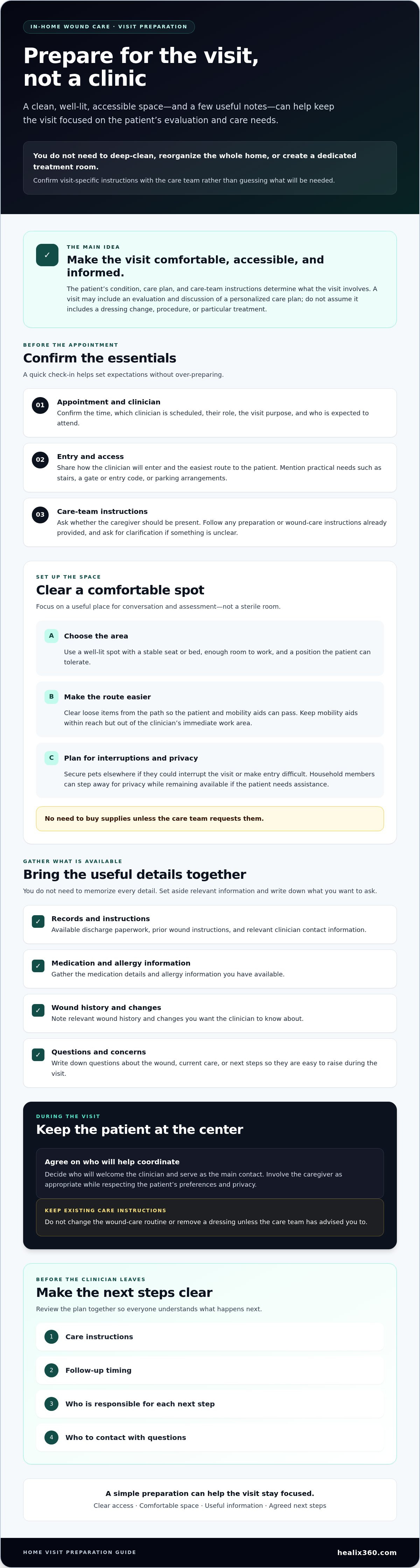
You don’t need to deep-clean your home or create a dedicated treatment room before an in-home wound care visit. A comfortable, accessible place to meet is a useful starting point. The visit’s needs depend on the patient’s condition, care plan, and any instructions from the care team, so confirm the details instead of guessing.
“Mobile wound nurse” is a common search phrase, but ask which clinician is scheduled and what their role will be. A visit may include an evaluation and discussion of a personalized care plan, but don’t assume every appointment involves a dressing change, procedure, or particular treatment. Learning about the wound healing process can provide general background, while the clinician’s assessment guides care for the individual patient.
Confirm who is coming and what the visit may involve
Confirm the appointment time, how the clinician will enter the home, and who is expected to attend. Ask about the visit’s purpose and whether the patient’s caregiver should be present. If the care team has given specific wound care or preparation instructions, follow them and ask for clarification if anything is unclear.
These questions help set expectations without assuming what the clinician will do. For more background on specialized in-home care, read this mobile wound care specialist guide.
Set expectations without over-preparing
Choose a spot where the patient can be positioned comfortably and speak with the clinician. A clear path to that area and enough room to move around matter more than rearranging the whole home. Keep following existing clinician instructions. Don’t change the wound care routine or remove a dressing unless the care team has advised you to.
Use this short checklist to organize the essentials:
- Appointment: Confirm the time, scheduled clinician, visit purpose, and whether a caregiver should attend.
- Access: Share entry instructions and identify the easiest route to the patient.
- Records: Set aside available discharge paperwork, prior wound instructions, medication details, and relevant clinician contact information.
- Questions: Write down concerns about the wound, current care, or next steps so they’re easy to raise during the visit.
This is a practical way to approach how to prepare your home for a mobile wound nurse visit without making preparation more complicated than necessary. Clear appointment details and relevant information help the clinician focus on the patient’s evaluation and care needs.
Set Up a Clean, Accessible Area for the Home Wound Care Visit
A practical setup supports conversation and assessment without turning the home into a clinic. Choose a well-lit area with enough room for the patient and clinician to talk comfortably and for the patient to sit or lie in a position they can tolerate. The space doesn’t need to be sterile, and you don’t need to buy supplies unless the care team requests them.
Make access and movement easier
Before the visit, check the route from the entrance to the patient’s location. Move loose items that could obstruct a walker, wheelchair, or other mobility aid. Secure pets elsewhere if they could interrupt the visit or make entry difficult. Let the care team know about practical access needs in advance, such as stairs, a gate or entry code, or parking arrangements.
Choose a practical place for discussion and assessment
Prioritize good lighting, a stable seat or bed, and enough working space nearby. Keep mobility aids within the patient’s reach but out of the clinician’s immediate work area. Household members can step away to protect privacy while remaining available if the patient needs assistance. If you’re unsure what the room requires, ask the care team rather than making assumptions.
For additional general guidance on arranging a comfortable, well-lit space, see AccentCare’s tips to prepare for your first home health visit. For a wound care appointment, follow any visit-specific instructions from the clinician or care team.
- Clear the route: Make sure doors and walkways allow the patient and mobility equipment to pass.
- Set up the area: Choose a spot with suitable lighting, a stable position, and room to communicate.
- Plan for privacy: Ask the patient who they want present and when they’d prefer household members to step out.
- Share access details: Tell the care team about stairs, entry instructions, or other barriers before the visit.
These simple steps can make how to prepare your home for a mobile wound nurse visit feel more manageable. If you’re arranging in-home wound care in Southern California, learn about Healix360’s mobile wound care services and ask the team what setup is appropriate for the scheduled visit.
Gather Wound History, Medication Details, and Questions Before the Visit
A brief, organized health summary can help the clinician understand the patient’s wound history and current care. Gather what’s available, but don’t delay the visit if some records are missing. The goal is to share accurate information, not to determine the wound’s cause or assess it yourself.
Organize health information the clinician may need
Set aside discharge paperwork, prior wound care instructions, and relevant contact information for clinicians involved in the patient’s care. If a home health agency or care facility is coordinating care, note the appropriate contact so the wound care team can communicate as needed.
Prepare a medication list with names and, if known, doses. Include known allergies and relevant medical history, such as diabetes, circulation concerns, or recent surgery. Use information you can verify from medication containers, records, or the patient’s care team. If a detail is uncertain, say so rather than guessing.
Prepare questions and observations
Write down when the wound began or when it was first documented. If the exact date isn’t known, an approximate timeframe is still useful. Add brief observations about changes in drainage, odor, discomfort, nearby skin, or the patient’s ability to move or complete usual activities. Describe what you noticed and when, and leave interpretation of the cause to the clinician.
A concise timeline can help the clinician understand what has changed since the patient’s previous care.
For example, note that discomfort increased after a particular dressing change or that the surrounding skin looked different earlier in the week. Don’t change the care routine based on these observations unless the patient’s care team has instructed you to do so.
- Wound history: Approximate start date, prior instructions, and notable changes over time.
- Health information: Current medications, known allergies, and relevant conditions or recent procedures.
- Care contacts: Names and contact details for clinicians, home health agencies, or facility staff involved in coordination.
- Questions: What should the patient or caregiver do between visits? When is follow-up expected, and whom should they contact with concerns?
Keep the notes accessible during the appointment so the patient or caregiver can refer to them without relying on memory. If the wound is related to a recent operation, this guide to advanced surgical wound care at home may provide useful context for recovery. Preparing this information is one practical part of how to prepare your home for a mobile wound nurse visit. It supports a focused discussion without requiring you to make clinical judgments.
Visit Day: Coordinate Patient, Caregiver, and Care Team
A simple visit-day routine can reduce last-minute confusion and help the patient take part in the discussion. Before the clinician arrives, make entry straightforward, place relevant records and current care instructions nearby, and agree on who will be the primary contact. This person can help answer questions or share observations, while the patient remains central to the conversation and decisions whenever possible.
- Make access easy: Be ready to provide entry instructions and help the clinician reach the patient’s location.
- Have information available: Keep relevant records and current wound care instructions accessible for reference.
- Identify the main contact: Decide who can help coordinate communication during and after the visit.
- Check the patient’s preferences: Ask who they want present and what concerns they’d like discussed first.
Support communication and patient comfort
Before the appointment, ask the patient which questions they want addressed first. If they use glasses, hearing devices, or another communication aid, make sure it’s within reach. A caregiver can add observations the patient may not recall, such as changes noticed between visits, but should allow the patient time to speak and express preferences. If the patient wants a private conversation with the clinician, help make that possible.
Coordinate when care is shared
If the patient lives in an assisted living or skilled nursing setting, notify the relevant staff about the scheduled visit and coordinate entry or access. At home, let involved home health contacts know when coordination is appropriate. Keep current instructions available so clinicians can refer to the same information and clarify how responsibilities are shared.
A mobile wound care specialist’s visit focuses on wound evaluation and care planning. It doesn’t automatically replace the patient’s existing medical team or other services. If responsibilities or communication pathways are unclear, ask the clinicians involved to clarify them rather than assuming who will provide each part of care.
Knowing how to prepare your home for a mobile wound nurse visit also means preparing the people involved. A patient, caregiver, facility staff member, or home health contact can help the visit run smoothly by sharing accurate information and following the agreed care plan. To learn more about Healix360’s in-home wound care in Southern California, explore Healix360 mobile wound care.
After the Mobile Wound Care Visit: Clarify the Plan and Follow-Up
Before the clinician leaves, make sure the patient and caregiver understand what happens next. Ask the clinician to explain the care instructions in clear steps, then repeat them back to confirm you’ve understood. Clarify what should remain unchanged, what the patient or caregiver is responsible for, and whether existing home health or facility staff should receive the updated plan.
Confirm instructions before the clinician leaves
Write down the recommended follow-up timing, any changes the clinician asked you to watch for, and the appropriate contact route for non-emergency questions. If another clinician or care team is involved, confirm who will share the updated instructions and how coordination will happen. Don’t rely on memory alone, especially when several people help with the patient’s care.
- Care instructions: What should the patient or caregiver do, and what should continue as before?
- Responsibilities: Who will handle each part of the agreed plan?
- Follow-up: When is the next contact or appointment expected?
- Questions: Who should be contacted for non-emergency concerns?
Preparation advice helps organize a visit; the clinician’s assessment determines the individualized wound care plan. Treatment and follow-up depend on the patient’s condition and clinical findings, so one person’s instructions may not apply to another wound. The final discussion is an important part of how to prepare your home for a mobile wound nurse visit.
Know when preparation advice is not enough
Preparation checklists aren’t a substitute for clinical advice. If symptoms are severe or worsening rapidly, contact emergency services or seek urgent clinical advice rather than waiting for a scheduled appointment. This article can’t diagnose a wound or recommend individual treatment. For additional information related to recovery after surgery, see the in-home surgical wound care guide.
For questions about mobile wound care availability in Southern California, contact Healix360 to discuss the service and next steps for arranging care. Clear communication before and after a visit helps patients, caregivers, and involved care teams understand how to support the plan.
Make Your Next Wound Care Visit Easier to Navigate
Preparing doesn’t require a clinical setup. Confirm the appointment and access details, gather the patient’s available wound and medication history, and make a comfortable space for conversation. On visit day, agree on who will support communication, then clarify the care plan, responsibilities, and follow-up before the clinician leaves.
These practical steps for how to prepare your home for a mobile wound nurse visit can help patients and caregivers feel more organized. The clinician’s assessment guides the individualized wound care plan, and questions are welcome when instructions or next steps aren’t clear.
Healix360 provides mobile wound evaluations in home and facility settings and coordinates with families and healthcare facilities in Southern California. Healix360 is a Medicare Part B provider, but coverage and payment depend on individual circumstances, so confirm your situation directly. Contact Healix360 to learn about mobile wound care and ask about availability for your needs. With clear communication and a few essentials ready, you can approach the visit with greater confidence.
Frequently Asked Questions
How do I prepare my home for a mobile wound nurse visit?
For how to prepare your home for a mobile wound nurse visit, confirm the appointment details and ask whether the scheduled clinician has specific instructions. A clean, well-lit, accessible space is a useful starting point; you usually don’t need a dedicated treatment room or new supplies. Gather available medication and allergy details, prior wound care instructions, and questions. If records are missing, don’t delay the appointment just to find them.
Should I change the wound dressing before the mobile wound care visit?
Follow the instructions already provided by the patient’s clinician or care team. Don’t remove, replace, or apply products to a dressing solely to prepare for an appointment unless you’ve been instructed to do so. If the dressing becomes loose, saturated, or concerning before the visit, contact the appropriate clinician for guidance rather than waiting for general preparation advice. The care team can advise based on the patient’s existing plan.
What information should I have ready for a wound care visit at home?
Have available medication and allergy information, relevant medical history, previous wound care instructions, and discharge paperwork if applicable. A brief timeline can include when the wound began and changes you’ve observed, such as a difference in drainage or discomfort. Note contact information for clinicians or care providers who may need to coordinate. Share verified details and identify anything uncertain. Missing records shouldn’t prevent you from attending the visit.
Does a caregiver need to be present during a mobile wound nurse visit?
A caregiver can be helpful if the patient wants support, needs assistance communicating, or would benefit from help recalling health details. Whether a caregiver must attend depends on the patient’s needs and the provider’s requirements, so confirm when scheduling. The patient’s preferences and privacy should guide who participates. A caregiver can share observations, but care decisions and instructions should come from the treating clinician and involved care team.
What should I ask the mobile wound care clinician?
Ask what the individualized care plan involves, what the patient or caregiver should do next, and when follow-up is expected. Confirm whom to contact with questions between visits and whether other clinicians or facility staff should receive an update. If any instruction is unclear, ask the clinician to explain it in practical steps. Recommendations depend on the patient’s assessment, so use the visit to clarify their specific plan rather than relying on general online advice.
Do I need special medical supplies before an in-home wound care appointment?
Don’t purchase or prepare special supplies unless the care team specifically requests them. Visit needs can vary according to the patient’s condition and the planned assessment or care. Keep existing instructions and supplies accessible if they’re part of the current plan, but don’t change wound care based on assumptions. If the care team requests an item or room arrangement, confirm exactly what’s needed before the appointment.
Can a mobile wound care visit take place in assisted living or a skilled nursing facility?
Mobile wound evaluations can take place in homes and care facilities, including settings in Southern California. Confirm access arrangements and notify the appropriate facility contact when needed. Facility policies and the patient’s care plan may affect coordination, so ask how visit information will be shared with the existing care team. A mobile wound specialist’s visit focuses on wound care and coordination; it doesn’t automatically replace the patient’s other clinicians or services.


