
What if a clearer plan could make wound care feel less daunting, even when the wound is difficult to see? Fear of pain, bleeding, or drainage is common, and uncertainty about each step can make a repeated care task feel overwhelming. Managing anxiety about wound care at home often starts with knowing what to expect and having a clinician-directed plan you can follow.
You don’t have to dismiss your concerns or figure out every change on your own. This article covers practical ways to make care more predictable, including organizing supplies, following your care team’s instructions, and asking questions when a step is unclear. It also explains which changes should prompt you to contact a clinician.
A steady routine, caregiver support, and guidance from wound care professionals can help reduce uncertainty. For appropriate patients in Southern California, mobile wound care specialists may provide in-home assessments and personalized treatment planning. The goal is to help you feel prepared while keeping decisions aligned with your individual care plan.
Managing anxiety about wound care at home: start with a clear plan
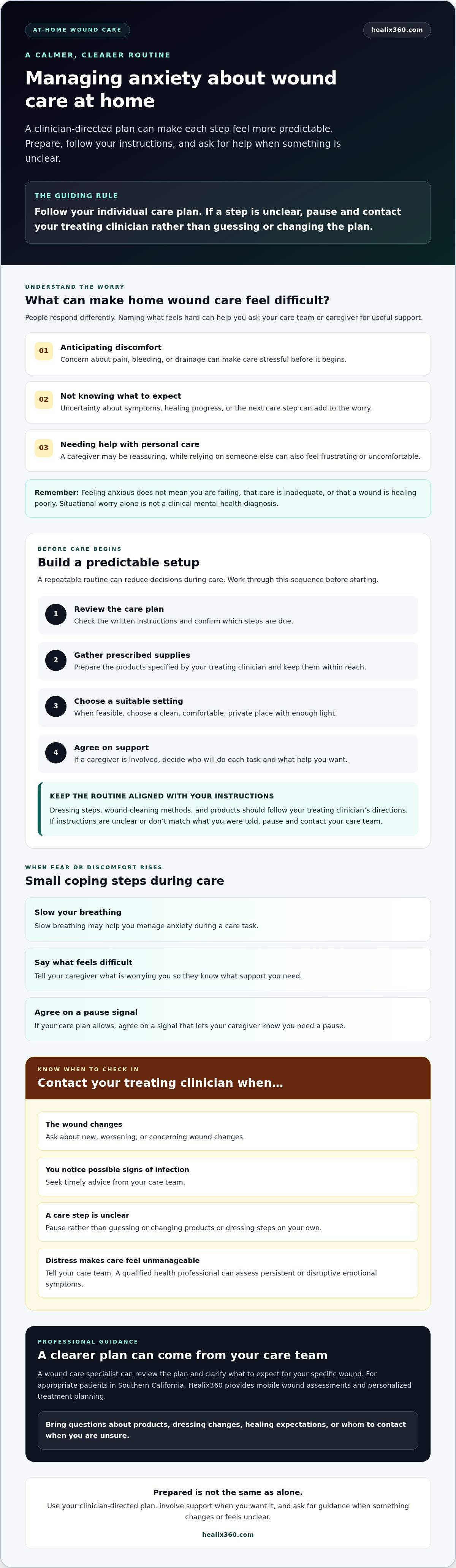
Before a care task begins, check the instructions you were given, gather the prescribed supplies, and decide who will help if needed. If you are unsure about a step, contact your treating clinician rather than guessing or changing the plan.
Key Takeaways
- Worry about symptoms, care tasks, or uncertainty can be a common response. Identifying what feels difficult can help you ask for useful support.
- Make care more predictable by reviewing the clinician’s plan, gathering prescribed supplies, and choosing a calm setting. Follow the clinician’s instructions for every dressing step and product.
- When managing anxiety about wound care at home, simple coping steps such as slow breathing and telling your caregiver what feels difficult may help. Agree on a pause signal when the care plan allows.
- Contact your treating clinician about new, worsening, or concerning wound changes, and seek timely advice if you notice possible signs of infection.
- A wound care specialist can review the plan and clarify care expectations. Healix360 provides mobile wound assessments and personalized treatment planning for appropriate patients in Southern California.
Why Can Wound Care at Home Feel So Anxiety-Provoking?
Wound-care anxiety is worry or distress connected with caring for a wound, noticing symptoms, or not knowing what to expect. People respond differently. One person may feel comfortable changing a dressing, while another may dread seeing the wound or worry about making a mistake. These reactions don’t mean someone is failing or causing poor healing. Situational worry is not, by itself, a clinical mental health diagnosis. A qualified health professional can assess persistent or disruptive emotional symptoms.
Home care can bring several concerns together: pain, bleeding or drainage, infection, slow progress, and dependence on someone else for help. It can be difficult to tell whether a change is part of healing or a reason to seek advice. Learning about the stages of the body's natural healing process may offer context, but your treating clinician is the right person to explain what to expect for your specific wound.
What parts of home wound care commonly trigger worry?
Anticipating pain can make a dressing change stressful before it begins. Removing a dressing, noticing drainage or odor, or seeing the wound may also cause distress. Previous painful or frightening care experiences can heighten these concerns, even if the current care plan is different.
Unclear instructions can add to the worry. You may be unsure which products to use, how often to change a dressing, how long healing may take, or what progress should look like. These are reasonable questions for your treating clinician. Don’t change dressing steps or products based on general information alone. Follow the individualized instructions you’ve been given.
How can a wound affect daily life and emotional well-being?
Repeated care tasks can interrupt familiar routines and require time, preparation, or help from another person. A wound may also affect sleep, privacy, mobility, and independence. Relying on a caregiver can be reassuring, but it may also feel frustrating or uncomfortable, especially when personal care is involved.
These pressures can affect emotional well-being, but anxiety alone doesn’t show that a wound is healing poorly or that someone’s care is inadequate. Research has linked depression with delayed wound healing, but that finding does not establish that anxiety itself causes delayed healing. If distress makes care feel unmanageable, tell your care team. Managing anxiety about wound care at home can begin with identifying the specific concern, such as pain, uncertainty, or needing more support.
How to Prepare for Home Wound Care When You Feel Anxious
A repeatable setup can reduce the decisions you need to make during care. Before beginning, follow this short sequence:
- Review the care plan. Check the written instructions and confirm which steps are due.
- Prepare approved supplies. Gather the products specified by your treating clinician and keep them within reach.
- Choose a suitable setting. When feasible, select a clean, comfortable, private place with enough light.
- Ask for help. If a caregiver is involved, agree on who will do each task and what support you want.
Dressing steps, wound-cleaning methods, and products must follow your treating clinician’s instructions. General guidance, including UCI Health’s overview of rules to prevent infection, can offer background, but it shouldn’t replace your individualized plan. If anything is unclear or doesn’t match the instructions you were given, pause and contact your care team before proceeding.
How can I make a wound-care routine feel more predictable?
If your care plan allows flexibility, choose a consistent time and prepare the clinician-approved supplies beforehand. Keep written instructions somewhere easy to reach and check them before you start instead of relying on memory. Write down questions as they come up, such as what a dressing change should involve or whom to contact if you’re unsure. Bring the list to an appointment or care-team call.
What can help before a dressing change?
Tell your caregiver what feels hardest before care begins. You might ask them to explain each step, help with supplies, or give you a moment to settle. Comfortable positioning and a calm, private environment may make the task feel less demanding. Don’t change medication, dressing materials, or wound-cleaning methods without guidance from your treating clinician.
If it feels comfortable, try a brief grounding exercise while you’re getting ready. Notice your feet supported by the floor or bed, then take a few slow, steady breaths. This is an optional way to settle in, not a treatment for a wound or an anxiety disorder. Stop if it doesn’t feel helpful. Managing anxiety about wound care at home can involve practical preparation as well as clear communication about the support you need.
If you’re still unsure how to follow your plan, ask your treating wound care team to review it with you. For appropriate patients in Southern California, mobile wound care assessments and personalized treatment planning may provide additional support at home.
What to Do During Wound Care When Fear or Discomfort Rises
Fear or discomfort can increase during a dressing change, even when you understand the care plan. If distress rises, tell your caregiver what’s happening. When it’s safe and the care plan permits, pause briefly, take a few slow breaths, and decide together whether to continue or ask the treating clinician for guidance. A pause should not mean changing the prescribed steps or leaving the wound without needed care.
How can patients and caregivers communicate during care?
Agreeing on a simple signal, such as saying “pause” or raising a hand, can make it easier to speak up. Use direct phrases: “Please stop for a moment,” “Can you explain the next step?” or “Can you help me get into a more comfortable position?” The caregiver can ask permission before touching or repositioning the patient and briefly explain each clinician-directed step. Don’t pressure someone to continue through severe or unexpected pain.
If pain feels different from what the care team has described, becomes severe, or prevents you from following the instructions safely, stop the task if it’s safe to do so and contact the treating clinician for advice. Don’t improvise by changing the dressing method, wound products, or medication. The clinician can clarify what to do next based on the individual care plan.
Which coping strategies may help in the moment?
There’s no single approach that works for everyone. Some people find it helpful to breathe slowly and notice the breath without forcing it. Others may ground themselves by naming things they can see, hear, and feel, or play calming audio if it doesn’t interfere with communication. Focusing on the next clinician-directed step, rather than the entire care task or healing process, may make the moment feel more manageable.
These are comfort strategies, not medical pain treatment. They don’t replace clinician guidance about pain or wound care, and they shouldn’t delay needed medical contact. If you feel overwhelmed, tell your caregiver and use the agreed signal to pause when the plan allows. If you’re alone, stop only when it’s safe, then contact your treating clinician if you’re unsure how to proceed.
Managing anxiety about wound care at home can include agreeing on how to communicate before care begins. Patients and caregivers can discuss what helps, what makes distress worse, and how to respond if the task needs to pause. Share recurring difficulty with the treating clinician so the care plan and expectations can be reviewed. Clear communication supports safer, more confident care without asking anyone to push through pain or fear.
When Should Anxiety or a Wound Concern Prompt a Call for Help?
Some nervousness around wound care can be expected, but you shouldn’t have to decide alone whether a new symptom matters. Contact your treating clinician about wound changes that are new, worsening, or concerning to you. Follow any escalation instructions in your individualized care plan, even if they differ from general guidance.
What wound changes should I report to my care team?
Seek timely advice if you notice spreading redness or warmth around the wound, worsening pain, pus or cloudy drainage, a foul odor, fever, or chills. These signs can have different causes, and one sign alone doesn’t confirm an infection. Don’t try to diagnose the problem or start an unapproved treatment. Describe what you’re seeing and ask your clinician what to do next.
It may help to note when a change began and whether it is getting better or worse. If it’s appropriate and doesn’t delay contacting your care team, a photo may help you describe what you’ve noticed. Tissue around the wound that turns dark or black, or symptoms that become severe or rapidly worsen, need prompt medical attention. Follow your care plan’s urgent instructions. For a life-threatening emergency, contact local emergency services.
When is emotional support from a professional worth discussing?
Raise persistent fear, panic, low mood, or avoidance with your treating clinician, especially if distress interferes with sleep, daily activities, or prescribed wound care. You can be specific: “I’m too anxious to complete this step,” or “I’m losing sleep because I’m worried about the wound.” A clinician can discuss suitable support or referrals based on your circumstances.
Managing anxiety about wound care at home doesn’t mean treating every worry as an emergency. The key distinction is whether the concern is persistent or disrupting care, or whether there’s a new or worsening physical change that needs clinical advice. Both deserve attention, but they may call for different kinds of support.
Healix360 provides wound care, not psychotherapy or emergency mental-health treatment. If you need help clarifying wound-care instructions or discussing a wound concern, contact Healix360 about mobile wound care in Southern California. For severe or rapidly worsening symptoms, use appropriate urgent or emergency services rather than waiting for a routine wound-care appointment.
How Professional Home Wound Care Can Make the Plan Easier to Follow
A specialist can review your current care plan and clarify which tasks are expected at home, what changes to report, and how follow-up will be coordinated. This doesn’t replace instructions from your treating clinician. It gives you an opportunity to discuss what feels uncertain and confirm how the plan applies to your situation. Clearer expectations can make managing anxiety about wound care at home feel more supported.
What should I ask a wound-care specialist?
Bring your questions to an appointment or care-team conversation. Ask which steps you or a caregiver should perform, which need professional support, and what to do if a step is difficult. You can also ask which wound changes to report, whom to contact with questions, and when follow-up is planned. Share concerns about pain, anxiety, privacy, access to supplies, or your caregiver’s ability to help. These details can inform a practical discussion of your care plan.
For additional background, Healix360’s advanced mobile wound care guide explains how specialist wound care may fit into care at home. Use general information as a prompt for questions, not as a substitute for instructions tailored to your wound.
How can mobile wound care fit into home support?
Healix360 provides mobile wound-care services in homes and care facilities, including wound assessments and personalized treatment planning. Its specialists can coordinate with families and care partners, including home health partners, while the patient’s existing clinicians remain part of the care picture. A home assessment can provide an opportunity to discuss the plan in the setting where care takes place. Service availability depends on the patient’s location, so confirm whether care is available in your area.
Professional wound care can address wound-related questions, but it isn’t psychotherapy or emergency care. If emotional distress is persistent or interfering with daily life, discuss it with an appropriate health professional. For patients seeking wound-care support in Southern California, explore Healix360’s wound care services and ask whether mobile assessment and treatment planning may fit your needs.
Take the Next Step Toward More Supported Wound Care
Home wound care can feel less uncertain when you understand the plan, prepare for each care task, and know how to ask for a pause or clarification. Managing anxiety about wound care at home doesn’t mean handling every concern alone. Share persistent distress with your care team, and report new or worsening wound changes according to your clinician’s instructions.
If you need more clarity, a wound-care specialist may be able to review care tasks, expectations, and follow-up with you. Healix360 provides wound assessments and personalized treatment planning, with mobile wound-care visits in home and facility settings. Availability depends on your location, so confirm whether visits are offered in your area.
Explore Healix360’s mobile wound care services to learn more about possible support. With clear guidance and the right help, you can approach each step with greater confidence.
Frequently Asked Questions
Is it normal to feel anxious about wound care at home?
Yes, feeling worried or distressed about home wound care can be a common response. Pain, seeing the wound, drainage, fear of infection, or uncertainty about instructions may all contribute. People react differently, and not everyone feels anxious. Feeling worried doesn’t mean you’re failing or causing a problem with healing. If distress persists or interferes with sleep, daily life, or prescribed care, discuss it with your treating clinician.
How can I calm down before changing a wound dressing?
Before care begins, check your clinician’s instructions and gather the prescribed supplies so you can focus on one step at a time. If it feels helpful, take a few slow breaths or notice what you can see, hear, and feel around you. You might also tell a caregiver what feels difficult and ask for a calm, private setting. These options may support comfort, but don’t replace your care plan or change its steps.
Can anxiety affect how well I manage wound care?
Anxiety may make it harder to concentrate, remember instructions, or begin a care task, and some people may avoid steps that feel frightening. That doesn’t mean anxiety alone causes poor healing or that you’re doing something wrong. Managing anxiety about wound care at home can start with identifying what feels difficult and telling your care team. They can clarify the plan and discuss appropriate support if distress is interfering with care.
What should I do if wound care is too painful or frightening?
If distress rises, tell your caregiver and pause when it’s safe and your care plan permits. Ask for an explanation or help with positioning. Don’t pressure yourself to continue through severe or unexpected pain, and don’t change medications, dressings, or cleaning methods without clinician guidance. Contact your treating clinician if pain prevents you from following the plan safely or you’re unsure what to do next. Seek urgent or emergency help for severe or rapidly worsening symptoms.
When should I call a doctor about a wound at home?
Contact your treating clinician promptly about new, worsening, or concerning changes. Examples include spreading redness or warmth, worsening pain, pus or cloudy drainage, a foul odor, fever, or chills. These signs can have different causes and don’t confirm an infection on their own, so don’t self-diagnose or start unapproved treatment. Follow your existing escalation instructions. For severe or rapidly worsening symptoms, seek appropriate urgent or emergency care. Use emergency services for a life-threatening situation.
Can a caregiver help with anxiety during wound care?
Yes. A caregiver can help by preparing clinician-approved supplies, explaining each care-plan step, and asking permission before assisting with touch or positioning. Agreeing on a signal to pause may help the patient communicate when they feel overwhelmed, if the care plan allows a pause. Caregivers should listen without minimizing concerns or pressuring someone through severe or unexpected pain. If anxiety repeatedly interrupts care, share this with the treating clinician for guidance.
Can a wound care specialist visit me at home in Southern California?
Mobile wound-care visits may be available to appropriate patients in Southern California. Healix360 provides wound assessments and personalized treatment planning in home and facility settings, and may coordinate with families and care partners. Availability depends on your location and circumstances, so confirm whether visits are offered where you live and discuss any coverage questions directly. Explore Healix360’s mobile wound care services to learn more. Mobile wound care isn’t emergency or urgent care.


