
An amputation site that isn’t improving or has changed in appearance can leave patients and caregivers unsure what to do next. If you’re seeking at-home care for non-healing amputation site San Bernardino, a wound-care specialist can assess the area at home and help determine appropriate next steps. A change in appearance alone doesn’t reveal the cause, so clinical evaluation matters.
Travel to appointments can be difficult during recovery. Healix360 provides mobile wound evaluations and personalized care planning in San Bernardino, coordinating with the patient’s existing care team when appropriate.
This article explains why an amputation site may heal slowly, what clinician-directed wound care at home can involve, and which changes may require urgent medical attention. It also covers how a specialist assessment can guide care according to the wound and the patient’s overall health, rather than relying on a one-size-fits-all dressing or treatment.
Key Takeaways
- A wound that stalls, worsens, or reopens needs clinical assessment. Its cause can’t be determined from appearance or elapsed time alone.
- A specialist’s in-home evaluation may include reviewing wound characteristics, symptoms, and factors that can affect healing.
- Sharp debridement, grafts, skin substitutes, and negative pressure therapy are selected according to assessment findings, not used as one-size-fits-all treatments.
- For at-home care for non-healing amputation site San Bernardino, follow your clinician’s wound-care instructions and don’t use unprescribed products or remove tissue yourself.
- Prepare relevant wound and medical information for a mobile assessment, and know which changes call for prompt medical attention.
What a Non-Healing Amputation Site May Mean for San Bernardino Patients
A surgical site that seems stalled, begins to reopen, or looks worse deserves clinical attention. There isn’t one timeframe or visual sign that proves an amputation site is “non-healing.” Progress depends on the procedure, the patient’s health, and clinical findings. A clinician needs to assess the site and its history rather than diagnose a problem from a photo or elapsed time alone.
For patients and caregivers considering at-home care for non-healing amputation site San Bernardino, a specialist evaluation can help clarify what the wound needs and whether care should be adjusted. This article is educational and doesn’t replace an individualized medical assessment or the surgeon’s instructions. Continue following the treating surgeon’s guidance and report changes to the care team. For general background on amputation procedures and possible complications, see Amputation.
What can affect healing after an amputation?
Clinicians consider possible contributors such as blood circulation, diabetes and blood glucose management, infection, pressure or friction at the site, nutrition, and other health conditions. More than one factor may be involved, and appearance alone can’t confirm the cause. Share relevant medical history, recent procedures, symptom changes, and new concerns with the clinician assessing the wound.
For example, a change in drainage may prompt further examination, but it doesn’t establish the cause. An accurate assessment helps guide decisions about wound care and the patient’s overall plan.
Which changes need prompt medical attention?
Contact a clinician promptly about spreading redness, increased warmth, new or worsening drainage, an unpleasant odor, or pain that is getting worse. These changes need assessment but don’t prove a specific diagnosis. If symptoms are rapidly worsening, the patient has a fever, or they feel acutely unwell, seek urgent medical guidance rather than waiting for a routine wound-care visit.
Severe bleeding, serious illness, or another immediate emergency requires emergency services. Call 911. For other changes, tell the care team when they began and how they have progressed, and follow the treating clinician’s instructions while arranging guidance.
In San Bernardino, mobile wound-care assessment brings specialist evaluation to a patient’s home or care facility, which can reduce the need for routine travel to a clinic. The next step is clinical review, not trying to identify the cause or change treatment based on appearance alone.
How Clinicians Assess a Non-Healing Amputation Site at Home
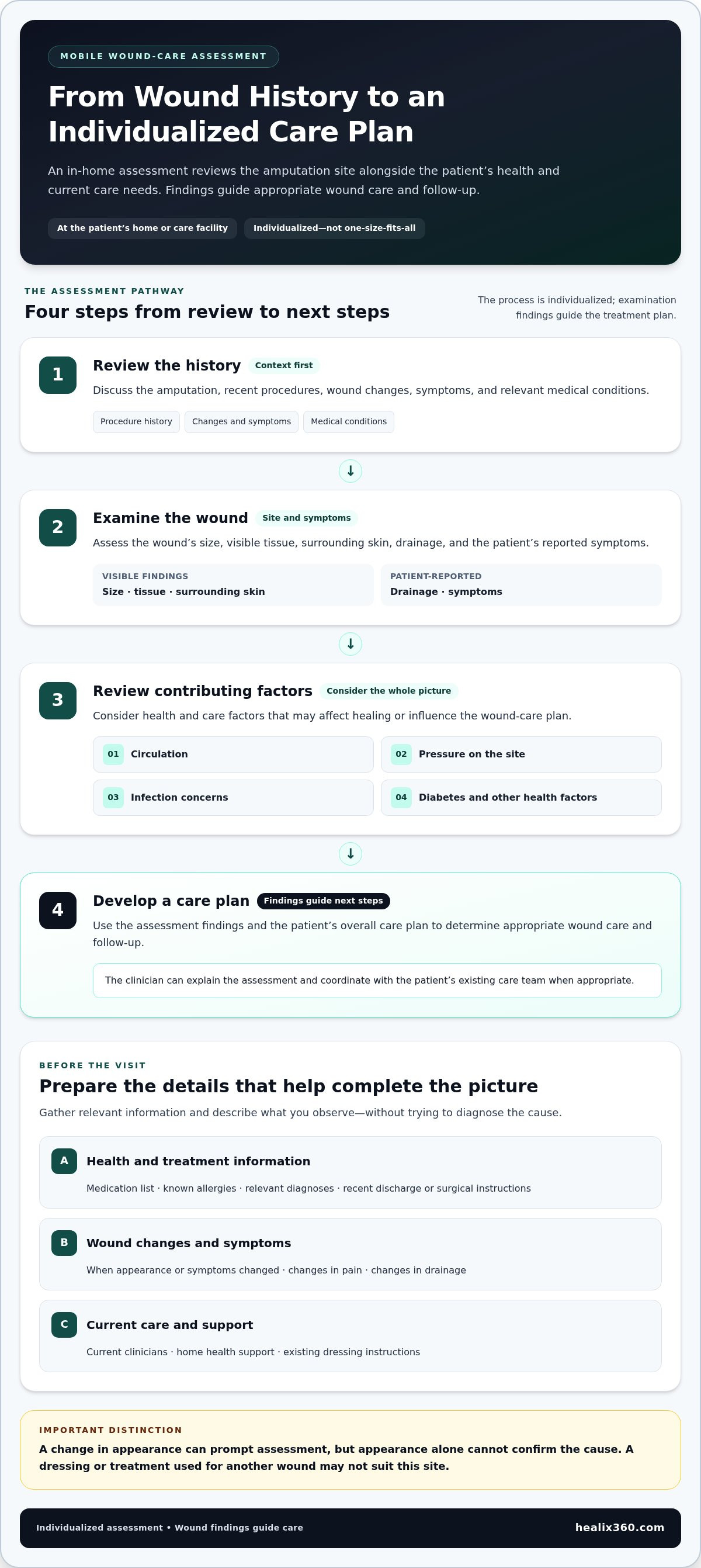
An in-home assessment gives a wound-care clinician a chance to evaluate the amputation site and understand the patient’s broader health and care needs. The process is individualized, but it commonly includes four steps:
- Review the history: Discuss the amputation, recent procedures, wound changes, symptoms, and relevant medical conditions.
- Examine the wound: Assess its size, visible tissue, surrounding skin, drainage, and the patient’s reported symptoms.
- Review contributing factors: Consider circulation, pressure on the site, infection concerns, diabetes, and other health factors that may affect care.
- Develop a care plan: Use the findings and the patient’s overall care plan to determine appropriate wound care and follow-up.
Examination findings guide the treatment plan. A dressing or treatment used for another wound may not suit this site. The clinician can explain the assessment and coordinate with the patient’s existing care team when appropriate.
What information should patients and caregivers prepare?
Before the visit, gather the medication list, known allergies, relevant diagnoses, and recent discharge or surgical instructions. Note when the wound’s appearance or symptoms changed, including any changes in pain or drainage. Record what you observe without trying to diagnose the cause.
Also identify the patient’s current clinicians, any home health support, and the existing dressing instructions. These details help the assessing clinician understand the current plan and support continuity of care. For general patient guidance, MedlinePlus explains how to change a wound dressing. If that information differs from the patient’s instructions, follow the treating clinician’s directions.
How the care team may coordinate follow-up
With appropriate coordination, wound-care updates can be shared with family members, home health agencies, and referring clinicians involved in the patient’s care. If an assessment raises an infection concern, a clinician may consider wound culture and sensitivity testing when clinically appropriate. This testing can inform care decisions, but it isn’t needed for every wound.
For at-home care for non-healing amputation site San Bernardino, mobile wound care brings specialist evaluation to a patient’s home or care facility. Learn more about advanced mobile wound care in Southern California, or explore a mobile wound care assessment.
Which At-Home Treatments May Be Considered, and What They Can Do
Advanced wound treatments are options a clinician may consider as part of an individualized plan, not automatic solutions for every amputation site. The wound’s condition, the patient’s medical history, and care goals all inform whether a treatment is appropriate. A graft or device cannot replace assessment, and no option guarantees wound closure or prevents further complications.
| Treatment category | General purpose | How selection is directed |
|---|---|---|
| Sharp debridement | Clinician-performed removal of selected tissue from the wound. | A specialist assesses the wound and determines whether debridement is appropriate. |
| Amniotic membrane grafts or bio-engineered skin substitutes | Advanced options that may be incorporated into a broader wound-care plan. | Considered according to wound findings, medical history, and the patient’s overall care plan. |
| Negative pressure wound therapy (NPWT) | A specialized dressing system that applies controlled negative pressure to a selected wound. | A clinician determines whether the site is suitable and directs its application and monitoring. |
When might advanced wound treatments enter the care plan?
These approaches may be considered when clinical assessment indicates they fit the wound and the patient’s needs. They aren’t interchangeable: each has a distinct role and requires clinician-directed selection. For an overview of one category, read about advanced skin substitute treatments. Including a treatment in a plan doesn’t guarantee a particular result.
How does negative pressure wound therapy fit into care?
NPWT may be considered for selected wounds, but it isn’t suitable for every amputation site. A clinician directs whether it’s appropriate, how it’s applied, and how the wound and treatment are monitored. Patients and caregivers shouldn’t start, adjust, or discontinue this therapy without guidance from the treating clinician. Learn more about wound VAC therapy at home.
For at-home care for non-healing amputation site San Bernardino, the practical next step is an individualized assessment, not choosing a graft or device based on an online description. Healix360 provides mobile wound-care evaluations and treatment at home or in care facilities. A mobile wound-care evaluation can connect assessment findings with a clinician-directed plan.
Safe Home Care for Amputation Sites in San Bernardino
Follow the dressing and medication instructions provided by the patient’s treating clinician or surgeon. Don’t replace that plan with online advice, even if a different method seems suitable for a similar wound. Dressing changes and pressure relief should follow the patient’s individualized instructions because the right approach depends on the wound and overall care plan.
Good preparation supports safer care at home. Wash hands before and after wound care, and keep supplies clean. Don’t apply unprescribed creams, soak the site, or cut or remove tissue. If a dressing becomes wet, loose, or difficult to change, follow the clinician’s instructions or seek guidance instead of improvising.
What should caregivers monitor between visits?
Keep a brief record of changes in drainage, odor, surrounding skin, pain, and the patient’s overall condition. Note when a change began and whether it is getting better or worse. Share concerns with the treating clinician rather than waiting for the next scheduled visit. These observations support clinical decision-making but don’t establish a diagnosis.
Photos may help document changes if the care team requests them. Before taking or sharing images, consider the patient’s consent and privacy, and use the communication method recommended by the care team.
How can local mobile care reduce travel demands?
For patients in the San Bernardino area, mobile wound-care visits bring specialist evaluation and treatment to the home or a care facility, reducing the need for routine travel to a clinic. Healix360 coordinates with families and home health agencies as appropriate, helping connect wound care with the patient’s existing support. Read about advanced surgical wound care at home for related recovery guidance.
Mobile care isn’t emergency care. If the patient has severe bleeding, serious illness, or an immediate emergency, call 911. For concerning changes that aren’t an immediate emergency, contact the treating clinician promptly. A specialist assessment can help clarify next steps for at-home care for non-healing amputation site San Bernardino.
To arrange an in-home wound-care assessment, contact Healix360 about mobile wound care.
How to Access Healix360 At-Home Wound Care in San Bernardino
Healix360 provides mobile wound care at home and in care facilities across Southern California. For patients in the San Bernardino area, an in-home assessment makes it possible to discuss a non-healing amputation site with a wound-care clinician without routine travel to a clinic. The next steps are to describe the wound, share relevant records, arrange an assessment, and follow the individualized care plan.
What happens after a patient requests care?
An initial intake conversation gathers information to guide next steps. Be ready to share the patient’s location and care setting, when the amputation took place, what changes have occurred at the site, and any relevant referral information. Recent surgical or discharge instructions, medication details, and notes from the current care team can also provide useful context.
A clinician evaluates the patient’s needs and determines the appropriate assessment and care plan. Recommendations depend on clinical findings and the patient’s overall health. The process doesn’t guarantee a particular treatment, appointment timing, or outcome.
What should families know about coverage and coordination?
Healix360 is a Medicare Part B provider, but that doesn’t mean every patient or service is automatically covered. Coverage depends on the patient’s plan, medical necessity, documentation, and applicable payer requirements. Families can share insurance information and relevant records when discussing care. Coverage and eligibility are determined according to the requirements that apply to the individual and service.
Coordination with the patient’s existing clinicians and home health team can connect wound-care recommendations with the broader care plan. With the patient’s permission, families can help provide records, current dressing instructions, and contact details for involved care providers. This gives the assessing clinician useful context and supports communication across the care team.
If the amputation site isn’t improving or has changed, request mobile wound-care guidance from Healix360. Start by requesting mobile wound-care guidance and sharing the patient’s location and relevant wound information. For severe bleeding, serious illness, or an immediate emergency, call 911 rather than waiting for a wound-care assessment.
Take the Next Step Toward Individualized Wound Care
A non-healing amputation site can have several contributing factors, so its appearance alone can’t identify the cause or determine the right treatment. Clinical assessment guides care according to the wound, the patient’s health, and the overall care plan. At home, follow the current clinician’s dressing instructions, keep supplies clean, and report concerning changes rather than adjusting treatment independently.
For patients seeking at-home care for non-healing amputation site San Bernardino, Healix360 provides mobile wound evaluations and care at home or in care facilities across Southern California. Its board-certified wound-care specialists can coordinate with families and the patient’s existing care team. Healix360 is a Medicare Part B provider, though coverage depends on applicable requirements and isn’t automatic for every patient or service.
Request at-home wound-care guidance from Healix360 to discuss a mobile assessment and practical next steps. An individualized plan can help patients and caregivers move forward with clearer guidance.
Frequently Asked Questions
What happens if an amputation site is not healing?
A stalled, reopening, or worsening amputation site should be assessed by a qualified clinician. Circulation, infection, pressure, nutrition, and underlying health conditions may affect healing, and appearance alone can’t identify the cause. Continue following the patient’s current care instructions and contact the treating clinician to discuss changes. Severe bleeding, rapidly worsening symptoms, or signs of a serious emergency require urgent medical attention. Call 911 for an immediate, life-threatening emergency.
Can a wound-care specialist treat an amputation site at home in San Bernardino?
Yes. Healix360 provides mobile wound care in patients’ homes and care facilities across Southern California. People looking for at-home care for non-healing amputation site San Bernardino can request guidance about an in-home wound assessment. A clinician evaluates the patient’s needs and determines an appropriate care plan. Mobile wound-care visits aren’t emergency services, so use emergency services for severe symptoms or an immediate threat to the patient’s safety.
What are warning signs of infection at an amputation site?
Possible warning signs include increasing redness, warmth, swelling, drainage, odor, or worsening pain around the site. A fever or feeling acutely unwell also warrants prompt medical guidance. These changes don’t confirm infection; assessment is needed to understand their cause. Contact the treating clinician promptly if symptoms change or worsen. Seek emergency help for rapid deterioration, severe symptoms, or a life-threatening concern, and call 911 for an immediate emergency.
Should I remove dead tissue or change the dressing myself?
Don’t cut, scrape, or remove tissue unless a qualified clinician has specifically instructed you to do so. Follow the patient’s current dressing-change and medication instructions, and use the supplies recommended by the care team. If a dressing becomes saturated, displaced, or difficult to manage, contact the treating clinician for individualized direction. The wound’s appearance doesn’t determine a safe dressing approach, so general online guidance shouldn’t replace the patient’s treatment plan.
What treatments may be used for a non-healing amputation site?
Treatment depends on clinical assessment, wound characteristics, and the patient’s health and care goals. A plan may include wound cleansing and dressings, clinician-performed sharp debridement, or advanced options such as negative pressure wound therapy, amniotic membrane grafts, or bio-engineered skin substitutes. These treatments have different purposes and aren’t suitable for every wound. The clinician explains why an option is being considered and what monitoring or follow-up it requires.
Does Medicare Part B cover at-home care for a non-healing amputation site?
Healix360 is a Medicare Part B provider, but coverage isn’t automatic for every patient or service. It depends on applicable requirements, which may include the patient’s plan, medical necessity, documentation, and treatment type. Patients and families should review benefits and any cost-sharing with the relevant payer. Healix360 can coordinate with the patient’s care team, while coverage decisions remain subject to the requirements that apply to the individual and service.
When should I seek emergency care for an amputation-site wound?
Seek emergency care for severe or uncontrolled bleeding, serious illness, rapidly worsening symptoms, or an immediate threat to the patient’s safety. Call 911 for a life-threatening emergency. For concerning changes that aren’t immediately life-threatening, contact the treating clinician promptly for guidance. A mobile wound-care visit isn’t a substitute for emergency services when urgent evaluation is needed. Don’t wait for a routine appointment if the patient’s condition is deteriorating.


