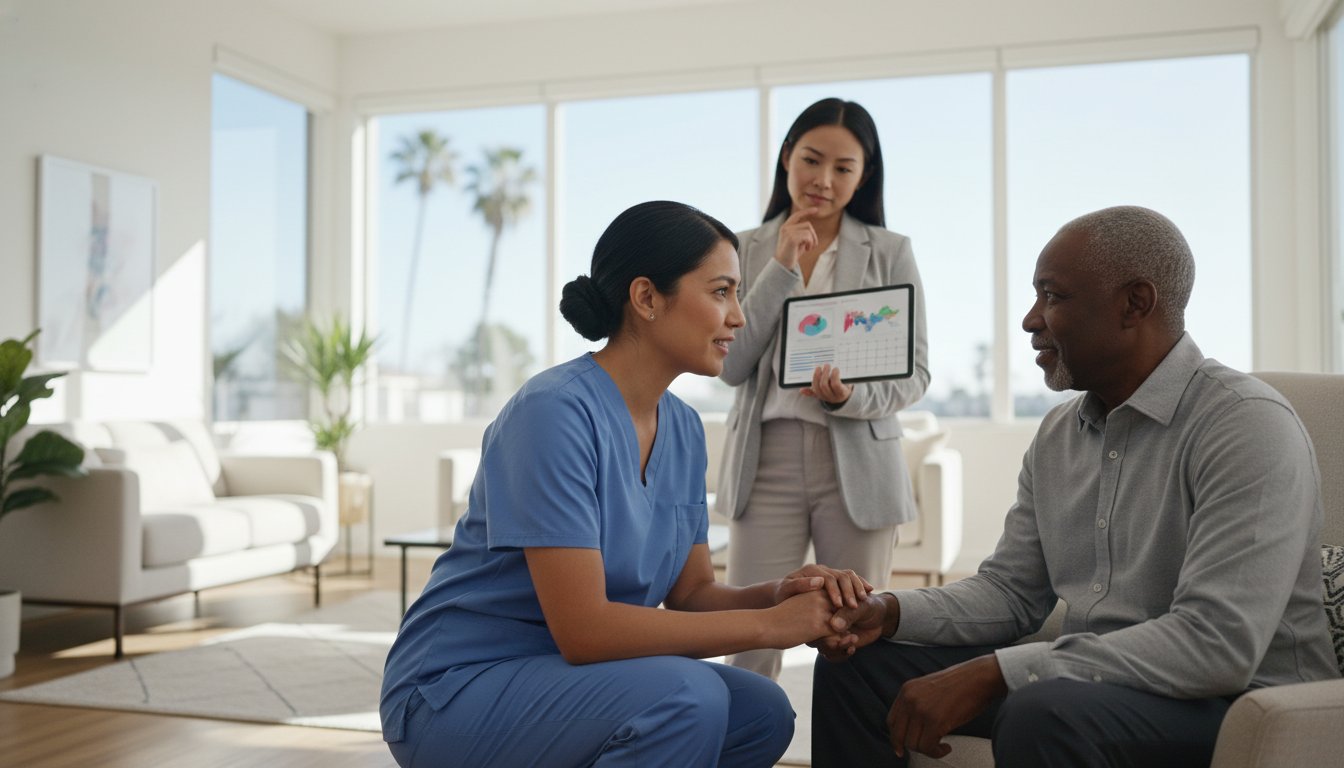
In the sprawling landscape of Los Angeles, the mobility of the provider, rather than the patient, has become the primary determinant of wound healing success. You likely recognize the daily frustration of coordinating a complex discharge only to see it compromised by the logistical impossibility of transporting an elderly patient across the city for specialized clinic visits. Accessing reliable case manager resources for wound care Los Angeles offers is no longer just about finding a provider; it's about integrating advanced clinical excellence directly into the patient's domestic environment.
This coordination guide empowers you to bridge the gap between hospital discharge and long-term recovery by leveraging mobile frameworks for advanced debridement and regenerative grafts. We'll examine the 2026 CMS reclassification of skin substitutes as incident-to supplies and provide actionable strategies to reduce your administrative burden. By the end of this article, you'll have a clear roadmap for securing seamless patient transitions that prioritize both clinical precision and your patient's quality of life. We'll show you how to navigate the latest regulatory shifts while ensuring your patients receive the highest standard of bedside care.
Key Takeaways
- Understand why the mobility of the specialist is the defining factor for healing success in the unique Los Angeles geographical landscape.
- Identify the clinical criteria for bedside amniotic membrane grafts and bio-engineered skin substitutes to accelerate recovery for non-healing ulcers.
- Access high-impact case manager resources for wound care Los Angeles that simplify the transition from acute care to advanced mobile recovery.
- Differentiate between standard home health nursing and the specialized surgical debridement necessary for managing complex, chronic wounds.
- Utilize a professional five-step referral checklist to ensure Medicare compliance and significantly reduce the administrative burden of discharge planning.
Navigating the Wound Care Coordination Landscape in Los Angeles
The 2026 healthcare ecosystem in Southern California demands a shift from facility-centric care to a more agile, patient-focused model. For professionals seeking case manager resources for wound care Los Angeles offers, the priority is no longer just clinical excellence; it's clinical accessibility. Mobile wound care specialists now serve as a vital bridge, ensuring that advanced interventions reach the patient without the physical toll of urban transit. By acting as a direct extension of your discharge strategy, these specialists provide the procedural heavy lifting required to maintain the momentum of recovery in a domestic setting.
Traditional outpatient models often fail in high-traffic corridors like Glendale or Beverly Hills. A patient with a complex diabetic foot ulcer shouldn't have to endure a ninety-minute commute for a ten-minute debridement. These logistical hurdles lead to a high rate of missed appointments, which directly correlates with increased bioburden and stalled tissue regeneration. When a patient misses even one specialized visit, the risk of infection rises, potentially undoing weeks of progress in the wound healing process. Mobile specialists eliminate this friction by transforming the patient's residence into a high-functioning clinical environment.
The Discharge Gap and Patient Readmission
The first 72 hours following a hospital discharge represent a critical window for wound assessment. Without immediate specialized follow-up, minor complications like exudate changes or periwound maceration quickly escalate into avoidable emergency room visits. We define the Discharge Gap as the period between hospital exit and the first specialist evaluation, serving as a primary driver of 30-day readmissions. Utilizing case manager resources for wound care Los Angeles specialists provide ensures that this gap is closed through proactive bedside evaluations that prevent clinical regression.
Los Angeles Geographic Barriers to Wound Healing
For the elderly population in L.A. County, mobility isn't a given. The sheer physical exhaustion of a trip to a wound center can cause cortisol spikes that negatively impact systemic recovery. This transport stress is a documented factor in physiological wound stalling. By integrating solutions into a mobile wound care framework, you ensure the environment of healing remains stable. This approach transforms the discharge strategy from a hopeful plan into a data-driven roadmap for long-term vitality, allowing patients to focus on recovery rather than the logistics of the 405 freeway.
Advanced Clinical Resources: Bringing the Wound Center to the Bedside
Clinical excellence is no longer confined to the four walls of a hospital department. When evaluating case manager resources for wound care Los Angeles, it's essential to recognize that mobile specialists bring a full surgical arsenal to the patient's bedside. This includes Negative Pressure Wound Therapy (NPWT) and advanced debridement techniques that were previously reserved for outpatient centers. By utilizing Medicare Part B as a primary funding source, these services allow for high-level care without the financial or logistical friction of clinic-based models. Navigating the 2026 reimbursement landscape is a core component of effective coordination. With CMS reclassifying skin substitutes as incident-to supplies as of January 1, 2026, mobile providers have adapted their delivery models to maintain high standards of care while remaining Medicare-compliant.
Bedside assessments offer a level of diagnostic accuracy that clinic visits often miss. A specialist in the home can observe real-world factors like nutritional intake, offloading compliance, and local environmental stressors that impact recovery. This level of oversight addresses the common challenges in transitioning care from acute settings to the community. Relying on board-certified specialists ensures that procedural interventions, such as sharp debridement, are performed with surgical precision rather than generalist approximations. If you're looking to elevate your discharge planning, a bedside wound evaluation can establish a clear, data-driven roadmap for recovery.
Regenerative Medicine and Skin Substitutes
Modern wound recovery often requires more than just standard dressings. Amniotic membrane grafts provide a biological scaffold that promotes rapid cellular migration in non-healing diabetic ulcers. Similarly, bio-engineered skin substitute treatments accelerate closure in chronic pressure injuries by mimicking the natural extracellular matrix. These regenerative tools represent the pinnacle of current biological science, now accessible in the home to ensure long-term tissue vitality.
Mobile Diagnostic Capabilities
Proactive care depends on precise data. Mobile specialists utilize bedside wound culture and sensitivity testing to identify pathogens before they trigger systemic infection. This diagnostic rigor is especially critical when managing edema in legs and venous ulcers, where vascular health is the primary driver of healing. Real-time reporting provides case managers with immediate visibility into patient progress, allowing for more informed clinical decisions and reduced administrative friction.
Collaborative Models: Case Managers, HHAs, and Mobile Specialists
Interdisciplinary care isn't just a buzzword; it's a structural necessity for chronic wound resolution in Southern California. While Home Health Agencies (HHAs) provide essential daily maintenance and monitoring, they are often restricted in the scope of surgical procedures they can perform at the bedside. Mobile specialists provide the procedural heavy lifting, such as sharp debridement and the application of bio-engineered skin substitutes, which fall outside the standard HHA nursing scope. This synergy allows the HHA to focus on dressing changes and patient education while the specialist manages the complex biological trajectory of the wound. Effective case manager resources for wound care Los Angeles must clarify these distinct roles to avoid operational friction and ensure the patient receives comprehensive oversight.
Navigating the billing landscape is often the greatest hurdle for case managers. It's a common misconception that HHA services and specialist consultations cannot co-exist. In reality, these services are funded through different Medicare channels, provided there is no duplication of specific tasks. While the HHA bills under Part A for home health episodes, the mobile specialist bills under Part B for surgical interventions. Following the CMS Wound Care Coverage Guidelines ensures that each provider's documentation supports medical necessity without overlapping claims. This clear financial separation allows for a higher tier of care without exhausting the patient's home health benefits.
The Triad of Care: HHA, Specialist, and Case Manager
Communication is the connective tissue of this collaborative model. By defining clear boundaries, specialists support HHA nurses by providing advanced clinical orders and specialized grafts that accelerate healing. Streamlining this data through secure, HIPAA-compliant reporting portals ensures that you, as the case manager, have a real-time view of the recovery process. This transparent flow of information reduces the need for redundant follow-up calls and allows the entire team to pivot quickly if a wound shows signs of stalling.
Addressing the Homebound Requirement
The homebound requirement remains a central pillar for patients receiving these advanced interventions. Case managers are instrumental in documenting the medical necessity for mobile surgical intervention, particularly for patients whose mobility is severely limited by chronic conditions. Part A HHA services cover the daily nursing care and home health aide support, while Part B specialist consultations fund the advanced surgical procedures and regenerative treatments performed at the bedside. Utilizing these case manager resources for wound care Los Angeles ensures that homebound patients aren't denied elite clinical care simply because they can't reach a traditional facility.

Referral Checklist: 5 Steps to Securing Mobile Wound Care
Transitioning a patient from an acute setting to a domestic recovery environment requires more than a standard discharge summary; it requires a tactical execution plan. To ensure clinical continuity, you need a professional-grade framework that prioritizes both speed and precision. This checklist serves as one of the most effective case manager resources for wound care Los Angeles offers for bridging the gap between hospital exit and home-based healing.
- Step 1: Clinical Assessment. Identify wounds that have failed to show significant closure for four weeks or more. These chronic cases require advanced interventions like sharp debridement or regenerative grafts.
- Step 2: Insurance Verification. Confirm the patient has Medicare Part B or a private PPO. This ensures the mobile specialist can bill for surgical procedures and advanced supplies without exhausting Home Health Part A benefits.
- Step 3: Documentation Gathering. Secure the recent History and Physical (H&P), a current medication list, and any prior wound history. This data allows the specialist to assess systemic health factors that may be stalling the recovery process.
- Step 4: Coordination. Align the mobile specialist’s visit with the patient’s home schedule. Seamless timing reduces patient stress and ensures that the Home Health nurse can be present if a collaborative dressing change is planned.
- Step 5: Follow-Up. Integrate the specialist’s bedside notes back into the primary care or hospital record. Closing this loop ensures that every member of the care team has visibility into the wound's trajectory.
By following this structured approach, you eliminate the administrative friction that often stalls patient care. If you're ready to initiate this process for a complex case, you can submit a mobile wound care referral to begin the coordination of bedside surgical services.
Identifying High-Priority Referral Candidates
Not every wound requires a surgical specialist, but certain presentations demand immediate expertise. High-priority candidates include those with Stage 3 or 4 bed sores ulcer presentations that carry a high risk of systemic infection. Additionally, discharge planning for patients requiring complex diabetic ulcer treatment should involve a mobile specialist early to prevent the complications that lead to readmission or amputation.
Streamlining the Referral Paperwork
Efficiency in documentation is the hallmark of a visionary strategist. Utilizing digital referral forms reduces the administrative lag that often plagues the transition to community-based care. Ensure the specialist has access to prior surgical wound care notes to maintain continuity. This historical context is vital for determining which bio-engineered skin substitutes or amniotic grafts will be most effective for the patient’s specific biological profile.
Healix360: The Visionary Strategist for Los Angeles Case Managers
Healix360 functions as more than a service provider; it's a strategic ally for professionals navigating the complexities of post-acute transitions. By offering the most comprehensive case manager resources for wound care Los Angeles has available, we ensure that the logistical burden of advanced treatment doesn't fall on your shoulders. Our white-glove coordination model simplifies your workflow by managing the intricate details of insurance verification and specialist scheduling. This allows you to focus on the broader aspects of patient advocacy while we handle the clinical heavy lifting at the bedside. We view every patient not just as a case to be managed, but as a lifestyle optimization partner whose long-term vitality is our primary metric of success.
Our commitment to data-driven, proactive care serves as a powerful shield against hospital readmission. By deploying board-certified specialists directly to the home, we maintain a level of scientific rigor that rivals the most elite outpatient centers. The Healix360 advantage lies in our ability to blend cutting-edge science with a human-centric warmth that reassures patients they're in expert hands. We translate complex biological data into a clear, actionable roadmap for recovery, ensuring that no detail of the individual's health is overlooked. This mastery over complex wound data provides you with the quiet confidence that your patients are receiving the highest tier of specialized care available in the community.
Serving the Diverse Needs of Southern California
Our clinical reach extends across the unique landscape of Los Angeles, from the high-traffic corridors of Glendale and Beverly Hills to the expansive neighborhoods of the San Fernando Valley. We partner closely with local Home Health Agencies to elevate the standard of at-home recovery, providing the surgical expertise that complements their daily nursing care. Throughout 2026, our primary clinical directive remains the preservation of limb function through the aggressive deployment of mobile bio-engineered skin substitutes and advanced diagnostic monitoring. This localized focus ensures that geographic barriers never dictate the quality of a patient's clinical outcome.
Partner with Healix360 for Superior Outcomes
Initiating a professional referral is a seamless process designed to integrate directly into your existing discharge planning routine. Our specialized care has a profound impact on patient quality of life, transforming the recovery journey from a source of stress into a path of empowerment. By choosing a partner that values excellence and precision, you're securing a future of physical excellence for those under your care. We invite you to partner with Healix360 for elite mobile wound care coordination and experience the difference that visionary clinical strategy can make in chronic wound management.
Elevating the Standard of Bedside Recovery
The 2026 landscape of Southern California healthcare requires a departure from traditional, facility-bound models. By prioritizing the mobility of the specialist over the transport of the patient, you ensure that healing remains a continuous process rather than a series of logistical hurdles. Utilizing specialized case manager resources for wound care Los Angeles offers, you can bridge the discharge gap with clinical precision. This approach integrates advanced amniotic grafts and sharp debridement directly into the domestic environment, allowing for superior outcomes without the physiological stress of urban travel.
Healix360 stands as your visionary strategist in this journey, providing board-certified wound specialists who serve as a seamless extension of your care team. As a dedicated Medicare Part B provider serving all of Southern California, we're committed to data-driven limb preservation and proactive prevention. You have the power to transform the trajectory of your patients' recovery by choosing a partner that values scientific excellence and human-centric warmth. Streamline your patient discharge with Healix360’s mobile wound care resources and help those under your care reclaim their long-term vitality. You're not just managing a case; you're orchestrating a return to physical excellence.
Frequently Asked Questions
Do Los Angeles case managers need to provide equipment for mobile wound care visits?
Case managers don't need to provide any medical equipment or supplies for mobile wound care visits. Our specialists arrive at the patient's bedside fully equipped with the surgical instruments, advanced dressings, and diagnostic tools required for complex interventions. This comprehensive approach eliminates the logistical burden on the referring facility and ensures that elite clinical resources are available regardless of the home setting's existing infrastructure.
How does mobile wound care billing work with Medicare Part B for L.A. residents?
Mobile wound care services for Los Angeles residents are billed directly through Medicare Part B as professional surgical services. This allows for specialized procedures like sharp debridement and skin substitute applications to be covered without impacting the patient's Home Health Part A episode. We manage all billing complexities internally, providing a transparent financial framework that supports long-term recovery while remaining fully compliant with 2026 CMS reimbursement regulations.
Can mobile specialists apply amniotic membrane grafts in a home setting?
Board-certified specialists can safely and effectively apply amniotic membrane grafts within a home setting. These regenerative biological scaffolds are ideal for non-healing diabetic ulcers and chronic pressure injuries that haven't responded to traditional dressings. By bringing these advanced modalities to the bedside, we provide patients with access to the latest breakthroughs in tissue engineering without the stress of clinic-based transport.
What is the typical turnaround time for a mobile wound care referral in Glendale?
We prioritize rapid response times for referrals in Glendale and the surrounding areas to close the critical discharge gap. While specific timing depends on patient availability and insurance verification, our streamlined intake process is designed to initiate bedside evaluations quickly after the initial request. This proactive approach ensures that advanced case manager resources for wound care Los Angeles specialists provide are deployed before minor complications escalate.
Does Healix360 coordinate with existing Los Angeles home health agencies?
Healix360 actively coordinates with existing Los Angeles home health agencies to create a unified care plan. While the HHA nursing staff manages daily dressing changes and general monitoring, our specialists perform the weekly surgical procedures and advanced assessments. This collaborative model ensures that the patient benefits from both consistent nursing oversight and high-level surgical expertise, leading to more predictable healing trajectories.
What documentation is required from a hospital case manager for a mobile wound referral?
Hospital case managers should provide a recent History and Physical (H&P), a current medication list, and any available wound history documentation. A physician's order for "Wound Care Evaluation and Treatment" is also necessary to initiate the mobile specialist's visit. These data points allow our team to perform a thorough initial assessment and tailor a treatment plan that addresses the patient's specific systemic health needs and biological profile.
Are these services available for patients in assisted living facilities in Beverly Hills?
Our mobile services are fully available to patients residing in assisted living facilities throughout Beverly Hills and the greater Los Angeles area. We work closely with the facility's clinical staff to provide specialized wound management that exceeds the scope of standard on-site care. This ensures that residents receive advanced treatments like bio-engineered skin substitutes without the risks and exhaustion associated with frequent external medical transport.
How does Healix360 report patient progress back to the case manager?
We provide detailed clinical notes and progress reports after every bedside visit through secure, HIPAA-compliant channels. This real-time data reporting gives case managers immediate visibility into the wound's healing status, including measurements and procedural outcomes. By maintaining this transparent flow of information, we empower you to utilize case manager resources for wound care Los Angeles effectively to make informed decisions regarding the patient's long-term care strategy.


