
Could a wound be worsening even when the changes are difficult to see? For people with weakened immune systems, infection and delayed healing may not follow an obvious course, making wound care for immunocompromised patients at home feel uncertain. It’s reasonable to worry about missing a warning sign or taking a step that isn’t right for the wound.
Safe home care depends on clinician-guided monitoring, not guesswork. Immune status can affect how the body responds to injury, so changes such as increasing redness, warmth, or drainage deserve prompt attention from a healthcare professional. A clinician can advise what care is appropriate for an individual wound and when it needs assessment.
This guide explains how immune status may influence healing, what families and caregivers can monitor, and when to seek clinical guidance. It also describes how mobile wound specialists can assess wounds at home and coordinate an individualized plan with families, home health agencies, and care facilities. Clear communication and professional follow-up help everyone understand the next steps in wound care.
Key Takeaways
- Understand how a weakened immune system may affect wound healing and infection risk, while recognizing that each patient’s needs differ.
- Learn which wound details clinicians assess, including appearance, drainage, surrounding skin, and changes over time.
- Recognize why a small wound or limited discomfort doesn’t always mean there’s little risk, and when changes warrant prompt clinical guidance.
- Use a simple safety checklist for wound care for immunocompromised patients at home, guided by the patient’s existing clinical instructions.
- See how mobile wound specialists can assess wounds at home or in care facilities and coordinate a personalized plan with patients, families, and care teams.
Why Immunocompromised Patients Need Extra Wound Care
Immunocompromised status means a person’s immune system is weakened or works less effectively than usual, which can affect how the body responds to infection and injury. The term covers different health circumstances. The degree of immune suppression and its effect on wound care vary from person to person.
Healing involves coordinated processes that help the body repair damaged tissue and respond to potential threats. A weakened immune response can affect those processes, increase infection risk, or make healing less predictable. The wound healing process offers useful background, but it cannot predict how a particular person’s wound will progress. Individual assessment matters.
For families, this means not judging a wound by appearance alone or comparing it with someone else’s experience. A small wound or one that causes little discomfort may still need attention in the context of the patient’s health. Home care can support an established clinical plan, but it doesn’t replace that plan or a clinician’s assessment. Follow the patient’s instructions and seek clinical guidance about concerns or changes.
What can make someone immunocompromised?
Immune function may be affected by certain health conditions, treatments such as chemotherapy, or medications that suppress immune activity. These are broad examples, not a way to determine an individual’s status. Some people have temporary changes; others have ongoing immune suppression. The patient’s care team considers the underlying circumstances and explains how they may affect wound care and follow-up.
Patients and caregivers should share relevant health changes and medication updates with the clinicians overseeing wound care. This context helps the care team interpret wound findings and tailor recommendations. It also prevents a general checklist from being mistaken for a personalized care plan. Two people with the same type of wound may need different monitoring or follow-up based on their overall health.
Why a wound may need closer follow-up
Wound appearance, drainage, surrounding skin, and changes over time can help caregivers describe what they see. These observations are not a diagnosis. A clinician interprets them alongside medical history, immune status, and current treatment. If a wound looks different or a caregiver is unsure whether a change matters, report it to the treating clinician instead of trying to identify the cause independently.
In wound care for immunocompromised patients at home, clear communication helps family members, facility staff, home health agencies, and clinicians stay aligned with the existing plan. Record observations in the manner the care team recommends and share them during follow-up. For an overview of specialist assessment and coordinated care in the region, see this Southern California mobile wound care guide. Home-based specialist assessment adds wound-specific expertise while keeping decisions connected to the patient’s broader clinical care.
How clinicians assess a wound and plan care at home
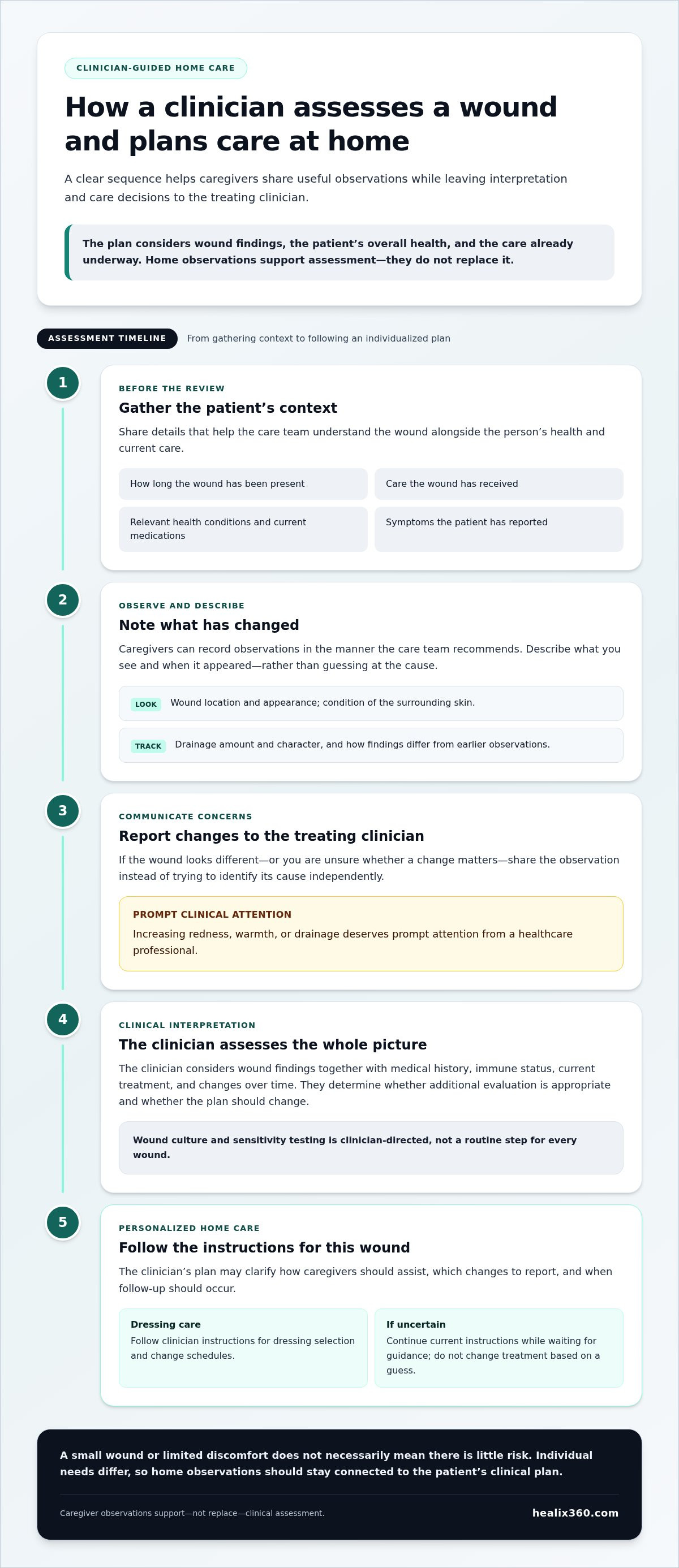
A home wound assessment is individualized. The clinician considers the wound’s location and appearance, the amount and character of drainage, the condition of nearby skin, and how these findings have changed since earlier observations. The patient’s medical history and current care also matter. A wound plan should reflect clinical findings, the patient’s overall health, and the care already underway.
Caregivers can help by sharing clear observations, but visual monitoring is not the same as clinical assessment. A clinician determines what findings may mean, whether additional evaluation is appropriate, and whether the treatment plan should change. This distinction is especially relevant to wound care for immunocompromised patients at home, where the care team needs the patient’s broader health context to interpret changes.
What information helps guide a wound assessment?
Before or during an evaluation, caregivers can gather details that may otherwise be difficult to recall. Useful information includes how long the wound has been present, what care it has received, relevant health conditions, current medications, and symptoms the patient has reported. Note when a change appeared and describe what you observed, rather than labeling its cause.
Wound culture and sensitivity testing is a clinician-directed decision, not a routine step for every wound. The clinician considers the assessment and the patient’s circumstances to decide whether testing is appropriate. Sharing concerns and changes promptly gives the care team relevant information for that decision.
- Keep a brief record of wound changes and questions for the next clinical review.
- Share updates about medications, recent treatment, or symptoms with the treating team.
- Follow the current care instructions while waiting for clinical guidance. Don’t change treatment based only on a guess about what a change means.
How a personalized plan supports home care
After evaluating the wound, the clinician develops instructions suited to its findings and the patient’s needs. The plan may clarify how caregivers should assist, what changes to report, and when follow-up should occur. Follow the clinician’s instructions for dressing selection and change schedules, since a routine that works for one wound may not suit another.
If the evaluation indicates that advanced treatment may be relevant, the clinician can explain whether options such as skin substitutes fit the wound and overall plan. Healix360’s guide to advanced wound healing and skin substitutes provides background on these approaches. The clinical decision remains specific to the patient.
In-home specialist assessments connect wound findings with practical instructions for families and care teams. Explore Healix360’s mobile wound care for support with wound assessment and personalized planning at home or in care facilities.
When a wound change needs prompt clinical attention
A wound’s size or the amount of discomfort it causes doesn’t reliably show how much attention it needs. In wound care for immunocompromised patients at home, changes should be interpreted in light of the person’s health and existing care plan. Caregivers can notice and report changes, but appearance alone cannot confirm or rule out infection.
Use the treating clinician’s instructions for routine monitoring. If something is worsening or concerning, contact the clinician for guidance rather than waiting for a scheduled follow-up or changing the treatment plan independently. Timely, clear communication gives the care team a chance to assess the situation and advise on next steps.
Changes caregivers should report
Report a noticeable change from the wound’s usual appearance or the patient’s baseline. This includes worsening redness, warmth, or swelling around the wound; new or increased drainage; increasing pain; or a change in the wound’s dimensions. Fever or feeling acutely unwell also warrants prompt guidance from the treating clinician, particularly when the patient has a weakened immune system.
Immune status and other health factors can influence how a person responds to illness, so symptoms may differ from patient to patient. That doesn’t mean infection is always symptom-free, and no single observation can establish a diagnosis. Share what you see and when it changed, then let the clinician interpret it in context.
- Describe the change plainly, such as “the surrounding skin looks more red than yesterday” or “there is more drainage than usual.”
- Include any new discomfort, fever, or change in how the patient feels overall.
- Follow the clinician’s instructions about how to report changes and what to do next.
When home observation is not enough
Home observation helps track changes, but it cannot replace clinical evaluation when a wound is deteriorating. If the wound or the patient’s overall condition is worsening rapidly, seek urgent medical evaluation rather than waiting for routine follow-up. Contact the treating clinician promptly for direction. If there is an immediate, life-threatening emergency, call emergency services.
There is no single visual sign or fixed timetable that applies to every patient. The care team can advise how urgently a particular change needs assessment, based on the wound, immune status, medical history, and current plan. If you’re unsure whether a change is significant, report it and explain what concerns you. Avoid diagnosing the cause, removing or changing prescribed treatments, or relying on limited pain as reassurance unless the clinician has specifically instructed you to do so.
For families coordinating care at home or in a facility, sharing the same observations with relevant caregivers and the clinical team can reduce confusion about what changed and when. Keep communication factual, follow the established plan, and raise concerns through the appropriate clinical or emergency channel.
A Safer Daily Routine for Home Wound Care
A consistent routine helps caregivers follow the patient’s clinical plan and communicate clearly with the care team. It should not become a substitute protocol: wound-care tasks, supplies, and dressing schedules must come from the treating clinician. This matters in wound care for immunocompromised patients at home, where an organized routine supports careful follow-through without asking family members to make clinical decisions.
Before assisting, check the current written instructions. If they’re unclear, conflict with what a caregiver was previously told, or don’t address a new concern, ask the care team for guidance rather than improvising.
- Prepare. Review the patient-specific instructions, gather only the supplies specified in the plan, and set them on a clean, organized surface. Wash hands before beginning and follow any additional hygiene steps the care team has provided.
- Follow instructed care. Assist only with the tasks the caregiver has been asked to perform. Avoid unnecessary contact with the wound, and don’t add products, change dressings, or alter the schedule unless the clinician directs it.
- Observe. As part of the instructed care, note visible changes or concerns. Don’t try to diagnose their cause or judge treatment effectiveness independently.
- Document and communicate. Record observations, questions, and relevant changes in one consistent place. Share them with the treating clinician and involved home health team as directed.
Prepare caregivers and supplies
Keep the current written plan accessible to everyone who helps with care. Store the supplies specified in that plan together, and don’t substitute items based on another patient’s routine or general advice. Caregivers should understand their assigned tasks and know whom to ask when instructions are unclear. Hand hygiene and a clean preparation area support careful assistance, while minimizing contact keeps tasks focused on the clinician-directed plan.
Coordinate care among family and care teams
A shared log, notebook, or agreed communication method can reduce gaps between family members, facility staff, and home health professionals. Record what changed, when it was noticed, and any questions, then share relevant updates with the treating clinician. Keep information factual; interpretation belongs to the clinical team. If the wound followed surgery, these surgical wound care at home considerations can help families understand the importance of following the specific recovery plan.
For patients and caregivers who need wound expertise at home or in a care facility, Healix360 provides mobile wound assessments and personalized care planning in coordination with families and care teams. Explore Healix360’s mobile wound care services for coordinated, clinician-guided wound care.
How Healix360 supports immunocompromised patients with wound care at home
For patients who need specialized wound expertise without traveling to a clinic, Healix360 provides advanced mobile wound care in Southern California. Specialists conduct wound assessments in patients’ homes and care facilities, then develop personalized plans based on clinical findings and the patient’s circumstances. This gives families and existing care teams a clear point of coordination for wound-specific evaluation and planning.
Care is individualized. A specialist considers the wound and relevant health information before recommending next steps. Depending on the assessment, care may involve ongoing monitoring or advanced wound treatments such as negative pressure wound therapy or skin substitutes. These options are not automatic; treatment decisions depend on clinical findings and the patient’s plan.
What mobile wound care can add to the care plan
A bedside evaluation brings wound expertise to the patient’s setting and allows the specialist to assess the wound directly. Follow-up recommendations and treatment adjustments are based on that assessment, not a one-size-fits-all routine. Mobile wound care complements the patient’s broader clinician-directed care. It does not replace emergency services, inpatient care, or primary care.
For families, a specialist assessment can clarify wound-specific instructions and appropriate follow-up. When more than one caregiver or care team is involved, a personalized plan gives everyone a shared reference for the specialist’s recommendations. It cannot guarantee a particular result, but it can support consistent communication about the wound and its care.
Coordinating specialist wound care in Southern California
Healix360 coordinates with families, home health agencies, and healthcare facilities so relevant observations and care instructions can be shared among the people supporting the patient. Caregivers can communicate changes they have noticed, while the specialist evaluates the wound and provides guidance based on clinical findings. Clear coordination helps reduce reliance on conflicting assumptions or outdated instructions.
This approach can be useful when a patient receives support in more than one setting, such as at home and through a care facility. Families can help by keeping the current wound plan accessible and directing questions to the appropriate treating clinician. Healix360’s mobile wound care in Southern California brings specialized assessment and personalized planning into patients’ homes and care facilities.
For an overview of how this service fits into home-based care, learn about Healix360 mobile wound care. If a patient needs wound expertise at home or in a care facility, connect with Healix360 to discuss mobile wound care and coordinated assessment.
Make the Next Step a Coordinated One
A practical next step is to make sure everyone involved knows who is guiding the wound plan and how to share questions or changes. One clear communication path can help family members and care teams avoid relying on different versions of instructions. For wound care for immunocompromised patients at home, that connection makes it easier to bring concerns to a clinician rather than interpreting them alone.
Healix360 provides advanced wound care in patients’ homes and care facilities across Southern California, coordinating with families, home health agencies, and healthcare facilities. A specialist assessment can help clarify wound-specific care needs and support an individualized plan within the patient’s existing care.
If a patient or family needs specialized wound assessment at home, learn about Healix360’s mobile wound care services. Take the next step toward coordinated, clinician-guided wound care with Healix360.
Frequently Asked Questions
Are all immunocompromised patients at the same risk of wound complications?
No. Risk and care needs vary with the reason for immune suppression, the patient’s overall health, medications, and wound characteristics. A temporary treatment-related change may call for different monitoring than a chronic condition, but only the patient’s care team can assess the individual implications. Share relevant health and medication updates with the clinician managing the wound so recommendations reflect the patient’s circumstances.
Can a wound look minor and still need medical attention?
Yes. A small wound or limited pain doesn’t by itself establish that the wound is low risk, particularly for someone with a weakened immune system. A minor-looking cut may deserve clinical guidance if it changes, doesn’t follow the expected course described by the care team, or occurs alongside a change in the patient’s health. Report concerns rather than relying on size or discomfort alone to judge what care is needed.
Should caregivers use hydrogen peroxide or alcohol to clean a wound?
Don’t use hydrogen peroxide or alcohol on a wound unless the treating clinician specifically instructs you to do so. Products used without guidance may be unsuitable for the patient’s wound or care plan. Follow the written instructions for that individual, including what to use for cleaning if cleaning is part of the caregiver’s assigned task. If the instructions don’t address a situation, contact the care team before applying a new product.
Does every wound in an immunocompromised patient need a wound culture?
No. A wound culture is not automatic simply because a patient is immunocompromised. The clinician decides whether testing is appropriate based on the wound assessment, patient history, and other relevant findings. Caregivers shouldn’t try to collect a sample or request treatment based on appearance alone. Instead, describe changes or symptoms to the treating clinician, who can determine whether a culture and sensitivity test or another step is indicated.
Can an immunocompromised patient receive wound care at home?
Yes. A patient may receive clinician-directed wound care at home when it fits their assessed needs and care plan. Healix360 provides mobile wound assessments and advanced wound care in homes and care facilities in Southern California, with personalized planning and coordination with existing care teams. Home visits complement the patient’s broader medical care; they don’t replace emergency services or other care the patient may need.
What should a caregiver have ready for an in-home wound assessment?
Have the current wound-care instructions, a list of medications, and relevant health information available. It can also help to note when the wound began, care already provided, and questions the patient or caregiver wants addressed. If other clinicians or home health staff are involved, keep their contact details accessible to support coordination. Don’t remove a dressing or change the routine just to prepare unless instructed.
When should a caregiver call 911 for a wound-related concern?
Call 911 for an immediate, life-threatening emergency, such as if the patient collapses, is difficult to wake, has severe trouble breathing, or appears critically unwell. For concerning wound changes without an immediate threat to life, contact the treating clinician promptly for direction. If you’re unsure whether the situation is an emergency, prioritize the patient’s immediate safety and use emergency services when a life-threatening condition may be present.


