
Does wound odor always mean an infection, or can drainage and dressings affect the smell? It’s understandable to feel concerned when a wound’s appearance changes, especially if you’re unsure how to change a dressing without irritating fragile skin. For families searching “how to manage wound drainage and odor at home Orange County,” the most useful first step is to track changes over time rather than rely on odor alone.
A consistent routine can help you notice when drainage, smell, or the surrounding skin looks different from usual. This guide explains how to observe and record changes, handle dressings carefully, protect nearby skin, and recognize signs that call for timely clinical advice. It also explains how mobile wound specialists can assess a wound at home or in a care facility in Orange County, which may help when travel is difficult.
Healix360 provides in-home wound evaluations and personalized care plans in coordination with families and care teams. A specialist can assess drainage and odor in context and recommend appropriate next steps for the wound.
Key Takeaways
- Track changes in drainage amount, color, and consistency over time to give your care team useful context.
- Follow your clinician’s directions for cleansing and dressing changes, and avoid removing dressings more often than instructed.
- Learn which changes, including worsening odor, increased drainage, spreading redness, warmth, swelling, or increasing pain, warrant prompt clinical advice.
- Use a simple log to record dressing condition, drainage, odor, pain, and when you notice a change.
- When managing wound drainage and odor at home in Orange County, a mobile wound specialist can assess the wound and tailor a care plan.
What wound drainage and odor can mean for an Orange County patient
Wound drainage, also called exudate, is fluid that comes from a wound. Its amount and characteristics can change during healing. The amount, color, and consistency matter, but none should be interpreted in isolation. A small amount of clear or pale fluid, for example, gives different information from a notable increase in drainage or a change accompanied by new symptoms.
Wound type, healing stage, and the prescribed care plan all shape what may be expected. A dressing can also affect what you see when it is removed. The wound healing process provides background on how wounds change over time, but it can’t determine whether a particular wound is healing as expected. This section offers general education, not a diagnosis or a replacement for your clinician’s instructions.
Which drainage characteristics should a caregiver observe?
At each dressing change included in the care plan, note the amount of drainage, its appearance and consistency, and how these compare with the previous dressing. Record whether the dressing is dry, lightly marked, damp, or more saturated than usual. Describe what you observe in plain language rather than assigning a diagnosis. The wound’s type and treatment plan provide essential context for interpreting these observations.
Why might a wound smell unpleasant?
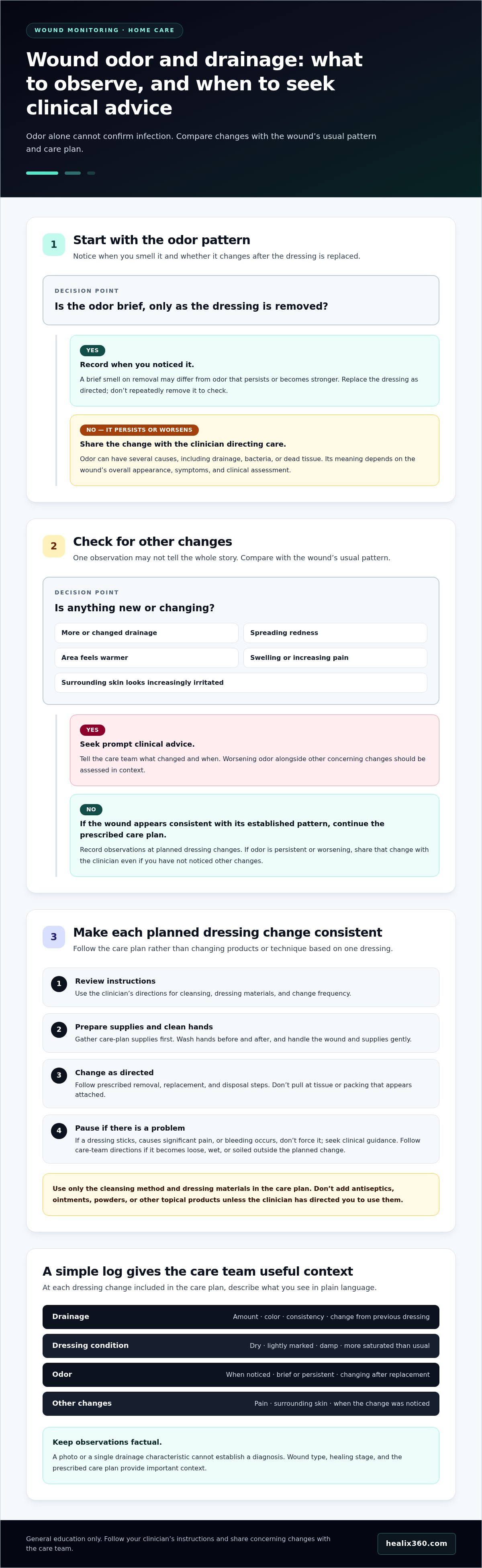
Odor can have several causes, including drainage, bacteria, or dead tissue, and should be considered alongside other changes. A smell noticed briefly as a dressing is removed may differ from odor that persists or becomes stronger. Note when you detect it and whether it changes after the dressing is replaced. Don’t repeatedly remove a dressing to check.
Odor alone cannot confirm a wound infection; its meaning depends on the wound’s overall appearance, symptoms, and clinical assessment. A photograph or a single drainage characteristic also can’t establish a diagnosis. If odor is worsening or appears with other concerning changes, share your observations with the clinician directing care. A wound specialist can assess drainage and odor in context and help determine whether the care plan needs review.
How to manage wound drainage and odor at home safely
A reliable routine starts with the wound-care plan, not a change in products or technique based on one dressing. For families managing wound drainage and odor at home in Orange County, consistency helps keep care aligned with the clinician’s assessment and makes changes easier to report.
Before each planned dressing change, follow this sequence:
- Review the instructions. Follow the clinician’s directions for cleansing, dressing materials, and how often to change the dressing.
- Prepare the supplies. Gather the items specified in the current care plan before removing the existing dressing.
- Clean your hands. Wash your hands before and after the dressing change, and handle the wound and supplies gently.
- Change the dressing as directed. Follow the prescribed steps for removal, replacement, and disposal. Don’t pull at tissue or packing that appears attached.
- Record what you observe. Note the dressing’s condition and any visible changes, then share relevant observations with the care team.
What should you do during a dressing change?
Use only the cleansing method and dressing materials in the care plan. Don’t add antiseptics, ointments, powders, or other topical products unless the clinician has directed you to use them. The right approach can depend on the wound and its treatment, so avoid substituting a product or changing the schedule on your own.
If a dressing sticks, causes significant pain, or bleeding occurs, pause rather than pulling or forcing it. Seek clinical guidance for instructions on what to do next. If the dressing becomes loose, wet, or soiled outside the planned change, follow the care team’s directions for that situation.
How can caregivers protect the skin around the wound?
Drainage can irritate the surrounding skin. Watch for visible changes and report them to the care team, especially if the skin appears increasingly irritated or drainage is affecting a wider area. Use a skin barrier or other product near the wound only if the clinician has approved it. Keep a simple log of dressing-change dates, dressing condition, drainage, odor, pain, and changes you notice. This record can help the clinician understand how the wound has changed between assessments.
If dressing changes are repeatedly difficult or the wound’s appearance is changing, an in-home assessment can bring specialist evaluation to the patient. Healix360 provides in-home wound assessments and personalized care plans in coordination with families and care teams.
Drainage and odor: which changes need clinical attention?
A single observation may not tell the whole story. Compare what you see with the wound’s usual pattern and care plan, and consider whether several changes are happening together. A brief odor when a dressing is removed is different from a smell that persists or worsens alongside increased drainage, pain, or changes in surrounding skin.
| Observation | What to do |
|---|---|
| Drainage and odor appear consistent with the established pattern, with no new surrounding skin changes or symptoms. | Continue the prescribed care plan and record observations at planned dressing changes. |
| Odor is persistent or worsening, drainage has increased or changed, redness is spreading, the area feels warmer or more swollen, or pain is increasing. | Contact the clinician directing wound care promptly for advice and assessment. Describe what changed and when you noticed it. |
| Symptoms are severe or worsening rapidly, or the person appears acutely unwell. | Seek urgent medical assessment rather than waiting for a routine wound visit. |
| There are potentially life-threatening symptoms, such as difficulty breathing, loss of consciousness, or bleeding that cannot be controlled. | Call emergency services. |
When is odor more concerning than a one-time observation?
Odor can arise for different reasons, including wound fluid or tissue changes, and doesn’t establish a diagnosis on its own. A persistent or worsening smell deserves more attention when it occurs with increased drainage, spreading redness, warmth, swelling, or increasing pain. Report the full pattern, including when the odor occurs and whether it continues after the dressing is replaced.
“Odor alone cannot confirm infection; the pattern of symptoms and a clinical wound assessment matter more than smell by itself.”
When should a caregiver seek urgent or emergency help?
For severe or rapidly worsening symptoms, seek urgent medical assessment. Use emergency services for potentially life-threatening symptoms, not a routine mobile wound-care visit. If the person has diabetes, poor circulation, or reduced sensation, changes may be harder to recognize or interpret. Follow their individualized clinician guidance and report concerns promptly, even if the wound appears only slightly different.
For caregivers managing wound drainage and odor at home in Orange County, the safest approach is to follow the existing care plan and share new or worsening changes with the clinician responsible for the wound. A mobile wound specialist can assess the wound in context when an in-home evaluation is appropriate.
A practical wound-monitoring plan for patients and caregivers in Orange County
A simple record can help patients, caregivers, and clinicians compare observations over time without disturbing the wound. For families coordinating care at home in Orange County, a shared log can also help keep everyone involved informed, particularly when the patient has limited mobility. Follow the wound-care plan and record observations during scheduled dressing changes rather than removing a dressing just to check the wound.
What should go in a wound-care log?
Use a notebook or a secure digital record. Keep entries factual and brief, and note questions to raise with the clinician.
- Date: Record when the dressing was changed or observed.
- Dressing condition: Note whether it was dry, damp, loose, or more saturated than expected.
- Wound observations: Describe visible drainage, odor, and any changes you noticed.
- Symptoms: Record pain and other reported changes relevant to the care team.
- Questions: List anything you want clarified at the next discussion.
Changes in mobility, appetite, or general condition may also be relevant. Include them when they help the care team understand the patient’s overall situation. If sharing photographs would help, take them only with the patient’s agreement and follow the clinician’s instructions. Store images and health information securely, and share them through a method the care team has approved.
How should the plan change for complex wounds?
There’s no single monitoring routine for every wound. Surgical, diabetic, pressure, venous, and arterial wounds may have different assessment and dressing instructions. The patient’s existing clinician, home health, or facility plan takes priority over general online guidance. Caregivers can ask the treating team how to record changes and who should receive updates, so the log supports coordinated care rather than replacing clinical assessment.
Consistent notes can make it easier to explain a change, but they don’t diagnose its cause. If limited mobility makes wound assessment difficult, Healix360’s mobile specialists can evaluate wounds at home or in care facilities and develop personalized plans in coordination with families and care teams. For guidance on wound drainage and odor at home in Orange County, learn about in-home wound assessments.
When mobile wound care in Orange County can help
Persistent drainage, recurring problems with dressings, or changing symptoms can make home care difficult to manage. A wound specialist can assess the wound and surrounding skin, consider the patient’s care history and current instructions, and help determine whether the plan needs adjustment. For people with limited mobility, an in-home assessment brings specialist evaluation to the patient, whether they are at home or in a care facility in Orange County.
Mobile assessment is appropriate for planned wound evaluation, not an emergency. If symptoms are severe or worsening rapidly, seek urgent medical assessment. Call emergency services for potentially life-threatening symptoms rather than waiting for a routine mobile visit.
What happens during a mobile wound assessment?
The specialist reviews the wound’s history, current care instructions, and changes reported by the patient or caregiver. The assessment considers the wound and surrounding skin alongside observations such as drainage, odor, and pain. Based on the clinical evaluation, the specialist develops a personalized care plan and may coordinate with family members, home health agencies, or other members of the existing care team.
If the wound’s condition calls for further investigation, wound culture and sensitivity testing may be considered when directed by the clinician. Testing is not based on odor alone; the specialist determines whether it is appropriate in the context of the wound assessment.
How can Orange County families take the next step?
Before an assessment, gather the wound log, current care instructions, and questions from the patient and caregivers. Note when drainage, odor, dressing problems, or other symptoms changed. These details can help the specialist understand what has happened between assessments and coordinate care with the existing team. Patients receiving care at home or in a facility can benefit from having the relevant caregiver or care-team contact available to discuss the current plan.
For families researching how to manage wound drainage and odor at home in Orange County, a mobile wound assessment provides professional evaluation and a care plan tailored to the patient’s needs. Healix360 provides mobile wound care and in-home assessments, not emergency services. Learn about mobile wound care support for patients receiving care at home or in a facility.
Build confidence with a clear wound-care plan
Safe wound care at home starts with following the clinician’s instructions and noting changes consistently. Drainage and odor need to be considered alongside the wound’s overall appearance and symptoms; odor alone can’t confirm an infection. A simple log of dressing condition, drainage, odor, and pain can help caregivers share useful information with the treating clinician. Seek timely clinical advice when symptoms change or worsen, and use emergency services for potentially life-threatening symptoms.
If you’re exploring how to manage wound drainage and odor at home in Orange County, an in-home specialist assessment can help clarify what the wound needs. Healix360’s board-certified wound care specialists provide mobile wound assessments and personalized care plans, coordinating with families and existing care teams. This can be a practical option when travel is difficult or ongoing wound changes need professional review.
Request mobile wound care support to arrange an in-home wound assessment in Southern California. With clear observations and qualified guidance, patients and caregivers can approach wound care with greater confidence.
Frequently Asked Questions
Is wound drainage normal during healing?
Some drainage, also called exudate, can occur as a wound heals. Its amount and appearance vary with the wound type, healing stage, and care plan, so there isn’t one expected pattern for every patient. Record changes in amount, color, or consistency at planned dressing changes. If drainage increases, changes noticeably, or comes with new pain or skin changes, contact the clinician directing wound care for guidance.
Can a wound smell bad without being infected?
Yes. Odor can have several causes and, by itself, doesn’t confirm an infection. A brief smell when removing a dressing may differ from odor that persists or becomes stronger. Pay attention to whether it occurs alongside increased drainage, spreading redness, warmth, swelling, or increasing pain. Report a worsening odor or a combination of changes to the treating clinician for assessment rather than trying to diagnose the cause at home.
How should I manage a wound dressing that becomes soaked with drainage?
Follow the care plan’s instructions for dressing changes and for what to do if a dressing becomes saturated. If it becomes soaked sooner than expected, contact the clinician directing care for advice rather than improvising with a different dressing or product. Use clean hands and the prescribed supplies for any instructed change. Don’t pull at attached tissue or packing, and don’t add antiseptics or topical products unless the clinician has directed you to.
What color or amount of wound drainage should prompt a call to a clinician?
There’s no single color or amount that can determine whether a wound has a problem. Consider the wound’s usual pattern and care instructions. Contact the clinician if drainage increases, changes in color or consistency, or saturates dressings more quickly than usual. Also report changes such as worsening odor, spreading redness, warmth, swelling, or increasing pain. Patients with diabetes, poor circulation, or reduced sensation should follow their individualized guidance.
When should I seek urgent help for wound odor or drainage?
Contact the treating clinician promptly about persistent or worsening odor, increased drainage, or new redness, warmth, swelling, or pain. Seek urgent medical assessment if symptoms are severe or worsening rapidly. For potentially life-threatening symptoms, such as difficulty breathing, loss of consciousness, or bleeding that cannot be controlled, call emergency services. Mobile wound care is for planned assessment, not emergency response.
Can a wound care specialist assess drainage at home in Orange County?
Healix360 provides mobile wound assessments in Southern California, including evaluations at patients’ homes or care facilities. A wound specialist can consider drainage and odor alongside the wound’s appearance, surrounding skin, care history, and reported changes, then develop a personalized plan. Specialists can also coordinate with families and the existing care team. For Orange County families, an in-home evaluation can be useful when travel is difficult.
What should I record when monitoring a wound at home?
At planned dressing changes, note the date, dressing condition, and drainage amount, appearance, and consistency. Record any odor, pain, and changes to the wound or surrounding skin, along with when you first noticed them. Include relevant changes in mobility, appetite, or general condition for the care team. Keep notes and any photographs taken with consent private and secure, and don’t remove dressings outside the care plan just to check.


