
A wound VAC leak alarm can sound alarming, but it doesn’t automatically mean the device has failed or that the wound is in immediate danger. If you’re asking, “what does a wound vac leak alarm mean,” it generally signals that the system may not be maintaining its prescribed negative pressure. The cause could involve the dressing seal, tubing, canister, or device, and the alarm alone may not identify which one.
It’s understandable to worry that therapy has stopped or that checking the equipment could disturb the wound. You can make a few safe observations without removing or adjusting the dressing, but follow the specific device instructions and the patient’s care plan. Don’t attempt repairs or change the dressing unless the care team has shown you how.
This article explains what the alarm may indicate, what you can safely look and listen for, and when to contact the wound care team. It also outlines symptoms that need prompt medical attention. A wound care clinician can assess the therapy and wound when needed. Healix360 provides mobile wound care in homes and care facilities across Southern California.
Key Takeaways
- Understanding what does a wound vac leak alarm mean starts with recognizing that it may signal a seal or suction issue. It doesn’t identify the cause or diagnose the wound.
- A lifted dressing edge, loose tubing connection, or visible tubing damage may contribute to an alarm. The specific cause depends on the device and setup.
- Follow the device instructions and care plan. Observe the dressing and tubing without removing or manipulating the dressing.
- Contact the wound care team if the alarm persists or recurs, therapy appears interrupted, or the dressing seems compromised.
- A wound care clinician can assess the wound, dressing, and therapy plan together. Mobile wound care may support patients at home or in care facilities.
What Does a Wound VAC Leak Alarm Mean?
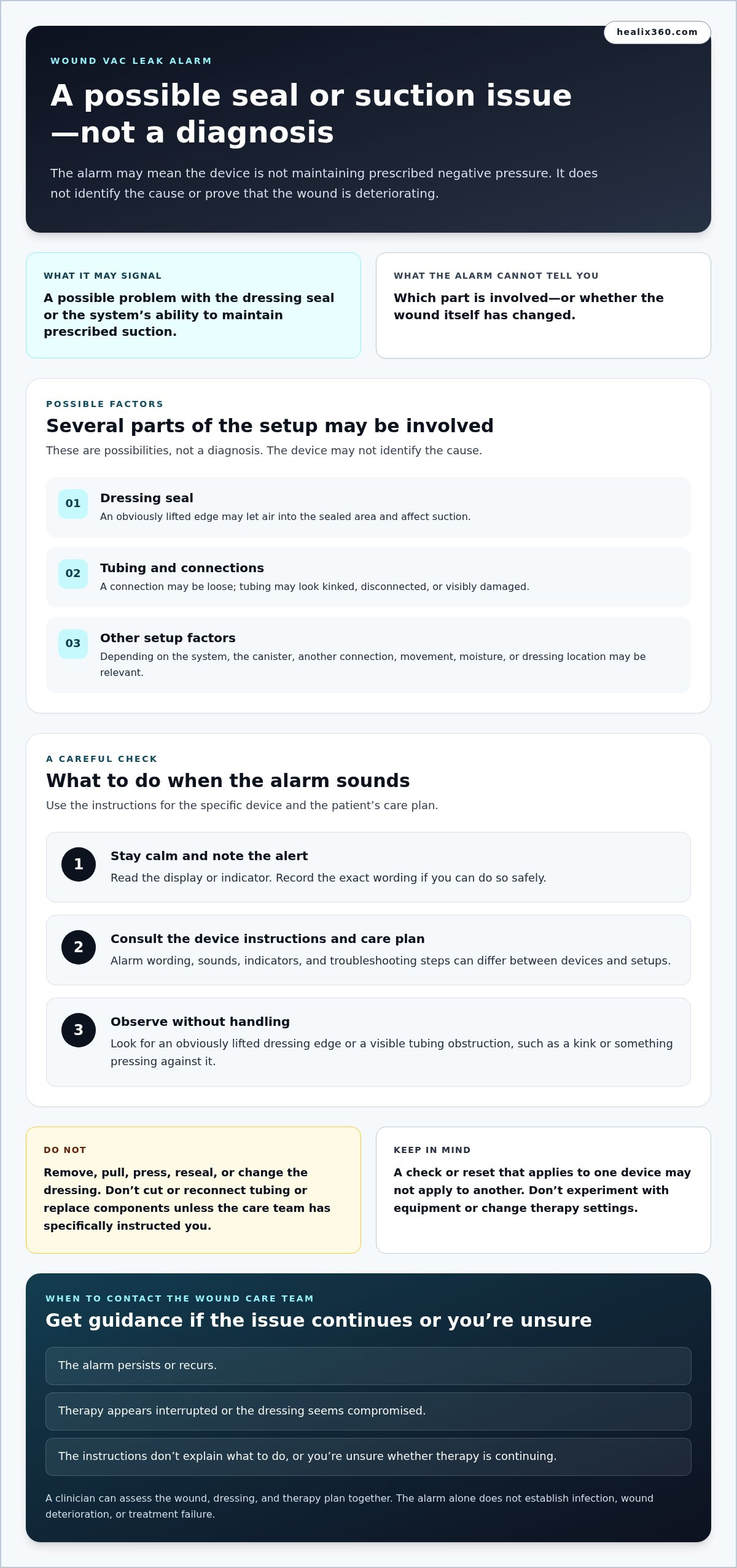
If you’re wondering what does a wound vac leak alarm mean, it generally means the device has detected a possible problem with the seal or its ability to maintain the prescribed suction. The alert doesn’t necessarily show whether the issue is at the dressing, tubing, connection, or another part of the setup. It also can’t determine whether the wound itself has changed.
A leak alarm is a signal to check the therapy setup, not proof that the wound is deteriorating. Alarm wording, sounds, and indicator lights differ among devices and therapy setups. Interpret the alert using the instructions for the specific unit and the patient’s care plan, rather than relying on a description of another device.
What negative pressure wound therapy is designed to do
Negative pressure wound therapy (NPWT), sometimes called wound VAC therapy, uses a dressing sealed over the wound and connected to a suction unit. The unit creates pressure below the surrounding air pressure and applies it according to the prescribed treatment plan. In plain language, it maintains a controlled pull through the sealed dressing. The approach and equipment can vary. Negative-pressure wound therapy provides a general overview of the treatment and its mechanisms.
Clinicians determine treatment parameters and dressing protocols based on the patient and wound. Don’t change a setting or alter the dressing based on a general description of NPWT. Follow the instructions for the specific therapy.
Why a leak alert should be taken seriously but calmly
A compromised seal may make it harder for the device to maintain the prescribed therapy. That deserves attention, but an alarm by itself doesn’t establish infection, wound deterioration, or treatment failure. It signals a possible therapy issue, not its cause or clinical consequence.
Pause and consult the device instructions and care plan. Note the alert shown and whether the device appears to be operating as expected, but don’t remove or adjust the dressing unless the care team has instructed you to do so. If the instructions don’t explain what to do, or you’re unsure whether therapy is continuing, contact the wound care team for guidance.
What Can Trigger a Wound VAC Leak Alarm?
A leak alert can have several possible explanations. The device signals that it may not be maintaining the expected seal or suction, but it may not identify which part of the setup is involved. If you’re asking what does a wound vac leak alarm mean, the practical answer depends on the equipment, dressing, and prescribed care plan.
Possible factors include a lifted dressing edge, a loose tubing connection, or tubing that appears kinked or damaged. Movement, moisture, or the dressing’s location may also affect the seal in some setups. These are possibilities, not a diagnosis, and an alert doesn’t confirm that any one of them is the cause. St. Jude Children’s Research Hospital offers a patient-focused explanation of NPWT, including how device alerts may relate to the therapy system.
Dressing seal and tubing issues
A visible lifted dressing edge may let air into the sealed area and affect suction. Tubing may also be loose at a connection, kinked, disconnected, or visibly damaged. Seeing one of these signs doesn’t establish that it caused the alarm, but it can help you describe what you notice when speaking with the wound care team.
Observe the dressing and tubing without pulling, pressing, or changing them. Don’t try to reseal the dressing, cut or reconnect tubing, or replace components unless the care plan or clinician specifically instructs you to do so.
Device, canister, and setup factors
Depending on the system, an alert may relate to a connection, canister, or another setup component. Display messages and troubleshooting steps are device-specific. A canister check or reset procedure that applies to one unit may not apply to another, so don’t assume every leak alarm has the same cause or remedy.
The device manual and the patient’s care plan determine which troubleshooting steps are appropriate for that specific setup. Use them to identify what the alert means and which observations or checks are permitted. If the instructions don’t address the situation or the alarm continues, contact the wound care team rather than experimenting with the equipment. Healix360 provides mobile wound care for patients who need professional wound assessment at home or in a care facility. Learn more about mobile wound care support.
What Should You Check When the Wound VAC Leak Alarm Sounds?
An alarm can be unsettling, but a careful, limited check can help you report what’s happening without disturbing the wound. If you’re trying to understand what does a wound vac leak alarm mean in this situation, start with the alert shown on the specific device. The patient’s clinician and device instructions take precedence over general guidance in this article.
Follow this sequence:
- Stay calm and note the alert. Read the display or indicator, and record the exact wording if you can do so safely.
- Consult the device instructions and care plan. Use the guidance for the specific unit and the patient’s prescribed therapy.
- Observe without handling. Look for an obviously lifted dressing edge or visible tubing obstruction, such as a kink or something pressing against it.
- Write down what you notice. Record when the alarm began, whether it stopped or returned, and any visible change in the setup.
Safe observations a caregiver can make
Keep the device in its prescribed position while you observe it. Check the display, indicator lights, and tubing visually, but don’t pull on the tubing, press down on the dressing, or move components to test whether the alarm changes. If it’s practical and doesn’t delay following the care plan, a photo of the display may help you share the exact alert with the treating team.
Small details can be useful. For example, note whether the alert appeared during movement or whether a dressing edge looks visibly raised. These observations don’t prove the cause, but they give the clinician more specific information than a general report that “the machine is alarming.”
Actions to avoid without clinical instructions
Don’t remove the dressing, touch the wound, or improvise a repair. Avoid changing prescribed settings or cutting, reconnecting, or replacing any part of the system unless the device instructions or care team specifically direct you to do so.
Don’t silence, reset, or switch off the unit simply to stop the sound. Those actions may affect therapy or make it harder to understand the alert, depending on the device. If the manual or care plan doesn’t explain the alert, or you’re uncertain about a step, contact the treating wound care team rather than experimenting. Follow any urgent guidance in the patient’s care plan.
When Does a Wound VAC Leak Alarm Need Clinical Attention?
Contact the treating wound care team if the alarm persists, returns, or can’t be addressed by following the device instructions and care plan. Clinical guidance is especially important if therapy appears interrupted or the dressing looks lifted, damaged, or otherwise compromised. Don’t assume the alarm will resolve on its own, and don’t attempt a repair that hasn’t been recommended for the patient’s setup.
The alarm itself doesn’t mean emergency care is needed. The patient’s symptoms and the condition of the dressing matter, too. Share new or worsening changes with a clinician, even if the device alert stops.
Call the treating wound care team
When you call, share the device model if known, the exact alert wording, when it began, how long it has continued, and whether it has recurred. Describe what you can see without touching the dressing, such as a lifted edge or visible tubing damage. These details help the care team interpret the alert alongside the wound and prescribed therapy plan.
Seek clinical advice if the instructions don’t explain what to do or you’re uncertain whether the system is delivering the prescribed therapy. Don’t change settings or remove the dressing while waiting for guidance unless the care plan specifically directs you to do so.
Recognize signs that need urgent medical evaluation
Contact a clinician promptly if you notice concerning changes such as fever, increasing redness or warmth around the wound, worsening pain, unusual or foul-smelling drainage, or the patient feeling unwell. These signs don’t establish a diagnosis, but they warrant professional assessment. Mention them when you report the alarm, even if you think the device issue has been corrected.
Severe symptoms, significant bleeding, or rapid deterioration call for emergency services rather than routine follow-up with the wound care team. If symptoms are serious or worsening quickly, don’t delay emergency care to troubleshoot the device. A leak alarm alone, without severe symptoms, doesn’t establish that an emergency is occurring.
Healix360 provides mobile wound care for patients who need therapy assessment at home or in a care facility. Explore mobile wound care support from Healix360’s wound care specialists.
How Wound VAC Specialists Can Help Restore a Safe Care Plan
A wound VAC alarm is one piece of information, not a complete assessment. A clinician can consider the wound, dressing, therapy setup, prescribed plan, and the patient’s individual needs together. This helps determine whether the next step is guidance on the existing plan, further evaluation, or a change directed by the treating team. An alarm doesn’t automatically mean the dressing must be changed or that a specialist visit is required.
If you’re still asking what does a wound vac leak alarm mean for a particular patient, the answer depends on these details. The device alert alone can’t establish the cause or determine whether the treatment plan should change.
What a wound care assessment may address
The treating clinical team may review what the device displayed, what the caregiver observed, and whether the prescribed therapy appears to be continuing. If an assessment is needed, clinicians can evaluate the wound and dressing alongside the therapy plan and relevant patient-specific factors. Next steps should follow the device instructions and existing care plan, rather than a general troubleshooting suggestion.
For people receiving care at home or in a facility, advanced mobile wound care in Southern California explains how specialist support can be coordinated in these settings.
Coordinating wound care at home or in a facility
Clear communication helps everyone involved follow the same plan. A patient or caregiver can share the alert wording and observations with the treating clinician. In a care facility, staff can communicate those details with the wound care team and help coordinate care with the patient and family. Healix360’s board-certified wound care specialists provide mobile wound care in homes and care facilities, coordinating with families and healthcare facilities.
For surgical wound concerns, see in-home surgical wound care guidance. Patients and caregivers seeking non-emergency wound care support can explore Healix360’s mobile wound care services for care at home or in a facility. If the patient has severe symptoms or is deteriorating rapidly, seek emergency medical attention rather than waiting for routine wound care coordination.
Take the Next Step With Confidence
A wound VAC leak alarm may indicate a seal or suction concern, but it doesn’t identify the cause or prove that the wound has worsened. Follow the device instructions and the patient’s care plan, and limit checks to safe observations. If the alarm persists or returns, therapy appears interrupted, the dressing is compromised, or the patient develops concerning symptoms, contact the treating wound care team. Seek emergency care for severe or rapidly worsening symptoms.
For patients who need clinical support with negative pressure wound therapy, Healix360 provides mobile wound care in home and facility settings across Southern California. Its board-certified wound care specialists can assess the wound and therapy in the context of the patient’s care plan. Learn about Healix360 mobile wound care and its support for patients at home or in care facilities.
Knowing what does a wound vac leak alarm mean can help you respond calmly, observe safely, and share useful information with the care team. With appropriate clinical guidance, patients and caregivers can take the next step with greater confidence.
Frequently Asked Questions
What does a leak alarm mean on a wound VAC?
A leak alarm generally indicates that the system may not be maintaining its seal or prescribed suction. If you’re asking “what does a wound vac leak alarm mean,” the alert points to a possible therapy-system issue, not its exact cause. A lifted dressing edge or tubing issue may be involved, but the alarm doesn’t diagnose the wound or prove it has worsened. Check the specific device instructions and care plan.
Can I fix a wound VAC leak alarm myself?
You can make safe visual observations, such as noting a lifted dressing edge, visible tubing damage, or the exact alert on the display. Follow only the checks permitted by the device instructions and the patient’s care plan. Don’t remove or press on the dressing, alter settings, or improvise a repair. If the alarm continues or the instructions don’t clarify what to do, contact the treating wound care team.
Is a wound VAC leak alarm an emergency?
A leak alarm alone doesn’t necessarily mean the patient needs emergency care. Follow the device instructions and contact the wound care team if the alert persists, recurs, or therapy appears interrupted. Seek prompt medical assessment for concerning changes such as fever, increasing redness, worsening pain, unusual drainage, or feeling unwell. Severe symptoms, significant bleeding, or rapid deterioration call for emergency services rather than routine follow-up.
How long can a wound VAC stay in alarm?
There isn’t one safe duration that applies to every wound VAC, because alarm behavior and instructions vary by device and therapy plan. Don’t wait for a general time limit before acting. Check the specific manual and care plan, and contact the wound care team if the alarm persists, returns, or you’re unsure whether prescribed therapy is continuing. Don’t switch off the system unless its instructions or the care team direct you to.
What happens if a wound VAC loses suction?
If suction isn’t maintained, the system may not deliver therapy as prescribed. What that means for the patient depends on the wound, treatment plan, and how the specific device is functioning. An alarm doesn’t establish that harm has occurred, but a persistent loss of suction needs attention. Follow the device instructions, avoid adjusting the dressing or equipment without guidance, and report the alert to the treating wound care team.
Can a wound VAC leak alarm mean the wound is infected?
A leak alarm by itself doesn’t mean the wound is infected. It signals a possible issue with the therapy system and can’t diagnose the wound. Contact a clinician if you notice fever, increasing redness or warmth, worsening pain, unusual or foul-smelling drainage, or if the patient feels unwell. These changes need professional assessment, but they don’t confirm an infection on their own.
Should I turn off a wound VAC when the leak alarm sounds?
Don’t turn off the wound VAC just to stop an alarm unless the device instructions or treating clinician tell you to. Read the alert and follow the steps in the care plan for that specific system. If you can’t determine what to do, contact the wound care team and explain the alert and any visible changes. Healix360 provides mobile wound care, including negative pressure wound therapy, in homes and care facilities across Southern California.


