
You noticed a faint, persistent redness on your loved one’s heel this morning, and despite your best efforts to reposition them, the color hasn't faded. For many family caregivers in Southern California, this small discovery triggers a deep sense of anxiety about what comes next. Caring for a bedbound family member is a demanding, 24/7 commitment that often feels like a race against time and biology. You want to provide the best care possible, yet the fear of a hospital readmission due to skin breakdown is a constant weight on your shoulders.
Successfully preventing pressure ulcers in immobile patients Los Angeles families care for requires more than just good intentions; it demands a clinical approach to skin integrity. This guide will provide you with the professional protocols used by wound specialists to maintain skin health at home and clarify exactly when you should call for an expert bedside evaluation. We'll cover a comprehensive prevention checklist, identify the critical early warning signs of Stage 1 injuries, and explain how mobile advanced wound care can act as a vital safety net for your home care routine.
Key Takeaways
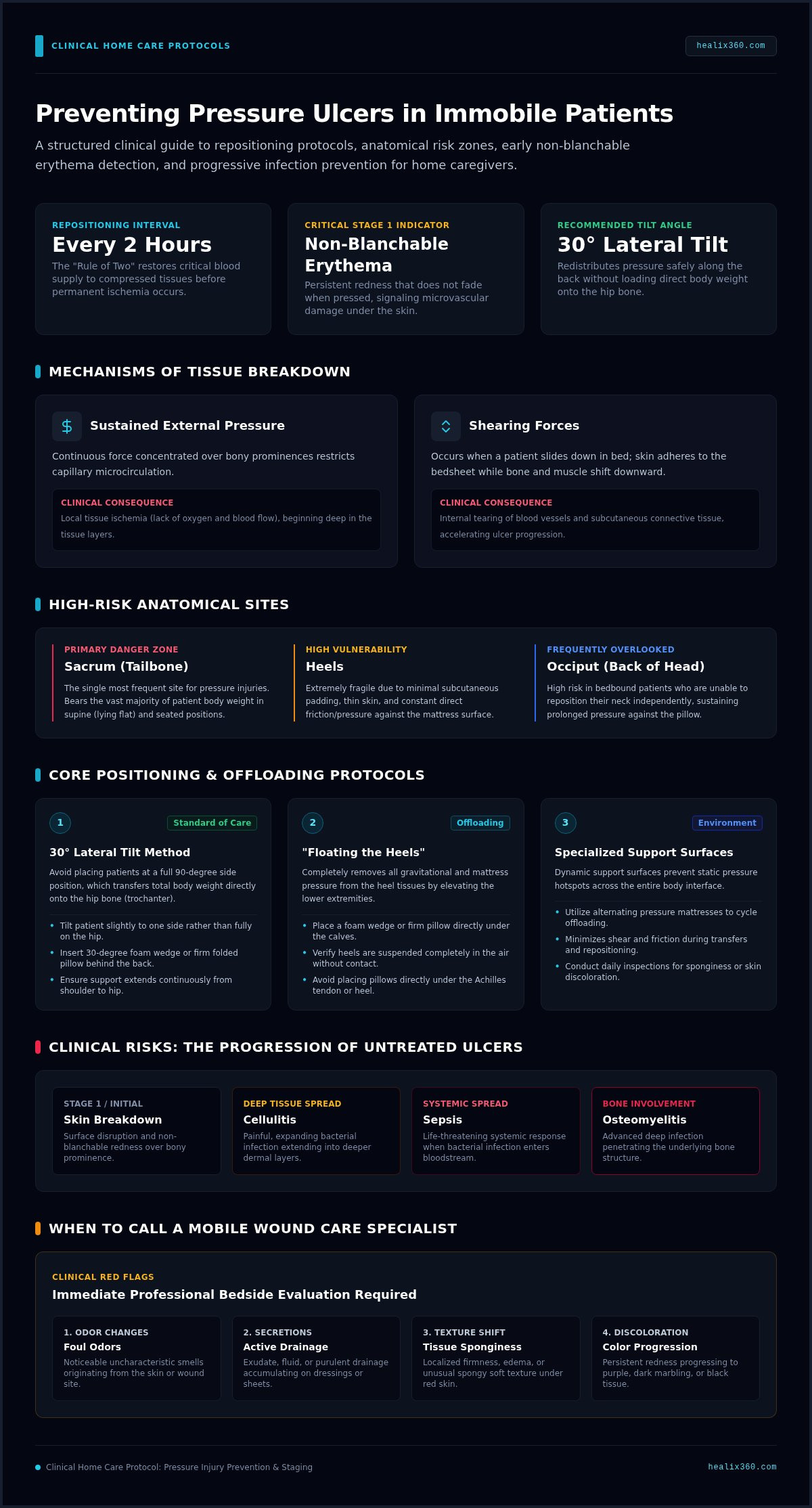
- Implement a strict two-hour repositioning schedule using the 30-degree lateral tilt method to protect bony prominences from sustained pressure.
- Conduct daily skin inspections to identify early signs of discoloration or sponginess, which are critical for preventing pressure ulcers in immobile patients Los Angeles caregivers manage at home.
- Optimize the home environment with specialized support surfaces, such as alternating pressure mattresses, to reduce friction and shear during patient transfers.
- Recognize clinical "red flags" like foul odors, drainage, or changes in tissue color that indicate the need for a professional bedside evaluation from a mobile wound specialist.
What Are Pressure Ulcers and Why Are Immobile Patients at Risk?
Pressure ulcers, commonly known as bedsores, represent localized damage to the skin and underlying soft tissue. These injuries usually occur over bony prominences where external pressure restricts blood flow, leading to tissue ischemia. For families focused on preventing pressure ulcers in immobile patients Los Angeles homes often present unique challenges due to the high concentration of elderly residents with limited mobility. Unlike a temporary skin irritation, a pressure ulcer is a clinical condition that requires immediate intervention to prevent progression.
Understanding the difference between simple redness and a Stage 1 injury is essential for home caregivers. A Stage 1 injury is characterized by non-blanchable erythema. This means the skin remains red even when pressed, indicating that microvascular damage has already begun. For a deeper understanding of these categories, clinicians refer to the pressure ulcer stages and classification system. Recognizing this early warning sign is the first step in avoiding more invasive medical complications.
Common Sites for Skin Breakdown
Skin breakdown isn't random; it follows predictable patterns based on how a patient is positioned. The sacrum (tailbone) and heels are the most frequent sites of injury because they bear the majority of a patient's weight in a supine position. Shearing is another critical factor. It occurs when a patient slides down in bed, causing the skin to stay in place against the sheets while the underlying bone and muscle shift. This internal tearing of tissue accelerates ulcer formation. High-risk zones include:
- Sacrum (Tailbone): The most common site for injuries while lying flat or sitting.
- Heels: Highly vulnerable due to thin skin and constant contact with the mattress.
- Occiput (Back of Head): Often overlooked in patients who cannot reposition their neck.
For a deeper look at management strategies, see our Comprehensive Guide to Bed Sores & Ulcer Treatment in Southern California (2026).
The Consequences of Untreated Ulcers
Leaving a pressure injury unmanaged can lead to severe clinical outcomes. What begins as a surface-level break in the skin can quickly evolve into cellulitis, a painful bacterial infection of the deep skin layers. If the infection reaches the bloodstream, it can cause sepsis, a life-threatening systemic response. In advanced cases, the ulcer may extend to the bone, resulting in osteomyelitis. Proactive management is the most effective strategy for preventing pressure ulcers in immobile patients Los Angeles caregivers can employ to maintain a loved one's quality of life and avoid acute medical crises.
Step-by-Step Positioning Protocol for Home Care
Adhering to a strict schedule is the foundation of preventing pressure ulcers in immobile patients Los Angeles families manage at home. Clinical standards dictate the "Rule of Two," which requires repositioning the patient at least every two hours. This frequency ensures that blood flow returns to compressed tissues before permanent damage occurs. As a core principle, remember that proper positioning is not just about moving the patient, but about redistributing weight away from vulnerable bony prominences.
One of the most effective offloading techniques involves "floating the heels." Instead of allowing the feet to rest directly on the mattress, place a foam wedge or pillow under the calves. This ensures the heels remain suspended in the air, completely removing pressure from one of the most common sites for skin breakdown. These clinical guidelines for preventing pressure injuries are essential for maintaining skin integrity in long-term home care settings.
The 30-Degree Lateral Tilt
Many caregivers mistakenly place patients in a full 90-degree side-lying position. This actually increases the risk of injury by placing the entire weight of the body directly on the trochanter, or hip bone. Instead, utilize the 30-degree lateral tilt to protect the hips and sacrum. If you're unsure if your home setup is sufficient for these maneuvers, a professional bedside wound evaluation can provide clarity on your specific technique. To perform the tilt correctly:
- Turn the patient slightly to one side rather than onto their hip.
- Place a 30-degree foam wedge or a firm, folded pillow behind the back.
- Ensure the wedge supports the body from the shoulder down to the hip.
- Check that the hip bone isn't bearing the full weight; you'll know the alignment is correct when the patient is supported at an angle where the sacrum and the hip bone are both relieved of direct pressure.
Seated Positioning for Wheelchair Users
Pressure injuries can develop even faster when a patient is seated because gravity concentrates weight on the ischial tuberosities, also known as the "sit bones." This makes the "15-minute rule" vital. Every 15 minutes, the patient should perform a weight shift, even if it's just a slight lean to one side or a brief lift. These adjustments are vital for preventing pressure ulcers in immobile patients Los Angeles caregivers support, as seated pressure can be more intense than bed pressure.
Selecting the right support surface is equally important. Air-filled cushions often provide better immersion and envelopment than standard foam, while gel cushions offer superior stability. Ensure the patient's feet are flat on footrests; dangling feet pull the pelvis forward, creating dangerous shearing forces on the tailbone. Proper seated alignment keeps the spine neutral and distributes weight across the thighs rather than just the buttocks.
Skin Care and Nutrition: The Internal Defense
Maintaining the integrity of the skin requires a dual approach that combines external vigilance with internal support. For those preventing pressure ulcers in immobile patients Los Angeles weather can be a complicating factor. The region's dry climate often leads to trans-epidermal water loss, making the skin brittle and prone to micro-tears. Proper hydration is essential; caregivers should monitor fluid intake closely, as dehydrated skin lacks the elasticity needed to withstand pressure and shear. It's not just about the surface; the skin's resilience starts from within.
Beyond hydration, nutritional status plays a decisive role in tissue repair and maintenance. A clinical diet rich in protein, Vitamin C, and Zinc provides the building blocks for collagen synthesis and immune function. If a patient’s caloric or protein intake is insufficient, the body may pull nutrients from the skin and muscle to support vital organs, leaving the periphery vulnerable to breakdown. Reviewing bedsores symptoms and risk factors highlights how systemic health directly influences the skin's ability to resist injury. Proactive nutritional management acts as a primary defense against the early stages of skin failure.
The Daily Skin Inspection Checklist
A thorough inspection must occur every 24 hours to catch changes before they evolve into open wounds. Use a long-handled hand mirror to visualize hard-to-see areas like the sacrum, heels, and the backs of the thighs. You're looking for "non-blanchable erythema," which is redness that doesn't turn white when pressed. Other warning signs include localized warmth or a "boggy" or spongy feel to the tissue. If you notice these changes, it’s time to consult a wound specialist for a professional assessment. Catching an injury at this stage can prevent the need for more invasive interventions like debridement or skin grafts.
Moisture Management Strategies
Chronic exposure to moisture is a primary driver of incontinence-associated dermatitis (IAD), which significantly increases the risk of pressure injuries. To protect the skin, use pH-balanced cleansers rather than standard soaps that can strip the skin's natural acid mantle. Applying a high-quality barrier cream creates a physical shield against moisture from incontinence or perspiration. It's also vital to change linens immediately if they become damp. Wet sheets increase friction against the skin, leading to "friction burns" that compromise the dermal layer. Consistent moisture control is a non-negotiable part of preventing pressure ulcers in immobile patients Los Angeles families must manage to avoid secondary infections like cellulitis.
Optimizing the Home Environment in Los Angeles
Unlike a clinical facility, the home environment must be intentionally modified to support skin health. For those focused on preventing pressure ulcers in immobile patients Los Angeles residences require clinical-grade equipment and precise climate control. Southern California’s high temperatures often cause excessive perspiration, which leads to skin maceration. This softening of the tissue makes it far more susceptible to breakdown. Maintaining a cool, stable room temperature is a simple yet vital step in reducing moisture accumulation under the patient. Organizing the bedside is equally important for safety; keep essential supplies, such as pH-balanced cleansers and barrier creams, within arm's reach to ensure they are used consistently during every repositioning.
Selecting the correct support surface is a primary decision for long-term care. Alternating pressure mattresses utilize air cells that inflate and deflate in cycles to shift weight automatically, which is ideal for patients who are completely immobile. Low-air-loss overlays provide a constant flow of air to manage the skin's microclimate and keep the surface dry, making them superior for patients with moisture management issues. To facilitate safer movement, use friction-reducing draw sheets. These allow caregivers to reposition a loved one without dragging the skin across the mattress, effectively eliminating the shearing forces that lead to deep tissue damage.
Durable Medical Equipment (DME) Essentials
To qualify for a hospital bed or specialized mattress through Medicare in California, a physician must document the medical necessity. This typically requires evidence of an existing Stage 2 injury or a high risk of breakdown due to total immobility. Group 1 surfaces are generally non-powered overlays, while Group 2 surfaces are powered air mattresses designed for more advanced prevention and treatment. A trapeze bar is another valuable addition for the home. It allows patients with some upper-body strength to assist in their own movement, which promotes autonomy and reduces the physical burden on the caregiver.
Local Resources for LA Caregivers
Families in Glendale and Beverly Hills often employ home health agencies for general nursing care. However, complex skin management requires home health wound care collaboration to ensure specialized protocols are followed. Mobile providers like Healix360 do not replace your existing team. Instead, they coordinate with your case manager to provide advanced bedside evaluations and regenerative treatments in the comfort of your home. If you are concerned about a non-healing wound, you can request a mobile wound care evaluation to ensure your loved one receives specialist-level attention without the stress of medical transport.
When to Call a Mobile Wound Care Specialist
While home prevention protocols are the first line of defense, some clinical situations require immediate intervention from a specialist. For families focused on preventing pressure ulcers in immobile patients Los Angeles geography and traffic make transporting a bedbound patient to a wound clinic a significant hurdle. This physical strain on the patient often leads to missed appointments and delayed healing. Mobile wound care eliminates this barrier by bringing hospital-grade diagnostics and treatments directly to the bedside. Professional intervention is necessary when you observe "red flag" symptoms that indicate the wound has progressed beyond the dermal layer.
Clinical indicators of a serious complication include a foul odor emanating from the site, purulent drainage (pus), or a change in the wound bed's color. If you see yellow, stringy tissue known as slough or black, leathery tissue called eschar, the wound is no longer manageable with standard dressings. These materials prevent the wound from closing and act as a breeding ground for bacteria. Healix360 specialists provide Medicare-compliant home evaluations throughout Southern California, ensuring that patients receive expert care without the risks associated with medical transport. As a Medicare Part B provider, these mobile consultations are often covered, making advanced care accessible for seniors in Los Angeles County.
Advanced Bedside Treatments
Once a pressure injury reaches Stage 2 or higher, "wait and see" is a dangerous strategy that risks systemic infection. Specialist intervention often involves sharp debridement, a procedure where a board-certified practitioner removes necrotic tissue to stimulate the body's natural healing response. Following debridement, we may utilize regenerative therapies such as amniotic membrane grafts or bio-engineered skin substitutes. These advanced materials provide a biological scaffold that encourages rapid tissue growth and closure. These treatments were once only available in inpatient settings, but our mobile model allows us to implement them in the comfort of your home.
Healix360: Your Partner in Prevention
Our network of board-certified specialists serves Glendale, Beverly Hills, and the greater Los Angeles area, providing a clinical safety net for home caregivers. We don't just treat the wound; we develop personalized treatment plans tailored to the patient’s specific mobility level and nutritional needs. By coordinating with your existing home health agency or case manager, we ensure a seamless continuum of care. Our mission is centered on preventing pressure ulcers in immobile patients Los Angeles families trust us to manage, focusing on avoiding hospital readmissions and preventing long-term complications. If you've noticed persistent redness or skin breakdown, contacting us for a bedside evaluation is the most proactive step you can take for your loved one's health.
Securing Long-Term Skin Health at Home
Maintaining skin integrity requires a disciplined approach to repositioning, moisture control, and nutritional support. By applying clinical protocols like the "Rule of Two," you've established a strong foundation for preventing pressure ulcers in immobile patients Los Angeles caregivers manage daily. Consistency is your strongest defense. These proactive measures are essential for avoiding the clinical complications that lead to hospital readmissions and prolonged pain.
You don't have to navigate these medical challenges without professional guidance. When skin changes persist, specialized intervention provides a necessary safety net. Healix360 is a Medicare Part B provider serving all of Southern California, and our board-certified specialists focus on managing non-healing chronic wounds directly at the bedside. You can request a bedside wound assessment from Healix360 today to receive a personalized treatment plan in your home. Your dedication to your loved one’s health is vital, and our team is ready to provide the expertise needed to ensure their continued comfort and recovery.
Frequently Asked Questions
How often should I turn a bedridden patient to prevent bedsores?
A bedridden patient should be turned at least every two hours to maintain tissue health. Clinical standards often refer to this as the "Rule of Two," which ensures that blood flow returns to compressed areas before permanent damage occurs. For those focused on preventing pressure ulcers in immobile patients Los Angeles caregivers should also implement the 30-degree lateral tilt method. This specific angle protects the hip bones and sacrum from bearing the full weight of the body.
Does Medicare pay for at-home wound care in Los Angeles?
Medicare Part B typically covers professional wound assessments and advanced treatments conducted in a patient's home or assisted living facility. Healix360 is a Medicare Part B provider specializing in mobile wound management throughout Southern California. This coverage includes bedside evaluations and the application of specialized medical products like regenerative grafts. Because these services are billed as professional medical consultations, they offer a cost-effective way to receive specialist-level care without the need for medical transport.
What is the best mattress for an immobile patient at home?
The most effective option for a totally immobile patient is an alternating pressure mattress or a low-air-loss overlay. These devices are designed to automatically redistribute weight and manage the skin's microclimate by reducing moisture. In California, these are often classified as Group 2 support surfaces and may be covered by insurance if medical necessity is documented by a physician. Choosing the right surface is a vital step in preventing pressure ulcers in immobile patients Los Angeles families manage.
Can a Stage 1 pressure ulcer be cured at home?
A Stage 1 pressure ulcer can often be reversed at home if the pressure is removed immediately and consistently. At this stage, the skin is still intact but shows persistent redness that doesn't turn white when pressed. Success depends on a strict repositioning schedule and optimizing the patient’s nutrition. If the redness does not fade within 24 hours despite these efforts, it's essential to involve a mobile wound specialist to prevent the injury from progressing further.
What are the early warning signs of a pressure injury?
Early warning signs include localized skin that feels warmer or cooler than the surrounding area. You should also look for "non-blanchable erythema," which is redness that remains even after you apply light pressure. The tissue might feel unusually firm or "boggy" and spongy to the touch. These changes indicate that the microvascular system is under significant stress. Catching these signs during a daily skin inspection is the most effective way to stop a bedsore from forming.
How do I know if a bedsore is infected?
An infected pressure injury typically exhibits a foul or sickly odor and purulent drainage, which is often thick, yellow, or green. The skin surrounding the wound may become increasingly red, swollen, and painful to the touch. In some cases, a patient might develop a systemic fever or chills. If you notice these clinical red flags, you should contact a mobile wound specialist immediately for a bedside evaluation and potential wound culture testing to guide effective antibiotic treatment.
Why is protein important for preventing pressure ulcers?
Protein is the primary building block for tissue repair and collagen synthesis. Without adequate protein intake, the body cannot maintain the dermal layers or heal existing skin breaks. This is especially important for elderly patients in Southern California who may also struggle with hydration. A diet rich in protein, combined with Vitamin C and Zinc, strengthens the internal defense of the skin. This nutritional foundation makes the tissue more resilient against the physical forces of pressure and shear.
What should I do if my loved one refuses to be moved?
If a patient refuses to be moved, start by explaining that repositioning is a medical necessity to prevent severe pain and infection. Sometimes, using friction-reducing draw sheets can make the process less intrusive and more comfortable for the patient. You might also try "micro-shifting," which involves making very small adjustments to their position more frequently. If the refusal persists, a professional bedside consultation from a wound specialist can help the patient understand the clinical risks of immobility.


