
The persistent weeping from a lower limb isn't just a management hurdle; it's a signal that your body's internal drainage system has reached a critical failure point. You've likely spent months cycling through absorbent pads while searching for a way to regain control over the swelling and skin breakdown. Managing lymphedema-related wounds at home San Bernardino requires more than just reactive bandaging. It demands a proactive, clinical strategy that addresses the underlying lymphatic congestion with precision. You deserve a solution that prioritizes your comfort and long-term vitality without the exhaustion of frequent hospital visits.
This guide provides a clinical framework for stabilizing chronic ulcers and reducing limb volume from the comfort of your living room. We'll explore how advanced mobile medical interventions, including Medicare-covered compression therapy and regenerative technologies, bridge the gap between basic home care and hospital-level excellence. You'll learn the precise indicators that signal it's time to transition from self-care to professional bedside assessment. By implementing these data-driven strategies, you can focus on closing non-healing wounds and reclaiming your physical freedom through expert, personalized care.
Key Takeaways
- Learn why lymphorrhea prevents traditional scabbing and requires specialized moisture management to protect the integrity of your skin.
- Master the four pillars of stabilization, focusing on meticulous hygiene and clinical-grade compression to redirect interstitial fluid away from the wound site.
- Recognize the clinical indicators that signal a need for advanced interventions like sharp debridement or regenerative amniotic grafts to restart the healing process.
- Establish a disciplined daily routine for managing lymphedema-related wounds at home San Bernardino to monitor changes in limb volume and prevent cellulitis.
- Understand how mobile specialists bridge the gap between home care and hospital-level precision by delivering specialized, Medicare-compliant treatments directly to your bedside.
What Are Lymphedema-Related Wounds and Why Are They Tricky?
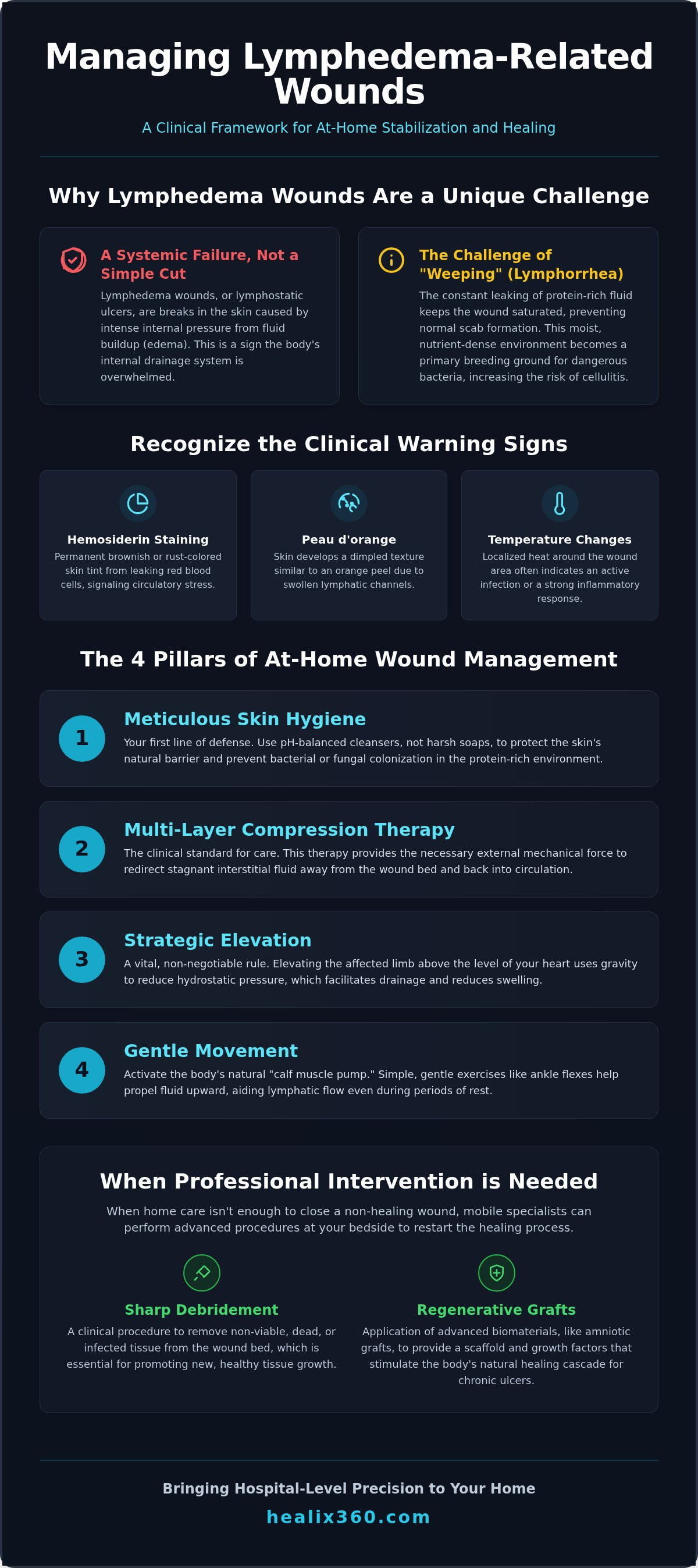
Lymphedema wounds aren't simple cuts; they're the result of a biological system under extreme pressure. When your lymphatic system fails to drain fluid effectively, it accumulates in the interstitial spaces between your cells. This buildup creates lymphostatic ulcers, which are essentially pressure-induced breaks in the skin. Understanding Lymphedema requires recognizing that these wounds are symptomatic of a systemic failure rather than a localized trauma. They represent a critical point where your body's internal drainage can no longer maintain the integrity of its external barrier.
The most challenging aspect of managing lymphedema-related wounds at home San Bernardino is dealing with lymphorrhea, often described as "weeping" or "leaking" legs. This clear or straw-colored fluid is highly concentrated with proteins. Because the wound remains constantly saturated, it cannot form a traditional protective scab. This moisture trap makes healing exceptionally difficult and turns the area into a primary breeding ground for bacteria. Without specialized intervention, this protein-rich environment significantly increases the risk of cellulitis, a deep skin infection that can rapidly progress to life-threatening sepsis.
The Connection Between Edema and Skin Breakdown
Chronic swelling acts like a balloon being overfilled. As the fluid volume increases, the skin stretches until it loses its structural integrity and protective barrier. You might notice your skin becoming thin, shiny, or brittle before it eventually breaks. A common precursor to a full ulcer is hemosiderin staining, where red blood cells leak into the tissue and leave behind a permanent brownish or rust-colored tint. This discoloration is a warning that your circulatory system is struggling. Because of this, managing edema in legs is the most critical first step in preventing a minor skin irritation from becoming a chronic wound.
Common Symptoms of Lymphedema Ulcers
Identifying the specific stage of your condition is vital for accurate treatment. Early stages often feature pitting edema, where pressing your finger into the skin leaves a temporary indentation. As the condition progresses and tissue becomes fibrotic, the edema becomes non-pitting, feeling firm or woody to the touch. You should also watch for these specific clinical markers:
- Peau d'orange: The skin takes on a dimpled texture similar to an orange peel.
- Foul Odor: A distinct sign that bacteria are colonizing the protein-rich fluid.
- Temperature Changes: Localized heat often indicates an active infection or inflammatory response.
Recognizing these signs early allows for a more strategic approach to managing lymphedema-related wounds at home San Bernardino before they require emergency intervention. Mastery over these symptoms is the first step toward reclaiming your skin health and long-term vitality.
The 4 Pillars of Managing Lymphedema-Related Wounds at Home
Stabilizing your health requires a structured methodology that addresses both the wound and the fluid dynamics of the limb. Managing lymphedema-related wounds at home San Bernardino is built upon four non-negotiable pillars of care. These strategies aren't merely suggestions; they are the clinical baseline for preventing hospital readmissions and promoting tissue regeneration. By mastering these foundational steps, you transition from reactive care to proactive health optimization.
- Pillar 1: Meticulous Skin Hygiene. This is your first line of defense against fungal and bacterial colonization in protein-rich environments.
- Pillar 2: Multi-layer Compression Therapy. This provides the mechanical force necessary to move stagnant fluid away from the wound bed.
- Pillar 3: Elevation Strategy. Elevating the affected limb above the level of your heart is a vital rule for reducing hydrostatic pressure and facilitating drainage.
- Pillar 4: Gentle Movement. Activating the "calf muscle pump" through simple ankle flexes propels fluid upward, even during periods of rest.
Hygiene and Infection Control
Effective hygiene starts with the right tools. You should use pH-balanced cleansers instead of harsh, scented soaps that can strip the skin of its natural oils. It's essential to dry thoroughly between toes and skin folds to prevent maceration, which is the softening and breaking down of skin due to prolonged moisture exposure. Applying moisture barriers to healthy surrounding skin while keeping the wound bed protected ensures that "weeping" fluid doesn't damage the adjacent tissue. This careful balance is a key component of advanced wound healing for lymphedema, as it manages the complex immunological environment of the limb.
Compression and Elevation Logistics
The choice of materials is just as important as the technique. Short-stretch bandages are preferred over standard ACE wraps because they provide high working pressure when you move but low resting pressure when you're still. This prevents the circulation from being cut off while you're resting in a recliner or bed. Compression is the engine of lymphatic healing because it provides the necessary external resistance to move stagnant, protein-heavy fluid out of the tissues and back into the vascular system. Under the 2024 Lymphedema Treatment Act, Medicare Part B now covers many of these essential compression supplies, making clinical-grade management more accessible.
If your current home routine feels insufficient to close a persistent ulcer, a mobile wound care evaluation can provide the professional oversight needed to refine your strategy and accelerate your recovery.
Advanced Interventions: When Home Care Requires Professional Expertise
"I'm cleaning it every day, but it won't close." This is a frequent concern for those diligently managing lymphedema-related wounds at home San Bernardino. While daily hygiene is the essential baseline, chronic ulcers often stall because of microscopic biological barriers that simple irrigation can't penetrate. When a wound stops progressing, it's usually because it has entered a state of cellular senescence; this is a biological "sleep" mode where the body's natural repair signals have gone quiet. Breaking this cycle requires a transition from basic maintenance to clinical intervention.
Sharp debridement is the first critical step in waking these tissues up. By physically removing biofilm, which is a resilient bacterial shield, and necrotic tissue, a specialist can restart the inflammatory phase of healing. This process is often followed by the application of advanced skin substitute treatments. These bio-engineered grafts provide the structural framework and growth factors that your compromised lymphatic system is currently unable to supply, offering a sophisticated path toward total closure.
Regenerative Medicine for Lymphatic Ulcers
Amniotic membrane grafts act as a biological scaffold, providing the necessary environment for new skin cells to migrate and multiply. These grafts are rich in natural proteins that reduce inflammation and prevent further scarring. Because these advanced interventions are now delivered through mobile wound care services, you can access elite-level regenerative medicine without the physical strain of visiting a hospital. The success rate of these biological grafts is significantly higher than traditional gauze dressings, which often just cover the wound rather than facilitating its repair.
Negative Pressure Wound Therapy (NPWT)
For wounds characterized by heavy lymphorrhea, or constant leaking, Negative Pressure Wound Therapy (NPWT) is a vital tool. A portable "Wound VAC" uses a vacuum seal to actively pull excess protein-rich fluid out of the tissue while simultaneously increasing localized blood flow. While standard lymphedema treatment and management protocols focus on passive compression, NPWT provides an active suction that manages fluid volume in real-time. This proactive management is essential when managing lymphedema-related wounds at home San Bernardino, as it prevents the fluid from damaging healthy surrounding skin. Mobile specialists coordinate closely with your home health agency to monitor the device, ensuring the therapy remains effective and comfortable within your daily routine.
Daily Lymphedema Wound Care Checklist: San Bernardino
Consistency is the primary driver of long-term tissue stabilization. Managing lymphedema-related wounds at home San Bernardino requires a tactical daily rhythm that accounts for both your internal physiology and the external environment. By following a structured checklist, you transform a complex medical challenge into a manageable, data-driven routine. This proactive approach ensures that minor changes in your condition are addressed before they escalate into clinical crises.
- Morning Assessment: Conduct a visual scan for new redness or increased fluid volume. If your dressings are significantly more saturated than the previous morning, your current compression level may need adjustment.
- Mid-day Elevation: Gravity is a constant adversary. Schedule 30-minute intervals to elevate your limbs above heart level, which facilitates the natural drainage of interstitial fluid.
- Evening Inspection: Before sleep, check the integrity of your compression wraps or garments. Ensure there are no "hot spots" or areas where the fabric has bunched, as this can cause localized skin breakdown.
Environmental Factors in San Bernardino
The Inland Empire's unique climate directly impacts your physiological state. San Bernardino's high temperatures can cause lymphatic vessels to dilate, leading to increased leakage and swelling. During heatwaves, it's vital to stay in climate-controlled environments to prevent vasodilation. Your diet also plays a role; the local heat often leads to dehydration, which triggers the body to retain sodium and fluid. Maintaining a low-sodium diet and consistent hydration helps stabilize limb volume. If you're struggling to find the right fit for your condition, local resources for medical-grade compression fittings can provide the specialized garments necessary for the Southern California climate.
When to Call a Specialist Immediately
You must remain vigilant for "Red Flag" symptoms that indicate a systemic infection. If you notice red streaks extending from the wound, experience a high fever, or feel sudden, sharp pain, these are signs of cellulitis or lymphangitis. For patients with limited mobility, there is also an increased risk of bed sores ulcer development. Stagnant fluid can soften the skin, making it more susceptible to pressure injuries. When these symptoms appear, self-management is no longer sufficient and requires immediate professional oversight.
If you've noticed a plateau in your healing or new warning signs, scheduling a mobile wound care evaluation ensures you receive a precise, bedside assessment without the stress of travel.
Mobile Wound Care in San Bernardino: The Healix360 Advantage
For patients experiencing significant limb volume and skin breakdown, the physical act of traveling to a specialized clinic is often a grueling ordeal. Healix360 removes this "transportation barrier" by delivering a high-end clinical suite directly to your bedside. Managing lymphedema-related wounds at home San Bernardino is no longer a solitary struggle; it becomes a collaborative effort led by board-certified specialists who understand the intricate relationship between lymphatic failure and tissue repair. We bring the latest breakthroughs in regenerative science to your living room, ensuring that your location never dictates the quality of your care.
Our clinical process is meticulous and data-driven. It begins with a comprehensive bedside evaluation where we assess the wound's depth, fluid volume, and surrounding tissue health. We utilize diagnostic testing, including wound culture and sensitivity analysis, to identify the specific microbial challenges present. This precision allows us to move beyond standard dressings to advanced interventions like amniotic membrane grafts and bio-engineered skin substitutes. These technologies provide the biological signals necessary to restart the healing process in ulcers that have been stagnant for months.
Accessibility remains a core pillar of our mission. As a Medicare Part B provider, Healix360 works to minimize out-of-pocket costs for seniors and high-achievers alike who view their health as their most valuable asset. We coordinate seamlessly with your existing home health agency and case managers to ensure 24/7 care continuity. This partnership ensures that every compression wrap and hygiene protocol is executed with clinical precision, preventing the small gaps in care where infections often take root.
Our Specialist Network in the Inland Empire
Our network consists of elite clinicians who specialize in chronic, non-healing wounds and systemic health optimization. We maintain active coordination with San Bernardino primary care physicians and vascular surgeons to ensure your wound care plan integrates perfectly with your broader medical strategy. The Healix360 philosophy is rooted in proactive prevention rather than reactive crisis management. We focus on stabilizing the lymphatic environment today to prevent the hospital readmissions of tomorrow.
Next Steps: Reclaiming Your Mobility
Closing a chronic lymphedema ulcer is the first essential step toward reclaiming your physical freedom. Once the skin barrier is restored and the "weeping" stops, you can safely return to the walking and exercise routines that are vital for long-term lymphatic health. We don't just treat the current wound; we provide personalized maintenance plans to prevent future recurrence and preserve your vitality. Your journey toward physical excellence begins with a single, expert assessment in the comfort of your own home.
Schedule your in-home wound assessment in San Bernardino today to begin your personalized roadmap to recovery.
Reclaiming Your Vitality Through Precise Lymphatic Care
Achieving long-term tissue stability requires a shift from reactive management to a structured, data-driven methodology. You've learned that managing lymphedema-related wounds at home San Bernardino is a multi-faceted journey that balances daily hygiene with advanced clinical interventions. By prioritizing the four pillars of care and recognizing the red flags of infection, you place yourself at the center of a proactive recovery. Stalled ulcers don't have to be your permanent reality when elite medical expertise is available at your bedside.
Our board-certified wound specialists bridge the gap between complex biological data and your daily quality of life. As a Medicare Part B provider, we deliver advanced regenerative grafts at home to restart the healing process and restore your skin's integrity. You don't have to navigate the complexities of chronic swelling alone. Taking the next step toward mobility means choosing a partner who values excellence and precision as much as you do. Your path to physical optimization and life-changing outcomes is within reach.
Book a Mobile Wound Care Consultation in San Bernardino
Frequently Asked Questions
Is lymphedema wound care at home covered by Medicare in San Bernardino?
Yes, Medicare Part B provides coverage for mobile wound care services and many lymphedema compression items. Under the Lymphedema Treatment Act effective January 1, 2024, Medicare covers 80% of the approved cost for prescribed compression garments and supplies after your deductible is met. This ensures that managing lymphedema-related wounds at home San Bernardino remains a financially viable option for seniors seeking elite, bedside medical intervention.
Can I use a regular bandage on a weeping lymphedema wound?
Regular adhesive bandages are generally insufficient for the heavy lymphorrhea associated with these ulcers. Standard dressings often trap moisture, which leads to skin maceration and can actually expand the wound area. You need specialized, highly absorbent materials and multi-layer compression to manage the protein-rich fluid effectively. Using the wrong supplies can delay healing and create an environment where bacteria thrive, increasing your risk of infection.
How do I know if my leg swelling is lymphedema or just standard edema?
Lymphedema often presents with specific clinical markers like the "Stemmer's sign," where the skin on the top of your foot cannot be pinched. While standard edema might fluctuate with your salt intake or activity, lymphedema is typically more persistent and can lead to a dimpled "orange peel" skin texture. A professional bedside evaluation is the most reliable way to differentiate these conditions and establish a precise treatment roadmap.
What happens if a lymphedema-related wound is left untreated?
Untreated lymphatic ulcers carry a significant risk of developing into cellulitis or life-threatening sepsis. Because the leaking fluid is high in protein, it acts as a perfect breeding ground for bacterial colonization. Delaying care can also lead to permanent fibrosis, where the tissue becomes woody and hard, making future management much more difficult. Proactive intervention is essential to avoid hospital readmissions and preserve your limb's long-term health.
Are amniotic grafts safe for elderly patients with chronic swelling?
Amniotic membrane grafts are a safe, minimally invasive regenerative option for elderly patients who may not be candidates for traditional surgery. These bio-engineered skin substitutes are applied directly at the bedside and focus on providing a biological scaffold to restart the healing process. They are particularly effective for chronic ulcers that have failed to close with standard therapy, offering a sophisticated path to recovery without the stress of a hospital visit.
How often should a mobile wound specialist visit my home?
Most patients benefit from weekly visits for bedside assessment, sharp debridement, and dressing changes. However, the exact frequency depends on your wound's progression and the volume of fluid being managed. We create a personalized plan that coordinates with your home health team to ensure managing lymphedema-related wounds at home San Bernardino remains consistent. This data-driven approach allows us to adjust your care in real-time as your tissue regenerates.
What is the best way to stop my legs from leaking fluid?
The most effective method to control lymphorrhea is consistent, clinical-grade compression therapy combined with limb elevation. Compression provides the necessary mechanical force to move stagnant interstitial fluid back into your vascular system. While absorbent dressings manage the immediate moisture, they don't solve the underlying pressure. You must address the hydrostatic imbalance through a combination of specialized garments and gentle movement to activate your body's natural drainage pumps.


