
What if easing wound pain depended less on finding a stronger medication and more on understanding what may be causing the discomfort? Pain during dressing changes or movement can be distressing, and concerns about opioid side effects or dependence are understandable. Managing wound pain without strong narcotics at home starts with practical comfort measures and a plan that considers the wound, not just the symptoms.
This guide covers ways to make wound care more comfortable, discuss nonprescription pain relievers safely with a healthcare professional, and prepare for dressing changes. You’ll also learn which changes in pain may signal a complication and when to seek professional care. Because the right approach depends on the wound and the person, don’t change prescribed treatment or medication without clinical advice. For persistent or changing pain, an in-home assessment can help identify factors affecting comfort and inform an individualized wound-care plan. Healix360’s mobile wound-care team provides bedside evaluations and personalized care planning at home, helping patients and care partners coordinate treatment and monitoring.
Key Takeaways
- Wound pain can change with the injury, its location, treatment, and individual health. Notice when and how discomfort occurs.
- Use comfort measures to support, not replace, your prescribed wound-care plan. Follow clinician instructions for cleansing and dressing changes.
- When managing wound pain without strong narcotics at home, discuss medication choices with a clinician because personal health conditions can affect what is safe.
- Track pain during dressing changes separately from pain at rest or with movement, and share new or changing symptoms with a healthcare professional.
- Healix360’s mobile wound specialists provide in-home assessments and personalized care plans that consider comfort alongside wound treatment and monitoring.
Why wound pain changes, and what it may tell you
Wound pain can be related to tissue injury, inflammation, treatment, or irritation of the surrounding skin. It may feel tender, aching, burning, or sharp, and can shift as the wound and nearby tissue change. The wound’s cause, location, depth, dressing, and treatment all affect what a person feels. Individual health matters too. Some health conditions can affect sensation, so a wound that hurts less isn’t necessarily less serious. An overview of understanding wounds and their healing process can provide useful background, but pain and appearance need to be considered in the context of the individual wound.
Some tenderness with movement or during a dressing change may be expected, particularly when the area is sensitive. Still, don’t assume that pain is harmless. A new pattern, steadily increasing discomfort, or pain that seems out of proportion to the activity deserves attention. A meaningful change in wound pain can signal that the wound or surrounding tissue needs clinical review, even when the cause isn’t obvious at home.
Common wound-pain patterns at home
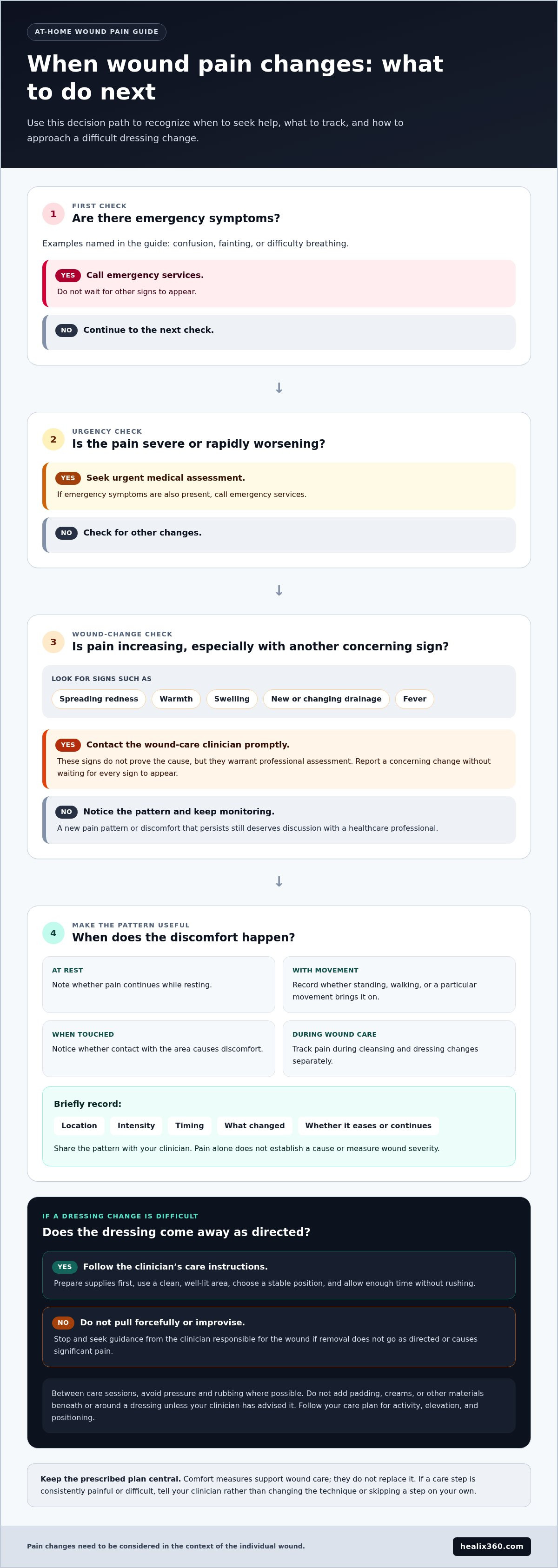
Notice when discomfort occurs: at rest, when standing or walking, when the area is touched, or during cleansing and dressing changes. Pain limited to a particular movement may offer different information from pain that continues at rest. A sudden sting during care may relate to contact with sensitive tissue or nearby skin. These patterns don’t establish a cause or measure wound severity.
Keep a brief record of the pain’s location, intensity, timing, and changes. Note whether it eases or continues after movement or wound care, then share the pattern with your clinician. This makes “it hurts more” more useful: you can explain what changed and when without relying on pain alone to judge the wound.
When pain deserves prompt attention
Contact the clinician managing the wound promptly if pain is increasing, particularly alongside spreading redness, warmth, swelling, new or changing drainage, or fever. These signs don’t prove what is causing the change, but they warrant professional assessment. Don’t wait for every sign to appear before reporting a concerning change.
Severe or rapidly worsening symptoms need urgent medical assessment. If the person also has emergency symptoms such as confusion, fainting, or difficulty breathing, call emergency services. For persistent or changing discomfort without emergency symptoms, a wound-care clinician can assess the area and review the care plan. Tracking changes supports managing wound pain without strong narcotics at home by helping the care team address possible wound-related concerns, rather than focusing only on discomfort.
How to make wound care more comfortable without strong narcotics
Comfort measures can make wound care more manageable, but they support rather than replace the prescribed treatment plan. Follow your clinician’s instructions for cleansing, applying products, and changing the dressing. Changing the technique or skipping a step to avoid discomfort may interfere with care or irritate the wound. If a step is difficult or consistently painful, tell the clinician so the plan can be reviewed safely.
Preparation matters, too. Searching for supplies midway through a dressing change can interrupt the process, prolong it, and add stress. Before starting, review the written instructions, gather the prescribed supplies, and arrange help if you need assistance reaching or seeing the wound.
Prepare for a less stressful dressing change
Set up in a clean, well-lit area and choose a stable position that lets you reach the wound without straining or risking a fall. Allow enough time to follow the care instructions without rushing. If you become distressed or the pain becomes difficult to manage, pause when it’s safe and contact your clinician for guidance. A helper can assist with supplies or instructions if the care plan allows.
Dressings that stick can be especially uncomfortable. Don’t pull forcefully or improvise a way to loosen one. Follow the instructions you were given. If the dressing won’t come away as directed or removal causes significant pain, stop and seek guidance from the clinician responsible for the wound.
Support comfort between dressing changes
Between care sessions, position yourself so the wound isn’t pressed against a chair, bedding, or clothing. Reduce avoidable rubbing and pressure, but don’t add padding, creams, or other materials beneath or around a dressing unless your clinician has advised it. Recommendations about activity, elevation, and positioning vary with the wound and a person’s health, so follow your care plan.
A simple routine can help: prepare the area, follow each care step in order, and note what caused discomfort or interrupted the process. If dressing changes remain difficult, or pain affects your ability to follow the prescribed plan, report that pattern rather than making major changes on your own. An in-home wound assessment can help review the wound and care approach. Healix360’s guide to mobile wound care in Southern California explains how specialist assessment and personalized planning can support care at home.
For people managing wound pain without strong narcotics at home, consistent preparation and clinician-directed adjustments can make care less rushed while keeping wound treatment central. If persistent pain or difficulty with dressing changes calls for closer review, Healix360’s mobile wound assessments bring wound evaluation and personalized planning to patients’ homes and care facilities.
Comparing non-narcotic pain options: what to discuss with a clinician
There isn’t one approach that suits every wound or patient. Non-drug comfort measures, over-the-counter medicines, and clinician-directed treatment each serve different roles. Positioning or a calm, unhurried routine may make care easier to tolerate, but these steps don’t treat the wound itself. Medicines may help some people, while persistent pain may call for a clinical review of the wound or care plan. The aim is to address discomfort safely without interrupting prescribed wound treatment.
Non-drug measures and over-the-counter medicines
Comfort measures such as reducing pressure on the affected area or using a calm routine can support wound care. Follow clinician guidance for wound-specific measures, including whether to use temperature-based therapies, since these may not suit every wound or health condition. Over-the-counter options also have different precautions: acetaminophen and nonsteroidal anti-inflammatory drugs (NSAIDs) aren’t interchangeable, and each can pose risks depending on a person’s health and other medicines.
A clinician or pharmacist should review medication safety before you start, stop, or combine pain medicines. Share all prescription and nonprescription medicines, supplements, allergies, relevant health conditions, and the wound treatment you’re receiving. This helps them consider possible interactions, duplicate ingredients in combination products, and other individual risks. Don’t assume a medicine is appropriate just because it’s available without a prescription.
When a clinician may need to adjust the wound-care plan
If pain continues despite following the plan, or makes dressing care difficult, the next step may be to review the wound and treatment rather than simply add medication. A clinician can consider whether the dressing, surrounding skin, cleansing approach, or another aspect of care needs attention. Depending on the wound, clinician-directed treatment may include changing the wound-care approach or considering a different treatment option. No particular adjustment is right for everyone, and an evaluation can’t guarantee a specific level of pain relief.
Before a discussion, note when pain occurs, what seems to trigger it, what you’ve tried, and whether anything has changed in the wound. You can also ask which comfort measures are appropriate, which medicines are safe with your existing treatment, and what symptoms should prompt follow-up. These details help distinguish discomfort tied to care from pain that may call for reassessment.
- Non-drug measures: Supportive comfort options that should fit the wound-care instructions.
- Over-the-counter medicines: Potential options with different precautions that require individual safety review.
- Clinician-directed care: Assessment and treatment-plan adjustments when pain persists or care becomes difficult.
For people managing wound pain without strong narcotics at home, discussing these options with a clinician helps keep comfort measures aligned with wound treatment. Healix360 provides mobile wound assessments and personalized care planning in patients’ homes and care facilities. Learn about Healix360’s mobile wound care and how an in-home assessment can support a review of persistent wound concerns.
A practical home plan for tracking pain and knowing when to act
A brief, consistent record can help you and the wound-care team see whether discomfort is tied to a particular activity or changing over time. Keep the plan simple enough to maintain, and follow instructions from the clinician overseeing the wound. A pain log supports clinical judgment; it doesn’t diagnose a problem or replace an examination.
What to record in a wound-pain log
Use a notebook or phone note and record observations in plain language. Separate dressing-change discomfort from pain at rest and pain during movement, since these situations may feel different. Add a short note after each relevant episode rather than trying to recall details later.
- Timing and activity: Note when discomfort starts and what was happening, such as resting, walking, or following wound care.
- Location and intensity: Describe where it hurts and how strong it feels, using the same personal scale each time.
- Pattern: Record whether pain settles, persists, or is becoming more difficult to manage.
- Visible changes: Note changes in redness, swelling, or drainage without trying to identify their cause.
- Care and medicines: Record wound-care steps and medicines taken as directed, including any concern or unexpected effect.
Before a clinical discussion, review your notes and prepare an up-to-date list of prescription medicines, over-the-counter products, and supplements. Share what has changed, when it began, and whether it affects sleep, movement, or your ability to follow the wound-care plan. A caregiver can help keep the record if the patient finds it difficult.
When home management is not enough
Seek prompt clinical advice for new or increasing pain, or a change in drainage, redness, or swelling. Fever or changes that are spreading rapidly warrant urgent assessment. Severe symptoms should not wait for a routine wound visit: seek urgent medical care, and call emergency services for an immediate emergency. Follow any specific escalation instructions already provided by the treating clinician.
Keep the plan adaptable. A clinician may give wound-specific instructions that differ from a general tracking routine, and those directions should take priority. Share the log with the patient’s existing care team so they can consider symptoms alongside the wound, its treatment, and the person’s health. Don’t change wound care or medication based only on a pain entry.
For persistent or changing wound pain that needs closer review, Healix360’s mobile specialists provide in-home wound assessments and personalized care planning. Request an in-home wound assessment to discuss ongoing wound concerns with a care team.
How Healix360 supports wound care at home in Southern California
Persistent or changing wound pain can be difficult to assess without examining the wound and surrounding skin. Healix360 brings advanced wound assessments and treatment to patients’ homes and care facilities in Southern California. A mobile visit makes it possible to review wound concerns where daily care takes place and help the patient and care partners understand the next steps in the treatment plan.
Healix360’s board-certified specialists develop personalized plans based on clinical findings and the patient’s needs. Comfort can be considered alongside wound treatment and monitoring. For people managing wound pain without strong narcotics at home, this means discussing how discomfort relates to the wound and its care, rather than making medication changes without clinical guidance. Healix360 is a Medicare Part B provider; that status does not mean every service is covered.
What an in-home wound assessment can address
An assessment considers the wound, nearby skin, reported pain, and current care plan. The specialist can review when discomfort occurs, whether the wound has changed, and how the existing care routine is working. Based on clinical findings, the specialist may recommend an individualized plan for wound treatment and follow-up. Recommendations depend on the person’s situation, and an assessment does not guarantee a particular pain or healing outcome.
For wounds following surgery, patients and caregivers may also find practical context in this guide to surgical wound care at home. Continue following the treating clinician’s instructions, and share new or worsening concerns during the assessment.
Coordinating care with family and existing providers
Home wound care often involves more than one person. Healix360 coordinates with families and care partners, including home health agencies, case managers, and hospital referral sources. Clear communication helps caregivers understand the plan, know what changes to report, and support consistent care between visits. Coordination can also connect wound assessment and treatment with existing care arrangements, with the patient’s needs at the center.
Before a visit, it may help to have current wound-care instructions, a list of medicines, and notes about pain changes available. These details give the specialist and care partners a clearer picture of the patient’s routine and concerns.
If wound pain persists or changes, an in-home assessment can help review the wound and care plan. Explore Healix360’s mobile wound care services to learn more about advanced wound assessment and treatment at home in Southern California.
Take the next step toward a clearer care plan
A manageable approach to wound discomfort begins with information you can share and a care plan you can follow. If pain persists, changes, or makes wound care difficult, bring those concerns to a wound-care professional rather than adjusting treatment on your own. A focused assessment can help clarify what needs attention and which steps are appropriate for your situation.
For people managing wound pain without strong narcotics at home, the next step can be straightforward. Healix360 offers mobile wound assessments and treatment at home or in care facilities, supported by a network of board-certified specialists. Healix360 is a Medicare Part B provider; coverage depends on the service and the patient’s circumstances.
Explore Healix360’s mobile wound care services to learn about in-home wound support and request an assessment. With clear guidance and professional input, you can move forward with greater confidence in your wound-care plan.
Frequently Asked Questions
Can I manage wound pain at home without opioids?
Often, yes. A clinician can help build a plan that combines appropriate comfort measures with a non-opioid medicine when suitable. When managing wound pain without strong narcotics at home, keep the wound-care instructions unchanged unless the treating clinician revises them. Share relevant conditions, allergies, and all medicines with the care team. A new pain pattern or discomfort that makes essential wound care difficult warrants clinical review.
Can I take ibuprofen or acetaminophen for wound pain?
Either may be appropriate for some people, but neither is right for everyone. Health conditions, allergies, other medicines, and wound treatments can affect which option is safe. Ask a clinician or pharmacist to review the specific patient’s situation before use. Follow the product label, and check the ingredients in combination products to avoid accidentally taking the same active ingredient more than once.
How can I make dressing changes hurt less?
Set out the prescribed supplies and care instructions before beginning, and choose a position that gives you a steady, safe reach. Follow the directions for removing the dressing. If it sticks, don’t pull it away from the wound; contact the treating clinician for instructions rather than forcing removal. If pain repeatedly prevents you from completing care, report that specifically so the wound-care approach can be reviewed.
What happens if wound pain suddenly gets worse?
Contact the clinician managing the wound promptly, especially if worsening pain occurs with spreading redness, warmth, swelling, drainage, or fever. These changes need assessment, but they don’t identify the cause by themselves. Severe symptoms, rapid changes, or signs of serious illness call for urgent medical assessment. Don’t wait for a routine wound appointment if symptoms seem urgent; call emergency services for an immediate emergency.
Is pain during wound healing always normal?
No. Some tenderness may occur, but pain alone can’t confirm whether a wound is healing as expected or reveal its severity. Pay attention if discomfort becomes persistent, differs from the pattern your care team described, or interferes with sleep or necessary activity. Share those details with the treating clinician, along with any visible changes. Don’t use pain by itself to diagnose an infection or another complication.
Can a wound-care specialist visit me at home in Southern California?
Yes. Healix360 provides mobile wound assessments and treatment in patients’ homes and care facilities in Southern California. Its specialists develop personalized wound-care plans and coordinate with families and care partners. The appropriate care depends on clinical assessment, and Medicare Part B provider status doesn’t guarantee coverage for every service. For severe or emergency symptoms, seek urgent medical care rather than waiting for a routine mobile wound-care visit.


