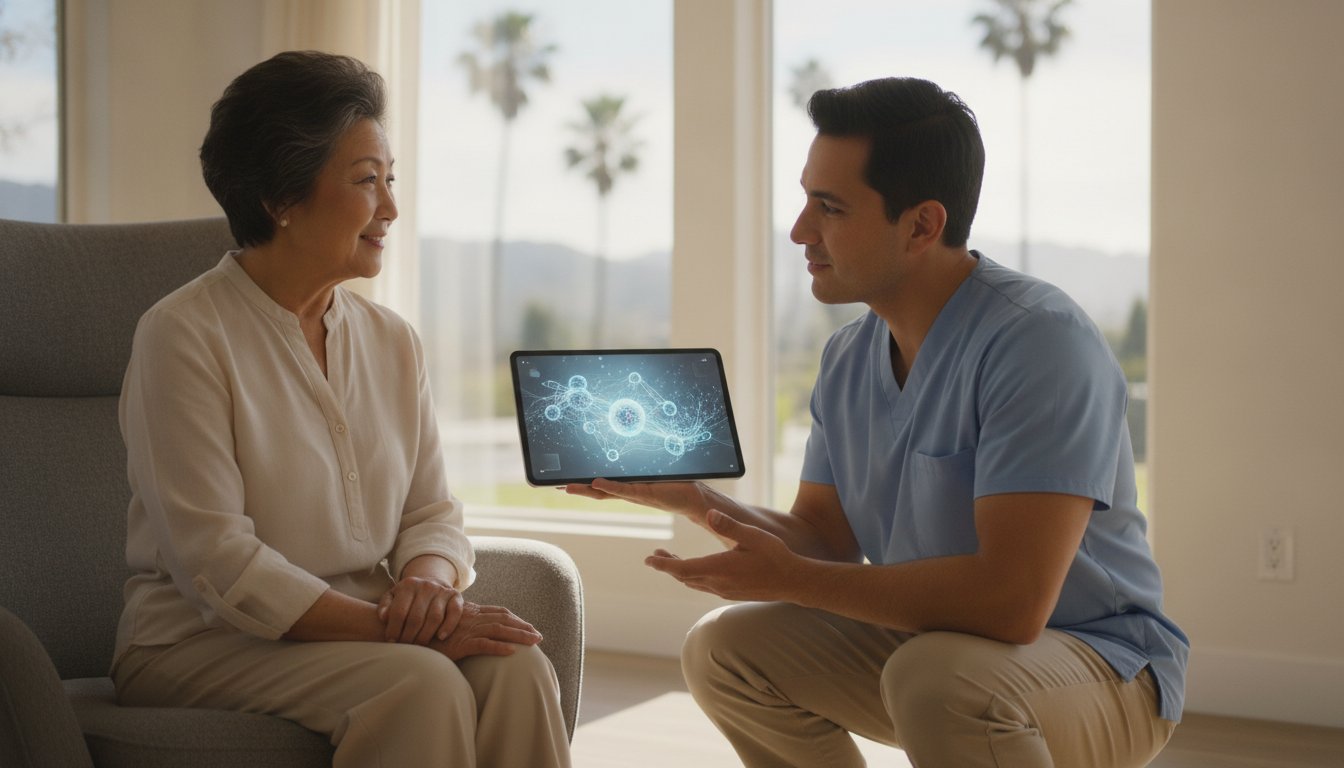
What if the most advanced regenerative science in wound healing didn't require a taxing trip to a specialized clinic, but was instead fully accessible within the comfort of your own living room? Many families feel trapped by the logistical hurdles of chronic wound management, often struggling to distinguish between basic home health nursing and the specialized medical interventions necessary for true recovery. You shouldn't have to choose between your physical comfort and the high-tier clinical data required to heal a complex injury.
Understanding the 2026 medicare guidelines for home wound care is the first step toward reclaiming your vitality and ensuring you receive the most sophisticated treatments available. We'll help you unlock the complexities of Medicare reimbursement so you can access advanced regenerative therapies like amniotic membrane grafts without leaving your home. This article provides a clear roadmap through the new flat-rate reimbursement models, the essential "Rule of 30" for medical necessity, and the strategic advantages of partnering with a mobile Part B specialist to optimize your long-term health outcomes.
Key Takeaways
- Learn the specific clinical requirements for home-based services, including the distinction between homebound status for Part A and the specialized access provided by Part B mobile specialists.
- Navigate the latest medicare guidelines for home wound care to understand how flat-rate reimbursement models in 2026 affect your access to high-tier medical supplies.
- Discover the crucial difference between standard home health agency nursing and advanced mobile wound management, ensuring you receive the appropriate level of expert intervention.
- Identify how to qualify for regenerative treatments such as amniotic membrane grafts and bio-engineered skin substitutes delivered directly to your bedside.
- Gain clarity on Medicare’s definitions for surgical dressings and the documentation needed to prove medical necessity for advanced wound care supplies.
Navigating Medicare Guidelines for Home Wound Care in 2026
Chronic wounds aren't merely a surface-level concern. They represent a complex biological challenge that demands a precise, data-driven strategy for resolution. When you examine the medicare guidelines for home wound care in 2026, it becomes evident that the Centers for Medicare & Medicaid Services (CMS) now prioritizes high-level clinical outcomes over basic maintenance. This regulatory shift creates a clear boundary between basic home health nursing, which provides general support, and mobile wound care. This specialized model brings the diagnostic rigor of a traditional wound center directly to your home in Southern California. To secure coverage, the injury must be chronic, traumatic, or surgical in nature, requiring a clinician's expert intervention to manage The Process of Wound Healing without the risk of hospital readmission.
The Core Components of Medicare Coverage
Medicare divides its reimbursement structure into two distinct paths. Part A generally covers Home Health Agencies (HHAs) for intermittent nursing care under a 30-day episode payment model. However, Part B is the gateway for professional services provided by mobile specialists. These experts offer bedside evaluations, sharp debridement, and specialized diagnostic testing. Your journey to recovery must be anchored by a physician-certified plan of care (POC). This document serves as a strategic blueprint, outlining the specific debridement schedules and advanced supplies required to restore your physical excellence. By utilizing Part B, you gain access to board-certified specialists who coordinate with your existing home health team to ensure no detail of your recovery is overlooked.
Evolving Standards for Wound Healing in 2026
The 2026 guidelines reflect a visionary transition toward value-based care and proactive prevention. CMS has expanded the scope of outpatient procedures that can be performed at the bedside to reduce the burden of travel for those with mobility issues. Central to this evolution is the rigorous application of the "medical necessity" standard. Under 2026 CMS standards, a service is medically necessary if it is required to treat a chronic wound that has shown no measurable improvement after 30 days of standard care and requires skilled clinical judgment to manage. This ensures that advanced therapies are applied precisely when they can offer the most life-changing results. By focusing on individualized care strategies, these updated medicare guidelines for home wound care empower you to pursue a roadmap of total-body health rather than just reactive treatment.
Eligibility Criteria: When Does Medicare Pay for In-Home Treatment?
Accessing high-tier medical care shouldn't be a logistical burden. To ensure your treatment is covered, you must meet specific clinical and administrative benchmarks defined by the Centers for Medicare & Medicaid Services. The medicare guidelines for home wound care establish that a patient must be under the care of a licensed physician who certifies the need for skilled intervention. This certification often begins with a "Face-to-Face" encounter, where a provider evaluates the wound and documents why standard self-care or caregiver assistance is insufficient to achieve physical excellence.
A critical component of this process is the "Skilled Care" requirement. Medicare doesn't reimburse for routine dressing changes that a family member or non-medical caregiver could perform. Instead, coverage is reserved for complex procedures that require the expertise of a registered nurse or a board-certified specialist. This includes managing infections, assessing vascular health, or performing precise clinical measurements to track healing velocity and systemic recovery.
The Homebound Status Explained
For services billed under Medicare Part A, you must maintain a "homebound" status. This doesn't mean you're a prisoner in your house. According to the Official Medicare Home Health Guidelines, being homebound means leaving your residence requires a taxing effort and is typically infrequent. You can still attend religious services or brief family milestones without losing eligibility. However, mobile specialists operating under Part B provide a different level of flexibility. Healix360 bridges this gap for patients in Glendale and across Los Angeles who find it physically exhausting to navigate traffic and long wait times at traditional wound centers, ensuring professional care reaches you regardless of your exact homebound classification.
Clinical Indicators for Professional Intervention
Not every injury qualifies for advanced mobile services. Medicare specifically targets wounds that pose a systemic risk or have failed to respond to primary treatments. Qualifying conditions often include bed sores ulcers, diabetic foot ulcers, and surgical dehiscence where the incision has reopened. A pivotal requirement for continued coverage is the performance of wound debridement. This procedure removes necrotic tissue to stimulate the body's natural recovery mechanisms. Detailed documentation of the wound's stage, size, and drainage is mandatory to prove the ongoing medical necessity required by medicare guidelines for home wound care. If your current healing journey has stalled, it's time to consult with a specialist who understands the intersection of clinical excellence and regulatory compliance.
Medicare Part A vs. Part B: The Crucial Distinction for Advanced Care
Navigating the administrative architecture of Medicare requires a clear understanding of how different "Parts" interact to support your recovery. While Part A is designed for broad support, Part B provides the specialized clinical depth necessary for complex injuries. According to Medicare's official coverage guidelines for home health services, Part A typically covers intermittent skilled nursing care through a Home Health Agency (HHA). These services are bundled into 30-day episodes of care. However, these bundles often focus on general maintenance rather than the advanced interventions required for non-healing wounds. This is where the medicare guidelines for home wound care allow for the strategic integration of Part B professional services.
Consolidated billing rules dictate that the HHA is responsible for providing all routine supplies, such as standard bandages and gauze, under the Part A bundle. But the intellectual capital—the diagnostic assessment and surgical intervention—is billed under Part B. You might already have a home health nurse visiting for vitals or general monitoring, but a wound specialist brings a higher level of board-certified expertise to the bedside. They perform the sharp debridement and regenerative applications that standard nursing staff aren't typically equipped to handle, ensuring your healing journey isn't stalled by administrative limitations.
Collaborative Care Models in Southern California
Healix360 functions as a visionary partner within the Southern California medical ecosystem. We don't replace your home health agency; we enhance their capabilities. By coordinating directly with Los Angeles-based HHAs, our specialists provide a layer of clinical oversight that ensures your treatment plan is both Medicare-compliant and biologically optimized. This partnership ensures that the nursing staff follows a precise, specialist-driven roadmap. It creates a seamless flow of data between providers, ensuring no detail of your systemic health is overlooked during the recovery process.
Reimbursement Realities: Deductibles and Coinsurance
Financial clarity is a pillar of proactive care and long-term peace of mind. While Part A services are usually covered at 100% after the deductible is met, professional consultations under Part B involve a different structure. Under Medicare Part B, you are responsible for a 20% coinsurance for each specialist consultation once your annual deductible is met. If you have a supplemental Medigap policy, it often covers this 20% portion, making elite-level care highly attainable. This separation of billing ensures you can access the highest tier of medical science while maintaining the general support provided by your home health team. By understanding these medicare guidelines for home wound care, you can make informed decisions that prioritize both your physical excellence and your financial health.

Guidelines for Surgical Dressings and Advanced Wound Supplies
Precise wound management requires more than just coverage; it necessitates a sophisticated understanding of the biological architecture involved in tissue regeneration. Under the 2026 medicare guidelines for home wound care, "Surgical Dressings" are defined as medical supplies required for the treatment of a wound caused by a surgical procedure or one that has undergone sharp debridement. To qualify for these supplies at home, your clinical documentation must show a rigorous data-driven approach. This includes precise measurements of the wound's length, width, and depth, as well as a detailed assessment of the drainage amount. Medicare typically limits supply shipments to a 30-day window to ensure that the treatment remains aligned with your current healing velocity and to prevent the accumulation of unused materials.
The arrangement of these supplies is equally critical. Clinicians distinguish between primary dressings, which make direct contact with the wound bed to facilitate healing, and secondary dressings, which provide necessary absorption and protection. For instance, a primary layer might utilize specialized foams or gels to maintain an optimal moisture balance, while the secondary layer secures the site against external contaminants. Maintaining this balance is essential for achieving physical excellence and preventing systemic setbacks during your recovery journey.
Qualifying for Advanced Supplies
Standard gauze often falls short when treating complex, non-healing injuries. This is why skin substitutes and amniotic grafts are categorized as advanced clinical interventions rather than simple supplies. To unlock coverage for these regenerative materials, the wound must be "opened" through professional debridement, which removes necrotic tissue and signals to Medicare that the site is ready for advanced therapy. Many Southern California patients face claim denials not because they don't need the care, but because their documentation lacks the specific tissue descriptions required by CMS. Healix360 specialists prioritize clinical rigor in every assessment to ensure these pitfalls don't stall your access to life-changing technology.
The Physician Order: A Legal Necessity
Every bandage and graft must be supported by a Standard Written Order (SWO) that acts as a legal blueprint for your care. This order must specify the type of dressing, the size required, and the frequency of changes. For chronic wounds, medicare guidelines for home wound care mandate that these orders be updated every three months to reflect the wound's progress or change in status. This rhythmic update ensures that your treatment plan remains a living document, evolving alongside your body's natural recovery. If you are managing a complex injury, partner with our specialists to ensure your supply orders are clinically sound and Medicare-compliant.
Healix360: Bridging the Gap with Medicare-Compliant Regenerative Care
Healing is not a passive event. It is a strategic biological objective that requires the precise application of advanced medical data and regenerative technology. Healix360 serves as a visionary strategist for your health, delivering specialized diabetic ulcer treatment directly to your bedside. By operating as a dedicated Medicare Part B provider, we ensure that your access to elite medical interventions isn't restricted by the limitations of traditional home health bundles. Our model integrates seamlessly into your existing home environment, providing the diagnostic depth of a premier wound center without the physical tax of travel.
Early specialist intervention is the most effective tool in preventing the systemic decline that leads to amputations. Chronic wounds often stall because they lack the necessary biological signals to progress through the stages of recovery. We bring board-certified expertise to your home to perform sharp debridement and apply advanced tissue scaffolds, ensuring your recovery stays on a trajectory toward physical excellence. This proactive approach honors the medicare guidelines for home wound care while prioritizing your long-term vitality and mobility.
Advanced Regenerative Medicine at Home
The science of amniotic membrane grafts and bio-engineered skin substitutes represents a paradigm shift in wound management. These aren't simple dressings; they are sophisticated biological allografts that transform a stagnant wound bed into a thriving environment for new tissue growth. While standard care often focuses on passive protection, our use of these regenerative materials stimulates active healing at a cellular level. High-achievers across Southern California choose this path because they view their health as their most valuable asset. They recognize that data-driven, specialist-led care is the most efficient roadmap to reclaiming an active, life-changing lifestyle.
Getting Started: The Bedside Evaluation
Your journey toward total-body health begins with a comprehensive, Medicare-compliant bedside wound assessment. During this initial encounter, our specialists perform a granular evaluation of your wound's vascular status, tissue health, and healing potential. We navigate the complexities of medicare guidelines for home wound care on your behalf, handling all aspects of insurance verification for residents in Los Angeles, Glendale, and the surrounding communities. This meticulous organization ensures that your care plan is clinically rigorous and fully aligned with CMS audit standards from day one. You don't have to navigate the nuances of Medicare coverage alone. Schedule your expert bedside wound evaluation today.
Secure Your Path to Advanced Recovery at Home
The evolution of clinical standards in 2026 has opened new doors for those seeking physical excellence during the recovery process. You now have a clear roadmap to navigate the medicare guidelines for home wound care, ensuring that administrative hurdles don't stand in the way of biological healing. By distinguishing between basic home health nursing and specialized Part B interventions, you can access a higher tier of medical science right at your bedside.
As a dedicated Medicare Part B provider, Healix360 bridges the gap between traditional care and visionary medicine. Our board-certified wound specialists bring advanced regenerative technologies, such as amniotic grafts, directly to you, bypassing the logistical strain of travel. We handle the rigorous documentation and insurance verification needed to prove medical necessity, allowing you to focus entirely on your long-term vitality. This proactive approach ensures no detail of your systemic health is overlooked.
Your journey toward total-body health is within reach, and we're ready to guide you every step of the way.
Frequently Asked Questions
Does Medicare Part B cover home wound care specialists?
Medicare Part B covers professional services from board-certified wound specialists who provide bedside evaluations and clinical treatments in your home. This coverage is distinct from the Part A home health benefit, as it focuses on specialized medical interventions rather than general nursing support. You are typically responsible for a 20% coinsurance after meeting your annual deductible, though supplemental insurance often covers this portion.
Will Medicare pay for skin substitutes like amniotic grafts for diabetic ulcers at home?
Medicare reimburses for amniotic membrane grafts and bio-engineered skin substitutes when they are medically necessary for chronic, non-healing wounds. Under the 2026 medicare guidelines for home wound care, these advanced biological scaffolds are now reimbursed at a flat, site-neutral rate. This policy ensures that patients with diabetic ulcers can access regenerative science at home once the wound has failed to respond to 30 days of standard therapy.
What is the "homebound" requirement for Medicare wound care coverage?
The homebound requirement applies specifically to services billed under the Medicare Part A Home Health benefit. To qualify, leaving your residence must require a taxing effort and typically be infrequent, such as for religious services or medical appointments. Mobile specialists billing under Part B provide more flexibility, as they can often treat patients who find travel difficult even if they don't meet the strict homebound criteria required for an agency episode.
Does Medicare cover wound VAC (Negative Pressure Wound Therapy) at home?
Medicare covers Negative Pressure Wound Therapy (NPWT), often referred to as a wound VAC, for home use when a wound meets specific clinical benchmarks. The injury must be chronic, traumatic, or a non-healing surgical site that requires a controlled, pressurized environment to stimulate tissue growth. Documentation must show that standard dressings were insufficient and that a skilled clinician is overseeing the device's application and progress.
How often will Medicare pay for a wound specialist to visit my home?
The frequency of specialist visits is determined by the medical necessity outlined in your physician-certified plan of care. While there isn't a fixed limit on the total number of visits, Medicare expects the schedule to align with the wound’s complexity and the need for skilled interventions like sharp debridement. Most high-acuity patients receive weekly or bi-weekly evaluations to monitor healing velocity and adjust advanced treatment strategies.
What happens if my wound isn’t healing under my current home health agency?
If your wound shows no measurable progress under standard home health nursing, you have the right to request a consultation from a mobile Part B specialist. This allows you to add expert oversight and advanced regenerative therapies to your existing care team without discharging your current agency. Specialist intervention introduces a higher level of diagnostic rigor that can restart the healing process for stagnant or complex injuries.
Are bandages and dressings covered by Medicare for home use?
Medicare covers surgical dressings and supplies for wounds that have been surgically created or professionally debrided. If you are currently in a 30-day home health episode, the medicare guidelines for home wound care dictate that the agency must provide these supplies as part of their bundled payment. Outside of an agency episode, dressings are covered under Part B as durable medical equipment when supported by a standard written order from your doctor.
How do I find a Medicare-compliant mobile wound care specialist in Los Angeles?
Finding a Medicare-compliant specialist involves identifying a Part B provider that specializes in mobile, bedside advanced wound care. Healix360 serves Glendale and the greater Los Angeles area, providing board-certified specialists who deliver regenerative treatments directly to your home. It's essential to choose a provider that coordinates with your primary physician to ensure your treatment plan remains compliant with the latest CMS documentation standards.


