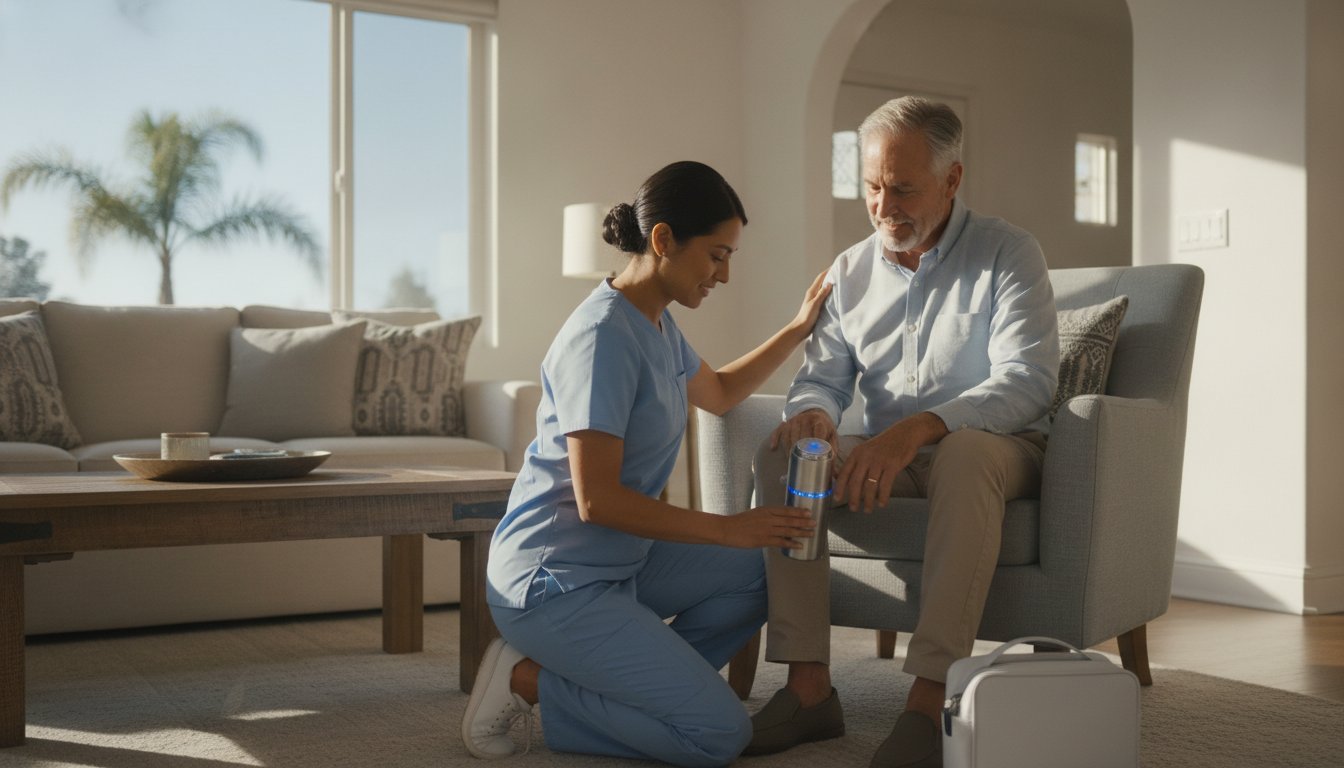
What if the most advanced regenerative treatments for chronic ulcers didn't require a stressful trip to a wound center, but instead arrived directly at your front door? You likely understand the physical and emotional toll of managing a non-healing wound, especially when mobility is a challenge and the fear of infection weighs heavily on your daily life. Navigating medicare part b wound care coverage Orange County can feel complex, particularly with the significant 2026 reimbursement shifts implemented by Noridian Healthcare Solutions that changed how high-tech grafts are funded.
We're here to help you unlock the full potential of your benefits to access hospital-grade mobile healing. This guide demonstrates how Medicare Part B facilitates access to sophisticated treatments like bio-engineered skin substitutes and amniotic membrane grafts right in your Orange County residence. We'll explore the updated 2026 financial landscape, including the new $283 annual deductible and flat-rate reimbursement models for cellular products. You'll discover a clear, data-driven roadmap for utilizing mobile clinical excellence to accelerate your path to recovery, ensuring your health remains your most valuable asset.
Key Takeaways
- Learn how Medicare Part B extends beyond traditional clinic walls to fund specialized, hospital-grade wound treatments within your private residence or assisted living facility.
- Understand the eligibility requirements for cutting-edge regenerative therapies, including bio-engineered skin substitutes and amniotic membrane grafts, to accelerate tissue repair.
- Gain clarity on the 2026 reimbursement updates for medicare part b wound care coverage Orange County to ensure you maximize your benefits for chronic ulcer management.
- Discover the specific clinical criteria, such as the "four-week rule," that Medicare requires before approving advanced mobile interventions.
- Explore how mobile clinical specialists bridge the gap between complex biological data and your daily quality of life through bedside debridement and personalized care plans.
Understanding Medicare Part B Wound Care Coverage in Orange County
Accessing advanced healing shouldn't be a logistical burden for those managing chronic conditions. While many associate Medicare (United States) primarily with hospital stays or clinic visits, Part B serves as the vital mechanism for funding medically necessary outpatient services. In the context of 2026 healthcare delivery, "outpatient" is no longer a destination; it's a level of care. For residents of Orange County, this means that sophisticated clinical interventions are fully covered when delivered directly within your home or assisted living facility. This mobile model eliminates the physical strain of transporting immobile patients to wound centers, placing the individual at the center of a proactive recovery strategy.
Securing medicare part b wound care coverage Orange County requires a partnership with Medicare-enrolled providers who understand the specific regulatory landscape managed by Noridian Healthcare Solutions, the regional administrative contractor. Under current 2026 guidelines, once you meet your $283 annual deductible, Medicare Part B typically covers 80% of the approved amount for wound care services. You're responsible for the remaining 20% coinsurance. This financial structure supports a wide array of mobile assessments and treatments, provided they are performed by qualified specialists who document the clinical necessity of every visit.
Professional vs. Supply Components of Care
Effective wound management involves a dual-layered approach to billing and treatment. The professional component encompasses the clinician's expertise, including bedside evaluations, sharp debridement, and complex medical decision-making. Simultaneously, the supply component covers the high-tech materials utilized during the procedure. This includes specialized dressings and bio-engineered skin substitutes. As of January 2026, Medicare has transitioned to a flat-rate reimbursement model for most skin substitutes, currently standardized at approximately $127 per square centimeter. Precise coordination between these two components is essential to ensure your claims are processed without delay, maintaining the continuity of your healing journey.
The Role of Medical Necessity in Orange County
Medicare doesn't just fund treatments; it invests in documented outcomes. For advanced interventions to qualify as "medically necessary," the wound must typically be chronic and resistant to standard care. Specifically, 2026 CMS guidelines require documentation showing that the ulcer has failed to respond to at least four weeks of traditional conservative treatment. This framework applies to several critical wound types common among the Medicare population:
- Diabetic Foot Ulcers: Specialized care to prevent deep-tissue infection and potential amputation.
- Venous Stasis Ulcers: Strategic management of circulation-related skin breakdowns.
- Pressure Injuries: Comprehensive treatment for bedsores that often affect those with limited mobility.
By maintaining rigorous documentation of your wound's progress, Orange County specialists ensure that your access to regenerative medicine remains uninterrupted and fully compliant with federal standards.
Advanced Regenerative Treatments Eligible for Part B Reimbursement
Regenerative medicine represents the pinnacle of modern wound care. By moving beyond simple dressings, clinicians can now utilize biological scaffolds to restart the body's stalled healing mechanisms. This shift from passive management to active intervention is why medicare part b wound care coverage Orange County is such a vital asset for those with non-healing ulcers. Medicare recognizes that investing in these high-tech treatments often prevents the far more costly alternatives of long-term hospitalization or surgical intervention. These therapies aren't just about covering a wound; they're about restoring the structural integrity of your skin.
Understanding the specifics of What Medicare Part B Covers helps patients transition from a "wait and see" approach to a more aggressive, data-driven recovery plan. While traditional gauze might protect a wound, regenerative therapies actually rebuild it. This level of care is especially critical for chronic wounds that haven't shown improvement after standard protocols have been exhausted. By leveraging your Part B benefits, you can access the same level of clinical excellence at home that was once reserved for elite inpatient centers.
Skin Substitutes and Bio-engineered Grafts
Bio-engineered skin substitutes are sophisticated cellular products designed to mimic the structural and functional properties of human skin. These grafts provide a matrix that encourages new tissue growth and vessel formation. Medicare Part B provides coverage for these products specifically when treating Diabetic Foot Ulcers (DFU) and Venous Leg Ulcers (VLU) that have failed to heal through traditional methods. Because of the technical complexity involved, Medicare requires these grafts to be applied by a board-certified professional to ensure optimal clinical outcomes. Under the 2026 reimbursement updates, most of these products are now covered at a standardized flat rate, ensuring consistent access to high-quality materials regardless of the specific brand used.
Amniotic Allografts: A Modern Healing Standard
Amniotic tissue represents a visionary leap in systemic health management. These allografts are rich in growth factors and cytokines that naturally reduce inflammation and minimize scarring, creating an ideal environment for tissue redevelopment. Part B covers amniotic membrane grafts as a component of a comprehensive management plan, allowing patients to access elite breakthroughs without leaving their homes. This proactive prevention strategy ensures that your path to physical excellence is supported by the latest biological data. If you're ready to explore these advanced options, you can learn more about personalized treatment plans available in your area. This modern approach ensures that no detail of your long-term health is overlooked.

Qualifying for Mobile Wound Care: The Medical Necessity Framework
Medicare's approval process for advanced regenerative therapies follows a structured, data-driven path. It's not enough for a wound to exist; it must demonstrate a specific clinical profile that justifies the use of high-tech biological scaffolds. This is where medicare part b wound care coverage Orange County transitions from general support to specialized, high-impact intervention. To protect the integrity of the program and ensure optimal patient outcomes, Medicare requires a "Standard of Care" prerequisite before authorizing advanced grafts. This foundation typically involves traditional moist wound healing, appropriate offloading, and the management of underlying infection or vascular issues.
Securing these benefits begins with a formal bedside evaluation by a wound care specialist. This assessment isn't a mere formality; it's a deep dive into the biological data of the wound. Clinicians look for specific "at-risk" markers such as neuropathy, vascular insufficiency, or metabolic complications that hinder the natural healing cycle. By documenting these systemic challenges, providers create a clear roadmap that justifies the shift toward regenerative medicine, ensuring you receive elite care without the stress of clinic-based logistics.
The 4-Week Failure Rule Explained
Medicare's "4-week rule" is a critical benchmark for reimbursement eligibility. According to 2026 Noridian guidelines, a wound is considered to have "failed to respond" if it hasn't shown significant progress, typically defined as less than a 50% reduction in size, after 28 days of consistent standard care. Meticulous clinical documentation is the only way to prove this failure to the Medicare Administrative Contractor. Healix360 assists by providing rigorous documentation of every treatment phase, ensuring that Orange County patients meet all regulatory requirements for advanced graft coverage. This proactive approach prevents administrative delays and keeps your recovery on track.
Wound Types That Meet Medicare Criteria
While many skin breaks are minor, Medicare Part B prioritizes chronic, complex wounds that pose a risk to long-term vitality. The framework covers a diverse range of conditions, provided they meet the medical necessity threshold. Specialized diabetic ulcer treatment is a core pillar of this coverage, focusing on wounds that are often complicated by poor circulation and nerve damage. Similarly, Medicare provides robust support for the management of bed sores and pressure ulcers, which are frequent challenges for those with limited mobility. Beyond these common types, Part B also extends to more acute issues, including:
- Surgical Dehiscence: Wounds that have reopened after a surgical procedure.
- Traumatic Wounds: Significant skin injuries that have failed to heal through primary closure.
- Venous and Arterial Ulcers: Chronic breakdowns caused by systemic circulatory dysfunction.
By identifying these specific wound categories early, we can implement a personalized treatment plan that leverages the full power of your Medicare benefits.
The transition from clinical settings to mobile healing represents a fundamental shift in how we approach recovery. For many, the primary hurdle isn't the treatment itself, but the journey required to receive it. By leveraging medicare part b wound care coverage Orange County, patients can receive advanced, hospital-grade care without leaving their familiar environment. This mobile model brings essential procedures, like sharp debridement and the application of bio-engineered skin substitutes, directly to the bedside. It's a proactive strategy that values your time and energy as much as your clinical outcomes. A typical mobile visit begins with a comprehensive bedside evaluation of the wound's current state. Our specialists don't just look at the surface; they analyze the underlying biological data to adjust your personalized treatment plan. This level of care requires seamless coordination between the mobile specialist, your primary care physician, and your family members. By keeping all stakeholders informed, we ensure that the roadmap to healing is clear and that all medical decisions are backed by rigorous scientific observation.Collaborating with Home Health Agencies
Effective wound management often requires a multidisciplinary team. While home health agencies provide essential skilled nursing for daily needs, advanced wound care specialists bring a specialized level of procedural expertise. We work alongside your nursing team to ensure that specialized treatments, such as Negative Pressure Wound Therapy (NPWT), are integrated perfectly into your routine. This partnership is vital for maintaining Medicare compliance, as it ensures that all documentation reflects the medical necessity of both the daily care and the advanced interventions.Serving Orange County Communities
Our mobile clinical reach extends across the diverse landscape of Southern California. Whether you reside in Newport Beach, Anaheim, or Irvine, our specialists are equipped to deliver elite care to your door. Avoiding the stress of Orange County traffic and the sterile coldness of hospital waiting rooms isn't just a matter of convenience; it's a lifestyle optimization that supports faster healing. If you're ready to experience this high-end professional service, you can schedule a mobile wound evaluationHealix360: Bridging the Gap Between Clinical Excellence and Home Comfort
True recovery requires more than just a surface-level solution; it demands a strategic integration of biological science and personalized care. Healix360 operates at the intersection of advanced technology and human-centric delivery, serving as a dedicated partner for those navigating medicare part b wound care coverage Orange County. We specialize in bringing hospital-grade regenerative medicine directly to your residence, ensuring that mobility challenges never stand in the way of elite clinical outcomes. Our focus remains on the most complex, non-healing wounds where traditional methods have reached their limit. By utilizing amniotic membrane grafts and bio-engineered skin substitutes, we aim to reverse the course of chronic ulcers and protect your long-term vitality.
Our primary mission is the proactive prevention of amputations through early, data-driven intervention. We understand that a non-healing wound is a significant threat to your independence and quality of life. By leveraging your Medicare Part B benefits, we provide access to specialized treatments that were once reserved for high-end inpatient centers. This commitment to physical excellence ensures that every individual in our care receives a roadmap to recovery that is both scientifically rigorous and deeply compassionate. We don't just manage wounds; we empower patients to reclaim their health through mastery over complex biological data.
A Visionary Approach to Wound Management
Healing is a complex process that requires moving beyond simple maintenance. We view each patient's journey through the lens of a visionary strategist, translating sophisticated clinical breakthroughs into clear, actionable steps for recovery. Our network of board-certified specialists across Southern California understands that chronic wounds are often symptoms of systemic health challenges. By addressing these underlying factors with regenerative technology, we move toward true redevelopment of healthy tissue rather than temporary "band-aid" fixes. This high-end professional service ensures that no detail of your recovery is overlooked, providing a sense of quiet confidence in your path to healing.
Next Steps: Requesting Your Mobile Evaluation
Initiating your journey toward mobile healing is a transparent and straightforward process. We begin with a comprehensive, Medicare-compliant bedside evaluation to assess the biological state of your wound and determine the most effective regenerative strategy. To ensure you maximize your benefits, our team provides thorough insurance eligibility checks. This verification clarifies exactly how medicare part b wound care coverage Orange County applies to your specific treatment plan, removing the confusion often associated with 2026 reimbursement updates. When you choose an elite guide for your care, you're investing in a partnership that treats your health as your most valuable asset.
Experience advanced mobile wound care with Healix360 today.
Secure Your Path to Advanced Mobile Recovery
Your journey toward physical excellence shouldn't be stalled by the logistical challenges of traditional clinical environments. This guide illustrates how medicare part b wound care coverage Orange County serves as the financial foundation for bringing regenerative breakthroughs directly to your bedside. By aligning with the 2026 medical necessity standards, you can access board-certified specialists and advanced amniotic grafts without the strain of hospital transport. This proactive strategy ensures that every detail of your systemic health is managed with clinical precision and quiet confidence.
Healix360 acts as your visionary strategist in this complex healthcare landscape. As a dedicated Medicare Part B provider, we bridge the gap between sophisticated biological data and your daily quality of life. If you're ready to transition from passive management to an actionable roadmap for healing, our team is prepared to lead the way. You can Request a Medicare-Compliant Mobile Wound Evaluation to initiate your personalized recovery plan today. Your vitality is a long-term investment, and we're committed to ensuring your healing journey is defined by mastery, stability, and life-changing outcomes.
Frequently Asked Questions
Does Medicare Part B pay for skin substitutes used at home?
Medicare Part B covers bio-engineered skin substitutes in a residential setting when they're classified as medically necessary outpatient procedures. Navigating medicare part b wound care coverage Orange County allows you to access these advanced grafts after the failure of conservative treatment. This mobile delivery model ensures you receive regenerative care without the need for hospital admission.
How many wound care visits will Medicare Part B cover per month?
Medicare doesn't set a rigid monthly limit on visits, opting instead to base coverage on documented medical necessity. Your specialist must provide evidence of clinical progress or the need for procedural intervention, such as sharp debridement, to justify each encounter. This data-driven approach ensures your treatment plan remains aligned with your actual healing trajectory.
What is the 4-week rule for Medicare wound care coverage?
The 4-week rule requires that a chronic wound fail to respond to standard conservative therapy for at least 28 days before Medicare approves advanced biological grafts. Response is typically measured by a significant reduction in wound size or improved tissue quality. This prerequisite ensures that high-tech interventions are reserved for wounds that truly require regenerative assistance.
Do I need a referral to see a mobile wound care specialist in Orange County?
You typically need a referral from your primary care physician to establish the medical necessity required for medicare part b wound care coverage Orange County. This referral serves as the clinical foundation for your mobile specialist to initiate a formal bedside evaluation. Coordinating with your existing medical team ensures that your specialized wound care integrates seamlessly with your overall health strategy.
Are amniotic grafts covered by Medicare for diabetic ulcers?
Medicare Part B provides coverage for amniotic membrane grafts specifically for the treatment of chronic diabetic foot ulcers. These grafts are recognized for their ability to stimulate tissue redevelopment in patients with compromised healing due to neuropathy or vascular issues. To qualify, the ulcer must meet the standard criteria for chronicity and fail to respond to primary dressing protocols.
What out-of-pocket costs should I expect with Medicare Part B wound care?
Beneficiaries are responsible for the annual Part B deductible, which is $283 for the 2026 calendar year. After meeting this deductible, you'll typically pay a 20% coinsurance of the Medicare-approved amount for specialist services and supplies. Many patients utilize supplemental insurance to manage these costs, ensuring that physical excellence remains an attainable goal.
Can Healix360 treat bedsores in an assisted living facility under Medicare?
Healix360 delivers specialized treatment for pressure injuries and bedsores directly within assisted living facilities. Because Medicare Part B classifies these environments as the patient's place of residence, the services are billed as outpatient clinical encounters. This mobile approach allows residents to access elite regenerative medicine without the stress of external transportation.
Does Medicare cover Negative Pressure Wound Therapy (Wound VAC) at home?
Medicare Part B covers Negative Pressure Wound Therapy (NPWT) in the home when prescribed for chronic or acute wounds that require active suction for healing. This coverage includes both the professional application of the system and the necessary medical equipment. Your specialist will monitor the device's efficacy during regular mobile visits to ensure the treatment meets ongoing coverage standards.


