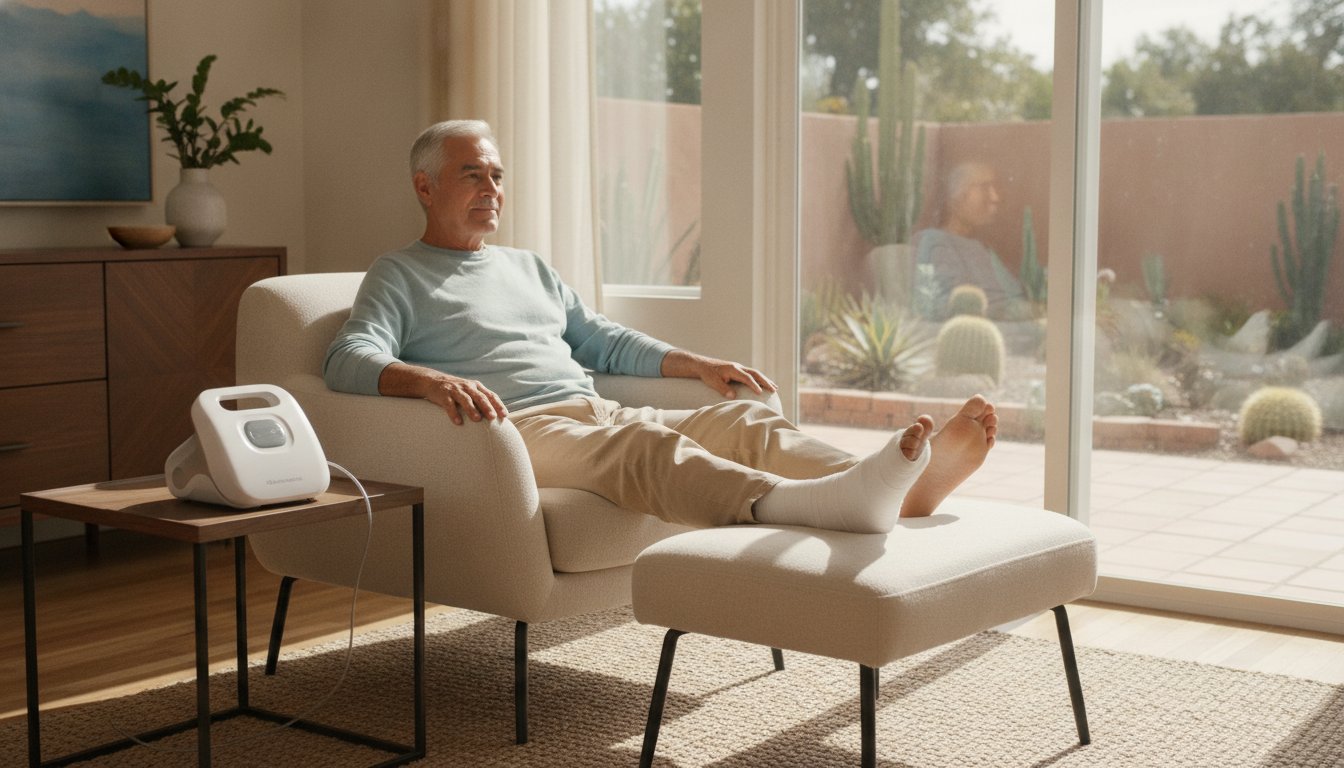
Did you know that a 2025 meta-analysis of clinical trials revealed that advanced medical intervention can increase your chances of complete diabetic foot ulcer healing by 46 percent? This is not just a marginal improvement; it represents a fundamental shift in how we approach recovery. Utilizing negative pressure wound therapy for diabetic ulcers transforms a stagnant wound into an active healing environment by removing excess fluid and stimulating cellular growth at a microscopic level. It's a sophisticated solution for what has historically been a complex and exhausting challenge.
We understand that living with a chronic ulcer often feels like a race against time. The frustration of slow progress and the anxiety of potential complications are frequently compounded by the logistical burden of navigating Los Angeles traffic for clinic visits. You deserve a recovery process that respects both your health and your quality of life. This guide explores how you can bridge the gap between elite clinical technology and the sanctuary of your own home. You'll learn how mobile specialists use portable devices to reduce healing time by an average of 18 days while providing the professional oversight needed to prevent infection. We will break down the science of the technology and show you exactly how to integrate this life-changing care into your daily routine.
Key Takeaways
- Understand the biological mechanism of "micro-deformation," where controlled sub-atmospheric pressure physically stimulates cellular growth to close chronic wounds faster.
- Compare the benefits of receiving advanced bedside care in Southern California versus the logistical strain and infection risks associated with traditional wound clinics.
- Learn how negative pressure wound therapy for diabetic ulcers creates a precise, protected environment that actively removes inflammatory fluids and infectious materials.
- Gain confidence in managing at-home equipment with a practical checklist for monitoring pump displays and identifying the difference between minor adjustments and clinical emergencies.
- Discover how a strategic approach integrates advanced technology with regenerative skin substitutes to optimize long-term health outcomes and limb vitality.
Understanding Negative Pressure Wound Therapy (NPWT) for Diabetic Foot Ulcers
Healing is not a passive event; it's a deliberate, data-driven process. For those managing chronic complications, negative pressure wound therapy for diabetic ulcers represents a sophisticated shift from simply covering a wound to actively managing its biology. This system utilizes controlled, sub-atmospheric pressure to create a specialized microenvironment. By Understanding Negative Pressure Wound Therapy, you can see how this technology does more than just protect the skin. It physically alters the wound bed to prioritize recovery and long-term vitality.
The system is comprised of three essential components: a specialized foam or gauze dressing, an airtight adhesive seal, and a precision pump connected to a collection canister. You might hear this technology colloquially called a "Wound VAC," but that's actually a specific brand name that became common in clinical circles. The professional term, NPWT, accurately describes the science of the vacuum. While traditional dressings are passive and only absorb drainage, NPWT is an active partner in your recovery. It continuously draws out excess fluid and infectious materials, depositing them into the canister while pulling the wound edges together to encourage closure.
The Role of NPWT in Modern Diabetic Care
Modern medical strategy has moved beyond the hospital walls. NPWT now serves as a vital bridge in the healing journey, moving a patient from the initial debridement phase toward successful, permanent closure. In previous years, these systems were bulky and required constant inpatient supervision. Today, we utilize portable, high-tech units that allow elite specialists to provide the same level of care at your bedside. This transition to home-based care is a significant advantage for diabetic patients. It eliminates the stress of travel and minimizes exposure to hospital-borne pathogens, all while maintaining a rigorous, data-backed treatment schedule.
Who is a Candidate for NPWT at Home?
Identifying the right moment for advanced intervention is key to preventing long-term complications. Candidates for negative pressure wound therapy for diabetic ulcers typically include individuals with Stage 3 or Stage 4 ulcers that haven't shown significant progress after four weeks of standard care. If your wound produces high levels of exudate, or fluid, that traditional bandages cannot manage, this therapy offers a superior solution. However, precision requires caution. This treatment is not appropriate for wounds with untreated bone infections, known as osteomyelitis, or for wounds containing necrotic tissue that hasn't been professionally cleared. A specialist evaluation ensures that your specific wound is biologically prepared for the vacuum's transformative effects.
How NPWT Accelerates the Biological Healing Process
Biological acceleration is the cornerstone of modern wound recovery. When we implement negative pressure wound therapy for diabetic ulcers, we aren't simply applying a dressing; we're initiating a complex cellular dialogue. The primary mechanism at play is "micro-deformation," a phenomenon where the vacuum's tension physically stretches individual cells within the wound bed. This mechanical stress signals the body that it's time to repair, effectively waking up dormant healing pathways that have been stalled for weeks or even months. By maintaining a moist, protected environment, the system ensures that these vulnerable new cells don't dry out or become compromised by external contaminants.
This proactive management of the wound's microenvironment is what separates advanced therapy from traditional, passive bandages. It transforms the wound from a site of stagnation into a hub of regenerative activity. For those looking to optimize their recovery, understanding these underlying mechanics is the first step toward reclaiming physical excellence. Many individuals find that integrating these scientific breakthroughs into personalized wound care treatment plans provides the clarity and confidence needed to navigate the healing journey successfully.
Fluid Management and Edema Reduction
Chronic ulcers often stall because they're literally drowning in their own fluid. This "exudate" is often rich in inflammatory proteins that actively prevent healthy tissue from forming. By continuously removing this excess interstitial fluid, NPWT reduces localized swelling, or edema, which is a frequent barrier to diabetic recovery. This is vital because high pressure from swelling compresses small capillaries, starving the foot of the oxygen it desperately needs to survive. A Cochrane systematic review highlights how managing these fluid dynamics contributes to superior outcomes in complex diabetic cases. When we lower the bacterial bioburden and clear the path for fresh, oxygenated blood, we significantly reduce the long-term risk of amputation.
Stimulating New Tissue Growth
The ultimate goal of any advanced intervention is the creation of a robust biological foundation. NPWT triggers angiogenesis, the formation of new blood vessels that act as the nutrient supply lines for your skin. As mechanical tension pulls on the wound bed, it prompts specialized cells called fibroblasts to produce collagen, the structural protein that gives skin its strength and elasticity. Granulation tissue is the biological foundation for wound closure, appearing as a healthy, pebbled red surface that signals a successful transition toward total-body health. This new tissue fills the wound from the bottom up, ensuring that the closure is not just a surface-level fix but a deep, structural restoration.
Mobile NPWT vs. Traditional Wound Clinics: Why Home Care Wins
Excellence in wound care is often measured by the technology used, but the environment in which that technology is applied is equally critical. For patients utilizing negative pressure wound therapy for diabetic ulcers, the transition from a sterile, high-traffic clinic to the sanctuary of the home represents a strategic optimization of the healing process. While traditional wound centers provide necessary interventions, they also introduce significant logistical stressors that can inadvertently stall progress. Choosing a mobile model ensures that clinical-grade treatment integrates seamlessly into your life, rather than forcing your life to revolve around a clinical schedule.
Safety is another paramount consideration. Traditional hospital environments, while designed for care, are also concentrated hubs for multi-drug resistant organisms. For an immunocompromised individual with a chronic diabetic foot ulcer, minimizing exposure to these pathogens is a proactive step in infection prevention. By receiving care at home, you maintain a controlled environment where the risk of cross-contamination is virtually eliminated. Healix360 further streamlines this process by coordinating directly with Medicare and home health partners, ensuring that your Class II medical devices and specialized supplies arrive at your doorstep without the administrative burden typically associated with advanced therapy.
The Logistics of Southern California Wound Care
Navigating the dense traffic of Glendale and Los Angeles is more than an inconvenience; for many, it's a physical barrier to consistent treatment. Missing even one appointment can disrupt the continuous suction required for effective negative pressure wound therapy for diabetic ulcers, potentially setting back weeks of progress. Home-based care removes this obstacle, leading to significantly higher compliance rates with dressing change schedules. Beyond the logistics, the psychological benefit of healing in a familiar, low-stress environment cannot be overstated. A calm nervous system supports a more efficient immune response, creating the ideal internal conditions for tissue regeneration.
Professional Monitoring Without the Commute
Mobile care doesn't mean a reduction in oversight. Our specialists utilize a combination of scheduled bedside visits and sophisticated monitoring to track every millimeter of wound closure. This model fosters a unique partnership between the medical team and the patient's primary caregiver, who becomes an empowered ally in the healing journey. By providing clear education on pump operation and seal integrity, we ensure that the technology is working at peak efficiency around the clock. This high-touch approach is a core component of Advanced Diabetic Ulcer Treatment in Los Angeles, where we prioritize medical precision and personal convenience in equal measure.

Managing Your Wound VAC at Home: A Caregiver’s Checklist
Empowerment in the healing journey begins with mastery over the tools of recovery. While the technology behind negative pressure wound therapy for diabetic ulcers is sophisticated, its daily management is a structured process that any caregiver can execute with precision. Your role is that of a strategic health partner, ensuring the biological environment remains optimized for tissue regeneration. Success requires a rhythmic approach to monitoring the equipment and the patient's physical state, starting with a visual confirmation of the airtight seal. When the system is functioning correctly, the dressing should appear firm and wrinkled, indicating that the vacuum is actively pulling the wound edges together.
A holistic approach to care extends beyond the device itself. The body requires a constant supply of nutrients to fuel the cellular growth stimulated by the vacuum. Prioritize high-protein nutrition and consistent hydration to support the production of new collagen and healthy granulation tissue. Additionally, pay close attention to the skin surrounding the dressing. Protecting this area from moisture and adhesive irritation is vital for maintaining the patient's comfort during the multi-week treatment cycle. If you are ready to bring this level of clinical expertise into your home, you can request a mobile wound evaluation to begin your personalized roadmap to recovery.
Troubleshooting Common Device Issues
Modern NPWT units are designed to communicate through a series of clear, actionable alerts. The most frequent alarm is a "Loss of Vacuum," which often occurs if an edge of the adhesive film has lifted or a tube has become slightly kinked. To resolve this, gently press your finger along the edges of the dressing to reseal any small air leaks; you will often hear a faint hiss that guides you to the exact spot. Canister changes are also a routine part of the process. When the pump indicates the canister is full, power down the unit, clamp the tubing, and swap the old canister for a fresh one with a quick, decisive click. A yellow or cloudy fluid in the tubing requires an immediate call to your Healix360 specialist.
Integrating Therapy into Daily Life
Living with a portable vacuum unit does not have to mean a loss of mobility. Most modern systems are lightweight and come with a carrying case, allowing patients to move around the house or even go for short walks. For hygiene, many patients find success by taking sponge baths or using a handheld showerhead while keeping the pump and dressing dry. Choose loose, breathable clothing that accommodates the tubing without causing it to kink or pull. Maintaining a positive, data-driven mindset is just as important as the physical care. By focusing on the incremental progress of wound closure, both the patient and the caregiver can navigate the recovery journey with quiet confidence and a clear vision of physical excellence.
Advanced Mobile Wound Care in Southern California: The Healix360 Difference
True healing is the result of a meticulously organized strategy. Healix360 operates as your visionary strategist, bridging the gap between cutting-edge laboratory data and your daily quality of life. We view negative pressure wound therapy for diabetic ulcers not as a standalone treatment, but as a critical component of a comprehensive recovery roadmap. By deploying a network of board-certified mobile specialists, we bring elite clinical authority directly to your bedside. This approach ensures that every detail of your health is scrutinized and optimized for physical excellence, allowing you to focus on your long-term vitality without the burden of a clinical commute.
Our commitment to your recovery is reflected in our seamless administrative integration. We manage the complexities of the Medicare Part B billing process for Glendale and Los Angeles residents, ensuring that your access to advanced therapy is clear and unobstructed. This professional transparency allows our patients to remain at the center of their journey, supported by a team that values precision and life-changing outcomes as much as they do. When you choose our mobile service, you aren't just receiving a device; you're gaining a dedicated partner in self-actualization.
Beyond the Pump: A Holistic Treatment Plan
Recovery requires a multi-layered defense against stagnation. Our mobile specialists combine negative pressure wound therapy for diabetic ulcers with advanced interventions such as sharp debridement and the application of regenerative skin substitutes. By integrating amniotic membrane grafts and bio-engineered tissues into your personalized wound care treatment plan, we provide the biological building blocks necessary for permanent closure. These bedside assessments allow us to adjust your strategy in real-time, proactively preventing amputations and ensuring that your path to health remains steady and rhythmic.
Getting Started with Healix360 in Glendale and Beyond
Beginning your journey toward physical excellence is a straightforward, data-driven process. You can schedule an initial home evaluation for a non-healing ulcer through our streamlined referral system. Our team coordinates directly with your existing primary care physician and home health agency to ensure a unified approach to your care. This professional synergy guarantees that no aspect of your systemic health is overlooked during the healing process. Don't let a chronic wound dictate your quality of life any longer. Schedule your expert bedside wound assessment today and take the first step toward a future of renewed mobility and strength.
Reclaiming Your Mobility and Long-Term Vitality
The journey toward closing a chronic wound is no longer a path you must walk alone or within the confines of a sterile clinic. By choosing negative pressure wound therapy for diabetic ulcers, you're opting for a biological accelerator that physically transforms the healing environment at a cellular level. This technology, when managed by elite mobile specialists, removes the logistical burdens of Southern California traffic while providing the highest standard of clinical care right at your bedside. You can now prioritize your recovery without sacrificing your comfort or your daily routine.
As a Medicare Part B Provider, Healix360 brings board-certified wound specialists to patients throughout Southern California and Glendale. Our mission is to provide a seamless, data-driven roadmap that focuses on physical excellence and the prevention of long-term complications. You don't have to navigate this complex process without an expert guide. Take the first step toward a future defined by health and freedom by choosing a partner who values your vitality as much as you do. Request a Mobile Wound Specialist Consultation today and start your journey toward a lasting recovery.
Frequently Asked Questions
Does Medicare Part B cover Negative Pressure Wound Therapy at home?
Medicare Part B generally covers negative pressure wound therapy for diabetic ulcers when prescribed by a physician for Stage 3 or 4 chronic wounds. Our team manages the Medicare-compliant documentation and coordinates with home health agencies to ensure your focus remains on recovery rather than administrative details. This coverage typically encompasses the pump rental, collection canisters, and specialized dressing kits required for your personalized treatment plan.
Is the Wound VAC pump noisy, and will it interfere with my sleep?
Modern NPWT pumps are engineered for quiet operation and shouldn't disrupt your sleep or daily conversations. While you may hear a soft humming or a rhythmic clicking as the device maintains the vacuum, these sounds are typically low-decibel and unobtrusive. Most patients find they quickly adjust to the ambient sound, viewing it as a reassuring signal that their healing technology is actively working in the background.
How often does a specialist need to change the NPWT dressing?
A mobile specialist typically visits your home to change the dressing two to three times per week. This regular frequency ensures the wound bed is professionally assessed and the airtight seal remains functioning at peak efficiency. These visits are also an opportunity to monitor the growth of healthy granulation tissue and make strategic adjustments to your clinical roadmap as your recovery progresses toward final closure.
Is it painful to have the negative pressure dressing applied or removed?
You might feel a slight tugging or "drawing" sensation during the initial application, but the process is generally well-tolerated and non-invasive. Our board-certified specialists use medical-grade adhesive removers and precision techniques to minimize skin irritation during dressing changes. If you experience sensitivity, your specialist can utilize specialized contact layers or adjust the pressure settings to ensure your comfort remains a top priority.
Can I walk or exercise while using a portable NPWT device?
You can certainly remain mobile and perform light activities while using a portable negative pressure wound therapy for diabetic ulcers system. These lightweight units are designed to be carried in a compact shoulder bag or clipped to a belt, allowing you to move freely through your home. While you should avoid high-impact exercises that might dislodge the seal, maintaining gentle movement supports the systemic circulation necessary for tissue repair.
What happens if the power goes out or the pump battery dies?
Most home-based NPWT units include a rechargeable battery backup that lasts for several hours during a temporary power outage. If the pump remains off for more than two hours, the airtight dressing should be replaced with a standard moist dressing to prevent moisture buildup and bacterial growth. Your specialist will provide a clear emergency protocol and a backup kit of traditional supplies for these specific situations.
How long does it typically take for a diabetic ulcer to heal with NPWT?
Healing timelines are individualized, but clinical data from a 2025 meta-analysis suggests that NPWT can reduce the median time to closure by approximately 18 days compared to standard care. Factors such as blood sugar management and localized circulation play a significant role in your specific progress. We track these biological markers closely to ensure your recovery stays on its optimal, data-driven trajectory for long-term health.
Do I need to stay in bed while the therapy is active?
You don't need to stay in bed; in fact, the goal of mobile therapy is to keep you engaged with your daily life. The pump is designed to work continuously whether you are sitting, standing, or moving through your home environment. This flexibility allows you to maintain your independence and personal quality of life while the technology works in the background to accelerate your biological recovery.


