
A stump wound that isn’t improving shouldn’t be managed by guesswork. If you’re treating non-healing amputation stump wounds at home, it can be hard to know whether slow progress is expected or the wound needs attention. Home care can support healing, but it should follow an individualized plan from your treating clinician.
This guide explains what you can safely do at home while following that plan, which changes may need prompt or emergency medical attention, and how wound pain differs from phantom limb pain. Increasing redness, warmth, swelling, drainage, a bad odor, wound opening, uncontrolled bleeding, or fever can signal a need for medical assessment.
You’ll also learn how an evaluation and follow-up can fit into care when travel is difficult. Healix360 provides mobile wound assessments and personalized treatment planning in the home, with treatment options based on each patient’s clinical needs. The goal is to help you understand the next step without treating home care as a substitute for professional evaluation.
Key Takeaways
- Wound changes and healing progress need clinical context; appearance alone can’t confirm whether a stump wound is healing normally.
- Residual-limb pain is felt in remaining tissue, while phantom limb pain is perceived in the absent limb. Pain descriptions alone can’t identify the cause.
- When treating non-healing amputation stump wounds at home, follow the clinician’s dressing instructions and protect the area between assessments.
- Know which wound changes call for prompt medical contact and which symptoms may require emergency attention.
- An in-home wound assessment can make evaluation and follow-up more accessible when travel is difficult.
What makes an amputation stump wound non-healing, and what should you notice?
A residual-limb wound may be described as non-healing when it isn’t progressing as expected, remains open, or worsens rather than improves. There’s no single timeline that applies to everyone. Wound size, depth, location, surgical history, overall health, and the care plan all affect how clinicians assess progress. A photograph or a slow change at home can provide useful information, but neither can establish the cause or confirm by itself that the wound is healing safely.
Notice and record changes in the wound and nearby skin, including size, drainage, odor, redness, swelling, or tenderness. Note whether discomfort is new, worsening, or associated with dressing changes or pressure. These details help a clinician assess the wound alongside an examination and relevant medical history. For general background on amputation and post-operative considerations, see Amputation: Post-operative care and wound healing.
A wound is a change in the residual limb’s tissue; phantom limb pain is perceived in the part of the limb that is no longer present. Pain descriptions alone can’t establish whether a wound is infected or healing. If you’re treating non-healing amputation stump wounds at home, share new or changing symptoms with the treating clinician instead of trying to diagnose them yourself.
Which changes should you document at home?
Keep notes that are dated, brief, and specific. Record what changed and when, along with related symptoms, so the care team can follow the sequence. Take photographs or measure the wound only as instructed. Don’t remove a dressing or change care just to inspect the wound unless your plan directs you to.
- Describe the wound’s size or visible appearance as instructed by your care team.
- Note changes in drainage, odor, or the surrounding skin.
- Record when discomfort began or changed, and whether it occurs with pressure or dressing care.
- Track temperature or other symptoms only if the care team has asked you to do so.
Consistent notes help a clinician compare changes over time and decide whether the care plan needs reassessment. If you’re unsure how to describe something, use plain language rather than assigning a medical label.
Why can a residual-limb wound have more than one cause?
Pressure from positioning or a prosthesis, friction, excess moisture, and reduced circulation can contribute to skin breakdown or interfere with healing. Diabetes, vascular problems, and other health conditions may also affect tissue repair. More than one factor can be involved, and the cause isn’t always apparent from the wound’s appearance.
A clinician can evaluate the wound in light of its location, surrounding tissue, medical history, and changes over time. Don’t assume a sore is simply friction or change prosthesis use, dressings, or topical products without guidance. An individualized assessment helps identify possible contributors and informs the next steps in care.
How stump wound pain differs from phantom limb pain
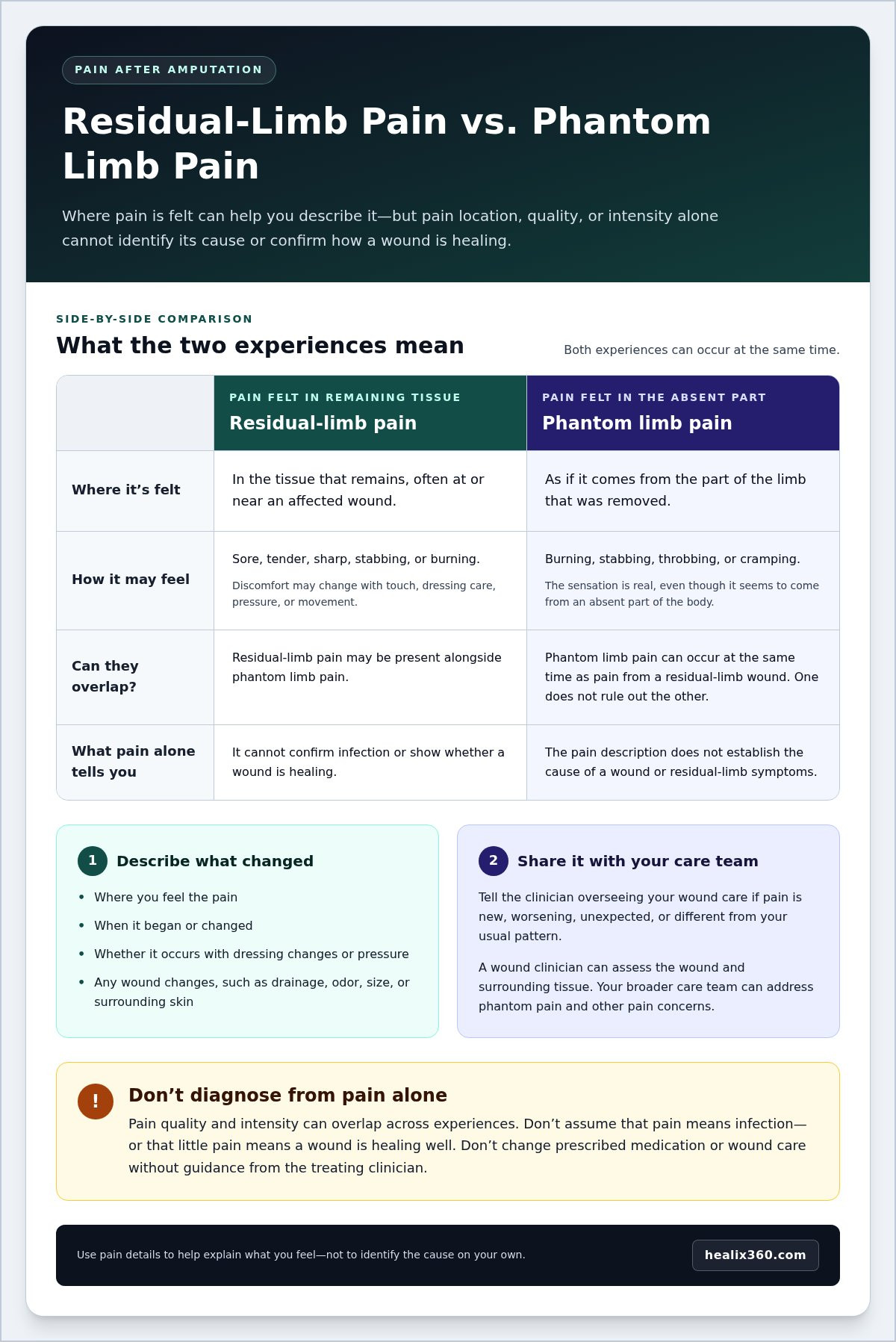
Pain after an amputation can come from the residual limb, be perceived in the absent part of the limb, or involve both experiences at once. Location matters, but it doesn’t reveal the cause by itself. A wound may be tender or painful for several reasons, and phantom limb pain can occur even when the residual-limb skin looks unchanged. Neither pain quality nor intensity alone can confirm infection or show whether a wound is healing.
Residual-limb pain is felt in the tissue that remains; phantom limb pain is felt as if it comes from the part of the limb that was removed. This distinction can help you describe what you feel, but it isn’t a diagnosis. Share new or changing pain with the clinician overseeing your wound care.
What may wound-related pain feel like?
Wound-related discomfort is often located at or near the affected area. It may feel sore, tender, sharp, stabbing, or burning, and it may change with touch, dressing care, pressure, or movement. These descriptions can overlap with other types of pain, so they can’t identify a specific problem on their own. Don’t assume that pain means infection or that little pain means the wound is healing well.
Tell your care team if pain is new, worsening, unexpected, or different from your usual pattern. Describe where you feel it and when it occurs, such as during dressing changes or when the residual limb is under pressure. Include any changes in drainage, odor, wound size, or surrounding skin. A dated record helps the clinician consider pain alongside the wound’s appearance and course.
What is phantom limb pain, and who can help?
Phantom limb pain is pain perceived in the part of the limb that is no longer present. It may feel burning, stabbing, throbbing, or cramping. The experience is real, even though the painful sensation seems to come from an absent part of the body. It can occur at the same time as pain from a wound on the residual limb; one does not rule out the other.
A wound clinician can assess the wound and surrounding tissue, while the patient’s broader care team can address phantom pain and other pain concerns. Don’t change prescribed medication or wound care because of a particular pain description without guidance from the treating clinician. If pain occurs alongside a visible wound change, report both rather than trying to determine the cause at home. The MedlinePlus guide to home care and warning signs for amputation stump wounds offers additional general information about stump care.
For people treating non-healing amputation stump wounds at home, an in-home wound assessment can help a clinician evaluate local wound concerns when travel is difficult. Healix360’s in-home wound assessments support individualized wound evaluation and care planning.
What can you safely do at home while a stump wound is assessed?
Home care can support a residual-limb wound between clinical assessments, but it shouldn’t replace evaluation or override the treating clinician’s instructions. Follow the specific plan for dressing changes, cleansing, and protecting the area. If an instruction is unclear or a dressing problem occurs, contact the care team for guidance rather than improvising.
Dressing choice depends on the wound assessment, so don’t select or change a dressing based on appearance alone. The right approach varies with the wound and surrounding skin. A simple routine can help keep care consistent:
- Prepare: Wash your hands before and after wound care, and set out the clean supplies specified in the care plan.
- Change the dressing: Follow the clinician’s instructions for removing, cleaning, and replacing it. Don’t add steps or products that weren’t recommended.
- Protect the area: Prevent avoidable rubbing or pressure, and follow instructions about keeping the wound clean and dry.
- Observe and record: Note changes in the wound, surrounding skin, drainage, or discomfort. Report concerns to the care team.
How should a caregiver follow the wound-care plan?
Before starting, check that supplies are ready and that you understand the prescribed steps. Use each item as directed; don’t reuse single-use supplies or substitute household materials, creams, powders, or antiseptics. If a dressing becomes loose, wet, or difficult to remove, follow the plan for that situation or contact the care team for instructions. Record when changes were made and note any difficulty, unexpected discomfort, or visible change. These details can help guide follow-up.
How can pressure and friction be reduced?
Pressure or rubbing from positioning, activity, or a prosthetic socket may irritate vulnerable skin. Protect the residual limb from avoidable friction while following the clinician’s directions for positioning and activity. If discomfort or skin changes seem related to socket use or fit, discuss them with the treating clinician. Don’t independently change how often you wear the prosthesis, adjust the socket, or stop using it; recommendations depend on your wound and individual circumstances.
Care plans may change as the wound is reassessed. If you’re treating non-healing amputation stump wounds at home, keep instructions accessible for anyone helping with care. Share new concerns rather than probing the wound, removing tissue, or changing treatment yourself. Home care is most useful when it stays coordinated with clinical follow-up.
When does a stump wound need urgent medical attention?
Changes in a residual-limb wound can call for different levels of care. Severe symptoms or feeling acutely unwell should not wait for a routine wound appointment or home visit. Other concerning changes, such as spreading redness, increasing warmth, worsening drainage, or fever, need prompt clinical advice. If you’re treating non-healing amputation stump wounds at home, follow the care team’s escalation instructions, but don’t delay urgent help to finish documenting symptoms or take a photograph.
Which symptoms should prompt emergency help?
Call local emergency services for uncontrolled or heavy bleeding, or if the person becomes severely unwell. Examples of severe symptoms include fainting, new confusion, difficulty breathing, or being difficult to wake. These symptoms may indicate an emergency and can’t be assessed safely through an article or routine mobile wound visit. If you’re unsure whether the person is in immediate danger, seek emergency help rather than waiting for a callback.
A wound that opens, fever, or signs of infection also warrant urgent attention. If these occur alongside severe illness, heavy bleeding, or another immediate threat, use emergency services. Otherwise, contact the treating clinician promptly for instructions. Don’t try to close an open wound, remove tissue, or manage significant bleeding by changing the wound-care plan on your own.
When should you contact the wound-care team promptly?
Contact the clinician without waiting for the next routine follow-up if redness is spreading, the area is increasingly warm or swollen, drainage is worsening, a new unpleasant odor develops, the wound opens, or fever occurs. These changes need clinical interpretation; they don’t confirm a specific diagnosis by themselves. The clinician can determine whether the wound needs examination, testing, or a change to its treatment plan.
Share observations clearly, but don’t let note-taking delay urgent care. A brief handoff can help:
- What changed in the wound, and when did the change begin?
- Has drainage, odor, redness, warmth, swelling, or discomfort changed?
- Are there other symptoms, such as fever or feeling unusually unwell?
- What relevant health conditions should the clinician know about?
- What wound-care instructions and treatments are currently being followed?
Keep following the current care plan unless a clinician advises otherwise, and avoid adding unprescribed products or changing dressings to address a concerning sign. If travel is difficult and the situation is stable, an in-home wound assessment can support clinical evaluation and follow-up; it does not replace emergency services. Healix360 provides mobile wound assessments at home for individualized wound evaluation and care planning.
How mobile wound care can support recovery at home
Travel for wound appointments can be difficult when mobility is limited, transportation is unavailable, or the residual limb needs careful protection. An in-home assessment brings wound evaluation to the patient and can make follow-up more accessible. It complements, rather than replaces, the treating clinician’s home-care instructions. Severe symptoms still require emergency care, not a routine mobile visit.
Healix360 provides mobile advanced wound care in Southern California, including bedside wound assessments and personalized treatment planning. A clinician can review the wound’s current condition, consider relevant health factors, and coordinate with the patient, family, and existing care team. For an overview of mobile wound care in Southern California, learn how in-home services can support evaluation and ongoing care.
What may happen during a mobile wound assessment?
The clinician may ask about the amputation, the wound’s history, recent changes, symptoms, health conditions, and current care. They’ll observe the wound and surrounding skin and review the existing dressing instructions or treatment plan. This puts what’s visible in context instead of relying on appearance alone.
Next steps depend on the assessment and the patient’s overall plan. When clinically appropriate, options may include wound culture and sensitivity testing or advanced treatments such as negative pressure wound therapy. Not every wound needs the same approach. The clinician determines whether examination, testing, treatment changes, or continued monitoring is appropriate. Coordination with a family caregiver, facility staff, home health agency, or other members of the care team can help keep instructions consistent.
How can you prepare for a home wound-care visit?
A little preparation can make it easier to review what has changed and understand the plan. Keep the patient’s preferences central, and gather readily available records and information. There’s no need to remove a dressing or change wound care before the visit unless the treating clinician has instructed you to do so.
- Have the current wound-care instructions and dressing plan available.
- Prepare a current medication list and relevant health information, including known conditions.
- Bring dated notes about changes in the wound, discomfort, or dressing challenges.
- Prepare photographs only if the treating clinician has requested them.
- Invite a caregiver or care-team member if the patient wants support or help remembering instructions.
After the assessment, make sure the patient and anyone helping with care understand the instructions and how to report new concerns. For wounds following an operation, in-home surgical wound care may provide useful context on evaluation and follow-up at home. For people treating non-healing amputation stump wounds at home, mobile wound care connects clinical assessment with daily care, while treatment decisions remain with the clinical team.
Take the next step with support that fits your care
Managing a residual-limb wound can place practical and emotional demands on patients and caregivers. Keep the treating clinician involved and use their guidance to decide what support will help you maintain care at home. If travel is a barrier, an in-home assessment can be part of ongoing wound care. Mobile care is available in homes and care facilities, with board-certified specialists supporting individualized evaluation.
Treating non-healing amputation stump wounds at home is safest when daily care remains connected to professional assessment and follow-up. A clear plan can help patients and caregivers feel more prepared to manage the next step, while leaving treatment decisions to the clinical team.
Learn about mobile wound care at home and how Healix360 can support your care. With guidance and coordinated support, you can move forward with greater confidence.
Frequently Asked Questions
Can I treat a non-healing amputation stump wound at home?
Home care can support treatment, but a wound that isn’t healing needs clinical assessment. When treating non-healing amputation stump wounds at home, use the dressing schedule and products specified by the treating clinician, and don’t cut away tissue or apply creams or powders without approval. If a dressing repeatedly slips or the wound changes between appointments, record what happened and contact the care team to determine whether the plan needs review.
How do I know if pain is from my stump wound or phantom limb pain?
Wound pain is felt in the remaining limb, while phantom limb pain is perceived in the part that was removed. Both can occur together, so location may not tell the whole story. Note whether discomfort is near the wound or feels as if it comes from the absent limb, and whether it changes with movement, pressure, or dressing care. Share new patterns with the treating care team.
What are signs of infection in an amputation stump wound?
Increasing redness, warmth, swelling, drainage, odor, worsening pain, or fever can be concerning, but these signs don’t confirm infection without clinical assessment. For example, report drainage that has changed noticeably from its usual amount or appearance. Contact a clinician promptly about new or worsening changes, especially if you also feel unwell. A clinician can decide whether an examination, wound culture, or another step is appropriate.
Should I keep wearing my prosthesis if I have a stump wound?
Whether to wear a prosthesis depends on the wound, socket fit, pressure, and your individual care plan. If use causes rubbing, discomfort, or a change in the wound, note when it happens and contact your treating clinician for guidance. Don’t adjust the socket or make a lasting change to prosthesis use based only on online advice. Follow individualized instructions while the wound is assessed.
How often should I change the dressing on an amputation stump wound?
Use the schedule set by the clinician who assessed the wound. Dressing materials and wound conditions differ, so a general schedule may not suit your situation. If the dressing becomes wet, loose, or soiled before the planned change, follow the instructions you were given for that event. If no instructions cover it, contact the care team rather than adding products or improvising a replacement.
When should I seek emergency care for an amputation stump wound?
Seek emergency help for uncontrolled bleeding, severe or rapidly worsening symptoms, or if the person becomes acutely unwell. Don’t wait for a scheduled appointment or routine home visit in those circumstances. For worsening wound changes without severe symptoms, contact the treating clinician promptly for advice. If you’re uncertain whether the situation is an emergency, use local emergency services rather than relying on remote wound guidance.
Can a wound-care specialist visit me at home in Southern California?
Yes. Healix360 provides mobile advanced wound care in homes and care facilities in Southern California. An in-home assessment can help when travel is difficult; clinicians review the wound and existing care plan, then tailor next steps to the patient’s needs. Care can be coordinated with family members and other involved professionals. Mobile wound care is not emergency care, so urgent symptoms require emergency services.


