A wound that refuses to close isn't just a slow healer; it's often a biological system trapped in a state of chronic stagnation. When standard treatments fail, it's natural to feel a sense of growing unease about the risk of infection or the long-term impact on your mobility. Understanding what causes a wound to heal slowly is the first step toward reclaiming your health and vitality. Often, the barrier isn't a lack of care, but rather complex systemic factors like biofilm, compromised circulation, or cellular fatigue that traditional bandages simply cannot address.
We understand that navigating conflicting medical advice while managing the logistics of specialized clinic visits can be overwhelming. This guide will clarify the biological reasons behind delayed recovery and provide a roadmap to modern, high-tech interventions. You'll discover how advanced regenerative therapies, including amniotic membrane grafts and bio-engineered skin substitutes, are shifting the standard of care. We will explore how these elite treatments are now available through professional mobile services, bringing expert clinical mastery directly to your home to ensure your recovery remains a seamless part of your life.
Key Takeaways
- Identify the critical four-week threshold where a standard injury transitions into chronic stagnation, signaling a need for advanced clinical intervention.
- Explore the systemic physiological barriers and vascular deficiencies that determine what causes a wound to heal slowly despite consistent traditional care.
- Recognize the non-negotiable role of specific micronutrients and high-quality protein in fueling the cellular blueprint required for effective tissue repair.
- Learn how regenerative solutions, such as amniotic membrane grafts, act as a biological bridge to restart the body's stalled recovery cycle.
- Discover the strategic advantages of mobile wound care services that eliminate logistical strain by providing expert bedside assessments in your own environment.
The Biological Blueprint: Why Some Wounds Stagnate
Biological recovery follows a precise, rhythmic sequence. When the body functions optimally, it moves through a series of orchestrated events to seal and strengthen damaged tissue. However, this process is delicate. A wound is clinically defined as chronic or delayed when it fails to progress through the expected stages within four weeks. Understanding what causes a wound to heal slowly requires a deep dive into the cellular environment, where stagnation isn't just a lack of progress but a specific biological state of exhaustion.
Your body's ability to repair itself depends on its capacity to transition smoothly between distinct phases. When a wound remains open for an extended period, the local cells often enter a state of senescence, essentially becoming tired and unresponsive to the signals that usually trigger growth. Optimizing the healing environment is essential to reboot this system. This involves managing moisture levels, bacterial load, and the chemical balance of the wound bed to invite new cellular activity and structural repair.
The Four Stages of Natural Tissue Repair
To appreciate why stagnation occurs, we must first understand the successful path. The Biological Blueprint of Wound Healing consists of four overlapping phases that ensure long-term skin integrity:
- Hemostasis: This is the immediate clotting response. It forms a temporary seal to stop blood loss and creates a matrix for future repair.
- Inflammation: White blood cells migrate to the site to clear debris and neutralize pathogens. It's a necessary cleanup phase for a sterile environment.
- Proliferation: New tissue fills the gap. During this stage, advanced tools like bio-engineered skin substitutes can provide a critical scaffold, encouraging the body's own cells to bridge the wound.
- Remodeling: This final stage can last for months as the new skin barrier matures and gains its full structural strength.
When the Inflammatory Phase Becomes a Trap
The most common bottleneck in chronic wounds occurs between the inflammatory and proliferative stages. In a healthy scenario, inflammation is a temporary spike. In a stagnant wound, the body gets stuck in a loop of high inflammation that actively destroys the very tissue it's trying to build. This chronic state prevents the growth of new blood vessels, leaving the area starved of the oxygen and nutrients needed for closure.
Excessive protease activity is often the culprit. These enzymes are designed to break down damaged tissue, but when they persist in high concentrations, they begin to degrade healthy growth factors and the extracellular matrix. You might notice clinical signs like increased drainage, a lack of healthy pink granulation tissue, or a wound edge that appears rolled or thickened. These are clear indicators that the biological machinery has stalled and requires a strategic, multi-modal intervention to restart the recovery journey.
Systemic Barriers: Medical Conditions That Halt Repair
Identifying what causes a wound to heal slowly is rarely a matter of looking at the skin alone; it requires a comprehensive assessment of the body’s internal health. Localized tissue repair is entirely dependent on the efficiency of your internal biological infrastructure. While topical dressings are important, they cannot compensate for a systemic environment that is fundamentally hostile to cellular growth. Oxygen serves as the most critical nutrient for healing, acting as the fuel that powers every phase of collagen synthesis and cellular replication. Without a robust vascular supply, the body simply cannot transport the necessary white blood cells, nutrients, or growth factors to the site of injury.
Understanding Medical Conditions That Halt Repair is essential for anyone dealing with chronic stagnation. Metabolic disorders and chronic illnesses often shift the body’s focus away from wound closure, creating a state of physiological distraction. When patients ask what causes a wound to heal slowly, the answer frequently involves an underlying condition that disrupts the delicate balance of systemic health. Coordinating specialized wound care with the management of these systemic factors is the only way to achieve long-term success.
Diabetes and the Neuropathic Challenge
Chronic elevations in blood glucose levels do more than affect energy; they actively damage the micro-vessels and peripheral nerves. This damage leads to neuropathy, which creates a dangerous scenario where "silent" wounds go unnoticed due to a lack of sensation. Effective diabetic ulcer treatment requires a multi-faceted strategy that includes strict glucose control and specialized offloading to protect compromised tissue. High sugar also creates a pro-inflammatory state that prevents the transition to the proliferative phase discussed in earlier sections. Without sensory feedback, a small pressure point can rapidly evolve into a complex injury before the individual even realizes there is a problem.
Vascular Insufficiency: Venous and Arterial Obstacles
The circulatory system must function as a perfect loop for healing to occur. Arterial obstacles prevent oxygenated blood from reaching the wound, while venous insufficiency prevents deoxygenated blood and metabolic waste from leaving. When blood pools in the lower extremities, it causes significant edema. This swelling creates internal pressure that physically chokes off the skin's blood supply from the inside out. Managing this venous hypertension often necessitates compression therapy to restore proper flow and reduce the physical barrier of fluid. For those struggling with these complex dynamics, personalized wound care treatment plans can help bridge the gap between systemic management and localized recovery.
External Factors & Lifestyle: The Hidden Enemies of Healing
While systemic health sets the biological stage, the local environment of the wound bed often determines the final outcome. Many individuals find themselves questioning what causes a wound to heal slowly even when their primary medical conditions are under control. The answer often lies in microscopic or physical blockades that traditional bandages simply cannot penetrate. External influences, ranging from medication interference to mechanical pressure, create a complex web of External Factors & Lifestyle choices that can halt tissue repair in its tracks.
Your daily habits and the physical environment surrounding the injury act as the secondary layer of the healing blueprint. If the wound bed is constantly subjected to friction or if your body lacks the basic building blocks for cellular replication, progress will stall. We must look beyond the surface to identify the invisible barriers that keep a wound in a state of chronic stagnation.
Biofilms and Necrotic Tissue: The Physical Blockades
Bacteria are opportunistic. They don't just colonize the surface; they build biofilms. These are microscopic bacterial fortresses that adhere firmly to the wound bed, shielding pathogens from standard antibiotics and the body's own immune response. When these structures combine with necrotic (dead) tissue, the wound becomes a breeding ground for infection rather than a site for repair. Necrotic tissue acts as a physical barrier and a primary food source for harmful bacteria. To restart the healing process, specialists often employ Sharp Debridement. This gold-standard procedure involves the precise removal of non-viable tissue to refresh the wound bed and disrupt biofilm colonies, effectively resetting the biological clock for recovery.
The Impact of Age and Nutritional Deficits
As we age, our skin naturally loses its structural resilience. Thinning dermis and reduced collagen production mean that elderly patients face a steeper climb during the remodeling phase of repair. However, age is often less of a barrier than nutritional status. Tissue regeneration is an energy-intensive process that requires specific building blocks. Protein, Vitamin C, and Zinc are non-negotiable for collagen synthesis and immune function. If you're wondering what causes a wound to heal slowly, look at your laboratory markers. Specialists frequently monitor Pre-albumin levels to assess the body's immediate capacity for repair. A healing diet isn't just a suggestion; it's a clinical requirement that provides the raw materials your cells need to bridge the gap in a stalled wound.
External interference also comes from your medicine cabinet. Certain medications, particularly steroids, are designed to suppress the inflammatory response. While this is helpful for managing autoimmune conditions, it's detrimental to a wound that needs a controlled inflammatory spike to begin the repair process. Additionally, mechanical forces like pressure and friction can physically tear new, fragile cells before they have a chance to bond. Constant shearing ensures a wound stays in a state of perpetual trauma, regardless of the topical treatments you apply.

When Standard Care Fails: Advanced Regenerative Solutions
Traditional wound care often focuses on passive protection. Standard bandages and basic ointments serve to shield a wound from the outside world, but they rarely address what causes a wound to heal slowly at the cellular level. When biological stagnation occurs, the body requires more than just a cover; it needs an active intervention to jumpstart the repair cycle. Regenerative medicine serves as this critical bridge, transitioning treatment from simple management to active tissue restoration by providing the biological signals that a chronic wound has lost.
These advanced technologies don't just sit on the surface. They integrate with the wound bed to provide a sophisticated scaffold, allowing your body's own cells to migrate, attach, and replicate. By introducing these "active" biological therapies, advanced wound care specialists can bypass the inflammatory traps and vascular obstacles discussed in previous sections, offering a roadmap to closure for even the most complex injuries.
Amniotic Membrane Grafts and Skin Substitutes
The science of amniotic membrane grafts represents a significant leap in clinical recovery. These grafts are rich in essential growth factors and cytokines that naturally signal the body to reduce inflammation and begin the proliferative phase of repair. For individuals facing diabetic ulcer treatment, these grafts are often the decisive factor in avoiding surgical intervention or amputation. Similarly, bio-engineered skin substitutes mimic the complex structure of human skin, providing a physical and chemical framework that encourages rapid closure in wounds that have remained open for months. These tools effectively "reboot" the cellular environment, turning a stagnant wound back into an active healing site.
Negative Pressure Wound Therapy (NPWT)
For wounds with significant drainage or deep tissue loss, Negative Pressure Wound Therapy (NPWT) offers a high-tech solution for rapid stabilization. Often referred to as wound vac care at home, this system uses controlled suction to remove excess fluid and infectious materials while simultaneously increasing localized blood flow. This vacuum effect creates a tension that stimulates the growth of healthy granulation tissue, the pink, nutrient-rich foundation required for final closure. Managing NPWT requires professional oversight, but it is now a standard component of mobile care for Southern California residents. You don't have to sacrifice your comfort for clinical excellence; learn how our advanced wound care specialists can bring these sophisticated regenerative technologies directly to your bedside.
By shifting the focus from passive dressings to active biological scaffolds, we address the root of chronic stagnation. These solutions work in harmony with your body’s natural blueprints, ensuring that the journey toward recovery is as efficient and effective as modern science allows.
Navigating Recovery with Mobile Wound Care Specialists
The journey toward recovery is often hindered by the very logistics of seeking care. For many patients, the physical exertion required to travel to a specialized clinic can exacerbate the mechanical and vascular issues that contribute to chronic stagnation. Sitting for long periods in transit or waiting rooms increases pressure on lower extremities, potentially undoing the progress made during treatment. By removing these logistical barriers, we address a significant factor in what causes a wound to heal slowly: the physical strain of the healthcare system itself.
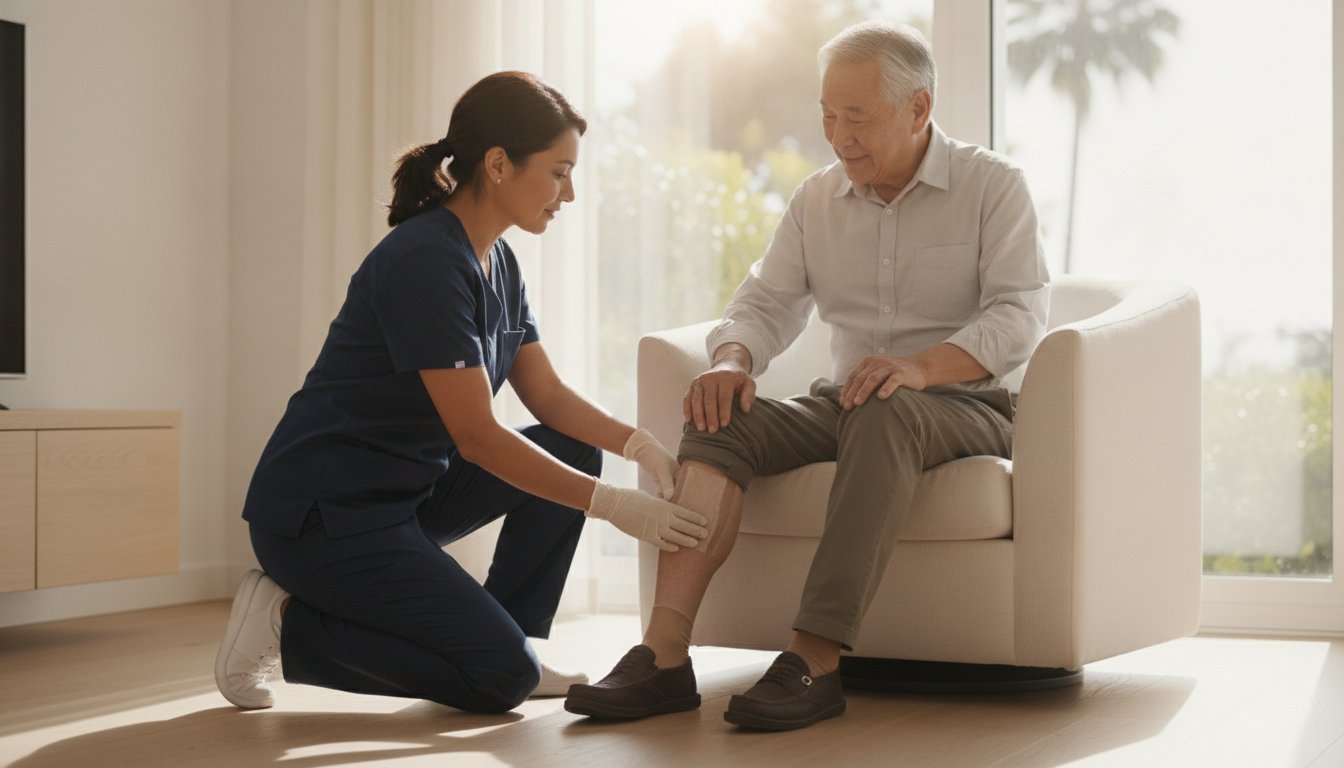
Bedside assessments offer a unique clinical advantage by allowing specialists to evaluate your wound within the context of your daily environment. This holistic view ensures that your personalized care plan accounts for your specific living conditions, mobility patterns, and support systems. Furthermore, many patients find that at home wound treatment medicare through Part B provides a seamless way to access elite medical expertise without the stress of frequent travel. A coordinated care plan involving specialists, family members, and home health agencies creates a unified front against stagnation, ensuring no detail of your biological recovery is overlooked.
The Healix360 Approach in Southern California
We bring board-certified expertise directly to your door in Glendale, Los Angeles, and across the surrounding regions. Our methodology moves beyond basic dressing changes to provide a visionary, data-driven strategy for tissue repair. Each treatment plan is a unique roadmap that may integrate sharp debridement to refresh the wound bed or advanced regenerative grafts to signal cellular growth. By utilizing proactive monitoring and precise diagnostic tools, we identify and neutralize complications before they can halt your progress, maintaining a steady rhythm of healing that respects your quality of life.
Taking the Next Step Toward Healing
Reclaiming your vitality starts with a comprehensive evaluation of your current recovery status. If you are struggling to understand what causes a wound to heal slowly despite your best efforts, a professional bedside assessment can provide the clarity you need. Requesting a mobile evaluation is a straightforward process designed to place you or your loved one at the center of the care journey. To prepare for your first visit, it's helpful to have a list of current medications, previous treatment records, and any specific questions regarding your long-term health goals.
Our specialists arrive equipped with the latest breakthroughs in regenerative science, translating complex biological data into actionable steps for your recovery. You don't have to navigate the complexities of chronic wounds alone. Schedule your advanced bedside wound assessment with Healix360 today and discover how a strategic, home-based approach can restart your path to physical excellence.
Empowering Your Path to Complete Tissue Restoration
Healing is a complex biological journey that requires more than just time; it requires a strategic environment optimized for repair. We've explored how stagnation often stems from a combination of systemic barriers like vascular insufficiency and external blockades like biofilm. Identifying what causes a wound to heal slowly is the first step toward a targeted intervention that shifts your recovery from a passive wait to an active restoration. By integrating regenerative scaffolds and specialized bedside care, you can overcome the cellular exhaustion that keeps wounds from closing.
You don't have to navigate this path alone or struggle with the logistics of specialized clinic visits. As a Medicare Part B provider, our board-certified wound specialists bring elite, data-driven expertise directly to your home across Southern California. We're committed to providing the clinical mastery and personalized roadmaps necessary for life-changing health outcomes. Take the first step toward physical excellence and Request an Advanced Mobile Wound Care Consultation today. Your journey toward a full, vibrant recovery is well within reach.
Frequently Asked Questions
How do I know if my wound is healing too slowly?
A wound is clinically considered chronic or delayed if it fails to show significant progress, such as a 30% to 50% reduction in size, within four weeks. You should also watch for rolled wound edges or a lack of vibrant, pink granulation tissue. These signs indicate that the biological repair process has stalled and requires a more sophisticated clinical intervention to restart.
Can a slow-healing wound be a sign of something serious?
Yes, a persistent injury is often a downstream indicator of an undiagnosed systemic issue. Understanding what causes a wound to heal slowly frequently reveals underlying conditions like peripheral artery disease, venous insufficiency, or metabolic dysfunction. Addressing these systemic barriers is essential for long-term health and preventing complications like deep-tissue infection or limb loss.
Is it normal for a wound to still be red after two weeks?
While some pinkness is expected during early repair, persistent deep redness after 14 days suggests the wound is trapped in a chronic inflammatory loop. This state prevents the transition to the proliferative phase where new tissue actually grows. It often signals that the body is fighting a biofilm or that the local vascular supply is inadequate to move past the cleanup stage.
What is the fastest way to speed up wound healing?
The most efficient way to accelerate recovery is to "reboot" the wound bed through sharp debridement followed by regenerative therapies. Using amniotic membrane grafts or bio-engineered skin substitutes provides the necessary growth factors to bypass biological stagnation. These active therapies provide a physical and chemical scaffold that encourages your own cells to close the gap rapidly.
Does Medicare cover advanced treatments like skin grafts at home?
Medicare Part B covers a wide range of advanced mobile wound care services for eligible patients when deemed medically necessary. This includes bedside evaluations and the application of cellular and tissue-based products like skin substitutes. Receiving these treatments at home ensures you maintain clinical excellence without the physical strain of traveling to a specialized wound center.
Why does my doctor keep scraping my wound (debridement)?
Sharp debridement is a critical procedure used to remove necrotic tissue and disrupt microscopic bacterial fortresses known as biofilms. These blockades physically prevent new skin from growing and act as a food source for pathogens. By refreshing the wound bed, your specialist creates a clean, viable environment that is receptive to advanced regenerative treatments and natural repair.
When should I call a wound care specialist instead of my primary doctor?
You should consult a specialist if your wound hasn't closed within 30 days or if you're managing complex comorbidities like diabetes. While primary doctors handle general health, wound specialists have access to advanced modalities like Negative Pressure Wound Therapy (NPWT) and biological grafts. They provide the highly specific diagnostic data needed to overcome chronic stagnation and ensure long-term limb preservation.
Can poor circulation in my legs be fixed to help my wound heal?
Circulation can often be optimized through a combination of compression therapy and systemic management to increase oxygen delivery. Oxygen is the fuel for cellular replication; without it, the wound bed remains starved and unable to produce collagen. Improving the vascular loop ensures that nutrients reach the injury site and metabolic waste is efficiently removed, creating a foundation for successful repair.


