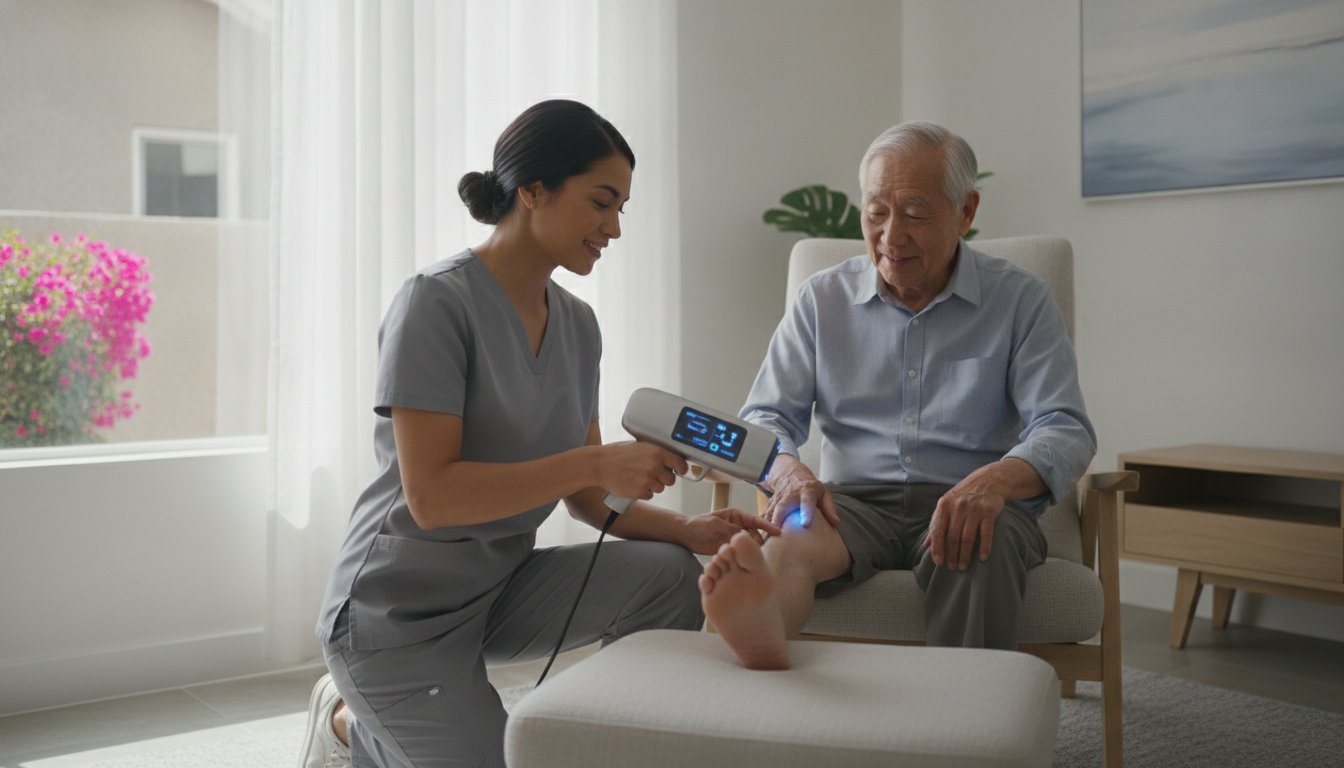
Continuing to rely solely on oral medication might be the least effective way to close a wound that has refused to heal for weeks. You've likely finished your prescription and followed every instruction, yet the persistent odor and sharp pain remain. It's exhausting to face the daily fear of sepsis or the looming threat of amputation while struggling to find what to do when antibiotics don't heal a wound. You deserve a strategy that moves beyond simple infection control toward true tissue restoration.
This guide explains why standard antibiotics often fail to penetrate the biological barriers of chronic injuries and introduces you to advanced regenerative therapies that can restart your body's healing process at home. We'll explore the science of biofilms, the role of bio-engineered skin substitutes, and how mobile specialists deliver hospital-grade care directly to your bedside. By shifting from a reactive approach to a data-driven, proactive plan, you can regain your physical excellence and focus on long-term health outcomes. You don't have to navigate this complex journey alone; expert care is ready to meet you exactly where you are.
Key Takeaways
- Learn why a 30-day plateau classifies a wound as chronic and why oral medications are often insufficient for rebuilding damaged dermal layers.
- Understand how microscopic biofilms create a physical shield that protects bacteria from your immune system and standard systemic treatments.
- Discover what to do when antibiotics don't heal a wound, starting with sharp debridement and precision culture testing to clear biological roadblocks.
- Explore how amniotic membrane grafts and bio-engineered skin substitutes provide the necessary cellular triggers to restart a stalled healing process.
- Realize the benefits of mobile specialist care that delivers advanced regenerative technology directly to your home, optimizing your recovery and long-term vitality.
Understanding Why Antibiotics Alone May Not Heal Your Wound
Many patients assume that a round of oral antibiotics will serve as a universal fix for any skin injury. While these medications are masterfully engineered to eradicate bacteria within the bloodstream and soft tissues, they aren't designed to bridge the gap of missing skin or repair damaged cellular architecture. If you've finished your prescription but your injury remains open, you're likely wondering what to do when antibiotics don't heal a wound. The answer begins with understanding that infection is only one piece of a complex biological puzzle.
A primary misconception is that a non-healing wound is always an infected one. In reality, a wound can be perfectly sterile yet still fail to close because the body's internal "construction crew" has stopped working. Distinguishing between a stalled wound and an actively infected one is the first step toward a successful recovery. Advanced wound care specialists look beyond the presence of bacteria to identify the underlying systemic failures preventing tissue regeneration.
The 30-Day Rule for Chronic Wounds
Clinical protocols generally define a chronic wound as any injury that fails to progress through the orderly stages of healing within 30 days. At this one-month mark, standard primary care often reaches a plateau because the wound has entered a state of biological stalemate. You might notice persistent drainage, a foul odor, or a complete lack of new, pink tissue growth along the edges. These symptoms indicate that the healing process has transitioned from an acute phase to a chronic, stagnant state. A chronic wound is a biological stalemate that requires sophisticated interventions rather than just pharmaceutical suppression.
Circulation: The Highway for Healing
Healing is a resource-intensive process that requires a constant influx of oxygen and nutrients. Conditions like diabetes and peripheral artery disease (PAD) effectively block the highways of the body, preventing antibiotics from ever reaching the wound site in therapeutic concentrations. When circulation is compromised, your tissues enter a low-oxygen state that actually protects harmful germs while starving the cells responsible for repair. This creates a localized environment where bacteria can thrive despite the presence of systemic medication.
Optimizing the local environment is just as important as the medication itself. For instance, managing edema in legs is essential for antibiotic efficacy because excess fluid creates a physical barrier that restricts microcirculation. When looking for what to do when antibiotics don't heal a wound, the strategy must include reducing this swelling to allow oxygen-rich blood to reach the injury. By clearing these systemic roadblocks, you provide the necessary foundation for advanced regenerative treatments to take hold and finally close the wound.
The Invisible Barrier: Biofilm and Bacterial Resistance
A primary reason standard treatments fail is the presence of biofilm. This microscopic, slimy colony of bacteria attaches to the wound surface, creating an organized community that behaves very differently from individual bacteria. While pills work effectively on free-floating bacteria in the bloodstream, they struggle against these structured fortresses. In fact, research indicates that bacteria within a biofilm can be up to 1,000 times more resistant to antibiotics than their free-floating counterparts. This staggering resistance explains why you might finish multiple rounds of medication without seeing a reduction in the wound size or odor.
Understanding these bacterial barriers in chronic wounds is essential for anyone trying to figure out what to do when antibiotics don't heal a wound. Biofilm acts as a biological shield, physically blocking immune cells and systemic drugs from reaching the pathogens underneath. It isn't just a layer of surface debris; it's a sophisticated defense system that actively maintains a state of physical excellence for the bacteria while degrading your own vitality.
Why Your Pills Can't Penetrate the Shield
The molecular structure of biofilm is composed of a sticky matrix that serves as a physical barrier, limiting the diffusion of antibiotic molecules. Beyond this physical wall, biofilms contain "persister" cells. These are dormant bacteria that remain in a metabolically inactive state. Since most antibiotics target active cellular processes like DNA replication, these "sleeping" germs are effectively invisible to the medication. Relying on systemic pills alone to treat a biofilm is like trying to put out a fire inside a fireproof safe. A physical reset is necessary to clear the wound bed of these colonies and allow for true recovery.
The Cycle of Chronic Inflammation
When biofilm persists, your body stays in a constant state of high alert. This creates a cycle of chronic inflammation where the immune system releases enzymes that, while intended to kill bacteria, actually damage healthy tissue and prevent new skin cells from forming. The wound becomes stuck in a proinflammatory phase, unable to transition into the proliferative phase where actual rebuilding occurs. Biofilm is a mechanical problem requiring a mechanical solution. Breaking this cycle involves more than just a different prescription; it requires a strategic intervention that removes the shield entirely. Our specialists offer personalized wound care treatment plans that address these mechanical barriers at the source, allowing your body to resume its natural healing trajectory.
Beyond the Pill: Specialized Debridement and Culture Testing
When systemic medication fails, the focus must shift from the bloodstream to the wound bed itself. The biological debris, consisting of slough, necrotic tissue, and the biofilm discussed previously, acts as a physical barrier that no pill can penetrate. If you are searching for what to do when antibiotics don't heal a wound, the strategy involves a two-pronged approach: identifying the specific enemy and physically clearing the field. This transitions your care from a generalized attempt at suppression to a precise, data-driven methodology that prioritizes your long-term physical excellence.
Clearing this "biological debris" is not merely a cleaning step; it is a sophisticated reset of the local environment. Without removing these layers, regenerative triggers cannot reach the healthy tissue underneath. This mechanical intervention ensures that subsequent treatments, such as amniotic grafts, have a receptive foundation to begin the rebuilding process. Understanding these advanced diagnostic and mechanical steps is the definitive answer for what to do when antibiotics don't heal a wound.
Precision Medicine: Wound Culture Testing
Relying on broad-spectrum antibiotics is often a process of trial and error that wastes valuable time and risks further resistance. Precision medicine utilizes wound culture and sensitivity testing to pinpoint the exact bacterial strains inhabiting your injury. This is critical because studies on antibiotic resistance patterns show that many chronic wounds harbor multi-drug resistant organisms that ignore standard treatments. By performing these evaluations at your bedside, mobile specialists can develop a personalized treatment plan that targets the specific pathogens present, ensuring every intervention is intentional and effective.
The Role of Sharp Debridement
Sharp debridement remains the gold standard for restarting the biological healing clock. Unlike simple wound washing or dressing changes, this procedure involves the surgical removal of non-viable tissue by a specialist using precision instruments. It serves as the essential precursor to advanced surgical wound care, creating a clean, healthy foundation for regenerative therapies. In a mobile clinical setting, you can expect this session to be performed with the same rigor as a hospital outpatient department, but with the added comfort and safety of your own home environment. This mechanical reset is what allows new skin cells to finally migrate across the wound surface and achieve lasting closure.

Regenerative Solutions: Amniotic Grafts and Skin Substitutes
After a specialist clears the biological debris through debridement, the wound requires more than just protection; it needs a stimulus to restart the cellular machinery of repair. This is the definitive next step in what to do when antibiotics don't heal a wound. Regenerative medicine utilizes nutrient-rich tissues to provide a structural scaffold for new growth while signaling the body's own cells to migrate and multiply. These aren't passive dressings. They are active biological interventions that address the underlying cellular exhaustion common in chronic injuries.
When determining what to do when antibiotics don't heal a wound, the shift toward cellular-level repair is often the missing link. Advanced therapies like amniotic membrane grafts and bio-engineered skin substitutes have transformed the landscape of recovery for those facing non-healing injuries. By introducing a complex array of proteins and structural components, these treatments bypass the stalled inflammatory phase and move directly into tissue synthesis. For many qualifying patients, these advanced therapies are covered by Medicare Part B, making elite-level regenerative care accessible without the need for hospital admission.
How Skin Substitutes Signal Healing
The efficacy of skin substitute treatments lies in their ability to mimic the natural extracellular matrix. These grafts are rich in cytokines and growth factors, which are chemical messengers that tell the body to stop fighting and start building. They effectively replace the protective and signaling functions of damaged skin, creating a microenvironment where new tissue can flourish. Amniotic grafts are biological accelerators for chronic injuries. By restoring this signaling pathway, specialists can achieve closure in wounds that have remained stagnant for months or even years.
Amniotic Allografts: The New Standard in Wound Care
Regenerative grafts represent a significant leap forward for patients requiring diabetic ulcer treatment or management of stage 3 and 4 pressure injuries. Traditional dressings often fail these complex cases because they don't provide the necessary biological triggers. Amniotic allografts are naturally anti-inflammatory and anti-fibrotic, which significantly reduces localized pain while preventing the formation of excessive scar tissue. For a graft to be successful, the wound bed must be meticulously prepared through sharp debridement to ensure direct contact with healthy, vascularized tissue. This strategic combination of mechanical clearing and biological stimulation is the most effective roadmap for achieving long-term health outcomes. If your current treatment has reached a plateau, it's time to consult with a mobile wound care specialist to explore these regenerative options.
Mobile Specialist Care: Advanced Healing Delivered to Your Home
The transition from clinical frustration to physical excellence shouldn't be stalled by the logistics of transportation. For many patients, the physical toll of traveling to a wound clinic with a chronic injury is a significant barrier to recovery. When you're determining what to do when antibiotics don't heal a wound, the solution often lies in bringing the specialist to you. Mobile advanced wound care services provide a seamless bridge between hospital-level technology and the safety of your own environment. This model of care ensures that your healing trajectory remains uninterrupted by the risks and stressors of traditional clinical settings.
Our mobile specialists operate with a high degree of integration, coordinating directly with your home health agencies and primary care physicians to ensure a unified strategy. This collaborative approach eliminates the fragmented care that often leads to stalled progress. It's also vital to understand the financial accessibility of these services. Medicare Part B frequently covers mobile medical consultations and specialized procedures, including sharp debridement and regenerative graft applications, for qualifying patients. This allows you to focus entirely on your physical excellence while we manage the complexities of clinical coordination and insurance compliance.
The Healix360 Approach in Southern California
Healing requires precision, and our network of board-certified specialists is dedicated to the science of tissue restoration. We bring hospital-grade technology, such as Negative Pressure Wound Therapy (NPWT) and bio-engineered grafts, directly to your bedside. By choosing mobile wound care in Los Angeles, Glendale, and the surrounding Southern California areas, you effectively eliminate the risk of hospital-acquired infections found in crowded waiting rooms. This proactive model preserves your vitality and places you at the center of a data-driven recovery plan.
Next Steps for Stalled Wounds
If you've spent weeks wondering what to do when antibiotics don't heal a wound, the first step is a comprehensive bedside evaluation. Scheduling a visit is a straightforward process that initiates a biological reset for your injury. You'll simply need to provide your basic medical history, current insurance information, and a list of previous treatments. Our team handles the rest, from the initial assessment to the implementation of advanced regenerative therapies. You don't have to accept a stalled wound as your new normal. Schedule a specialist wound assessment in Southern California today to reclaim your health and experience the future of personalized care.
Reclaiming Your Health with Advanced Regenerative Care
Achieving lasting closure for a chronic injury requires a shift from passive observation to proactive, specialized intervention. We've explored how the microscopic barriers of biofilm and poor systemic circulation can render standard prescriptions ineffective. True recovery demands a strategic reset of the wound environment, combining mechanical debridement with the biological signaling power of amniotic grafts and high-tech skin substitutes. Understanding what to do when antibiotics don't heal a wound empowers you to move beyond temporary suppression toward a future of physical excellence and long-term vitality.
As a dedicated Medicare Part B provider, our network of board-certified wound specialists delivers elite mobile regenerative medicine directly to your home. We translate complex biological data into a clear, actionable roadmap designed for your specific needs. You can Request a Bedside Wound Evaluation in Southern California to experience hospital-grade technology without the clinical waiting room. Your health is your most valuable asset, and we're here to ensure no detail of your recovery is overlooked. You have the power to restart your healing process today; let's take that first step toward your total-body health together.
Frequently Asked Questions
Why is my wound still draining after 10 days of antibiotics?
Persistent drainage often signals that the wound has entered a chronic, inflammatory state that antibiotics alone cannot resolve. While the medication may have addressed systemic bacteria, it cannot penetrate localized barriers like biofilm or overcome poor microcirculation. If you're wondering what to do when antibiotics don't heal a wound, a specialist evaluation is necessary to identify if the injury is stalled due to biological roadblocks rather than active infection.
Can a wound heal if it has biofilm on it?
No, a wound typically cannot achieve closure as long as a mature biofilm is present on the surface. This slimy matrix acts as a physical shield, protecting bacteria from your immune system and preventing new skin cells from migrating across the wound bed. Healing requires a mechanical reset through sharp debridement to physically remove the biofilm and allow regenerative therapies to take hold.
Is debridement painful if done at home?
Bedside debridement is performed with a high level of precision and patient comfort in mind. Specialists use localized numbing agents to ensure the procedure is well-tolerated while they surgically remove non-viable tissue. Receiving this advanced care in the safety of your home environment reduces the stress and physical exhaustion often associated with traveling to a traditional outpatient clinic.
Does Medicare cover amniotic membrane grafts for diabetic ulcers?
Yes, Medicare Part B typically covers amniotic membrane grafts and other bio-engineered skin substitutes for patients with qualifying chronic wounds, such as diabetic ulcers. These advanced treatments are recognized as essential for restarting the healing process in injuries that haven't responded to conservative care. Our team ensures all documentation is Medicare-compliant to facilitate access to these high-tech regenerative solutions.
What happens if a chronic wound is left untreated?
Neglecting a non-healing wound can lead to severe systemic complications, including cellulitis, bone infections (osteomyelitis), and sepsis. Over time, the lack of progress increases the risk of tissue necrosis, which may ultimately necessitate surgical amputation to save the patient's life. Early specialist intervention is the most effective way to optimize long-term health outcomes and preserve your physical excellence.
How do I know if my wound needs a specialist instead of a primary doctor?
You should seek a specialist if your wound fails to show significant improvement within 30 days of standard treatment. Primary care is excellent for acute injuries, but chronic wounds require advanced diagnostics like culture testing and regenerative grafts. If you're searching for what to do when antibiotics don't heal a wound, a specialist evaluation is the next logical step in your journey toward recovery.
Can I get advanced skin substitutes at home in Glendale?
Yes, our mobile advanced wound care services deliver high-tech skin substitutes and amniotic grafts directly to residents in Glendale and throughout Southern California. We bring hospital-grade regenerative technology to your bedside, allowing you to receive elite-level care without leaving your home. This model of delivery maximizes your quality of life by avoiding the risks and logistics of traditional hospital visits.
What is the success rate of regenerative grafts for pressure sores?
Clinical evidence demonstrates that regenerative grafts significantly improve the likelihood of closure for stage 3 and 4 pressure sores compared to traditional dressings. These grafts provide the essential growth factors and structural scaffolds needed to rebuild deep tissue layers. Success is highest when the grafts are integrated into a comprehensive treatment plan that includes regular debridement and personalized care strategies.


