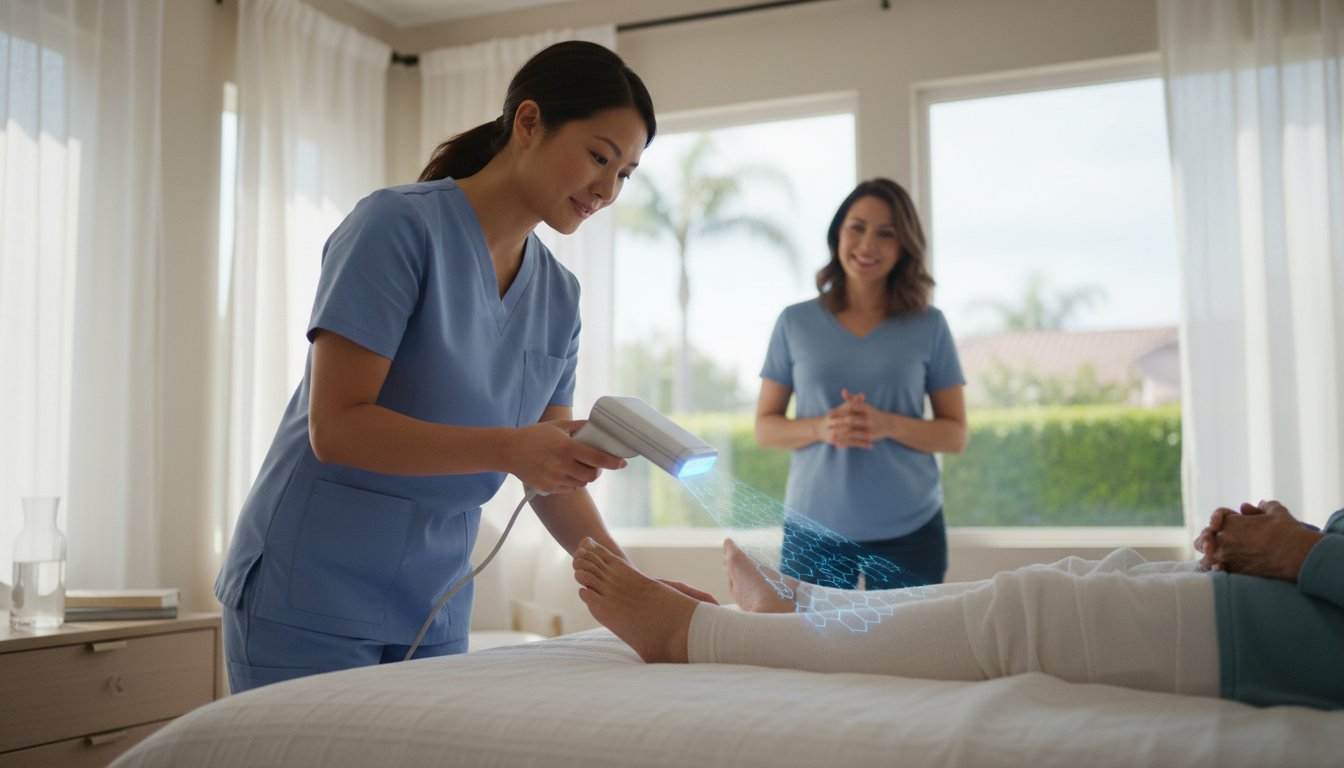
Why risk the physical and emotional trauma of an ambulance transfer for a wound treatment that can be delivered with greater precision in your own living room? We know that for many families in Southern California, the logistical nightmare of moving a non-ambulatory loved one feels like an impossible barrier to quality medical intervention. You shouldn't have to compromise on clinical excellence or fear the onset of infection just because a traditional clinic visit is out of reach.
This guide explores how Healix360 redefines wound care for bedridden patients Orange County by bringing sophisticated regenerative medicine, such as bio-engineered skin substitutes and amniotic membrane grafts, directly to the bedside. Our approach bridges the gap between laboratory science and the home environment, ensuring that high-achieving families have access to elite healing protocols without the risks of hospitalization. We'll detail how our mobile specialists utilize advanced diagnostics and the latest 2026 Medicare-compliant protocols to heal complex wounds. You'll gain a clear, actionable roadmap for maintaining long-term skin integrity and restoring the quality of life your loved one deserves.
Key Takeaways
- Discover how bio-engineered skin substitutes and amniotic membrane grafts provide hospital-grade healing without the need for clinical relocation.
- Learn why specialized wound care for bedridden patients Orange County is shifting toward mobile delivery to eliminate the physical and emotional trauma of ambulance transport.
- Understand the "Visionary Health Architect" approach to designing a personalized treatment environment that prioritizes long-term skin integrity and infection prevention.
- Identify the core pillars of a proactive recovery roadmap, including advanced moisture management and precision offloading techniques tailored for home settings.
- Explore how Healix360 integrates with Medicare Part B to provide seamless access to board-certified wound specialists directly at your bedside.
The Challenge of Wound Care for Bedridden Patients in Orange County
Skin is the body's primary barrier against the environment, yet for non-ambulatory individuals, it's also the most significant point of physiological vulnerability. Chronic pressure injuries occur when prolonged pressure restricts blood flow to localized tissue, leading to cellular death and deep-seated damage. For families seeking specialized wound care for bedridden patients Orange County, this isn't just a clinical hurdle; it's a daily battle to maintain the dignity and longevity of a loved one. The stakes are exceptionally high because a stalled wound isn't a static condition. Without expert intervention, these injuries often spiral into systemic infections, sepsis, or multiple hospital readmissions that further deplete the patient’s resilience.
Orange County presents a unique set of challenges for skin integrity. With approximately 15% of our 3.1 million residents over the age of 65 and a significant diabetic population, the demand for sophisticated skin management is intense. Our coastal climate, while temperate, often introduces fluctuations in humidity that can impact skin maceration. When moisture levels aren't perfectly balanced, the skin's protective mantle weakens, making it easier for pressure and friction to cause catastrophic breakdown. A traditional "wait and see" approach fails because it ignores the underlying biological data. Chronic wounds in bedridden populations require a visionary health architect who can look beyond the surface to optimize the entire healing environment.
Understanding Pressure Injury Stages
Early detection is the cornerstone of proactive care. Stage 1 injuries present as persistent, non-blanchable redness, while Stage 2 involves a partial thickness loss of the dermis, often looking like a shallow open ulcer or a ruptured blister. By the time an injury reaches Stage 3 or 4, the damage extends into the subcutaneous fat or even the bone and muscle. Pressure ulcers are particularly dangerous when they manifest as Deep Tissue Injuries (DTI). These appear as localized purple or maroon discolorations that may look like a simple bruise but actually signal significant, irreversible damage deep beneath the surface. What might be dismissed as a minor "butt wound" can quickly become a medical emergency that threatens the patient's life.
The Risks of Transporting Non-Ambulatory Patients
For a patient with a non-healing wound, the act of traveling to a clinic is often more damaging than the wound itself. Transport-induced shear occurs when the patient's body is shifted during ambulance loading or vehicle movement, causing the skin to pull against the underlying tissue. This mechanical stress can effectively restart the wound clock, tearing through fragile new granulating tissue. Beyond the physical trauma, the hidden costs of ambulance fees and hours spent in clinic waiting rooms create unnecessary exhaustion. Bedside stabilization is the first step in our 360-degree care plan, ensuring that wound care for bedridden patients Orange County remains focused on healing rather than the logistics of transport.
Advanced Regenerative Therapies: Bringing the Lab to the Bedside
Modern medicine has evolved beyond the four walls of the hospital. By bringing the laboratory's most sophisticated breakthroughs to the patient's bedside, we transform the home into a center for peak healing performance. In 2026, the standard for wound care for bedridden patients Orange County has moved past simple bandage changes toward a more integrative, data-driven methodology. This shift allows us to address the unique biological biomarkers of each patient, ensuring that the local environment is optimized for rapid recovery rather than mere maintenance.
Success begins with a meticulously prepared wound bed. Sharp debridement remains a cornerstone of our clinical practice, as it removes the non-viable tissue and bacterial biofilms that stall the body's natural repair mechanisms. We often complement this process with Negative Pressure Wound Therapy (NPWT), a technology that uses controlled suction to manage exudate and stimulate localized blood flow. While families can acquire basic Wound Management Home Skills for daily hygiene, these advanced regenerative interventions require the precision of a visionary health specialist. If you're ready to move beyond traditional dressings, a personalized wound care treatment plan can identify the specific therapies needed to jumpstart healing.
The Science of Amniotic Allografts
Amniotic allografts are biological scaffolds rich in growth factors that facilitate cellular migration and tissue regeneration. These regenerative grafts are significantly superior to traditional gauze or honey dressings because they provide the actual building blocks required for complex tissue repair. By integrating stem-cell-derived therapies, we can directly improve geriatric skin longevity. This proactive approach is particularly effective for diabetic ulcers, where the body's self-repair signals have often been silenced by chronic inflammation.
Bio-engineered Skin Substitutes
Venous and arterial ulcers often trap patients in a frustrating cycle of non-healing that lasts for months or even years. Bio-engineered skin substitutes break this cycle by providing a 360-degree protective barrier that mimics the structure of healthy human skin. These advanced materials don't just cover the wound; they integrate with the patient’s own biological systems to encourage the growth of new, healthy tissue. This high-tech intervention ensures that even the most stubborn injuries are met with the scientific rigor necessary to achieve transformative results at home.
Mobile Wound Care vs. Traditional Clinics: Why Location Matters
Traditional healthcare models often operate on the assumption that every patient can physically arrive at a centralized facility. While Orange County is home to some of the nation's most prestigious specialized centers in Irvine and Newport Beach, the requirement for transport creates a significant "Clinic Gap" for non-ambulatory individuals. For those managing wound care for bedridden patients Orange County, this gap isn't just a logistical hurdle; it's a physiological risk. Every time a patient is moved for a clinic visit, they're exposed to mechanical shear and the exhausting stress of travel, both of which can stall the body's regenerative processes. By bringing the specialist to the bedside, we eliminate these variables and maintain the integrity of the healing environment.
Choosing mobile care also serves as a proactive strategy for infection control. Hospitals and outpatient clinics are high-traffic areas where the risk of hospital-acquired infections (HAIs) is significantly elevated. For a patient with a compromised immune system or a chronic pressure injury, even a brief exposure can lead to systemic complications. As a visionary health architect, Healix360 designs a care plan that prioritizes the safety of the home environment. We don't just treat the injury; we empower the local caregiver with professional tools and education, ensuring that the daily environment supports peak performance in cellular repair. This integrative approach transforms the home into a high-end recovery suite where clinical excellence meets personal comfort.
The Logistics of Longevity
Consistency is the primary driver of successful outcomes. We coordinate seamlessly with Orange County home health agencies to ensure that daily dressing changes align perfectly with our specialized treatment protocols. Bedside wound evaluations allow us to catch early signs of dehiscence or infection before they require emergency intervention. Healix360 acts as your elite guide, translating the complex data found in the Current Management of Pressure Ulcers into a clear, actionable roadmap for your loved one. This level of oversight ensures that no detail of the patient's skin integrity is overlooked, providing a 360-degree view of their long-term health.
Cost-Benefit Analysis for Families
Elite medical care should be as accessible as it is effective. Many families are surprised to learn that Medicare Part B covers mobile specialist consultations, allowing for advanced wound care for bedridden patients Orange County without the premium price tag of private transport. By stabilizing the patient at home, you avoid the massive financial burden and emotional exhaustion associated with emergency room visits and hospital readmissions. Faster healing trajectories don't just save money; they preserve the patient's vitality and offer families the peace of mind that comes from knowing they're in expert hands. Investing in mobile regenerative medicine is a commitment to both clinical success and the patient's daily quality of life.

A Proactive Roadmap: Managing Bedridden Wounds at Home
Healing a chronic wound requires more than just a high-tech graft; it demands a total-body optimization strategy. We call this the 360-degree view. It integrates nutrition, pressure management, and precise moisture control into a single, cohesive plan. For families coordinating wound care for bedridden patients Orange County, this proactive roadmap is the difference between a stalled recovery and transformative results. By addressing the systemic environment alongside the local injury, we ensure the patient's biological systems are primed for peak performance in tissue repair.
Scientific precision eliminates the guesswork that often plagues general home health. We utilize wound culture and sensitivity testing to identify specific pathogens within the wound bed. This data-driven approach ensures that every treatment targets the exact bacterial biomarkers present, preventing the overuse of broad-spectrum antibiotics and reducing the risk of drug-resistant infections. When you understand the microscopic landscape of the wound, you can apply therapies with the confidence of a visionary health architect. Our specialists can design a personalized wound care treatment plan that addresses these complex factors directly at your bedside.
Offloading and Pressure Redistribution
Pressure redistribution is the foundation upon which all other therapies are built. Without it, even the most expensive bio-engineered grafts will fail because the mechanical stress continues to starve the tissue of oxygen. We guide families in selecting specialized low-air-loss mattresses and high-density foam cushions that minimize contact pressure on vulnerable bony prominences. To prevent shear during repositioning, it's essential to use friction-reducing draw sheets and "lift-not-drag" techniques. A consistent turning schedule is vital, yet it must be meticulously organized to work within the realities of a home setting, ensuring that no single area bears weight for more than two hours at a time.
Nutritional Support for Tissue Regeneration
Longevity and skin integrity are fueled by what happens inside the body. Protein intake is directly linked to collagen synthesis, which serves as the literal scaffolding for new skin cells. In many geriatric patients, a "protein gap" exists that silently stalls the healing process despite perfect topical care. We also look for signs of edema in the lower extremities, as fluid retention can compress capillaries and starve the wound of oxygen-rich blood. When standard diets fall short of the metabolic demands of a non-healing injury, we integrate medical-grade supplements designed to optimize the biomarkers necessary for rapid wound closure.
Healix360: Your Advanced Mobile Wound Specialist in Orange County
Clinical excellence shouldn't be confined to a hospital wing. At Healix360, we operate as visionary health architects, bringing a sophisticated Southern California network of board-certified specialists directly to your door. We understand that effective wound care for bedridden patients Orange County requires more than just clinical skill; it demands a seamless integration into the patient's existing ecosystem. Our model is built on a foundation of scientific rigor and proactive prevention, ensuring that every diagnostic biomarker is analyzed to create a clear path toward peak healing performance.
We don't work in isolation. Our specialists serve as the elite guide for a comprehensive care team, collaborating closely with home health agencies, case managers, and hospital referral sources. This partnership model ensures that the high-level medical concepts we implement at the bedside are supported by consistent daily management. By bridging the gap between advanced laboratory breakthroughs and daily quality of life, we provide a 360-degree view of the patient's recovery. Whether you're in Irvine, Anaheim, or Newport Beach, our mobile units are equipped to deliver transformative results where they matter most.
Medicare-Compliant In-Home Care
Navigating the financial landscape of advanced medicine can be complex, but we've designed our process to be as transparent as it is effective. Healix360 is a Medicare-compliant provider, and our mobile specialist consultations are typically covered under Medicare Part B. We handle the coordination with your existing primary care physician, ensuring that our specialized treatment plans are fully integrated with the patient's broader health goals. Our team provides clear, detailed procedural billing for advanced grafts and therapies, so families can focus on healing rather than paperwork. This professional approach ensures that elite wound care for bedridden patients Orange County remains accessible and well-organized.
The Healix360 Difference
Choosing a specialized mobile team means you're prioritizing longevity and safety. Traditional clinical environments often lack the time or the specific focus required to manage complex, non-healing wounds in non-ambulatory populations. We bring regenerative breakthroughs, including amniotic membrane grafts and bio-engineered skin substitutes, directly into your bedroom. This elite level of care eliminates the "clinic gap" and provides the stability necessary for cellular repair to thrive. Our real-world success in chronic wound management is rooted in our ability to translate complex biological data into actionable, personalized roadmaps that restore both skin integrity and peace of mind.
Restoring Longevity Through Mobile Excellence
The journey toward total-body healing starts with a shift in perspective. By prioritizing mobile regenerative medicine, you choose a path that respects the patient's environment while leveraging elite clinical breakthroughs. We've explored how amniotic grafts and biomarker optimization provide a roadmap for long-term health that traditional clinic visits simply cannot match. This specialized wound care for bedridden patients Orange County ensures that clinical excellence is never sacrificed for logistical convenience.
Healix360 serves as your visionary health architect, providing hospital-grade care through a Medicare Part B provider model that covers all of Southern California. Our specialists in regenerative amniotic grafts are ready to help you reclaim skin integrity and peace of mind. Taking this proactive step eliminates the fear of infection and the physical trauma of transport. Schedule a Bedside Wound Evaluation with Healix360 Today to begin a personalized journey toward transformative results. Your loved one's health is their most valuable asset, and we're here to protect it with scientific precision and human-centric warmth.
Frequently Asked Questions
Does Medicare cover mobile wound care for bedridden patients in Orange County?
Yes, Medicare Part B generally covers mobile wound care for bedridden patients Orange County when these services are deemed medically necessary. Our clinical interventions are billed as professional specialist consultations, similar to a traditional office visit but performed at your loved one's bedside. We manage the complex documentation and coordination with your primary care physician to ensure full compliance with 2026 CMS guidelines. This allows families to access elite regenerative therapies without the financial burden of private ambulance transport.
What are the first signs of a pressure ulcer I should look for?
The earliest indicator is usually a localized area of skin that remains red or discolored even after pressure is removed. If you press the area and it doesn't turn white or "blanch," blood flow is already compromised. You should also monitor for changes in skin temperature, unusual firmness, or a "boggy" texture compared to the surrounding tissue. Catching these biomarkers early is the first step in a 360-degree prevention plan to avoid deep tissue injury and systemic infection.
How often does a wound specialist need to visit a bedridden patient?
Frequency is determined by the wound's complexity and the specific regenerative therapies utilized in the treatment plan. Most chronic or non-healing wounds require a specialist's evaluation once a week to perform sharp debridement or apply advanced amniotic grafts. We coordinate with your home health team to manage daily dressing changes and moisture control between our professional visits. This rhythmic cadence ensures that no detail of the healing process is overlooked and that the treatment remains optimized for recovery.
Can a Stage 4 bedsore really be treated at home?
Yes, Stage 4 injuries can be effectively managed at home using hospital-grade mobile technology and advanced regenerative protocols. We utilize bio-engineered skin substitutes and Negative Pressure Wound Therapy (NPWT) to stabilize and close deep wounds that involve muscle or bone. By treating these high-stakes injuries at the bedside, we eliminate the physical trauma of transport which often causes further tissue shear. Our goal is to achieve transformative results while maintaining the patient's comfort and safety in their own environment.
What is the difference between home health and a mobile wound specialist?
Home health agencies typically provide general nursing care, such as routine dressing changes and medication monitoring. In contrast, a mobile wound specialist is a board-certified provider who performs advanced clinical procedures like sharp debridement and applies bio-engineered scaffolds. We act as the visionary health architect, designing the specific clinical roadmap that the home health team then implements daily. This integrative partnership ensures the highest level of expertise is applied to complex wound care for bedridden patients Orange County.
How do I prevent a wound from getting infected while waiting for a specialist?
Prioritize offloading the area immediately to restore capillary blood flow to the compromised tissue. Keep the surrounding skin clean and dry, utilizing professional moisture barriers if incontinence is a factor. Avoid applying unprescribed creams or powders that can trap bacteria or macerate the wound edges. Maintaining a strict turning schedule every two hours is the most effective way to stabilize the environment until a specialist can perform a bedside evaluation and wound culture.
What are skin substitutes, and are they safe for elderly patients?
Skin substitutes are sophisticated, bio-engineered scaffolds designed to mimic human dermal structure and stimulate cellular growth. They are exceptionally safe for elderly patients as they provide a 360-degree protective barrier and deliver essential growth factors directly to the wound bed. These therapies are often more effective than traditional dressings because they jumpstart the body's natural repair mechanisms. We use them to improve geriatric skin longevity and close wounds that have stalled under standard care models.
How do I schedule an in-home wound evaluation with Healix360?
You can initiate your journey by contacting our Orange County office directly or through our secure online portal. We'll perform a comprehensive bedside evaluation to assess the wound's stage, vascular health, and nutritional biomarkers. From there, we design a personalized treatment plan that integrates with your current care team and home health agency. Our specialists are available to visit homes and residential facilities throughout Southern California to begin the healing process immediately.


