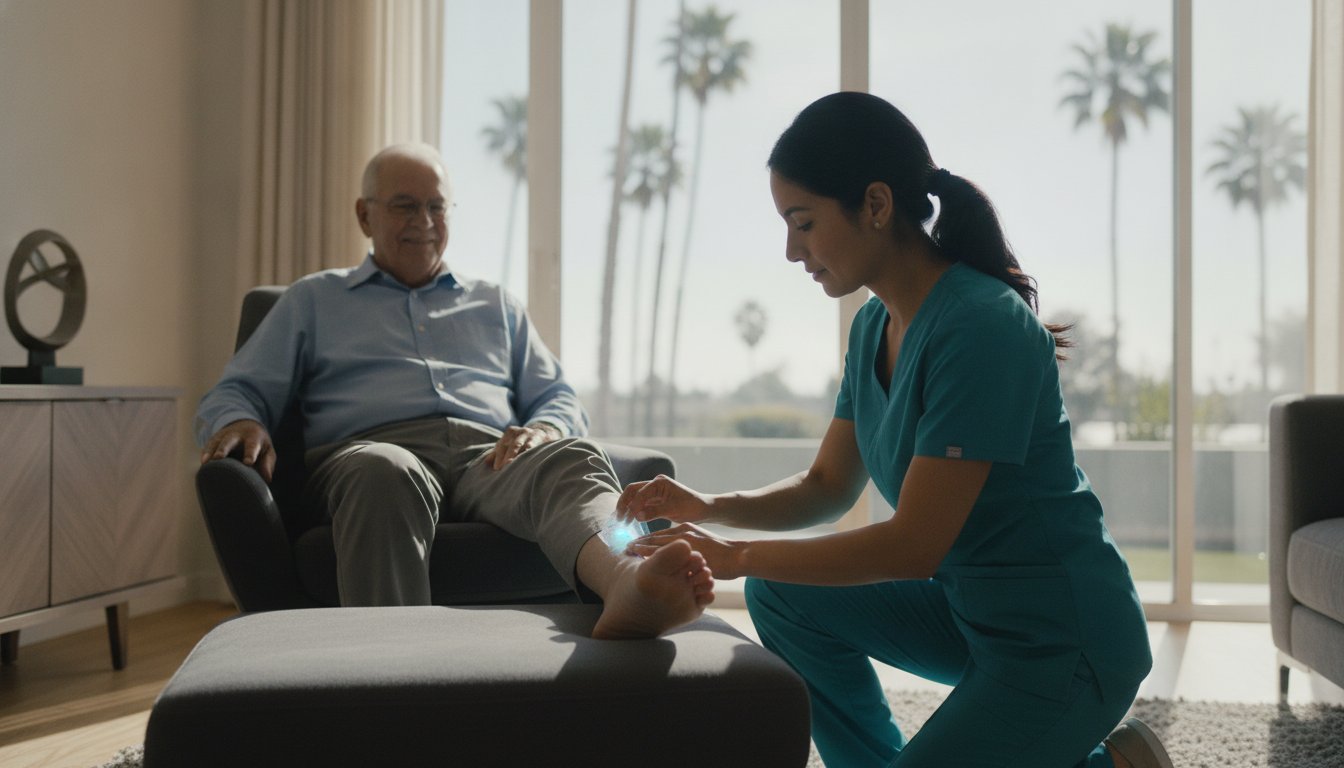
The most effective way to heal a stubborn venous ulcer isn't found in a hospital wing, but within the sophisticated biological architecture of regenerative tissue. You've likely spent months enduring the persistent ache of a non-healing wound while dreading the exhausting crawl through Los Angeles traffic just to reach a specialist. It's frustrating to feel like your mobility is being stolen by a condition that refuses to respond to standard care. This guide explores how a specialized amniotic allograft for venous ulcers Southern California residents can access at home is fundamentally changing the recovery timeline by delivering regenerative science directly to your door.
We'll walk you through the 2026 landscape of mobile wound care, where advanced clinical expertise meets the comfort of your own living room. You'll discover how these bio-engineered grafts accelerate tissue repair and reduce edema without the logistical burdens or infection risks of traditional wound centers. We also demystify the latest 2026 Medicare payment updates and prior authorization protocols, providing a clear roadmap to reclaiming your physical excellence. By the end of this article, you'll understand why the future of healing is a collaborative, data-driven journey designed entirely around your lifestyle and long-term vitality.
Key Takeaways
- Discover how the biological architecture of amniotic tissue, rich in growth factors and cytokines, restarts the healing process in chronic, stalled venous ulcers.
- Learn why accessing an amniotic allograft for venous ulcers Southern California through mobile medical care eliminates the stress of travel while reducing exposure to hospital-acquired infections.
- Understand the 2026 Medicare landscape, including the specific documentation requirements and "reasonable and necessary" standards for advanced skin substitute coverage.
- Explore the synergistic relationship between professional sharp debridement and regenerative grafts to achieve rapid wound closure and significant reduction in leg edema.
- Gain a clear roadmap for transitioning to a physician-led, bedside treatment plan that prioritizes your long-term vitality and lifestyle optimization.
The Challenge of Chronic Venous Leg Ulcers in Southern California
Chronic venous leg ulcers (VLUs) represent more than just a surface level injury; they are a complex manifestation of systemic vascular failure. In Southern California, our aging population increasingly faces the burdens of chronic venous insufficiency, a condition where weakened vein valves allow blood to pool in the lower extremities. This persistent pressure leads to tissue breakdown that often resists standard medical interventions. For many, the journey involves a cycle of temporary improvement followed by painful recurrence that drains both physical energy and emotional reserves.
Why Standard Wound Care Stalls
When a wound fails to close within four weeks, it's typically transitioned into a chronic state characterized by biological stagnation. High levels of inflammatory proteases begin to degrade the body's natural growth factors, effectively stalling the healing engine. Standard treatments often fall short because they don't address the specific molecular environment of a chronic wound. Common limitations include:
- Moisture Management Only: Basic hydrocolloids manage fluid but don't stimulate new tissue growth.
- Bacterial Resistance: Silver dressings may reduce surface bacteria but don't penetrate deep biofilm layers.
- Inadequate Biological Signaling: Traditional bandages lack the active cytokines necessary to jumpstart cellular migration.
- Delayed Intervention: A "wait and see" approach increases the risk of cellulitis and systemic infection.
The Impact of Southern California Lifestyle on Recovery
Living in the Southland presents unique challenges for wound recovery. The region's warm climate can exacerbate edema in legs, making consistent compression therapy even more critical for success. Additionally, the logistical nightmare of navigating Los Angeles or San Diego traffic often leads to missed appointments at traditional wound centers. This lack of consistency is a primary reason why an amniotic allograft for venous ulcers Southern California patients receive at home is becoming the gold standard for 2026. By utilizing the regenerative properties of the amniotic membrane, clinicians can restart the healing process in a patient's own environment. This shift toward mobile, bedside care ensures that professional medical expertise is delivered without the exhaustion of travel, allowing patients to focus entirely on their recovery and long-term vitality.
Amniotic Allografts: The Science of Regenerative Wound Healing
Regenerative medicine has moved from the laboratory to the bedside, offering a biological restart for wounds that have failed to close through traditional means. An amniotic allograft for venous ulcers Southern California clinicians utilize is a human-derived, bio-engineered skin substitute designed to mimic the natural healing environment of healthy tissue. These grafts aren't simply protective covers; they are active biological engines that communicate with your body's own cells. By providing a complex matrix of cytokines, growth factors, and extracellular matrix proteins, they create a physical and chemical scaffold that invites your own skin cells to migrate, divide, and rebuild. This sophisticated architecture also supports angiogenesis, the formation of new blood vessels, which is vital for delivering oxygen and nutrients to oxygen-starved venous tissue that has been trapped in a cycle of stagnation.
Safety and precision remain the cornerstones of this advanced therapy, ensuring that every application is both effective and reliable. Every allograft undergoes rigorous screening and proprietary processing of donated placental tissue to ensure it meets the highest clinical standards for purity and bio-activity. This meticulous approach ensures that you receive a premium product capable of transforming a chronic, painful ulcer into a healing, vibrant site of recovery. By prioritizing these high-end biological materials, we ensure that your path to physical excellence is supported by the most robust scientific data available today. This commitment to quality means fewer complications and a more predictable roadmap toward your long-term health goals.
The Biological Mechanism of Action
Amniotic tissue effectively modulates the inflammatory environment of a venous leg ulcer by shifting the wound from a state of chronic degradation to one of active repair. This transition is largely driven by the signaling influence of Mesenchymal Stem Cells (MSCs) and essential proteins that coordinate the cellular response. Key components include:
- Growth Factors: These stimulate cell proliferation and migration to close the wound gap.
- Cytokines: These regulate the inflammatory response to prevent further tissue breakdown.
- Structural Proteins: These create the physical scaffold required for new tissue to anchor and grow.
Unlike standard dressings that might allow for disorganized tissue growth, these allografts promote high-quality epithelialization. This results in the formation of functional, flexible skin rather than thick scar tissue, preserving the integrity and vitality of your lower limbs.
From Stalled to Stimulated: The Healing Trajectory
Amniotic allografts jumpstart the proliferative phase of wound healing by replacing the missing biological signals that chronic ulcers lack. Clinical data, such as this amniotic membrane allografts case study, shows rapid wound area reduction within the first four weeks of application. This accelerated timeline is why specialists prefer these skin substitute options over synthetic alternatives. Choosing an amniotic allograft for venous ulcers Southern California providers deliver ensures you're accessing elite breakthroughs in medical science. You might consider how mobile regenerative specialists can bring this elite level of care directly to your home, allowing you to recover in comfort.
Comparing Amniotic Grafts to Traditional Venous Ulcer Treatments
Traditional Standard of Care (SOC) often focuses on passive management rather than active biological restoration. While compression therapy remains a foundational necessity, relying solely on basic gauze or moisture-wicking dressings can lead to a frustrating cycle of stagnation. An amniotic allograft for venous ulcers Southern California specialists provide represents a proactive shift from merely covering a wound to actively engineering its closure. Unlike autologous skin grafts, which require a painful secondary donor site and a surgical theater, allografts offer a minimally invasive bedside alternative that preserves your comfort and mobility. This approach places the individual at the center of the journey, utilizing elite medical science to achieve outcomes that traditional methods often fail to reach.
The success of these regenerative grafts is significantly amplified when paired with professional sharp debridement. By meticulously removing necrotic tissue and biofilm, we create a clean, receptive bed that allows the graft's biological signals to integrate seamlessly. This synergistic relationship often yields visible results within the first 30 to 60 days, providing a predictable trajectory toward physical excellence. It's a method that values precision and mastery over complex biological data, ensuring that no detail of your vascular health is overlooked.
Amniotic Allografts vs. Standard Dressings
Standard dressings typically require frequent, often daily, changes that disrupt the wound bed and cause recurring discomfort for the patient. In contrast, regenerative grafts provide a stable, bio-active environment that reduces the need for intrusive maintenance. Consider the following advantages of this advanced approach:
- Superior Moisture Control: Allografts maintain a precise physiological balance, preventing the maceration common with basic hydrocolloids.
- Economic Efficiency: While the initial application involves a higher clinical cost, it often prevents months of recurring expenses on failed traditional supplies.
- Enhanced Infection Resistance: The biological barrier of the graft offers a level of protection that synthetic materials simply cannot match.
Clinical Efficacy and Real-World Outcomes
Observations from 2025 clinical data highlight the success of advanced regenerative products in complex patient populations. Even for individuals managing co-morbidities such as diabetes or peripheral artery disease, these allografts provide the necessary signaling to overcome systemic healing barriers. Weekly applications of an amniotic allograft for venous ulcers Southern California patients receive have been shown to significantly accelerate the transition from the inflammatory phase to the proliferative phase of repair. This data-driven strategy transforms a stalled recovery into a clear, actionable roadmap for long-term health and self-actualization.

Accessing Advanced Wound Care in Southern California: Medicare and Logistics
Accessing elite medical care shouldn't be a logistical hurdle that compromises your recovery. In metropolitan hubs like Glendale and Los Angeles, the journey to a specialized wound center often involves hours of exhausting gridlock, which is fundamentally counterproductive for patients who require leg elevation and physical rest. By choosing an amniotic allograft for venous ulcers Southern California residents can receive at home, you bypass these environmental stressors entirely. This mobile model ensures that board-certified experts come to you, coordinating seamlessly with your primary care physician and home health agency to create a unified, data-driven front against chronic wounds.
Understanding Medicare and Insurance Coverage
Navigating the financial landscape of regenerative medicine requires the precision of a visionary strategist. As of January 1, 2026, the Centers for Medicare & Medicaid Services (CMS) has established a single payment rate for skin substitute products at approximately $127.14 per square centimeter. Because the Noridian jurisdiction now determines coverage on a case-by-case basis following the withdrawal of specific Local Coverage Determinations in late 2025, meticulous documentation of "medical necessity" is more critical than ever. Medicare Part B typically covers these advanced grafts when a wound has persisted for at least four weeks despite conservative therapy. We act as your elite guide in this process, ensuring that vascular assessments and wound measurements meet every rigorous requirement to avoid out-of-pocket surprises.
The Benefits of Mobile Specialized Care
Mobile medicine is the new gold standard for maintaining a sterile, high-end clinical environment within the comfort of your own residence. Our specialists perform mobile wound care with the same scientific rigor found in elite surgical suites, ensuring every amniotic allograft is applied under optimal conditions. This bedside approach allows us to observe your actual living environment, identifying lifestyle factors or mobility barriers that a traditional clinic might overlook. Whether you require complex surgical wound care or routine graft maintenance, our presence in your home provides a level of continuity that traditional centers simply cannot replicate. This proactive partnership places you at the center of the journey, transforming your home into a sanctuary of healing and vitality.
Reclaiming your physical excellence starts with a single, informed decision to prioritize your health as your most valuable asset. Contact our Southern California specialists today to verify your insurance eligibility and begin your personalized roadmap to recovery.
Healix360: Delivering Regenerative Venous Ulcer Care to Your Doorstep
True healing happens where you are most comfortable. At Healix360, we've refined a proactive philosophy that merges elite medical science with patient-centric empowerment. We don't view a venous ulcer as a standalone clinical issue; it's a systemic challenge that requires a 360-degree strategy for resolution. Our role is that of a premium guide, translating complex biological data into a clear, actionable roadmap for your recovery. By bringing the most advanced regenerative technologies directly to your bedside, we ensure that your health remains your most valuable asset without the exhaustion of traditional clinic visits.
Our Mobile Regenerative Approach
The Healix360 process begins with a comprehensive bedside wound evaluation and assessment. Our board-certified specialists utilize cutting-edge diagnostics to understand the unique landscape of your wound before any intervention occurs. To ensure the highest success rate for an amniotic allograft for venous ulcers Southern California patients receive, we employ professional sharp debridement to meticulously prepare the wound bed. This surgical precision removes biological barriers like biofilm and necrotic tissue, creating the ideal environment for bio-engineered skin substitutes to integrate and thrive. Each treatment plan is personalized and dynamic, evolving as your tissue regenerates and your wound progresses toward total closure.
Long-Term Outcomes and Vascular Health
Our commitment to your physical excellence extends far beyond the initial application of a graft. We integrate advanced compression therapy and lifestyle optimization strategies to address the underlying vascular insufficiency that caused the ulcer in the first place. By partnering closely with families, home health agencies, and case managers, we ensure that every aspect of your daily environment supports your long-term vitality. This collaborative model is designed to prevent recurrence and help you maintain the mobility you've worked so hard to reclaim. We provide a stable, rhythmic cadence of care that monitors your progress with professional observations, ensuring no detail of your health is overlooked.
Initiating your journey with Healix360 is a straightforward, professional process designed to respect your time and your goals. You can request a bedside consultation through our secure portal or by speaking with your current home health provider about a referral. We take pride in providing Medicare-compliant services that bring the future of regenerative medicine directly to your doorstep in Glendale, Los Angeles, and across the Southland. Don't let a non-healing wound dictate your quality of life. Contact us today to secure an expert partner who values your health and long-term vitality as much as you do.
Empowering Your Recovery Through Regenerative Precision
The transition from a chronic, non-healing state to active recovery requires more than just standard dressings; it demands a strategic biological intervention. By utilizing an amniotic allograft for venous ulcers Southern California residents can finally bypass the stagnation of traditional care and the logistical exhaustion of traffic-heavy commutes. We've explored how these bio-engineered tissues restart the cellular engine of repair while mobile specialists bring elite clinical mastery directly to your bedside. This 360-degree approach ensures that every aspect of your vascular health is managed with the precision it deserves.
As a dedicated Medicare Part B provider, our board-certified wound care specialists and regenerative medicine experts are ready to guide you through the complexities of 2026 coverage and personalized treatment planning. Your health is your most valuable asset, and reclaiming your vitality starts with a proactive choice to access the latest scientific breakthroughs in the comfort of your own home. Schedule a Professional Mobile Wound Assessment with Healix360 today to begin your journey toward lasting wellness. You deserve a future defined by physical excellence and the freedom to move without pain.
Frequently Asked Questions
Is an amniotic allograft considered a surgical procedure?
An amniotic allograft is not a traditional surgical procedure because it doesn't require an operating room, general anesthesia, or incisions. It's a minimally invasive bedside application where the bio-engineered tissue is placed directly onto a prepared wound bed. While it represents a sophisticated medical intervention, it's performed in a clinical or home setting with minimal downtime, allowing you to maintain your daily routine and long-term vitality.
Does Medicare cover amniotic allografts for venous leg ulcers in California?
Medicare Part B generally covers an amniotic allograft for venous ulcers Southern California patients receive when the treatment is deemed reasonable and necessary. To qualify, documentation must show the wound hasn't responded to at least four weeks of standard conservative therapy. Because the 2026 regulatory landscape relies on case-by-case determinations by Noridian, our specialists prioritize meticulous clinical documentation to ensure your path to recovery is fully supported by your benefits.
How long does it take to see results after an amniotic graft application?
Most patients begin to observe a measurable reduction in wound size and improved tissue quality within the first 30 days of application. While the biological signaling starts immediately at the cellular level, the visible jumpstart of the healing engine typically manifests as a decrease in edema and pain during the first few weeks. Consistent weekly assessments ensure the treatment trajectory remains aligned with your specific recovery goals and physical excellence.
Is the application of an amniotic allograft painful for the patient?
The application of the graft itself is painless and often provides a soothing sensation to the exposed wound bed. Any mild discomfort is typically associated with the sharp debridement required to prepare the site for the graft's integration. We prioritize your comfort by using precise techniques that minimize trauma, ensuring the experience feels like a proactive step toward health rather than a stressful medical event.
What is the difference between an amniotic allograft and a traditional skin graft?
Traditional autografts require a secondary surgical site to harvest your own skin, which creates an additional wound to manage. In contrast, an amniotic allograft utilizes donated, bio-engineered tissue that provides a biological scaffold without the need for a donor site. This makes it a superior option for those looking to avoid surgical risks while still accessing the highest level of regenerative growth factors and cytokines.
Can amniotic allografts be applied at home by a mobile wound specialist?
Advanced mobile specialists can safely apply an amniotic allograft for venous ulcers Southern California residents require directly in their own homes. This bedside model maintains the same sterile protocols and clinical rigor found in a hospital while eliminating the logistical burden of travel. It's a premium service designed for individuals who value their time and want to integrate elite medical care into their existing lifestyle seamlessly.
Are there any side effects or risks associated with amniotic tissue grafts?
Amniotic tissue is naturally immune-privileged, which means the risk of a rejection response is exceptionally low compared to other graft types. Every allograft undergoes rigorous, multi-level screening and proprietary processing to ensure it meets the highest safety standards for purity. While minor localized irritation can occur in rare cases, the overwhelming majority of patients tolerate the treatment perfectly as part of a data-driven recovery plan.
How many applications of the allograft are typically required for a venous ulcer?
The number of applications depends on the wound's size, depth, and underlying vascular health, but many patients achieve significant closure within one to four applications. We monitor your progress weekly, adjusting the treatment plan based on real-time data and tissue response. This rhythmic, intentional approach ensures that the biological engine remains stimulated until the wound is fully resolved and your long-term vitality is restored.


