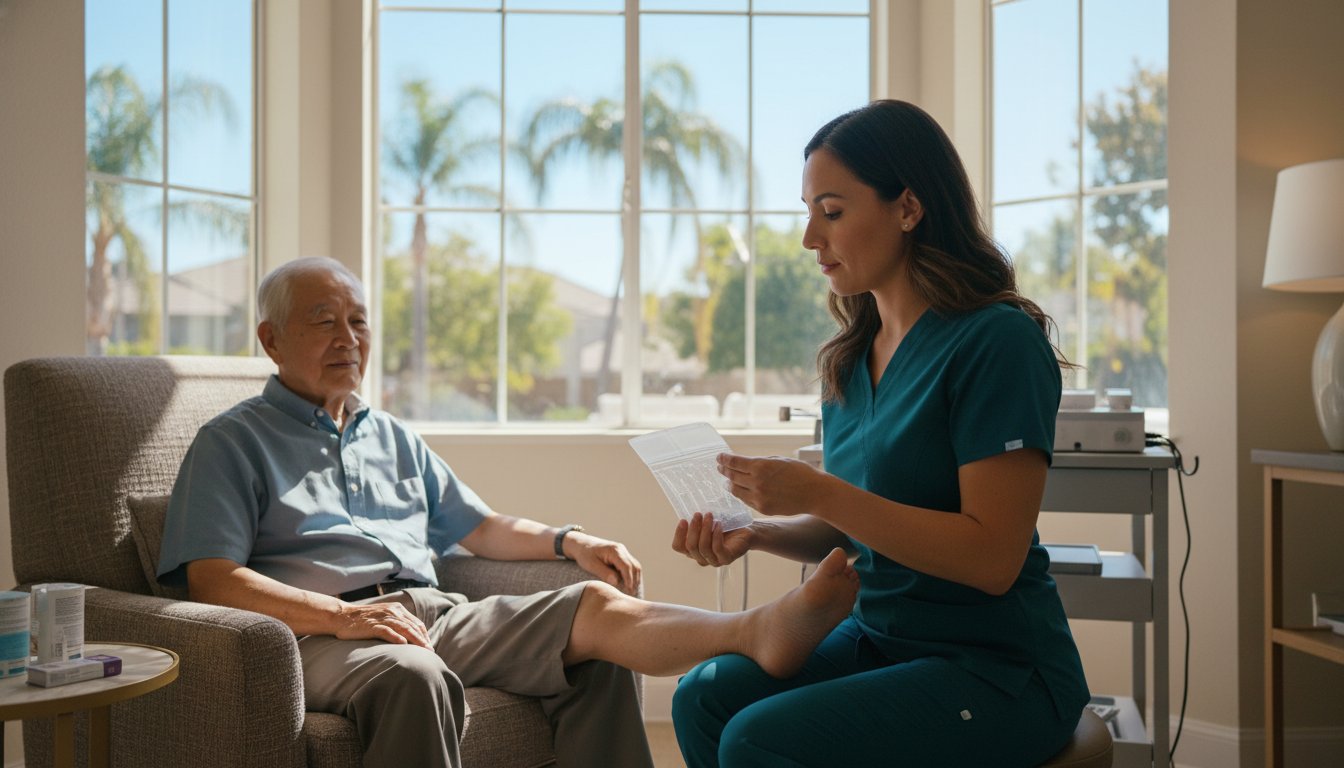
Why should a traumatic ambulance transfer be the standard for accessing life-saving regenerative medicine? With 14% of Los Angeles County's 10 million residents now over the age of 65 and a 10% diabetes prevalence rate, the demand for sophisticated bedside care is at an all-time high. You likely recognize the anxiety that comes with a non-healing ulcer, especially when the threat of amputation or systemic infection feels constant. Finding a qualified assisted living wound specialist Los Angeles shouldn't mean sacrificing the comfort of home for a sterile clinic waiting room.
Healix360 transforms this experience by delivering a 360-degree model of care that integrates advanced biomarkers and limb-preservation technology directly into your living space. You'll discover how we utilize the 2026 Medicare-standardized skin substitutes, currently reimbursed at approximately $127 per square centimeter, to accelerate recovery times while maintaining strict Title 22 compliance. This article outlines our precise roadmap for achieving peak healing outcomes through seamless coordination with your facility staff and home health partners. It's time to bridge the gap between laboratory breakthroughs and your daily quality of life.
Key Takeaways
- Learn how bio-engineered skin substitutes and amniotic grafts trigger cellular repair to close stubborn diabetic and venous ulcers directly at the bedside.
- Discover why an assisted living wound specialist Los Angeles achieves superior healing velocity and limb-preservation rates compared to traditional outpatient clinic cycles.
- Understand the collaborative framework required to synchronize elite specialist care with facility staff and home health agencies for seamless, 360-degree recovery.
- Gain clarity on navigating Medicare Part B coverage for mobile consultations and the specialist's role in documenting medical necessity for advanced wound modalities.
- Move beyond reactive treatment toward a model of proactive prevention that prioritizes long-term mobility and systemic health optimization for high-achieving seniors.
The Challenge of Chronic Wound Management in Los Angeles Assisted Living
Los Angeles County houses approximately 1.4 million residents over the age of 65. Within this demographic, the prevalence of diagnosed diabetes sits at 10%, creating a high-stakes environment for skin integrity and vascular health. For seniors in assisted living facilities (ALFs), a simple scrape can quickly evolve into a complex clinical crisis. The Challenge of Chronic Wounds lies in their refusal to follow a standard healing trajectory, often stalled by underlying systemic issues like poor perfusion or localized inflammation. Traditional models of care frequently fail these patients because they treat the wound as an isolated event rather than a symptom of a broader biological breakdown.
Effective recovery requires a 360-degree view of the patient’s health architecture. We don't just look at the surface of a pressure injury; we analyze the biomarkers and lifestyle factors that prevent cellular repair. In the sprawling Los Angeles landscape, a significant gap exists between routine primary care and the high-tech intervention required for limb preservation. While a general practitioner manages overall wellness, they often lack the specialized diagnostic tools to address non-healing ulcers. This is where an assisted living wound specialist Los Angeles becomes an essential partner in your longevity strategy, bringing the sophisticated capabilities of a wound center directly to the resident's bedside.
The Hidden Risks of Patient Transport
Transporting a fragile senior to an outpatient clinic is more than a logistical hurdle; it's a physiological threat. The physical trauma of being moved from a bed to a gurney, combined with the shear forces experienced during an ambulance or van transfer, can cause micro-tears in compromised skin. Beyond the physical impact, the emotional toll of "transfer anxiety" is particularly acute for residents experiencing cognitive decline. These stressors trigger a cascade of stress hormones that impair the body's natural regenerative processes. Transfer-related wound trauma is a significant physiological and psychological barrier that frequently resets the healing clock for fragile patients.
Why Generalist Care Often Falls Short
Standard assisted living environments are designed for comfort and community, not advanced surgical intervention. Generalist care providers typically don't have access to the sharp debridement tools or the bio-engineered skin substitutes that are now standard in 2026 for treating chronic injuries. Relying on basic dressing changes often leads to a "wait and see" approach that results in avoidable hospitalizations. You need a board-certified assisted living wound specialist Los Angeles who understands the intersection of medicine and technology. By utilizing mobile debridement and advanced sensitivity testing at the bedside, we intervene before a localized infection turns into a systemic threat, ensuring that your health remains an asset rather than a liability.
Regenerative Medicine at the Bedside: Advanced Modalities for Non-Healing Wounds
Regenerative wound care represents a fundamental shift from simply covering a wound to actively rebooting the body's biological repair systems. It uses biological scaffolds and growth factors to jump-start cellular activity in tissues that have stalled in the inflammatory phase. For seniors, this technology is vital because aging skin often loses its natural ability to signal for repair. Research from the National Institutes of Health highlights the specific challenges in wound healing for older adults, noting that chronic inflammation and reduced perfusion are primary roadblocks to recovery. By bringing these advanced modalities directly to the patient, an assisted living wound specialist Los Angeles bypasses the delays inherent in traditional clinical models.
In 2026, the landscape of mobile medicine includes bio-engineered skin substitutes and amniotic grafts that were once exclusive to high-end hospital outpatient departments. These materials provide a biological template that encourages new skin growth over stubborn diabetic or venous ulcers. The accessibility of these treatments has improved significantly following the January 1, 2026, CMS reimbursement change, which established a national flat rate of approximately $127 per square centimeter for skin substitute products. This regulatory shift allows our team to focus on clinical optimization rather than acquisition costs, ensuring your loved one receives the highest tier of regenerative technology without leaving their room.
Amniotic Allografts and Cellular Tissue-Based Products (CTPs)
Amniotic tissue acts as a potent biological powerhouse by delivering high concentrations of cytokines and growth factors that suppress inflammation and prevent scar tissue. These allografts provide a complex extracellular matrix that "architects" new skin growth by providing a structural blueprint for healthy cells to populate. This science is at the heart of our longevity-focused approach. To understand how these biologicals can transform a non-healing injury into a story of recovery, explore our detailed guide to Advanced Skin Substitute Treatments.
Negative Pressure Wound Therapy (NPWT) in an ALF Setting
Deep pressure injuries often require the mechanical assistance of Negative Pressure Wound Therapy, frequently referred to as a Wound VAC. This system uses sub-atmospheric pressure to remove excess exudate and promote localized blood flow, which is essential for closing deep tissue gaps. Managing NPWT in an assisted living facility requires a specialized eye to monitor seal integrity and fluid output. Our assisted living wound specialist Los Angeles provides the necessary bedside oversight, ensuring the device operates at peak performance while coordinating closely with facility staff. If you're ready to implement a high-tech healing roadmap, you can consult with our mobile specialist team today.
On-Site Specialist Care vs. Hospital Transfers: A Comparative Analysis
Clinical excellence isn't found in a crowded waiting room; it's found in the consistency of the bedside environment. For many families, the default response to a non-healing ulcer is a referral to a hospital-based wound center. However, the traditional outpatient cycle often introduces delays that compromise healing velocity. When a resident must wait ten days for an appointment and then endure a four-hour round trip, the wound remains in a state of stagnation. An assisted living wound specialist Los Angeles eliminates these logistical gaps by initiating advanced interventions within 24 to 48 hours of a referral. This rapid response is critical for maintaining the "360-degree" stability required for tissue regeneration.
Infection control is another area where on-site care outpaces traditional clinic visits. Outpatient facilities are high-traffic zones where fragile seniors are exposed to community-acquired pathogens. By treating a wound in a stable, familiar environment, we minimize the risk of cross-contamination and secondary infections. This approach aligns with the latest best practices for wound management in long-term care, which emphasize the importance of environmental stability. Furthermore, families save significantly by avoiding "non-emergency" ambulance fees, which often aren't covered by insurance for routine clinic visits.
Limb Preservation and Vascular Health
Early detection is the cornerstone of limb preservation. Our mobile specialists are trained to identify the subtle biomarkers of critical ischemia or early-stage gangrene that a generalist might overlook. We prioritize integrative diagnostics, including bedside assessments of perfusion and effective edema in legs management, to ensure the underlying vascular system can support new tissue growth. Limb preservation is the primary goal of 2026 wound protocols because it directly correlates with a resident's long-term mobility and systemic vitality. By addressing vascular insufficiency at the bedside, we prevent the "cascade of decline" that often leads to surgical intervention.
The Continuity of Care Advantage
The greatest risk to a resident's recovery is fragmented communication. When a patient travels to a hospital, the specific orders for dressing changes or pressure offloading often get "lost in translation" between the hospitalist and the facility staff. An assisted living wound specialist Los Angeles acts as a central health architect, creating a unified roadmap for everyone involved. We collaborate directly with facility nurses and home health agencies to ensure 24/7 monitoring and real-time adjustments to the treatment plan. This level of coordination ensures that every detail of the resident’s daily environment is optimized for peak performance and transformative results.

Navigating Medicare and Coordination for ALF Wound Care
Managing the financial and administrative aspects of chronic care shouldn't be your burden. As an elite assisted living wound specialist Los Angeles, we prioritize clinical transparency and rigorous documentation to ensure your loved one accesses the highest tier of medical benefits. Medicare Part B covers our mobile consultations and advanced treatments, treating them as professional medical services delivered directly in the resident's home. This is a critical distinction for families who often confuse these services with the Part A benefits typically associated with skilled nursing stays or hospitalizations. In the assisted living environment, our specialists operate as independent providers, billing Medicare directly so the facility doesn't incur additional clinical costs.
Transparency is the bedrock of our 360-degree view. We understand that families often feel disconnected from the care their loved ones receive behind closed doors. Our team utilizes digital reporting tools to provide real-time bedside updates and clear clinical photography. This ensures you're never left wondering about the status of a pressure injury or the efficacy of a new treatment plan. By documenting medical necessity with scientific precision, we facilitate the approval of advanced modalities that are often caught in administrative red tape. It's about creating a clear, actionable roadmap that everyone can follow.
Medicare Compliance and Insurance Reimbursement
The 2026 Medicare landscape requires a sophisticated understanding of procedural billing. As of January 1, 2026, CMS has streamlined the reimbursement for bio-engineered skin substitutes to a single national rate of approximately $127 per square centimeter. Our specialists manage the complex documentation required to prove these treatments are medically necessary for non-healing ulcers. We handle the "incident-to" billing requirements, ensuring that sharp debridement and amniotic grafts are coded correctly. This meticulous approach protects the patient from unexpected out-of-pocket expenses while securing the best possible biological materials for their recovery.
The 360-Degree Coordination Model
Success in wound healing depends on what happens between our specialist visits. We coordinate closely with ALF administrators and the Director of Nursing (DON) to align our treatments with the facility’s staffing patterns. This includes providing in-service education to ensure staff members understand how to protect a new graft or manage a compression wrap. We seamlessly integrate surgical wound care into existing ALF care plans, ensuring that post-operative recovery doesn't stall due to a lack of specialized oversight. If you want to ensure your loved one’s facility is fully supported by a high-tech medical partner, contact Healix360 for a facility consultation.
Healix360: The Elite Choice for Mobile Wound Care in Los Angeles
Healix360 serves as the visionary health architect for families who view wellness as their most valuable asset. We've curated an elite network of board-certified specialists dedicated specifically to the Southern California landscape, ensuring that your loved one receives the same caliber of care found in top-tier university medical centers. Our model moves beyond the traditional, reactive medical visit. We bring the diagnostic rigor and advanced technology of a hospital-grade wound center directly into the residential suite, eliminating the logistical friction that often stalls recovery. By placing the client at the center of the journey, we ensure that every clinical decision aligns with the goal of peak physiological performance.
Our philosophy is rooted in the intersection of medicine and technology. We utilize a 360-degree view of health architecture to address the underlying biomarkers that contribute to chronic injuries. This integrative approach is essential for managing complex bed sores and ulcers at the bedside. Rather than just applying a dressing, we analyze perfusion, nutrition, and systemic inflammation to create a transformative roadmap for healing. This proactive prevention strategy is why an assisted living wound specialist Los Angeles is the preferred partner for families who refuse to settle for the status quo of geriatric care.
Why Los Angeles Families Trust Our Vision
Los Angeles families value precision and excellence. With 14% of the county's population now over the age of 65, the demand for specialized, in-home care has never been more critical. Local ALF administrators and Directors of Nursing trust Healix360 because we provide direct access to specialists without the typical ten-day wait for a clinic appointment. Our commitment to longevity and vitality means we don't just aim for wound closure; we aim for the restoration of daily quality of life. You'll find that our team communicates with quiet confidence, providing the scientific rigor needed to inspire total trust during the healing process.
Getting Started with Healix360
Initiating elite bedside care is a seamless and intentional process. We've simplified our referral system to ensure that families and facility managers can secure specialist intervention within 24 to 48 hours. During the initial bedside assessment, our specialist performs a granular evaluation of the wound and the resident's overall health architecture. We then coordinate with the facility to implement a personalized treatment plan that may include amniotic grafts or negative pressure therapy. If you're ready to transition from reactive treatment to a model of clinical optimization, schedule a specialist consultation for your loved one today.
Secure Your Path to Recovery with Bedside Excellence
Choosing a mobile care model is a strategic decision for long-term vitality. By partnering with an assisted living wound specialist Los Angeles, you're opting for a clinical system that prioritizes limb preservation and rapid healing over the logistical friction of traditional outpatient cycles. We've examined how 2026 Medicare-compliant regenerative technology and 360-degree coordination with facility staff create the optimal environment for tissue repair. This integrative approach doesn't just address a surface-level injury; it architects a comprehensive roadmap back to peak performance.
Our team of board-certified wound specialists operates as a dedicated Medicare Part B provider, specializing in high-tech amniotic grafts and advanced limb-preservation protocols. You don't have to manage the risks of chronic wounds in isolation. We're here to translate the latest breakthroughs in regenerative medicine into actionable results at your bedside. Request an Elite Bedside Wound Assessment in Los Angeles today to secure the expert oversight your health deserves. It's time to reclaim your quality of life with the confidence of elite medical support.
Frequently Asked Questions
Does a wound specialist actually come to the assisted living facility?
Yes, we deliver advanced medical intervention directly to the resident's room. This mobile model addresses the 2026 trend where hospital managed outpatient centers are becoming more difficult to access for fragile seniors. By bringing the specialist to you, we ensure that clinical optimization happens in a stable environment. This prevents the physiological stress and shear forces often associated with transporting patients with compromised skin integrity.
Is mobile wound care covered by Medicare Part B in California?
Medicare Part B generally covers our mobile wound care services in California. As of January 1, 2026, CMS has implemented a national payment rate of approximately $127 per square centimeter for skin substitute products. We bill Medicare Part B directly for consultations and procedures, which simplifies the financial landscape for families. It's important to verify specific coverage details, but our team manages most of the administrative documentation for you.
What types of wounds can be treated by a mobile specialist at an ALF?
Our specialists treat a wide spectrum of complex conditions, including Stage I and II pressure injuries, diabetic foot ulcers, and venous stasis ulcers. While California Title 22 regulations generally prohibit ALFs from caring for Stage III and IV ulcers independently, we provide the necessary medical supervision through our home health partnerships. An assisted living wound specialist Los Angeles ensures that even stubborn, non-healing wounds receive the regenerative technology needed for closure.
How often will the wound specialist visit the resident?
Most residents receive a specialist visit once per week to monitor biomarkers and adjust the treatment roadmap. This cadence allows us to perform necessary procedures like sharp debridement or graft applications while ensuring the wound environment remains optimized. We synchronize these visits with the facility's existing dressing change cycles to maintain a seamless 360-degree care plan that supports your longevity goals.
Can advanced grafts like amniotic tissue be applied in an assisted living room?
Advanced biological grafts are safely and effectively applied at the bedside in the resident’s suite. We utilize amniotic membrane grafts and bio-engineered skin substitutes to jump-start cellular repair without requiring a trip to a surgical center. These high-tech materials are essential for treating stubborn ulcers in the elderly population, where the prevalence of diabetes is approximately 10% in Los Angeles County.
Do I need a referral from a primary care doctor to see a Healix360 specialist?
You don't necessarily need a prior referral to start the conversation, though we always coordinate with the patient's existing medical team. We act as health architects, bridging the gap between primary care and specialized wound intervention. Our board-certified specialists handle the rigorous documentation required to prove medical necessity for advanced modalities, ensuring that your loved one’s care plan remains compliant with the latest 2026 Medicare standards.
What happens if the wound requires sharp debridement?
Sharp debridement is performed at the bedside by our board-certified specialists to remove devitalized tissue and biofilm. This procedure is a cornerstone of limb preservation, as it prepares the wound bed for advanced grafts and reduces the risk of systemic infection. We use precise tools to ensure the process is as comfortable as possible for the resident, maintaining a calm and professional clinical environment throughout the intervention.
How does Healix360 coordinate with the assisted living facility staff?
We maintain a steady, rhythmic communication flow with the facility’s Director of Nursing and administrative staff. Our team provides detailed digital reporting and in-service education to ensure that facility staff can protect the wound site between our visits. This collaborative approach ensures that the resident's daily quality of life is never overlooked and that the facility remains in full compliance with state regulatory requirements.


