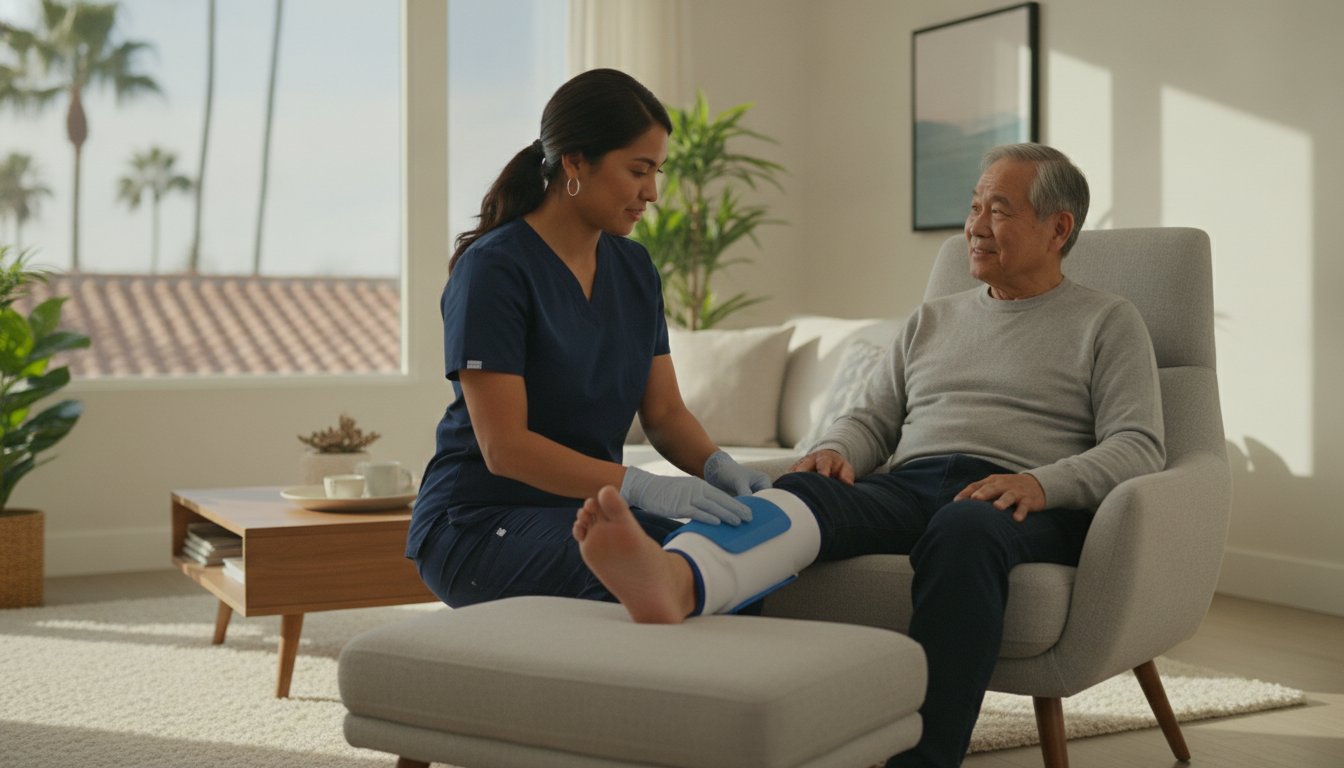
The most effective recovery for a chronic leg ulcer doesn't happen in a crowded clinic waiting room; it happens in the quiet comfort of your own living room. You likely understand the physical and emotional toll of managing a non-healing wound, especially when mobility issues make every trip to a specialist feel like an exhausting hurdle. The fear of infection or the looming threat of hospitalization can be overwhelming when you're navigating these challenges alone. This guide explores how you can access advanced at-home venous ulcer treatment Anaheim residents trust to bridge the gap between hospital-grade technology and domestic convenience.
We're entering a new era where specialized care follows the patient. Expertise shouldn't require a commute. You'll discover how regenerative amniotic grafts and bio-engineered skin substitutes, which are now classified as incident-to supplies under 2026 Medicare guidelines, are delivered directly to your bedside. We'll also examine how integrated compression therapy and professional debridement can reduce pain and swelling without requiring a single hospital stay. By the end of this article, you'll have a clear roadmap for reclaiming your vitality through a data-driven, personalized healing strategy that prioritizes your long-term health outcomes.
Key Takeaways
- Understand why chronic venous ulcers require specialized vascular intervention rather than simple bandages to achieve long-term wound closure.
- Discover how regenerative technologies, such as amniotic membrane grafts, jumpstart your body's natural healing processes at the cellular level.
- Learn how to secure advanced at-home venous ulcer treatment Anaheim residents use to replace difficult clinic commutes with elite, one-on-one bedside care.
- Explore the clinical process of mobile wound care, which integrates sharp debridement and vascular testing to create an optimal environment for tissue regeneration.
- Clarify how Medicare Part B supports mobile wound care, providing you with a transparent path to accessing hospital-grade treatments from the comfort of home.
Understanding Venous Ulcers: Why Chronic Leg Wounds Need Specialist Care
Healing begins with a deep understanding of the underlying biological mechanics. Venous ulcers aren't merely surface-level abrasions; they're visible symptoms of a complex vascular failure occurring beneath the skin. When the valves in your leg veins lose their structural integrity, blood pools in the lower extremities rather than returning to the heart. This creates a state of high venous pressure that forces fluid and blood cells into the surrounding tissue. Understanding Venous Ulcers requires recognizing that this persistent internal pressure is what prevents traditional bandages from working. Standard dressings might manage moisture, but they don't address the systemic circulation issues that caused the wound in the first place.
Relying on a "wait and see" approach often leads to severe clinical complications. Without specialized intervention, these wounds become gateways for pathogens. Chronic stasis can quickly escalate into cellulitis or deep tissue infections that may eventually threaten the limb itself. According to industry data, venous leg ulcers affect approximately 1% of the U.S. population, yet many individuals suffer for months without the correct diagnostic oversight. Healix360 changes this trajectory by bringing board-certified expertise directly to your bedside, ensuring that at-home venous ulcer treatment Anaheim residents receive is rooted in scientific rigor rather than temporary fixes.
Common Symptoms of Venous Stasis in Anaheim Patients
Early detection is a cornerstone of proactive prevention. You might notice a persistent feeling of heaviness or aching in your legs that intensifies after standing for long periods. A distinct sign is hemosiderin staining, where the skin takes on a leathery, reddish-brown discoloration due to iron deposits from leaked red blood cells. This condition is often preceded by chronic edema in legs, a swelling that signals your vascular system is struggling to manage fluid volume. If you observe "weeping" wounds that saturate dressings quickly, it's a sign that the tissue is under extreme pressure and requires an immediate professional assessment to prevent further breakdown.
Why Traditional Clinic Visits Fail Mobile-Limited Seniors
The journey to a specialist shouldn't be a source of trauma. For many seniors, the physical toll of navigating Anaheim traffic and parking while managing a painful, bandaged leg can be prohibitive. Busy waiting rooms also present a risk of cross-contamination, which is a significant concern for those with compromised immune systems. By choosing at-home venous ulcer treatment Anaheim, you eliminate these external stressors. A controlled, familiar home environment allows your body to remain in a parasympathetic state, which is essential for vascular recovery and cellular regeneration. This elite, mobile model ensures that the focus remains entirely on your personalized healing roadmap rather than the logistics of transportation.
Advanced Regenerative Solutions for Non-Healing Venous Ulcers
Regenerative medicine isn't just a clinical trend; it's a fundamental shift in how we approach tissue restoration for chronic wounds. When standard dressings fail to produce progress after four weeks of conservative care, the biological environment of the wound often requires a reset. Healix360 specializes in these high-tech interventions, ensuring that your at-home venous ulcer treatment incorporates the latest breakthroughs in cellular therapy. By introducing bio-engineered materials directly to the wound bed, we jumpstart the natural healing processes that have been stalled by poor vascular circulation.
The goal is to move beyond simple wound management toward active tissue reconstruction. Our mobile specialists utilize advanced therapies to reduce the chronic inflammation and persistent pain that often accompany long-standing ulcers. This proactive approach places you at the center of a sophisticated recovery plan. As of January 1, 2026, Medicare has reclassified many of these regenerative products from "biologic drugs" to "incident-to supplies," making it easier than ever to access at-home venous ulcer treatment Anaheim residents need for lasting recovery. We translate these complex regulatory and scientific advancements into a clear, actionable roadmap for your bedside care.
Amniotic Membrane Grafts: Nature's Healing Blueprint
Amniotic membrane grafts serve as a biological reservoir of essential growth factors and cytokines that are critical for tissue regeneration. These allografts provide a unique "smart" barrier that down-regulates inflammation while protecting the wound from external pathogens. During a routine mobile visit, our team applies these grafts in a painless, non-invasive process that requires no anesthesia or surgical facility. Amniotic grafts are a non-surgical regenerative option for chronic ulcers that often outperform traditional gauze for Stage 3 and 4 injuries. Because they are derived from natural tissues, they offer a biocompatible solution that minimizes the risk of rejection while accelerating the closure of deep vascular gaps.
Bio-engineered Skin Substitutes for Vascular Wounds
For stubborn wounds that have resisted closure, skin substitutes provide a sophisticated scaffolding that mimics the body's natural architecture. This structure supports the migration of new skin cells, effectively bridging the area where tissue has been lost due to chronic venous pressure. These materials are particularly effective for vascular wounds where the skin has become thin and fragile. By providing a stable environment for cellular growth, we help your body rebuild itself from the inside out. If you're ready to experience this level of precision care, you can schedule a bedside evaluation to see if these regenerative solutions are the right fit for your unique healing journey. This elite model of at-home venous ulcer treatment Anaheim ensures that you receive hospital-grade technology without the stress of navigating a traditional clinic environment.
Mobile Wound Care vs. Anaheim Wound Centers: A Comparison
The traditional journey to a wound center often begins with the logistical challenge of navigating the 91 or 57 freeways during peak hours. For an individual managing a painful leg wound, the physical strain of entering and exiting a vehicle, combined with the walk from a parking structure to a high-volume clinic, can trigger significant discomfort and inflammation. Choosing at-home venous ulcer treatment Anaheim residents rely on eliminates these barriers entirely. Instead of a sterile, rushed environment where specialists must balance dozens of patients simultaneously, mobile care provides a dedicated window of one-on-one clinical attention in the sanctity of your own home.
Continuity is a cornerstone of our methodology. In a standard clinic setting, you might see a different technician or provider at every visit, which can lead to fragmented communication and inconsistent treatment observations. Our mobile model ensures you build a partnership with the same specialist who understands the unique nuances of your healing trajectory. This consistent oversight allows for real-time adjustments to your care plan based on granular data. We also provide comprehensive venous ulcer self-care instructions to empower you between visits, ensuring that your daily routine aligns with our clinical goals for long-term vitality.
Logistics of Care in Anaheim and Orange County
Our reach extends across the diverse landscape of the city, from the quiet residential streets of Anaheim Hills to the urban center of the Platinum Triangle. This "hospital-at-home" model isn't just about convenience; it's about systemic integration. We coordinate directly with your local case managers, primary care physicians, and home health agencies to ensure a seamless flow of information. By bringing advanced diagnostic equipment and treatment modalities to your bedside, we transform your living space into a specialized recovery suite. This proactive coordination removes the administrative burden from the patient, allowing you to focus exclusively on your physical excellence.
Quality of Outcomes: Is Mobile Care Effective?
Data suggests that consistent mobile intervention is a powerful tool for preventing acute medical crises. Studies within the industry have indicated that patients receiving specialized bedside care can see up to an 88% reduction in wound-related hospitalizations. This is largely due to the ability to perform sharp debridement and vascular assessments in a controlled environment before minor issues escalate into emergencies. Utilizing mobile wound care allows for the immediate identification of infection markers, such as increased exudate or changing tissue color. By addressing these factors at home, we help you avoid the risks associated with emergency room visits and prolonged hospital stays, keeping your recovery on a steady, rhythmic path toward closure.

The Healix360 Treatment Process for Venous Ulcers
Precision is the cornerstone of our clinical methodology. When you choose the at-home venous ulcer treatment Anaheim residents rely on, you aren't just receiving a standard dressing change; you're initiating a structured, data-driven recovery sequence. Every successful outcome begins with a meticulous blueprint that translates complex vascular data into a clear roadmap for tissue restoration. We transform your residential space into a sophisticated medical environment where advanced science meets the personal comfort of your own home.
Our approach prioritizes active intervention over passive management. By combining high-tech diagnostic tools with bedside expertise, we eliminate the guesswork often associated with chronic wound care. This level of at-home venous ulcer treatment Anaheim specialists provide ensures that your healing journey is steady, rhythmic, and focused on long-term physical excellence. We monitor every variable, from bacterial load to vascular pressure, ensuring no detail of your health is overlooked.
Step 1: Bedside Evaluation and Diagnostic Testing
The process begins with an exhaustive bedside evaluation designed to uncover the systemic causes of your non-healing wound. We perform wound culture and sensitivity testing to identify specific pathogens, which allows us to tailor antimicrobial strategies with surgical accuracy. A critical component of this initial assessment is the evaluation of your arterial and venous flow. By measuring the ankle-brachial index (ABI), we confirm that your circulation can safely support compression therapy. This diagnostic rigor ensures that our treatment plan is perfectly aligned with your unique biological profile, preventing complications and setting the stage for rapid cellular regeneration.
Step 2: Advanced Procedures and Compression
Once we establish a diagnostic foundation, we move into the phase of active tissue optimization. Sharp debridement is performed at the bedside to remove necrotic or non-viable tissue, which effectively "resets" the wound and prepares the bed for regenerative grafts. Following debridement, we implement multi-layer compression therapy to address the underlying venous hypertension. We select the most appropriate technology for your needs, whether that involves Unna boots or specialized multi-component bandages. During this visit, our specialists provide hands-on training for family members and caregivers, focusing on the critical role of leg elevation and daily skin care to maintain vascular health between professional visits.
We utilize digital wound tracking and high-resolution imaging to capture granular data at every stage of the process. This allows our clinical team to visualize progress and adjust strategies in real-time based on objective evidence. If you're ready to experience a higher standard of care, contact our specialists today to schedule your initial bedside assessment and begin your journey toward physical restoration.
Medicare and Insurance: Accessing Care in Anaheim
Financial transparency is as vital to your recovery as clinical precision. Navigating insurance shouldn't be a barrier to physical excellence or long-term vitality. Healix360 operates as a dedicated Medicare Part B provider, which means our mobile services are billed as professional physician encounters rather than traditional home health nursing. This distinction is critical for residents seeking at-home venous ulcer treatment Anaheim can rely on for hospital-grade outcomes. By providing specialized care through Part B, we ensure that advanced interventions like amniotic membrane grafts and sharp debridement are accessible without the administrative hurdles often found in inpatient settings.
Securing coverage for regenerative technology requires a data-driven approach to documentation. For many of the advanced treatments discussed in this guide, including surgical wound care, Medicare mandates a clear history of medical necessity. This typically involves documenting that the venous ulcer has not responded to at least four weeks of conservative therapy, such as standard compression and basic dressings. Our specialists handle this clinical reporting with meticulous detail, ensuring your treatment plan aligns with the latest 2026 Medicare Physician Fee Schedule regulations and reimbursement flat rates.
Navigating Medicare Part B for Mobile Wound Care
While home health agencies provide essential nursing support, Healix360 brings the specialist's office to your door. This allows us to perform high-level procedures that exceed the scope of general nursing, such as sharp debridement and the application of bio-engineered skin substitutes. Medicare Part B typically covers 80% of professional wound care services. The remaining portion is often covered by secondary insurance or supplemental plans. Since skin substitutes were reclassified as incident-to supplies in early 2026, the pathway to receiving these regenerative materials at home has become more streamlined for eligible seniors with chronic vascular wounds.
Scheduling Your Bedside Consultation in Anaheim
Reclaiming your mobility starts with a single, well-organized step. You don't need to wait for a complex hospital referral to begin exploring your options for at-home venous ulcer treatment Anaheim. Our intake process is designed for efficiency, allowing you or your caregiver to initiate a consultation through the Healix360 portal. To ensure a seamless evaluation, have your insurance information and any recent hospital discharge summaries or wound history ready for our clinical team. This data allows us to build your personalized roadmap before we even step through your front door. Schedule your expert at-home wound assessment today to experience a higher standard of vascular recovery and tissue restoration.
Reclaiming Your Mobility Through Advanced Bedside Care
Physical excellence is a journey that shouldn't be stalled by the logistics of transportation or the limitations of traditional clinical environments. Expertise now follows the patient. You've seen how integrating regenerative medicine and precision compression therapy can transform a non-healing wound into a success story of tissue restoration. By choosing specialized at-home venous ulcer treatment Anaheim residents can bypass the stress of high-volume waiting rooms and receive hospital-grade intervention in a controlled, personal space.
Our methodology bridges the gap between laboratory breakthroughs and your daily quality of life. As a Medicare Part B provider, we offer a transparent pathway to elite care led by board-certified wound specialists with deep regenerative medicine expertise. This proactive model ensures that your vascular health is managed with scientific rigor and human-centric warmth. You possess the power to shift your recovery from a state of management to one of active healing and long-term vitality.
Request Your Advanced Bedside Wound Evaluation to begin your personalized roadmap toward physical restoration. Your future of vitality and comfort starts right at your doorstep.
Frequently Asked Questions About Mobile Venous Ulcer Care
Does Medicare cover at-home venous ulcer treatment in Anaheim?
Medicare Part B provides robust coverage for professional wound care services delivered in a residential setting. Most patients find that Medicare covers 80% of the cost for clinical evaluations, sharp debridement, and advanced bio-engineered skin substitutes. We handle the complex documentation required to prove medical necessity, ensuring your at-home venous ulcer treatment Anaheim aligns with the latest 2026 reimbursement guidelines and regulatory standards.
How often will a wound specialist visit my home?
Clinical visits typically occur on a weekly basis to ensure consistent monitoring and tissue optimization. This frequency allows our specialists to perform necessary sharp debridement and adjust compression therapy based on real-time healing data. Your specific roadmap for recovery might require more frequent visits during the initial inflammatory phase to prevent complications and accelerate the trajectory of tissue closure.
What is the difference between a home health nurse and a mobile wound specialist?
A mobile wound specialist provides a higher tier of clinical intervention than a general home health nurse. While nurses manage vital signs and basic dressing changes, our specialists are board-certified to perform advanced procedures like sharp debridement and the application of regenerative amniotic grafts. This elite model brings the technical expertise of a high-end wound center directly to your bedside for superior outcomes.
Can amniotic grafts be applied safely at my bedside?
Amniotic membrane grafts are specifically engineered for safe, non-surgical application in a home environment. These allografts don't require an operating room or general anesthesia. During a routine at-home venous ulcer treatment Anaheim visit, your specialist applies the graft to the clean wound bed, where it immediately begins releasing growth factors to jumpstart cellular regeneration and reduce localized pain.
What happens if my leg ulcer becomes infected?
We respond to signs of infection with immediate diagnostic testing and targeted antimicrobial strategies. If your specialist observes increased redness, warmth, or exudate, they'll perform a wound culture and sensitivity test at your bedside. This data allows us to prescribe the most effective treatment to neutralize pathogens before they compromise your systemic health or lead to an avoidable hospital stay.
Is sharp debridement painful when done at home?
Sharp debridement is a precision procedure that's generally well-tolerated in a residential setting. Because the process focuses on removing necrotic tissue, which lacks active nerve endings, many patients experience little to no discomfort. We prioritize your comfort and can utilize topical numbing agents to ensure the procedure remains a stress-free part of your recovery journey toward physical excellence.
How long does it typically take for a venous ulcer to heal with advanced grafts?
Healing timelines are highly individualized and depend on the initial stage of the ulcer and your systemic vascular health. Advanced regenerative grafts are designed to accelerate the closure of stubborn wounds that haven't responded to traditional care for over four weeks. By creating an optimal biological scaffolding, these high-tech materials significantly reduce the time required to achieve total wound closure and long-term vitality.
Do I need a doctor's referral to see a Healix360 specialist?
You don't necessarily need a formal physician's referral to initiate a bedside evaluation with our team. While we frequently partner with primary care doctors and home health agencies, you can request an assessment directly through our digital portal. We'll coordinate with your existing healthcare providers to ensure your treatment plan is integrated, data-driven, and perfectly aligned with your long-term health goals.


