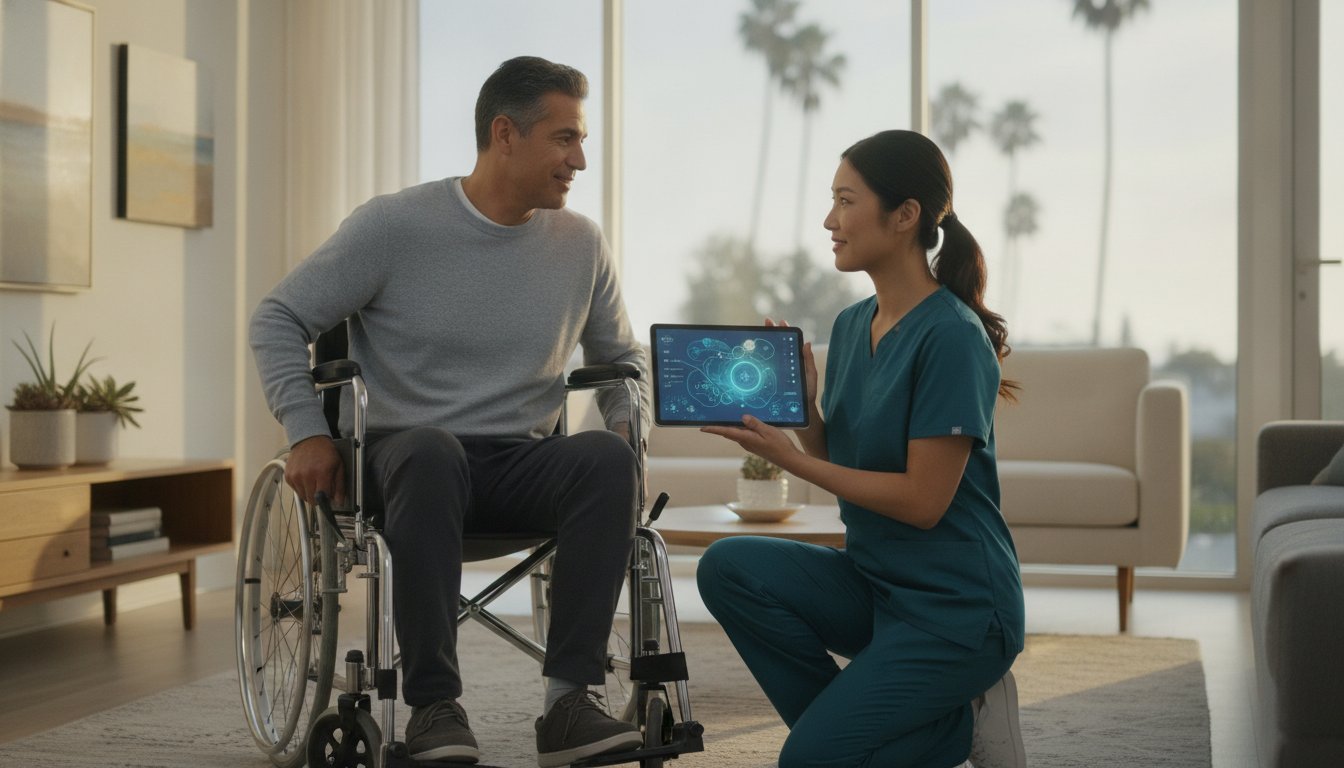
Nearly 39% of individuals re-hospitalized during their first year following a spinal cord injury are admitted specifically for pressure ulcers. This data reveals a significant systemic failure in how we manage skin integrity for those with limited mobility. You likely recognize the physical and mental toll of this reality, where the simple act of seeking treatment often introduces new risks. Between the shearing hazards of vehicle transfers and the four-hour journey through traffic for a brief consultation, the traditional clinic model often compromises the very healing it intends to provide.
We believe that specialized wound care for paraplegic patients Los Angeles should adapt to your life, not the other way around. By utilizing advanced mobile medical technology, we bring regenerative healing and expert pressure injury treatment directly to your home. This approach eliminates the logistical barriers to recovery while maintaining the highest clinical standards. You'll discover how bio-engineered skin substitutes and bedside sharp debridement are accelerating outcomes, preventing hospital readmissions, and allowing you to maintain your independence and long-term vitality in Southern California.
Key Takeaways
- Understand why paralysis-related sensory loss creates unique diagnostic challenges that require specialized pressure injury management beyond standard clinical protocols.
- Discover how to eliminate the physical risks of vehicle transfers by utilizing advanced wound care for paraplegic patients Los Angeles delivered directly to your bedside.
- Explore the science of regenerative medicine, including bio-engineered skin substitutes and amniotic grafts designed to stimulate cellular repair in non-healing wounds.
- Learn the steps to establish a coordinated care strategy that syncs bedside specialists with your home health team for seamless, long-term health outcomes.
- Identify how to leverage Medicare Part B and private insurance to access premium, mobile-first wound treatments without the stress of hospital visits.
Understanding the Unique Skin Integrity Challenges for Paraplegic Patients
Paralysis fundamentally changes how the body interacts with its environment. While a standard wound might result from an external trauma, a pressure injury in a paraplegic patient is often an internal biological failure caused by prolonged ischemia. The lack of sensory feedback means the body’s natural alarm system is silenced. This is why specialized wound care for paraplegic patients Los Angeles requires a level of diagnostic precision that goes beyond basic dermatology. It isn't just about treating a surface-level break; it’s about managing the complex interplay between pressure, time, and tissue vitality.
Bony prominences like the sacrum, coccyx, and ischial tuberosities bear the brunt of sitting or lying for extended periods. In these areas, the pressure of the bone against a surface compresses the small blood vessels, starving the tissue of oxygen and nutrients. For those with spinal cord injuries, compromised circulation in the lower extremities further slows the delivery of growth factors and immune cells. This creates a physiological environment where even a minor skin break can rapidly escalate into a complex, non-healing ulcer.
The Silent Progression of Pressure Injuries
Damage often begins deep within the muscle and fat layers before any discoloration appears on the skin surface. By the time you notice redness or a blister, the underlying tissue might already be severely compromised. This bottom-up progression makes Understanding Pressure Ulcers and their early stages vital for long-term health. While daily skin checks are a necessary foundation, they aren't a substitute for specialist oversight. Detecting a Stage 2 pressure ulcer early, when it presents as a shallow open ulcer with a red-pink wound bed, can be the difference between a quick recovery and months of intensive treatment.
Secondary Complications in Paralysis Management
Wound care for paraplegic patients Los Angeles must also account for systemic triggers like autonomic dysreflexia. An unhealed pressure injury can act as a noxious stimulus, triggering a sudden, dangerous rise in blood pressure. Additionally, moisture management is a constant hurdle. Incontinence near sacral wounds introduces bacteria and breaks down skin proteins, leading to maceration. We prioritize wound culture and sensitivity testing at the first sign of infection. This data-driven approach ensures we target the specific pathogens involved, preventing the progression toward sepsis and protecting your systemic health.
The Logistics Gap: Why LA Wound Clinics Can Be Risky for Paraplegic Patients
Los Angeles geography is more than a backdrop; it’s a clinical variable that directly impacts recovery. For an individual with a spinal cord injury, a 15-minute medical consultation often requires a four-hour logistical operation. When seeking wound care for paraplegic patients Los Angeles, the transit to a brick-and-mortar clinic often introduces more trauma than the treatment can resolve. This "Transportation Trap" creates a cycle where the physical effort of reaching a specialist actively undermines the body's ability to repair itself.
The journey involves a series of high-friction events. Every transfer, from bed to wheelchair and wheelchair to vehicle, carries a risk of shearing. Shearing occurs when the skin stays in place while the underlying bone and muscle shift; this internal tearing is devastating for fragile, ischemic tissue. For patients with ischial ulcers, the physiological stress of prolonged sitting in a transport vehicle is particularly damaging. A 60-minute crawl on the 405 or the 101 isn't just an inconvenience. It’s a sustained pressure event that starves the wound bed of oxygen at the exact moment it needs it most.
The Hidden Cost of Medical Transport
Beyond the physical risk, the logistics of medical transport carry a heavy emotional and systemic burden. Waiting rooms and public transport vehicles are often hubs for cross-contamination, presenting a significant risk for patients with compromised skin integrity. The process is exhausting for both the patient and the caregiver, often leading to burnout that can result in missed appointments. In the world of chronic wound management, a single missed debridement or dressing change can lead to a significant setback, turning a healing ulcer back into a stagnant, high-risk site.
Shearing and Pressure Spikes During Transit
Offloading is a fundamental pillar of recovery, yet it’s virtually impossible to maintain during a typical LA commute. Vehicle vibrations and sudden braking create micro-movements that disrupt the delicate cellular scaffolding of a healing wound. This mechanical stress complicates the comprehensive management of pressure injuries, as even the most advanced dressings can't withstand constant friction. By choosing mobile wound care services, you ensure that your home remains a sanctuary for healing rather than a starting point for a hazardous journey. Mobile care eliminates the #1 cause of wound mechanical failure: transport friction.
Advanced Regenerative Medicine: Bringing the Lab to the Bedside
Traditional medical models often suggest that high-tech interventions belong exclusively in sterile surgical centers. We challenge this assumption by bringing the laboratory directly to the patient. For complex wound care for paraplegic patients Los Angeles, waiting for a hospital-based appointment is a luxury the tissue simply cannot afford. Advanced regenerative medicine now allows us to deploy bio-engineered skin substitutes and amniotic grafts in the home environment, bypassing the logistical hazards of transport while maintaining strict clinical protocols.
Compromised vascularity is a primary barrier to healing in paralyzed limbs. When blood flow is restricted, the body lacks the raw materials necessary for cellular repair. Bio-engineered skin substitutes act as a biological bridge in these scenarios. These advanced scaffolds provide a matrix of proteins and growth factors that jump-start the healing process where the body has stalled. By applying these treatments at the bedside, we ensure that the healing environment remains stable and undisturbed by mechanical friction, allowing the new tissue to integrate without interruption.
Effective healing also requires a pristine wound bed. Sharp debridement, the precise removal of necrotic or infected tissue, is a cornerstone of our mobile service. Performing this procedure in a familiar, comfortable home setting reduces patient anxiety and allows for more frequent, meticulous maintenance of the wound site. This proactive approach ensures that chronic ulcers don't remain stagnant, but instead move steadily through the phases of repair.
Regenerative Solutions: Amniotic Allografts
Amniotic tissue represents a powerhouse of regenerative potential. These grafts act as a biological scaffold for new skin growth, providing a rich source of cytokines and essential nutrients. Beyond just covering a wound, they possess significant anti-inflammatory properties that are critical for calming chronic ulcers. You can learn more about these breakthroughs in our guide to Advanced Skin Substitute Treatments in Southern California. While some providers reserve these for surgical theaters, our specialists are trained to apply these advanced allografts safely at your bedside, ensuring you receive elite care without leaving your home.
Negative Pressure Wound Therapy (NPWT) at Home
Managing a "Wound VAC" system shouldn't require a hospital stay. Negative Pressure Wound Therapy uses sub-atmospheric pressure to remove excess fluid and increase localized blood flow to paralyzed extremities. This constant stimulation is vital for closing deep cavities and preparing the wound for regenerative grafts. Our specialized nurses monitor these systems in your home, ensuring the seal is perfect and the therapy is optimized for your specific physiology. This mobile NPWT model keeps you out of the hospital and in control of your daily life.

Creating a Sustainable In-Home Wound Care Strategy
Developing a sustainable strategy for wound care for paraplegic patients Los Angeles requires a shift from reactive crisis management to proactive systemic health. Healing a chronic ulcer is not a singular event; it's a multi-phased process that demands a highly organized roadmap. When the clinical environment is brought into the home, the focus shifts toward optimizing every variable of the patient's daily life to support tissue regeneration. Our methodology follows a precise sequence designed to ensure long-term stability and prevent the recurrence of pressure injuries.
The journey begins with a comprehensive bedside evaluation by a board-certified wound specialist. This assessment goes beyond the wound bed to analyze the home environment, seating surfaces, and transfer techniques. Following this, we implement a coordinated care plan that syncs with your existing primary care physicians and home health agencies. This ensures that every member of your medical team is working from the same data set. The strategy then moves into metabolic and mechanical optimization, focusing on personalized nutrition plans and offloading protocols. Finally, regular mobile visits for sharp debridement or graft application are supported by continuous digital monitoring to track healing velocity in real-time.
The Role of Home Health Collaboration
Mobile specialists serve as the essential bridge between daily nursing care and high-level surgical intervention. The Healix360 approach focuses on a multi-disciplinary partnership where our specialists provide the advanced procedures, such as bio-engineered skin substitutes, while collaborating closely with home health RNs on daily maintenance. This synergy ensures that specialized treatment plans are executed with precision between our visits. You can explore the Benefits of Home Health Wound Care Collaboration in L.A. to see how this unified front accelerates recovery. If you are ready to integrate expert oversight into your home routine, you can schedule a bedside evaluation today.
Empowering the Caregiver
The individual providing daily support is the most critical factor in the healing equation. We prioritize caregiver education, providing hands-on training for complex dressing changes and teaching the subtle signs of early wound progression. Optimizing the home environment is equally vital; we provide specific recommendations for pressure-redistributing cushions and turning schedules that align with your unique mobility needs. Proactive prevention is the cornerstone of paraplegic longevity. By equipping caregivers with the right tools and knowledge, we transform the home into a high-performance recovery center that protects skin integrity for the long term.
Healix360: Expert Mobile Wound Care for the Los Angeles Paraplegic Community
Healix360 isn't just a medical service; it's a visionary partner in your long-term health strategy. We've engineered our mobile-first delivery model to specifically address the high-complexity needs of those living with spinal cord injuries. Specialized wound care for paraplegic patients Los Angeles demands more than traditional clinical protocols. It requires a sophisticated blend of scientific rigor and human-centric warmth. By deploying regenerative technologies like amniotic membrane grafts and bio-engineered skin substitutes directly to your home, we remove the physical and emotional barriers that often stall the recovery process.
Our commitment is rooted in the proactive prevention of secondary complications. We view every non-healing ulcer as a challenge that requires a data-driven, meticulous roadmap to resolution. This approach is designed to prevent hospital readmissions and avoid the devastating outcomes of chronic infection or amputation. Whether you are in Beverly Hills, Glendale, or the wider Southern California region, our specialists bring elite medical breakthroughs to your bedside. We believe that physical excellence is attainable when the right expertise meets the individual in their own environment.
Medicare-Compliant Mobile Consultations
Navigating the financial aspects of advanced medical care can feel overwhelming, but our process is designed for maximum transparency. We are a trusted Medicare Part B provider, which allows us to deliver professional medical consultations and treatments without the added burden of hospital facility fees. By eliminating the 'facility fee' often associated with traditional wound centers, we ensure that resources are directed where they matter most: toward your healing. We also coordinate with various private insurance plans to ensure your coverage options are fully utilized, providing a seamless administrative experience that respects your time and resources.
Schedule Your Bedside Assessment
The window following a hospital discharge is a critical period for maintaining skin integrity. We've simplified the referral and follow-up process to ensure that specialized oversight begins the moment you return home. Our Glendale-based specialists work in close partnership with home health agencies and case managers to provide a unified front against chronic wounds. This collaborative strategy ensures that your personalized treatment plan is executed with precision and clinical authority. You deserve a care partner who values excellence as much as you do. Request an expert mobile wound evaluation today and take the first step toward a more secure, independent future.
Empowering Recovery Through Mobile Innovation
The path to healing doesn't have to lead through Los Angeles traffic or hazardous vehicle transfers. By prioritizing a mobile-first approach, you protect your body from the mechanical stress and shearing risks that often impede tissue repair. Our board-certified wound specialists bring the laboratory to your bedside, utilizing regenerative amniotic grafts and bio-engineered skin substitutes to stimulate cellular growth where it’s needed most. This model ensures that specialized wound care for paraplegic patients Los Angeles is defined by clinical precision rather than logistical exhaustion.
Healix360 is a dedicated Medicare Part B provider, offering elite medical oversight across Southern California without the facility fees of traditional hospitals. We specialize in creating a stable, proactive environment where chronic ulcers can finally close. You have the power to transform your home into a center for physical excellence and long-term vitality. Schedule an expert bedside wound consultation with Healix360 today to begin your personalized roadmap to recovery. Your journey toward sustained independence and health is our primary mission.
Frequently Asked Questions
Does Medicare cover mobile wound care for paraplegic patients in Los Angeles?
Yes, Medicare Part B covers mobile wound care services when they are performed by qualified medical specialists in the home setting. This coverage typically includes bedside evaluations, sharp debridement, and the application of advanced skin substitutes. Because we are a Medicare Part B provider, our services often help patients avoid the high facility fees and logistical costs associated with hospital-based outpatient clinics.
What are the advantages of amniotic membrane grafts for non-healing pressure sores?
Amniotic membrane grafts act as a biological scaffold that jump-starts the healing process in stagnant, chronic ulcers. These grafts are naturally rich in growth factors and cytokines that suppress inflammation while stimulating cellular migration. For individuals with spinal cord injuries, these grafts provide the essential biological signals that the body may no longer produce efficiently on its own due to compromised circulation.
How often does a mobile wound specialist need to visit my home?
Visit frequency is tailored to your specific clinical needs, though most patients receive specialized oversight once a week. This cadence allows our board-certified specialists to perform necessary debridement, apply regenerative grafts, and monitor healing velocity. If a wound is progressing rapidly or requires intensive Negative Pressure Wound Therapy (NPWT), we may adjust the schedule to ensure your recovery remains on track.
Can Stage 4 pressure ulcers be treated at home, or is a hospital stay required?
Stage 4 pressure ulcers can often be successfully managed at home through expert wound care for paraplegic patients Los Angeles. By utilizing advanced technologies like bio-engineered skin substitutes and mobile NPWT systems, we can treat deep tissue damage without the risks of hospital-acquired infections. While severe systemic complications may require acute care, our goal is to provide hospital-grade treatment in a stable, home-based environment.
What is sharp debridement, and can it be safely performed at the bedside?
Sharp debridement is the precise removal of necrotic, non-viable tissue using sterile surgical instruments, and it is a standard bedside procedure. Removing this dead tissue is critical because it eliminates the biofilm and bacteria that prevent healthy skin from closing. Our specialists are highly trained to perform this procedure safely in your home, ensuring the wound bed is optimized for regenerative healing without the need for a surgical center.
How do mobile wound care services coordinate with my existing home health agency?
We function as a specialized partner to your home health team, bridging the gap between daily nursing and advanced surgical intervention. While your home health RN focuses on daily dressing changes and general wellness, our specialists manage the high-level procedures and diagnostic testing. This collaborative model ensures that your primary care physician and nursing team are always aligned on the most current data regarding your healing progress.
What areas of Southern California does Healix360 serve for mobile visits?
Healix360 provides specialized wound care for paraplegic patients Los Angeles across a wide geographic range, including Glendale, Beverly Hills, and the surrounding Southern California counties. We focus on bringing elite medical expertise to areas where traffic and transport logistics often prevent patients from accessing high-quality care. Our mobile units are equipped to deliver advanced regenerative treatments to your doorstep, regardless of your specific neighborhood within our service footprint.
What should I do if I suspect my pressure ulcer is becoming infected?
You should contact your wound specialist immediately to schedule a bedside evaluation and a wound culture and sensitivity test. Early signs of infection, such as increased drainage, new odors, or localized warmth, require scientific diagnosis rather than guesswork. By identifying the specific pathogens involved, we can implement a targeted treatment plan that prevents the infection from spreading and protects your long-term systemic health.


