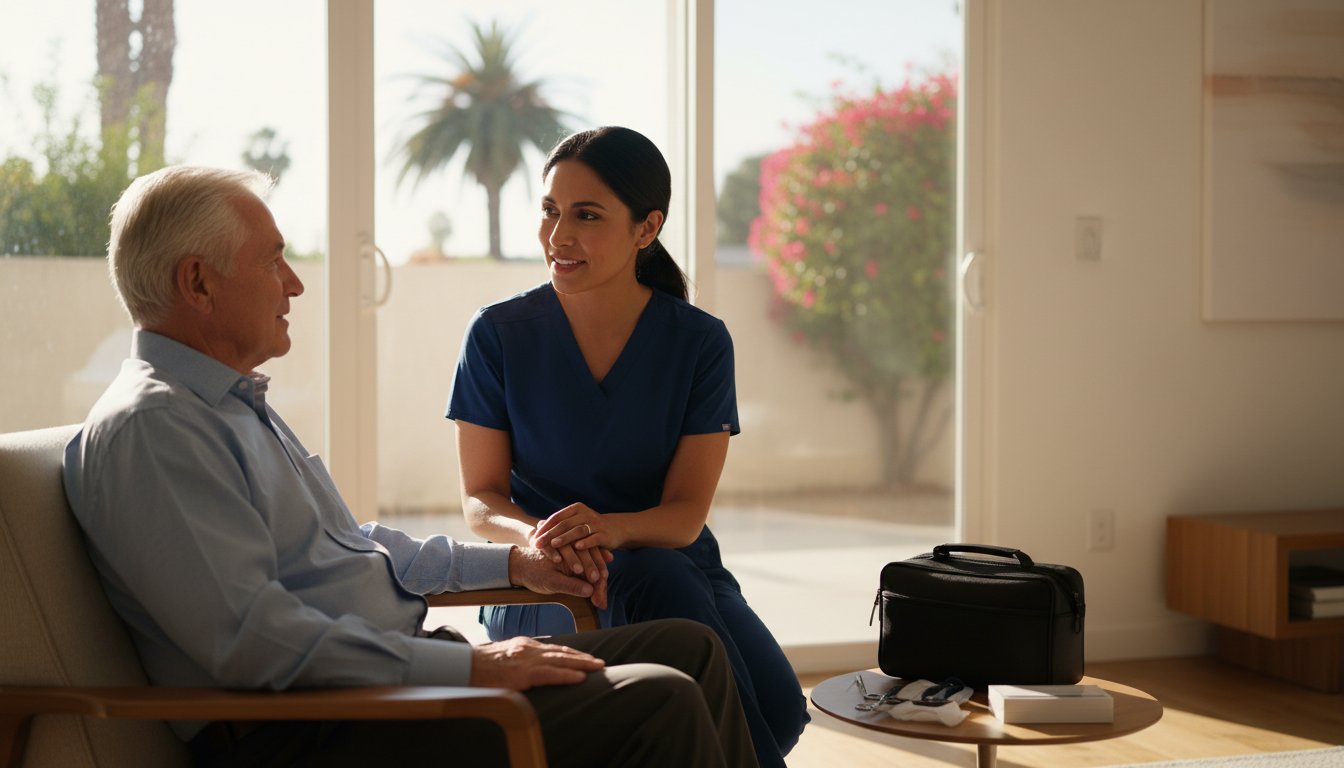
Over 8.2 million Americans over the age of 65 currently navigate the complexities of chronic wounds, yet the most sophisticated clinical interventions are no longer confined to hospital wings. Finding the best wound care specialist in Southern California now means looking toward your own front door rather than a traditional outpatient center. You've likely experienced the physical toll of frequent travel and the frustration of slow healing rates that leave you fearing for your long-term mobility. It's a heavy burden to coordinate care between multiple providers while worrying if a standard dressing is enough to prevent a serious infection.
We're here to bridge the gap between elite laboratory science and your daily quality of life. You'll discover how mobile regenerative medicine, utilizing tools like amniotic membrane grafts and bio-engineered skin substitutes, is redefining the standard of care. This article outlines how to identify top-tier experts who deliver sharp debridement and advanced therapies directly to your bedside, ensuring rapid wound closure without the stress of a hospital stay. We'll examine the latest 2026 clinical shifts and provide a clear roadmap for your personalized healing journey.
Key Takeaways
- Identify why the best wound care specialist in Southern California must combine vascular insight with surgical precision to achieve superior clinical outcomes.
- Understand the role of advanced biologics, such as amniotic membrane grafts, in providing a regenerative scaffold for non-healing tissue.
- Evaluate the clinical benefits of mobile wound care, including the reduction of logistical burdens and a lower risk of secondary infections.
- Learn how to distinguish between providers offering basic dressings and those capable of delivering advanced bedside debridement and skin substitutes.
- Gain a clear roadmap for transitioning from traditional hospital-based visits to a personalized, in-home healing strategy that prioritizes your vitality.
What Defines the Best Wound Care Specialist in Southern California?
Excellence in wound management is defined by the intersection of surgical precision and biological innovation. The best wound care specialist in Southern California doesn't merely manage a surface level condition; they orchestrate a comprehensive recovery by integrating vascular expertise with regenerative technology. This shift from "standard of care," which often relies on simple bandages and passive observation, to "advanced modalities" involving biologics marks the difference between a wound that lingers and one that closes permanently. True mastery in this field requires a deep understanding of how systemic health influences local tissue repair.
Clinical speed is a biological necessity. We prioritize "Healing Velocity," a sophisticated metric that tracks how rapidly a specialist can initiate and complete the wound healing process. Faster closure isn't just about convenience; it's the primary defense against systemic infection and unnecessary hospitalization. In the diverse patient landscape of Southern California, a specialist must possess the board certified experience to navigate complex medical histories. This ensures that every treatment plan is as unique as the individual's own cellular makeup, moving beyond the limitations of traditional outpatient clinics.
Clinical Expertise vs. General Practice
Chronic wounds are rarely isolated events. They're often the visible symptoms of underlying systemic issues like venous insufficiency or peripheral neuropathy. While a general practitioner provides essential broad spectrum care, they often refer non-healing wounds to a dedicated specialist who can perform precise diagnostic cultures. By targeting specific bacterial strains and identifying vascular roadblocks, the best wound care specialist in Southern California transforms a stagnant wound into a dynamic site of repair. This specialized focus allows for the application of advanced tools like Negative Pressure Wound Therapy (NPWT) that general clinics may not be equipped to manage at home.
The Role of Limb Preservation and Salvage
For patients facing diabetic or arterial ulcers, the primary objective is limb preservation. The "amputation cascade" often begins with a small, poorly managed ulcer that escalates into a life altering surgery. Leading specialists employ aggressive limb salvage protocols, using bedside debridement and bio-engineered skin substitutes to restore tissue integrity before the damage becomes irreversible. This proactive approach ensures that your mobility remains your most protected asset. By delivering these high level interventions directly to the patient's bedside, specialists eliminate the logistical barriers that often delay critical care.
Advanced Regenerative Technologies: The Specialist's Toolkit
Advanced healing requires more than a passive barrier against the environment. While traditional dressings serve a basic purpose, the best wound care specialist in Southern California utilizes a sophisticated toolkit designed to actively stimulate cellular repair. This process begins with sharp debridement, a fundamental procedure where a clinician meticulously removes necrotic or infected tissue to reveal healthy, viable margins. Without this essential groundwork, even the most expensive biologics cannot integrate with the body's natural systems. By clearing the path for new growth, specialists ensure that every subsequent therapy has the highest probability of success.
Modern medicine has introduced advanced wound healing technologies that transform chronic stagnation into active recovery. These tools allow clinicians to address the specific biological roadblocks that prevent a wound from closing. Key components of a specialist's toolkit include:
- Negative Pressure Wound Therapy (NPWT): This modality uses controlled sub-atmospheric pressure to manage high-exudate wounds while promoting localized blood flow and reducing edema.
- Bio-engineered Skin Substitutes: These advanced products provide a complex matrix of collagen and cells that mimic human skin to facilitate closure.
- Amniotic Membrane Grafts: These act as biological scaffolds, rich in growth factors that reduce inflammation and accelerate tissue regeneration.
- Compression Therapy: Essential for managing venous ulcers by improving circulation and reducing the pressure that stalls healing.
Integrating these technologies into a daily routine allows patients to maintain their lifestyle while receiving hospital grade care. If you're looking for a mobile wound care partner, these advanced modalities can now be expertly applied in the comfort of your home.
Amniotic Allografts and Stem Cell Therapy
Amniotic membrane grafts represent a pinnacle of medical innovation, acting as a biological scaffold that supports new tissue growth. These grafts are naturally rich in essential growth factors and cytokines that significantly reduce inflammation while accelerating the migration of your own cells to the wound site. This level of Advanced Skin Substitute Treatments is particularly beneficial for patients with compromised immune systems, as it provides the necessary biological signals that the body may no longer produce on its own. It's a proactive way to jumpstart the healing process in wounds that have been stalled for months.
Bio-engineered Skin Substitutes for Diabetic Ulcers
Diabetic foot ulcers often stall in the inflammatory phase, making them notoriously difficult to treat with standard methods. Bio-engineered skin substitutes address this by mimicking the structure of human skin, effectively tricking the body into restarting its natural repair cycle. By providing a structural matrix, these products offer the integrity needed for long term closure and limb preservation. The best wound care specialist in Southern California distinguishes themselves by their ability to deploy these high end biologics early in the treatment plan, rather than waiting for standard dressings to fail. This strategic intervention is often the deciding factor in avoiding surgical complications.
The Mobile Advantage: Why In-Home Specialist Care is Rising
For many patients, the most significant barrier to recovery isn't the wound itself, but the journey to the clinic. Transporting a non-ambulatory individual to a wound center creates a logistical nightmare that often results in missed appointments and fragmented care. Identifying the best wound care specialist in Southern California requires looking beyond physical clinic walls to a model that prioritizes the patient's environment. When a specialist comes to you, the risk of exposure to hospital-acquired infections like MRSA drops significantly. This controlled, domestic setting allows the body to focus its resources on regeneration rather than fighting off external pathogens.
Consistency is the bedrock of clinical success. Patients are far more likely to adhere to a treatment plan when it's integrated into their daily life rather than treated as an exhausting weekly excursion. The psychological benefit of healing in a familiar, comfortable environment shouldn't be underestimated. Peer-reviewed research has validated the effectiveness of in-home wound care, demonstrating that patients often experience better outcomes and improved quality of life when care is delivered at home. This approach transforms the healing journey from a clinical chore into a proactive partnership in your own living room.
Hospital-Grade Technology at the Bedside
It's a common myth that mobile care is a "lite" version of hospital treatment. In reality, modern mobile specialists carry the same advanced grafts, sterile procedure kits, and negative pressure tools found in fixed clinics. We use digital tracking and multispectral imaging to provide precise wound measurement and progress reporting that is often more detailed than traditional paper charts. Mobile debridement is performed with surgical precision right at the bedside, ensuring that necrotic tissue is removed without the need for a hospital visit. This ensures you receive elite science without the sterile coldness of a waiting room.
Medicare Part B and Insurance for Mobile Care
Accessing the best wound care specialist in Southern California is often more financially viable than many families realize. Medicare Part B typically covers professional mobile consultations and procedures, recognizing the clinical value of keeping patients out of high-cost hospital environments. By choosing in-home care, you avoid the expensive facility fees associated with outpatient wound centers. Healix360 manages the reimbursement process for Southern California families, providing a seamless experience that allows you to focus entirely on recovery. This strategic approach ensures that elite medical care remains an attainable asset for those who value their long-term health.

Evaluating Wound Care Companies: A Southern California Checklist
Selecting a clinical partner for chronic wound management is a strategic decision that directly impacts your long-term vitality. The best wound care specialist in Southern California doesn't just apply dressings; they operate as a visionary strategist for your systemic health. Because the region offers a wide array of providers, you need a rigorous framework to distinguish between basic home health services and elite mobile regenerative medicine. Your focus should remain on providers who prioritize data-driven outcomes and use the latest biological breakthroughs to accelerate healing.
Use this essential checklist to evaluate potential specialists during your search:
- Board Certification: Confirm that the attending providers are board-certified in wound management or related surgical fields. Specialized expertise ensures they possess the mastery required for complex debridement.
- Advanced Biologics: Ask if they provide amniotic membrane grafts and bio-engineered skin substitutes. If a company only offers standard bandages, they aren't utilizing the full spectrum of modern science.
- Healing Metrics: Inquire about their average time-to-closure for chronic pressure ulcers or diabetic wounds. A high-performing specialist should be able to discuss their success rates with confidence.
- Insurance Integration: Ensure they accept Medicare Part B and are experienced in coordinating care with your existing home health agency.
- Clinical Responsiveness: Determine how quickly they can schedule an initial bedside assessment. In wound care, delay is the enemy of limb preservation.
If you're ready to move beyond standard treatments, you can schedule your bedside evaluation with a team that meets these elite standards.
Questions to Ask During Your First Consultation
Precision begins with the right questions. Ask your specialist: "What specific type of debridement do you plan to perform to prepare the wound bed for healing?" You should also inquire about the frequency of their visits and the specific digital tools they use to communicate progress to your family. Finally, it's vital to ask: "What is your protocol if the wound shows signs of infection between visits?" A clear, actionable roadmap for emergencies is the hallmark of a professional service.
The Importance of Care Coordination
The best specialists never work in a vacuum. They serve as a "Wound Care Strategist," partnering seamlessly with your primary care physician and home health agency to manage your total-body health. This collaborative approach ensures that every aspect of your care, from nutrition to vascular health, aligns with the goal of rapid closure. For more detailed vetting tips, review our guide on Finding a Wound Specialist in Los Angeles. By synchronizing multiple medical disciplines, these experts create a stable environment where regeneration can flourish without interruption.
Healix360: Southern California’s Leader in Mobile Wound Excellence
Healix360 operates with the quiet confidence that comes from clinical mastery. We serve as a visionary strategist for patients across the greater Los Angeles area, including Glendale, Beverly Hills, and the surrounding communities. Our model is built on the belief that physical excellence is an attainable goal, even when facing complex, non-healing wounds. We specialize in partnering with home health agencies and case managers to ensure your care is perfectly synchronized across all medical disciplines. This commitment to scientific rigor and seamless coordination makes us the best wound care specialist in Southern California for those who view their health as their most valuable asset.
Every clinical decision we make is driven by a desire for life-changing outcomes. We bridge the gap between complex biological data and your daily quality of life by translating high-level medical breakthroughs into an actionable roadmap. You'll experience a professional delivery that suggests mastery over the most difficult chronic conditions. By bringing elite science directly to your bedside, we eliminate the sterile coldness of traditional environments and replace it with proactive, human-centric care. Our goal is to empower you through precision, ensuring that no detail of your recovery is overlooked.
Personalized Treatment Plans for Long-Term Vitality
A chronic wound is a systemic signal, not just a localized failure. We treat the individual's total-body health by identifying the underlying vascular or metabolic factors that stall recovery. This often involves integrating advanced compression therapy and Managing Edema in Legs to optimize circulation and reduce tissue pressure. By addressing these systemic roadblocks, we create the necessary environment for long-term vitality. Our clinicians don't just apply a graft; they manage the biological landscape to ensure the repair is both rapid and permanent.
How to Get Started with a Bedside Evaluation
Initiating elite care is a straightforward process designed to respect your time and energy. You can request a consultation through a referral from your primary doctor or by contacting us directly to schedule a bedside evaluation. During your first 60 minutes with a Healix360 specialist, we'll perform a comprehensive assessment that includes digital wound mapping and a thorough review of your vascular status. We then provide a clear roadmap to recovery, establishing realistic healing milestones that keep you and your family informed at every stage. It's a data-driven approach that places you at the center of your own healing journey.
Secure Your Path to Advanced Recovery
Selecting the best wound care specialist in Southern California is a strategic investment in your future mobility and long-term health. We've explored how transitioning from traditional hospital visits to advanced mobile regenerative medicine eliminates logistical barriers while accelerating tissue repair. By integrating biological scaffolds like amniotic membrane grafts and precision debridement at your bedside, you move beyond mere management into active recovery. Clinical excellence requires a partner who understands the complex interplay between systemic health and local wound environments.
Healix360 serves as a dedicated Medicare Part B provider, offering a team of board-certified specialists and regenerative medicine experts across all of Southern California. We bridge the gap between laboratory breakthroughs and your daily comfort, ensuring your healing journey is both scientifically rigorous and deeply personal. Don't let a chronic wound dictate your lifestyle when elite science is available at your door.
Schedule an Expert Bedside Wound Evaluation with Healix360 Today
Your path to rapid closure and restored vitality begins with a single, proactive step toward expert intervention.
Frequently Asked Questions
Does Medicare cover mobile wound care specialists in Southern California?
Medicare Part B typically covers mobile wound care consultations and procedures when they're medically necessary for the patient's recovery. This coverage includes bedside evaluations, sharp debridement, and the application of advanced biologics like amniotic grafts. Because these services are performed in your residence, they often help you avoid the high facility fees associated with hospital outpatient departments. It's always wise to verify your specific plan details with a provider who understands Medicare compliance.
What is the difference between a wound care nurse and a wound care specialist?
A wound care nurse typically manages the day-to-day dressing changes and basic monitoring of a site under a physician's direction. In contrast, the best wound care specialist in Southern California is often a board-certified clinician with advanced training in surgical debridement and regenerative medicine. These specialists possess the clinical authority to perform complex procedures and prescribe advanced modalities like bio-engineered skin substitutes that go beyond the scope of general nursing care.
How often does a specialist need to visit for a non-healing diabetic ulcer?
Visit frequency depends on the wound's healing velocity and the specific biological therapies being utilized in your treatment plan. For a non-healing diabetic ulcer, a specialist typically visits once a week to perform necessary debridement and monitor the integration of any applied grafts. This consistent cadence ensures the wound bed remains clean and allows the specialist to adjust the strategy in real-time based on the tissue's biological response.
Can skin substitutes be applied at home or in an assisted living facility?
Advanced bio-engineered skin substitutes and amniotic grafts can be safely applied at home or within an assisted living facility. Mobile specialists use sterile procedure kits and portable diagnostic tools to maintain hospital-grade standards in a residential environment. This accessibility allows patients to receive cutting-edge regenerative therapy without the physical strain of traveling to a fixed clinic, supporting a more stable and comfortable recovery process for those with limited mobility.
What should I do if my loved one’s pressure ulcer (bedsore) smells or looks black?
Black tissue or a foul odor often indicates necrosis or a deep-seated infection that requires immediate clinical intervention. You should contact a wound specialist immediately to perform sharp debridement and assess the wound's depth. Delaying treatment for these signs can lead to systemic sepsis or bone infection. A specialist will use cultures to identify specific bacterial strains and implement a targeted treatment strategy to salvage the tissue and prevent further complications.
Why is my wound not healing despite using antibiotic ointments and bandages?
Standard ointments and bandages are passive treatments that don't address the underlying biological roadblocks of chronic wounds. Non-healing wounds often suffer from poor vascular supply, persistent biofilm, or a lack of essential growth factors. To restart the repair process, a specialist must often remove necrotic tissue through debridement and introduce active biological scaffolds. These advanced interventions help the body move from a stagnant inflammatory phase back into active regeneration.
How do I find a mobile wound care provider in Glendale or Los Angeles?
You can find a mobile provider by requesting a referral from your primary care physician or searching for board-certified experts who specialize in home-based regenerative medicine. Healix360 serves the entire Los Angeles area, including Glendale and Beverly Hills, bringing elite clinical care directly to the patient. When evaluating providers, prioritize those who offer a comprehensive suite of services to ensure you're working with the best wound care specialist in Southern California.
Is sharp debridement painful when performed at the bedside?
Sharp debridement is performed with a focus on patient comfort and clinical precision. Specialists typically use topical or local numbing agents to desensitize the area before the procedure begins. While you might feel some pressure, the goal is to make the process as painless as possible while removing the necrotic tissue that stalls healing. Removing this debris is an essential step that significantly reduces overall pain by lowering the risk of chronic inflammation and infection.


