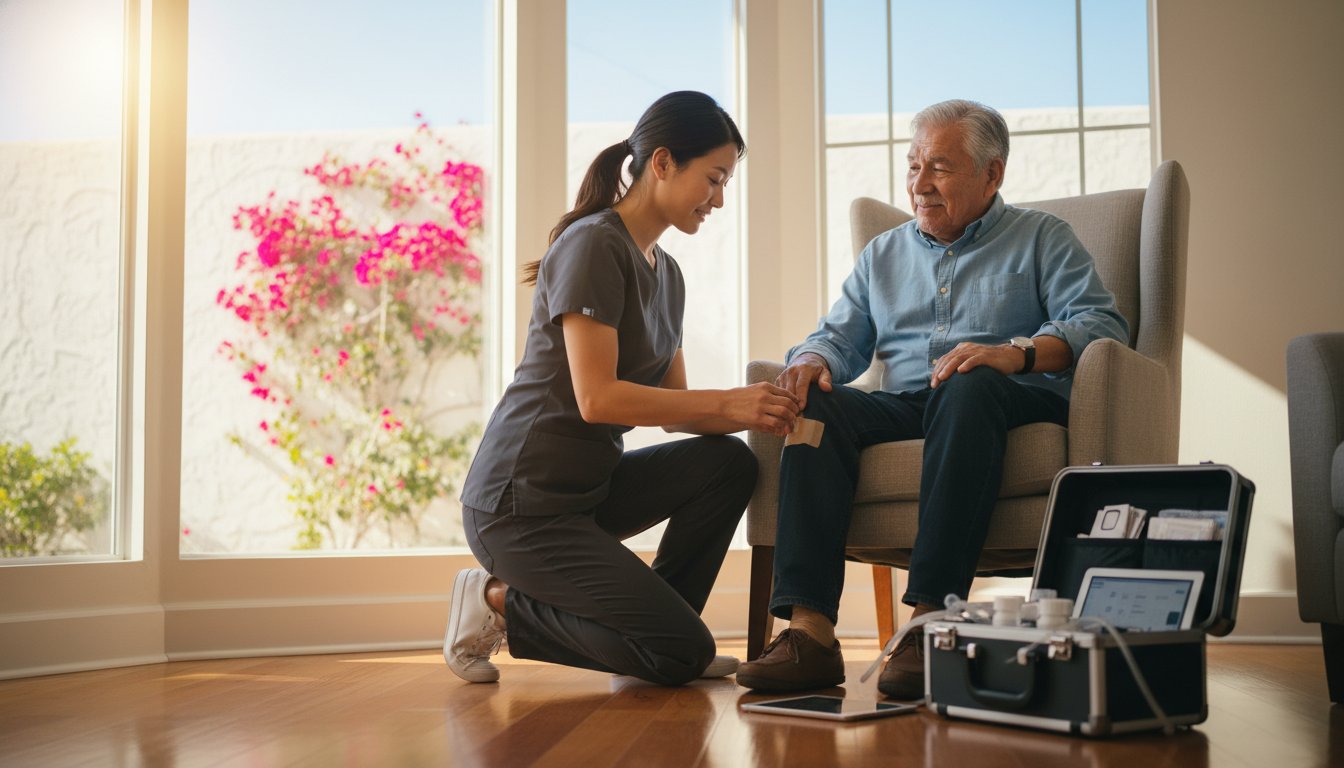
Why should the journey toward advanced tissue regeneration be stalled by the physical exhaustion of a clinic commute? For many Los Angeles families, the struggle to transport a patient with a non-healing ulcer often leads to missed appointments and heightened anxiety over stalled recovery. You're likely searching for a solution that prioritizes both clinical excellence and personal comfort, which naturally leads to the question: does Medicare cover mobile wound care Los Angeles patients can receive at home? Under current Medicare Part B guidelines, you don't have to choose between elite specialist care and the safety of your own environment.
We understand that managing the complexities of 2026 reimbursement updates can feel overwhelming while you're focused on long-term vitality. This guide clarifies how Medicare facilitates access to sophisticated treatments like amniotic membrane grafts and negative pressure therapy right at your bedside. We'll outline the specific eligibility criteria for chronic wounds and show you how a proactive, mobile-first strategy reduces hospital readmission risks. Discover how to transform your home into a sophisticated healing environment through a partnership with expert specialists who bring the laboratory to your doorstep.
Key Takeaways
- Medicare Part B typically covers 80% of the approved amount for specialist-led mobile consultations, ensuring elite care is accessible directly at your bedside.
- You'll distinguish between Part A general home health and Part B specialist services to understand how does Medicare cover mobile wound care Los Angeles residents need for active healing.
- Identify the clinical criteria required to qualify for advanced regenerative therapies, such as amniotic membrane grafts, when standard treatments don't produce results.
- Follow a structured roadmap that transitions you from an initial physician referral to a comprehensive bedside evaluation and personalized diagnostic testing.
- Discover how proactive, Medicare-compliant care from board-certified specialists helps minimize hospital readmission risks and optimizes your long-term health outcomes.
Understanding Medicare Coverage for Mobile Wound Care in Los Angeles
Optimizing your recovery shouldn't be a logistical burden. Specialist-led mobile wound care represents a shift toward a more precise, patient-centric model where professional medical treatment is delivered directly at your location. This approach bypasses the physical and emotional exhaustion of traditional clinic visits, bringing advanced clinical mastery to your private residence. Many patients and their families often ask: does Medicare cover mobile wound care Los Angeles residents can access without leaving home? The answer lies in the specific structure of Medicare Part B, which generally covers 80% of the approved amount for medically necessary mobile consultations and specialist interventions.
While many people associate home-based care with Medicare Part A, there's a vital distinction between general nursing and specialist-led treatment. Part A typically requires the patient to be strictly "homebound" and focuses on general oversight. In contrast, Medicare Part B covers outpatient services based on medical necessity, regardless of your ability to leave the house. This distinction is why Los Angeles patients are increasingly choosing mobile specialist models. By engaging a dedicated specialist, you ensure that the wound healing process is managed with high-level diagnostic precision and advanced therapeutic tools that general home health may not provide.
The Role of Medicare Part B in Mobile Medicine
Medicare Part B serves as the primary vehicle for accessing specialized care outside of a hospital setting. This includes professional fees for board-certified specialists who perform comprehensive bedside evaluations and sharp debridement. Beyond the physical assessment, Part B covers essential diagnostic testing, such as wound cultures and sensitivity analysis, which are critical for identifying the underlying biological barriers to healing. It's important to remember that your standard 20% coinsurance and the annual Part B deductible apply to these mobile visits. By leveraging these benefits, you can access a higher tier of care that prioritizes long-term systemic health.
Geographic Specifics for Los Angeles County Patients
Living in Los Angeles County provides unique advantages for patients seeking mobile care. Local coverage determinations (LCDs) for Southern California have seen significant updates in 2026, including the withdrawal of certain restrictive policies regarding skin substitutes. This regulatory shift allows for broader access to advanced treatments for residents in Glendale, Beverly Hills, and the San Fernando Valley. Additionally, many Los Angeles residents utilize Medicare Advantage (Part C) plans. These private insurance options often mirror Original Medicare coverage while sometimes offering additional coordination benefits. We recommend verifying your specific plan's network to ensure seamless integration with our specialist-led mobile services.
Medicare Part B vs. Part A: Specialist-Led Care vs. Home Health
Understanding the nuances of your benefits is the first step toward reclaiming your physical excellence. Many patients assume that any care received at home falls under the umbrella of home health, which is typically managed by Medicare Part A. However, when asking does Medicare cover mobile wound care Los Angeles families need to distinguish between routine maintenance and advanced clinical intervention. While Part A provides essential nursing oversight and dressing changes, Medicare Part B facilitates the involvement of board-certified specialists who perform high-level procedures like sharp debridement and graft applications directly at your bedside.
The difference lies in the level of clinical intensity. Home health agencies focus on skilled nursing, which centers on monitoring and following a physician's existing orders. Mobile specialist care involves specialized medical intervention. This is a more proactive approach where a specialist evaluates the biological data of the wound to adjust the treatment roadmap in real-time. Often, the most effective recovery strategy in Los Angeles involves a collaborative model where a home health agency manages daily care while a mobile specialist provides the advanced therapies necessary to close chronic wounds.
Specialist Intervention: Beyond Dressing Changes
A board-certified specialist brings a level of expertise that is often the deciding factor in preventing severe complications or amputations. These providers are authorized to perform advanced procedures that go far beyond simple gauze application. Under the Official Medicare Wound Care Coverage Policy, Medicare Part B covers specific interventions such as sharp debridement, bio-engineered skin substitutes, and negative pressure wound therapy. These treatments are reserved for cases where standard care hasn't achieved significant progress, requiring a sophisticated treatment plan signed by a physician to ensure medical necessity is clearly documented.
Navigating Homebound Status in Southern California
One common barrier to care is the homebound requirement associated with Part A services. To qualify for home health under Part A, a patient must have a condition that makes leaving the home a major, taxing effort. This can be frustrating for high-achievers in Southern California who still wish to remain active but require specialized medical attention for a non-healing wound. Fortunately, mobile specialists operating under Part B can see patients regardless of their homebound status. This flexibility ensures that you can receive elite wound care without the constraints of traditional home health eligibility. If you're seeking this level of precision, you may want to explore how advanced wound care specialists can integrate into your lifestyle and support your long-term vitality.
Qualifying for Advanced Wound Treatments and Skin Substitutes
Accessing regenerative breakthroughs shouldn't be limited by the four walls of a hospital. While basic interventions are foundational, Medicare Part B provides a pathway to advanced biological therapies for those who haven't seen results with traditional methods. You might be asking, does Medicare cover mobile wound care Los Angeles patients can use to access amniotic membrane grafts? The answer is yes, provided the wound has failed to show a 50% reduction in size after 30 days of standard therapy. This "failed standard of care" milestone is the gateway to advanced skin substitute treatments that stimulate cellular repair.
Precision in documentation is the backbone of successful coverage. Medicare requires meticulous records, including high-resolution photography, exact measurements, and a detailed history of previous sharp debridements. Healix360 manages this complex administrative landscape, ensuring that all clinical data meets the rigorous standards required for high-value regenerative medicine. This allows you to focus on healing while our specialists handle the technicalities of Medicare-compliant billing. When considering does Medicare cover mobile wound care Los Angeles services, remember that clinical necessity must be proven through these detailed bedside evaluations.
Diabetic Ulcer and Pressure Injury Requirements
Treatment protocols for diabetic ulcer treatment in Los Angeles are particularly stringent. For a diabetic foot ulcer to qualify for bio-engineered grafts, it must be classified as a Wagners Grade 1 or higher. Similarly, advanced bed sores ulcer management often requires the wound to be at Stage III or IV to justify the use of cellular-based products. These protocols ensure that these high-tech interventions are applied where they can deliver the most transformative physical outcomes. Specialists use these specific staging criteria to build a roadmap that aligns with both your biological needs and Medicare's regulatory framework.
Regenerative Medicine at the Bedside
The science of amniotic allografts represents a massive leap over traditional wet-to-dry dressings. These grafts contain biological data, such as growth factors and cytokines, that actively signal the body to rebuild tissue. According to the official guide on Medicare Coverage for Home Health Services, skilled interventions like these are covered when they're essential for treating chronic conditions. By moving beyond simple moisture management to active tissue engineering, specialists help you bypass the stagnation of chronic wounds. This proactive approach ensures that your recovery is driven by the latest breakthroughs in medical science rather than outdated, passive care models.

The Mobile Wound Care Process in L.A. County
Precision medicine requires a structured, data-driven approach to ensure that your recovery roadmap is both clinically sound and fully reimbursed. If you are investigating does Medicare cover mobile wound care Los Angeles patients can access, understanding the logistical flow is essential. Our process is designed to bridge the gap between a hospital discharge and long-term physical excellence, bringing advanced clinical tools directly to your residence. This five-step roadmap ensures no detail of your biological data is overlooked.
- Step 1: Initial Referral. The journey begins with a referral from your primary physician, vascular surgeon, or a hospital discharge planner who identifies the need for specialized intervention.
- Step 2: Bedside Evaluation. A board-certified specialist conducts a comprehensive assessment at your home, utilizing diagnostic testing and wound cultures to identify specific bacterial barriers.
- Step 3: Eligibility Verification. We perform a rigorous review of your Medicare Part B benefits. This is the definitive moment where we answer the question: does Medicare cover mobile wound care Los Angeles services for your specific diagnosis?
- Step 4: Regenerative Implementation. Once cleared, we apply advanced therapies, such as amniotic membrane grafts or bio-engineered skin substitutes, to trigger cellular repair.
- Step 5: Ongoing Coordination. We maintain a steady cadence of monitoring, sharing healing data with your broader medical team to ensure a unified recovery strategy.
Coordination with Your L.A. Medical Team
Mobile specialists do not operate in a vacuum. We act as a strategic partner to your existing healthcare providers, ensuring that data from every bedside visit is seamlessly integrated into your electronic health records. This is particularly vital when integrating mobile care with surgical wound care protocols, where post-operative monitoring is critical for preventing infection. By maintaining an open channel with your vascular surgeon or primary doctor, we create a cohesive medical roadmap that prioritizes your systemic health and prevents the fragmentation of care often seen in traditional outpatient settings.
Logistics of In-Home Specialist Visits
Preparing for a specialist visit in Glendale or Beverly Hills is straightforward and designed to minimize stress. We recommend a well-lit area where the patient can rest comfortably during the evaluation. Specialized treatments generally occur on a weekly or bi-weekly cadence, depending on the wound's responsiveness to the regenerative grafts. Family caregivers play a vital role in this partnership, acting as the daily observers of the healing process between specialist visits. To begin this collaborative journey toward recovery, you can schedule a bedside evaluation with our specialist team today.
Healix360: Los Angeles Leaders in Medicare-Compliant Mobile Care
Healix360 operates as a visionary strategist in the Southern California medical landscape. We've built a premium network of board-certified specialists who prioritize long-term physical excellence over mere symptom management. By merging high-tech diagnostic precision with a human-centric approach, we ensure that your recovery is both scientifically rigorous and deeply personal. If you've been wondering, does Medicare cover mobile wound care Los Angeles patients can access with confidence, Healix360 provides the definitive answer through our mastery of Medicare-compliant protocols.
Our specialists serve as elite guides, navigating you through the complexities of chronic wound recovery. We understand that transporting a patient to a clinic often creates unnecessary friction in the healing process. By bringing specialist-led care to your doorstep, we minimize the physical and emotional burden on both the patient and the family. This proactive model ensures that no detail of your systemic health is overlooked, allowing you to maintain your lifestyle while receiving hospital-grade interventions right in your living room.
Expertise in Regenerative Wound Science
Our clinical authority is rooted in the application of advanced regenerative tools. We utilize amniotic membrane grafts and Negative Pressure Wound Therapy (NPWT) to accelerate the body's natural restorative processes. These therapies represent the intersection of science and vitality, offering outcomes that traditional dressings simply cannot match. We deploy proactive, data-driven interventions at the bedside to halt tissue degradation and preserve limb integrity before surgical necessity arises. This focus on physical excellence ensures that every treatment plan is an investment in your future mobility and long-term vitality.
Seamless Medicare Integration for Patients
The administrative side of medical care shouldn't be your concern. We manage the entire Medicare Part B billing and documentation process, ensuring that every bedside evaluation and graft application aligns with the latest CMS standards and Local Coverage Determinations (LCDs). Our meticulously organized approach removes the anxiety of rising medical costs by maximizing your existing benefits. This seamless integration allows you to focus entirely on your roadmap to recovery without the frustration of navigating complex biological data on your own. Experience advanced mobile wound care with Healix360 today.
Reclaiming Your Vitality Through Advanced Bedside Care
The transition from clinical stagnation to active tissue regeneration begins with understanding your coverage landscape. You've discovered that does Medicare cover mobile wound care Los Angeles patients can access through Medicare Part B, allowing for high-level interventions like amniotic membrane grafts without the stress of travel. By distinguishing between general nursing and specialist-led care, you've gained the clarity needed to prioritize physical excellence. This roadmap ensures that your biological data is managed with precision, moving you closer to a future of restored mobility and systemic health.
Healix360 stands as your strategic partner in this journey, offering a network of board-certified wound care specialists who specialize in amniotic and regenerative grafts. As a dedicated Medicare Part B provider, we handle the complex documentation required to meet 2026 CMS standards, allowing you to focus entirely on healing. Don't let a non-healing wound dictate your quality of life. Schedule your in-home specialist evaluation with Healix360 to begin your personalized path toward recovery. You have the power to transform your home into a sophisticated environment for healing, and we're here to provide the expert guidance you deserve.
Frequently Asked Questions
Does Medicare Part B cover the travel costs for mobile wound care specialists?
Medicare Part B focuses its reimbursement on the clinical components of a mobile visit rather than the specialist's travel costs. While the medical procedures and evaluations are covered at the standard 80% rate, you might be responsible for a separate convenience or administrative fee associated with the home visit. It's best to confirm these specific logistics with your provider before scheduling your initial bedside assessment.
Can I receive mobile specialist care if I am already enrolled in a home health agency?
You can absolutely receive mobile specialist care while under the care of a home health agency. This dual-track approach allows a home health nurse to manage daily dressing changes under Medicare Part A while a specialist provides advanced clinical interventions under Part B. This collaborative model ensures your recovery is supported by both consistent oversight and high-level medical expertise for optimal tissue regeneration.
What types of wounds are eligible for Medicare-covered skin substitutes at home?
Medicare typically covers advanced skin substitutes for chronic wounds like diabetic foot ulcers, venous leg ulcers, and Stage III or IV pressure injuries. To qualify, the wound must generally show a lack of significant healing after 30 days of standard therapy. When exploring does Medicare cover mobile wound care Los Angeles residents need, these regenerative grafts are essential tools for closing wounds that have stalled under traditional care.
Do I need a doctor's referral to start mobile wound care in Los Angeles?
A physician's referral is a standard requirement to establish medical necessity for specialized mobile wound care. This referral acts as a clinical bridge between your primary care team and the specialist, ensuring your treatment roadmap is unified and data-driven. Obtaining this order from your doctor or hospital discharge planner is the first step toward securing Medicare-compliant coverage for your in-home treatments.
How much will I pay out-of-pocket for advanced amniotic grafts under Medicare?
Your out-of-pocket responsibility for amniotic grafts usually consists of the 20% coinsurance required by Medicare Part B once your annual deductible is met. Many patients with supplemental insurance or Medigap plans find that these secondary policies cover the remaining balance. Because these are outpatient medical services, the financial structure mirrors what you would expect at a traditional wound care clinic but with the added benefit of home delivery.
Is mobile wound care available in assisted living facilities in Glendale and Beverly Hills?
Mobile wound care specialists frequently visit patients in assisted living facilities across Glendale, Beverly Hills, and the San Fernando Valley. Since these facilities serve as your private residence, you can receive elite bedside evaluations and sharp debridement without the logistical burden of medical transport. This ensures you maintain your lifestyle and community connections while accessing the latest breakthroughs in regenerative medicine.
What happens if Medicare denies coverage for a specific wound treatment?
If a specific treatment is denied, you have the right to an appeal process where additional clinical data can be submitted to support medical necessity. Denials are often the result of insufficient documentation regarding wound measurements or previous failed treatments. Specialists prioritize meticulous record-keeping and high-resolution photography to ensure your biological data meets Medicare's rigorous standards from the very first visit.
How often can a mobile wound care specialist visit my home under Medicare?
The frequency of visits is determined by the clinical needs of your wound and the specific protocols for treatments like negative pressure therapy or graft applications. Most patients receive specialist visits on a weekly or bi-weekly cadence to monitor progress and perform necessary procedures. Medicare continues to cover these visits as long as the specialist documents a clear medical necessity for ongoing professional intervention in your does Medicare cover mobile wound care Los Angeles recovery journey.


