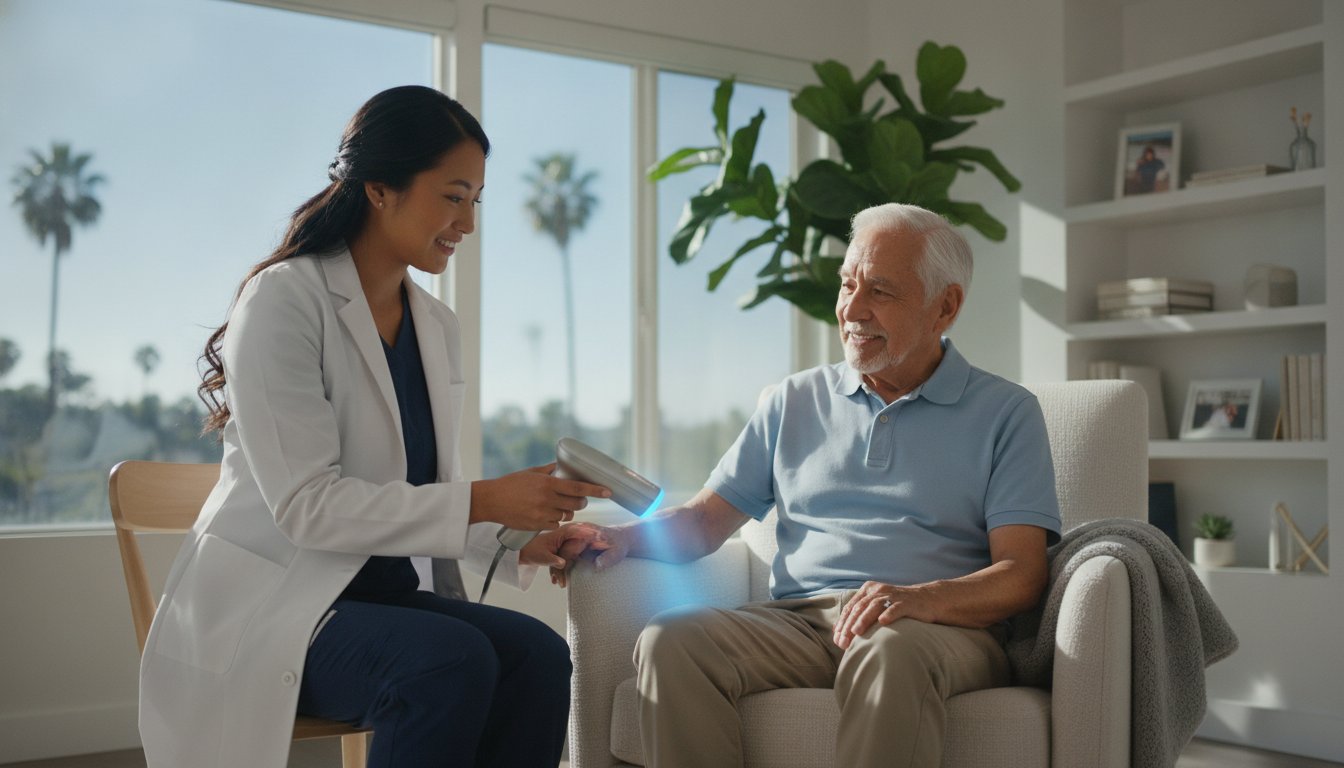
What if the most advanced regenerative technology for non-healing wounds didn't require a taxing journey to a hospital basement? For many individuals, the physical strain of traveling to a clinic often outweighs the benefits of the treatment itself, especially when progress feels stalled. You likely feel that your recovery should be faster and your care more accessible. When choosing a wound care specialist in 2026, it's essential to find a partner who bridges the gap between laboratory breakthroughs and your daily comfort. We'll help you identify the critical criteria for selecting an expert who brings hospital-grade science directly to your home.
This guide explores how to navigate the recent 2026 Medicare shifts, including the transition of skin substitutes to incident-to supplies, while ensuring you receive the highest standard of care. You'll learn how mobile assessments and bio-engineered grafts are preventing amputations and restoring vitality without the traditional clinical overhead. We'll provide a clear roadmap for selecting a specialist who uses data-driven strategies to accelerate healing and return you to a life of physical excellence.
Key Takeaways
- Recognize the "Golden Window" for chronic healing, where seeking expert intervention after four weeks of stagnation is essential for preventing severe complications.
- Prioritize clinical excellence and logistical ease when choosing a wound care specialist who integrates advanced regenerative technologies with mobile delivery.
- Compare the traditional hospital model with modern mobile care to understand why in-home treatment often yields superior outcomes for those with mobility challenges.
- Navigate the 2026 Medicare landscape with confidence by identifying specialists who maintain strict compliance while utilizing bio-engineered skin substitutes.
- Master the critical questions to ask your provider regarding their success rates with diabetic ulcers and their ability to perform sharp debridement at the bedside.
The Critical Role of a Wound Care Specialist in Chronic Healing
A wound care specialist isn't just a clinician; they're a master of tissue viability and cellular recovery. While a primary care physician effectively manages acute injuries, a board-certified specialist focuses specifically on complex, non-healing tissue that has failed to follow the standard biological roadmap of repair. This distinction is vital when choosing a wound care specialist because chronic wounds require a level of scientific rigor that goes beyond standard topical treatments. These experts operate at the intersection of biology and technology to restart the body's natural healing mechanisms.
The "Golden Window" for chronic healing is a critical four-week period that dictates long-term outcomes. If a wound hasn't shown a 50% reduction in size within 28 days, it's biologically stalled and requires immediate intervention. At this stage, the risk of severe infection or amputation increases significantly. Specialists intervene by shifting the wound from a chronic inflammatory state back into an active healing phase, often through advanced modalities like sharp debridement or bio-engineered skin substitutes. This multidisciplinary approach often involves Wound, ostomy, and continence nursing professionals who ensure every aspect of tissue health is monitored with precision.
When to Transition from Primary Care to a Specialist
Stalled healing is your first red flag. If you notice increasing pain, foul odors, or the presence of necrotic, black tissue, the situation is no longer routine. For diabetic or elderly patients, a "wait and see" approach is often a dangerous gamble. These individuals face systemic challenges, such as poor vascular circulation, that require immediate specialist intervention to prevent tissue death. By addressing these underlying systemic issues early, a specialist creates a stable environment for long-term recovery and physical excellence.
The Impact of Board Certification and Experience
Expertise in tissue viability directly influences your long-term health outcomes. Board-certified specialists possess the rigorous training required to navigate the complex 2026 landscape of regenerative medicine, including the latest Medicare-compliant amniotic membrane grafts. While the initial consultation may seem specialized, this level of expertise actually reduces the total cost of care. Faster closure times mean fewer visits and a lower risk of expensive hospital readmissions. When choosing a wound care specialist, you're selecting a strategist who views your health as a high-value asset worth protecting with the most advanced tools available.
5 Essential Criteria for Choosing a Wound Care Specialist in 2026
The landscape of clinical recovery has evolved significantly, moving beyond simple topical dressings toward sophisticated cellular interventions. When you're choosing a wound care specialist, the priority should be finding a professional who views your health as a high-value asset. In 2026, the best care isn't confined to the sterile walls of traditional Wound care centers; it's delivered where you're most comfortable. This shift requires a specialist who masters both advanced biological data and the logistics of mobile delivery.
To ensure your recovery stays on a trajectory of physical excellence, look for these five pillars of modern wound management:
- Regenerative Technology: Access to amniotic membrane grafts and bio-engineered skin substitutes that restart the healing process.
- Mobile Accessibility: The ability to receive hospital-grade treatment in your Southern California home, avoiding the physical strain of travel.
- Bedside Diagnostic Precision: Providers who perform sharp debridement and wound culture testing during the initial assessment.
- Systemic Coordination: Active collaboration with your home health agency and primary care network to ensure a unified healing strategy.
- Financial Transparency: Expertise in Medicare Part B and private insurance coordination to eliminate billing confusion.
Evaluating the Use of Regenerative Medicine
A critical question to ask is whether your provider utilizes skin substitutes for diabetic ulcers and other complex injuries. For Stage 3 or 4 wounds, the standard of care involving basic bandages is often insufficient. Amniotic allografts serve as a biological scaffold. They stimulate natural repair and recruit the body's own healing cells to the site, providing a clear roadmap for tissue restoration. If you're seeking a proactive partner in your recovery, consulting with a mobile specialist can offer the clarity you need to move forward.
Insurance and Medicare Part B Compliance
Navigating the financial aspects of advanced healing shouldn't be a source of stress. Choosing a specialist who's a Medicare-enrolled provider is vital for your peace of mind. These experts understand the 2026 flat-rate reimbursement models and handle the complex procedural billing for high-value grafts on your behalf. Always insist on transparent insurance verification before your first bedside visit. This ensures that your focus remains entirely on your vitality and long-term health outcomes rather than administrative hurdles.
Clinical Excellence vs. Patient Comfort: Why Location Matters
Excellence in medicine is defined by the quality of intervention, not the square footage of the facility. For years, the hospital model was the default for complex treatments, yet this often forced patients into high-stress environments that could actually impede recovery. When choosing a wound care specialist, you must consider how the setting impacts your physiological state. A mobile model prioritizes your comfort while maintaining the clinical rigor established by organizations like the American Board of Wound Healing. This ensures that the same high standards of care are applied directly at your bedside, where you are most at ease.
Healing at home significantly reduces the risk of hospital-acquired infections, which remain a major concern for those with compromised immune systems. In a domestic setting, you're exposed to your own familiar microbial environment rather than the resistant pathogens often found in clinical wards. This is particularly crucial for managing a bed sores ulcer, where the environment's cleanliness and the ability to reposition frequently are paramount. By selecting a specialist who comes to you, you eliminate the physical trauma of transportation, which can often aggravate existing pressure injuries and increase systemic inflammation.
The Benefits of Mobile Wound Care in Southern California
Southern California's geography often makes hospital visits a logistical ordeal. Eliminating travel-related stress is more than a convenience; it's a clinical necessity for patients with limited mobility. Mobile specialists perform evaluations in your actual living environment, allowing them to identify external factors, such as seating surfaces or nutritional habits, that might be stalling your progress. This proximity also enables faster follow-up care immediately after a hospital discharge, closing the gap where many complications typically arise. It's a proactive strategy that places your vitality at the center of the care plan.
Technological Parity: Bringing the Lab to the Living Room
Modern mobile wound care utilizes the same advanced technology found in premier surgical centers. Specialists now carry portable Negative Pressure Wound Therapy (NPWT) units and precision debridement tools that allow for high-level intervention in any setting. Digital imaging and remote tracking software ensure that your progress is monitored with data-driven accuracy, providing a transparent roadmap of your healing journey. In 2026, the "clinic" is defined by the expertise of the provider and the technology they wield, not the building where they practice. When choosing a wound care specialist, focus on the professional who brings the future of medicine directly to you.

Key Questions to Ask Before Starting a Treatment Plan
Empowerment begins with inquiry. When you're choosing a wound care specialist, the quality of their answers reveals their level of clinical mastery and their commitment to your recovery. You aren't just looking for a provider; you're selecting a strategist who will navigate the complex biological data of your healing journey. A high-end professional service should offer a clear, actionable roadmap that prioritizes your long-term vitality. Before committing to a treatment plan, ensure your specialist can provide precise responses to these fundamental questions.
A primary concern is their specific experience with your condition. Ask about their success rate with non-healing diabetic ulcer treatment and how they've handled cases that have stalled elsewhere. In 2026, clinical excellence is defined by the ability to perform advanced procedures at the bedside. Confirm if they perform sharp debridement during home visits and which bio-engineered skin substitutes they recommend for your specific tissue type. Finally, ask how they coordinate with your existing home health agency or primary doctor to ensure your care remains seamless and unified.
Understanding the Treatment Roadmap
Demand a personalized plan that includes clear milestones for closure. You should know exactly what to expect at each stage of the process, including the frequency of visits and the specific protocols for care between consultations. A visionary specialist will always perform wound culture and sensitivity testing early in the process. This diagnostic rigor is essential to rule out underlying infections that could silently sabotage your progress. If you're ready to partner with a team that values precision, schedule a bedside evaluation with our specialists today.
Evaluating Post-Surgical Support
For those requiring surgical wound care, the stakes are exceptionally high. Ask specific questions about their protocols for managing dehiscence or complex drainage issues. It's vital to understand their emergency protocols and how they provide support if a complication arises after hours. If your treatment involves Negative Pressure Wound Therapy (NPWT), ensure the specialist is proficient in managing the equipment and troubleshooting the seal in a home environment. This level of detail ensures that no aspect of your physical excellence is left to chance.
Healix360: Advanced Mobile Wound Care Across Southern California
Healix360 operates as the premier visionary strategist for individuals seeking mastery over their recovery. We recognize that choosing a wound care specialist is more than a clinical selection; it's a commitment to your future vitality. By removing the logistical barriers of hospital visits, we bring a high-end professional service directly to your bedside. Whether you're in a private residence, an assisted living facility, or a nursing home, our mobile advantage ensures that your environment supports, rather than hinders, your healing trajectory.
Our methodology integrates the latest breakthroughs in regenerative science. We employ amniotic membrane grafts and stem cell therapy to provide the biological scaffolding necessary for complex tissue closure. This proactive approach is supported by a deep understanding of Medicare Part B compliance, allowing for rapid coordination and financial clarity from the first consultation. We don't just treat wounds; we manage the systemic health data that leads to physical excellence.
Our Network of Board-Certified Specialists
The specialists within the Healix360 network are defined by their clinical rigor and a proactive care philosophy. They bridge the gap between the precision of laboratory science and the practical reality of bedside treatment. Each provider is an elite guide, translating complex biological data into an actionable roadmap for recovery. Our primary objective is limb preservation and the achievement of life-changing outcomes for every individual we serve. We believe that no detail of your health is too small to overlook, ensuring that your journey toward wellness is both thorough and stable.
Serving Glendale, Los Angeles, and Beyond
Our mobile services are specifically tailored for the diverse communities of Southern California. We maintain a strong presence in Glendale, Los Angeles, and the surrounding regions, ensuring that expert intervention is never out of reach. Our team simplifies the process of choosing a wound care specialist by offering a clear, data-driven path to healing. By partnering closely with local home health agencies and case managers, we provide a seamless continuum of care that starts the moment you leave the hospital. This collaborative spirit ensures that your recovery is supported by a unified team of professionals dedicated to your success.
Schedule your bedside wound evaluation with Healix360 today.
Secure Your Trajectory Toward Physical Excellence
Your recovery is a high-value asset that deserves the highest level of strategic oversight. When choosing a wound care specialist, you're selecting a partner who will navigate the complex biological roadmap of your healing journey. We've explored how the integration of bio-engineered skin substitutes and bedside diagnostics can effectively restart the body's natural repair mechanisms. These breakthroughs, combined with the safety of your own home environment, represent the new standard of clinical excellence in 2026.
As regenerative medicine experts and a dedicated Medicare Part B provider, Healix360 is committed to serving Southern California families with scientific rigor and human-centric warmth. We bridge the gap between complex laboratory data and your daily quality of life, ensuring that no detail of your healing journey is overlooked. It's time to transition from a stagnant approach to a proactive strategy that preserves your mobility and long-term health outcomes.
Take the first step toward a life of physical excellence. Request an Advanced Bedside Wound Assessment today and partner with a team that views your recovery as their ultimate mission. Your path to restoration is clear, and we're here to guide you through every step of the process.
Frequently Asked Questions
How do I know if a wound specialist is covered by Medicare?
Specialists who are Medicare-enrolled providers typically accept Medicare Part B for their clinical services. Under the 2026 Physician Fee Schedule, advanced treatments such as bio-engineered skin substitutes are reclassified as incident-to supplies, meaning they're covered as part of the specialist's procedure. It's essential to verify your provider's enrollment status before your first bedside visit to ensure seamless financial coordination and peace of mind.
What is the difference between a wound care nurse and a specialist?
A wound care nurse focuses on the essential daily management and dressing changes, while a specialist is a board-certified professional who serves as the visionary strategist for your entire recovery roadmap. Specialists possess the advanced training required to perform sharp debridement and apply regenerative grafts. When choosing a wound care specialist, you're selecting an expert who can interpret complex biological data to accelerate your healing trajectory.
Can a wound specialist treat bedsores at home?
Yes, mobile specialists are specifically equipped to manage pressure injuries and bedsores within your actual living environment. This setting is often superior because it allows the provider to assess the seating and bedding surfaces that may be contributing to the injury. Treating bedsores at home eliminates the physical strain of hospital travel and significantly reduces your exposure to resistant hospital-acquired infections.
What advanced treatments are available for non-healing diabetic ulcers?
Modern treatments for non-healing diabetic ulcers include amniotic membrane grafts and bio-engineered skin substitutes that act as biological scaffolds for tissue growth. Specialists also utilize Negative Pressure Wound Therapy (NPWT) and precision compression strategies to optimize the local healing environment. These regenerative tools are designed to restart the body's natural repair mechanisms when standard care has stalled.
How long does it usually take to see results with a specialist?
Visible progress should ideally occur within the "Golden Window" of the first four weeks of specialized intervention. While every biological system responds differently, a 50% reduction in wound size within 28 days is a common clinical milestone for success. If progress is slower, your specialist will use data-driven insights to adjust your personalized treatment plan and ensure you remain on a path toward physical excellence.
What happens during a first mobile wound care consultation?
The initial bedside evaluation involves a comprehensive assessment of the wound's history and a diagnostic review of the surrounding tissue. Your specialist will often perform sharp debridement to remove necrotic tissue and conduct wound culture testing to rule out underlying infections. This session concludes with the delivery of a clear, actionable roadmap that details the specific technologies and milestones required for closure.
Do I need a referral to see a wound care specialist in Southern California?
Many residents can access specialized care through direct coordination, though Medicare and certain private insurers often require a partnership with your primary care physician or home health agency. Most mobile specialists handle this coordination on your behalf, reaching out to your existing medical network to ensure care is unified and compliant. It's a proactive process that prioritizes your vitality over administrative hurdles.
Is debridement painful when performed at home?
Sharp debridement is performed with clinical precision and, when necessary, topical numbing agents to maximize your comfort. Most patients report an immediate sense of relief following the procedure, as removing necrotic tissue reduces local pressure and inflammation. When choosing a wound care specialist, look for a provider who emphasizes a calm, human-centric approach to these essential bedside procedures.


