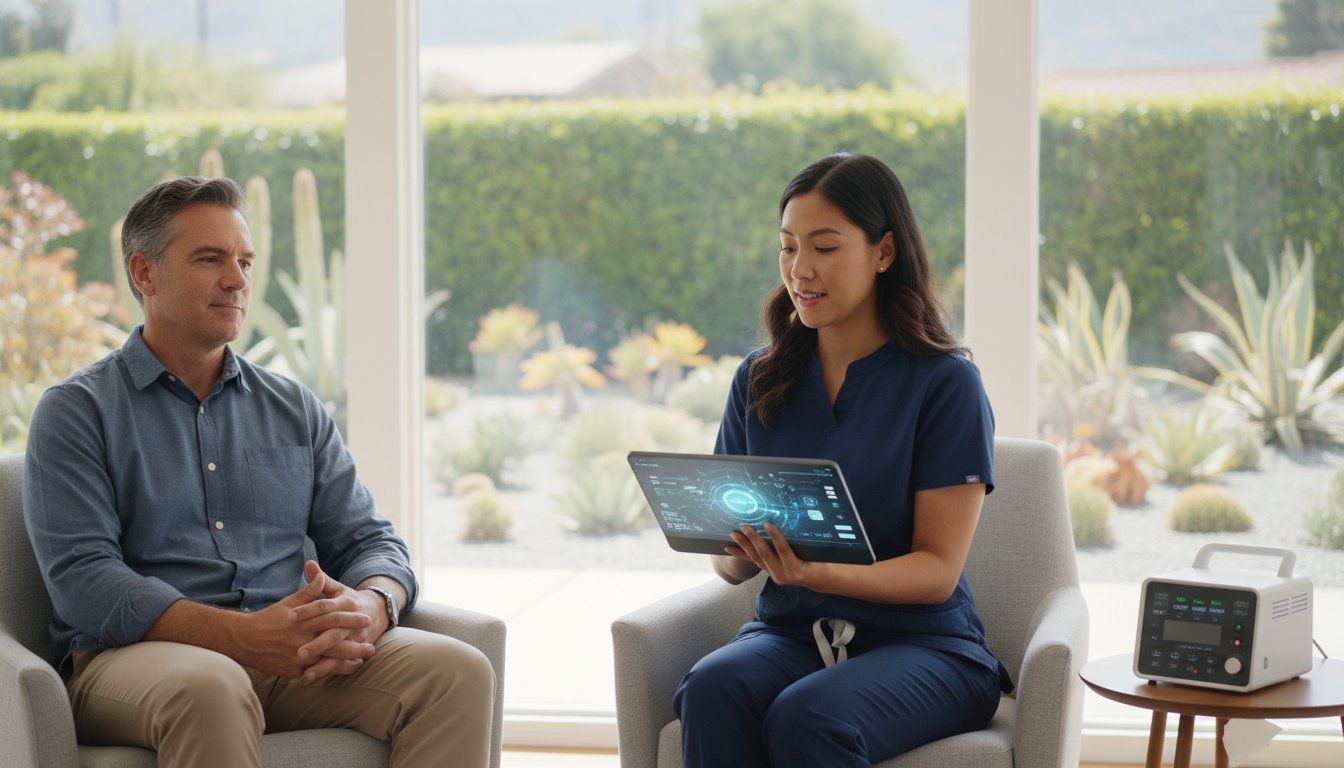
A reopened surgical incision isn't just a setback in your recovery; it's a critical biological signal that your body's regenerative process requires professional recalibration. You've likely felt the sharp anxiety of seeing a wound separate, wondering if you need to rush back to the hospital or if you can safely manage the situation from your living room. It's a common concern for high-achievers who prioritize their health but find the logistics of clinic travel during recovery to be a significant barrier. This guide explains how you can access expert wound dehiscence treatment at home in Southern California to secure your long-term vitality without the stress of an emergency room visit.
We'll explore the underlying risks of tissue separation and the latest 2026 clinical standards for regenerative care, including updated CMS frameworks for skin substitutes. You'll learn how mobile specialists utilize advanced methodologies like bio-engineered grafts and negative pressure therapy to prevent hospital readmission. By understanding the intersection of science and proactive care, you can transform a healing challenge into a roadmap for physical excellence. We'll outline how our data-driven approach brings hospital-grade precision directly to your doorstep, ensuring no detail of your recovery is overlooked.
Key Takeaways
- Understand why surgical incisions typically separate between day five and ten post-operation and how to identify early biological warning signs.
- Learn the critical steps for stabilizing a reopened wound, including why you shouldn't attempt to re-close the site yourself without professional guidance.
- Discover how to access expert wound dehiscence treatment at home in Southern California to bypass the physical strain and safety risks of post-operative travel.
- Explore sophisticated regenerative options like amniotic membrane grafts and NPWT that act as biological scaffolds to accelerate your natural healing timeline.
- Identify the specific clinical red flags that signal a need for immediate professional intervention to prevent secondary complications like cellulitis or chronic failure.
Understanding Wound Dehiscence: Why Surgical Incisions Reopen
Surgical recovery is a delicate balance of biological synchronization and structural integrity. When this balance is disrupted, wound dehiscence occurs, which is the partial or total separation of previously approximated wound edges. This isn't merely a broken stitch; it's a signal that the body's natural repair mechanisms have encountered a significant obstacle. While many patients expect complications to appear immediately after surgery, most instances of dehiscence manifest between five and ten days post-operation. This specific window is critical because it's when the initial inflammatory response transitions into tissue proliferation, a phase where the wound hasn't yet regained its full tensile strength. For those seeking a deeper Understanding Wound Dehiscence, it's essential to distinguish between superficial separation, which affects only the skin, and deep tissue dehiscence that involves the underlying muscle and fascia layers. Securing expert wound dehiscence treatment at home in Southern California ensures that these nuances are professionally managed without the physical strain of clinical travel.
The Clinical Causes of Surgical Wound Failure
The "why" behind a reopening wound often involves a combination of metabolic and mechanical factors. Metabolic conditions like diabetes or poor vascularity act as silent disruptors, sabotaging the cellular repair process by limiting the delivery of oxygen and essential nutrients to the site. When the cellular fuel lines are compromised, the tissue remains fragile and prone to failure. Beyond internal biology, mechanical stress plays a decisive role. Simple actions like coughing, sneezing, or lifting heavy objects can physically pull sutures apart before the skin has fused. In many Southern California patients recovering from lower extremity surgeries, localized edema or swelling creates intense skin tension that can eventually overwhelm the incision line. Understanding these drivers is the first step in creating a proactive roadmap for physical excellence.
Recognizing the Early Warning Signs
Identifying the precursors to dehiscence can prevent a minor separation from evolving into a complex non-healing wound. One of the most common hallmarks is the appearance of serosanguinous drainage, a thin, pinkish fluid that often saturates dressings unexpectedly. This fluid is frequently a precursor to the physical separation of the wound edges. You might notice visual changes such as increased redness, localized heat, or the skin visibly pulling away from the suture line. In some cases, patients report a distinct "popping" or "ripping" sensation during movement, which is a visceral mechanical signal that the internal layers have separated. If you experience these symptoms, accessing wound dehiscence treatment at home in Southern California provides the immediate, expert evaluation necessary to stabilize the site and initiate a personalized treatment plan.
The Risks of Unmanaged Dehiscence and When to Act
Delaying intervention after an incision reopens transforms a manageable surgical site into a complex biological challenge. When wound edges separate, the internal environment is exposed to external pathogens, significantly increasing the risk of secondary infections like cellulitis. This progression often stalls the natural healing timeline, leading to a non-healing chronic wound that requires more aggressive regenerative intervention. For a detailed clinical perspective, Understanding Wound Dehiscence involves recognizing that unmanaged gaps can lead to evisceration, a critical emergency where internal organs or tissues protrude through the incision. Proactive management via expert wound dehiscence treatment at home in Southern California prevents these high-stakes complications while preserving your physical excellence.
Clinical Complications of Delayed Intervention
Stagnant wounds often develop necrotic tissue, or eschar, which acts as a physical barrier to cellular migration. This dead tissue provides a breeding ground for bacteria, potentially leading to systemic inflammatory responses that compromise your entire recovery. Clinical data suggests that surgical site complications like dehiscence can increase the risk of hospital readmission by over 20%. Addressing these issues early with personalized wound care strategies ensures you remain on the path to long-term vitality and avoids the cycle of surgical failure. When you prioritize early intervention, you're not just treating a gap; you're protecting your systemic health.
Distinguishing Between Minor Gaps and Major Failures
Not every separation requires an emergency room, but every gap deserves a professional evaluation to ensure structural integrity. Use the depth test as a baseline: if you can see underlying fat, muscle, or fascia, the repair is compromised and requires immediate clinical attention. Beyond the physical risks, surgical failure often carries a heavy psychological burden, creating a sense of uncertainty about your body's ability to heal. A mobile specialist provides the reassuring, data-driven mastery needed to navigate these moments with confidence. Accessing wound dehiscence treatment at home in Southern California allows for bedside evaluations that determine if advanced therapies are necessary to restore your quality of life.
- Visual Inspection: Look for any tissue that appears dusky, gray, or black, which indicates poor perfusion.
- Drainage Analysis: Monitor for an increase in thick, cloudy, or foul-smelling fluid.
- Structural Check: Assess if the tension on the skin is increasing due to localized swelling.
Why Mobile Wound Care is the Standard for SoCal Recovery
Southern California is defined by its sprawling geography, yet for a post-operative patient, the distance between a residence in Glendale and a specialist in West LA can feel like an insurmountable barrier. Navigating the logistical complexities of regional traffic isn't just an inconvenience; it's a physical risk to your recovery. When your body is in the fragile state where Why Surgical Incisions Reopen becomes a primary concern, the jarring movements of a car and the prolonged sitting required for clinic visits can exacerbate tissue tension. Additionally, many patients are restricted by immobility or the cognitive effects of post-operative pain medication, making driving itself a significant safety hazard. Opting for wound dehiscence treatment at home in Southern California allows you to bypass these stressors entirely. By bringing advanced clinical mastery to your doorstep, we ensure your healing environment remains stable, controlled, and focused on long-term vitality.
The Logistics of Healing in Los Angeles and Glendale
Mobile care eliminates the physical strain of entering and exiting vehicles, a movement that often places undue stress on abdominal or lower extremity incisions. For those residing in assisted living facilities or private residences, Medicare-compliant wound care provides a seamless bridge between hospital discharge and self-actualization. This model relies on precise coordination with your referring surgeons, ensuring the personalized treatment plan initiated in the operating room is maintained with scientific rigor. We work in tandem with Southern California home health agencies and case managers to provide a comprehensive layer of specialized oversight. This collaboration ensures that no detail of your recovery is overlooked, from systemic health monitoring to the granular details of wound bed preparation.
Clinical Superiority of Home-Based Assessments
Treating a patient in their own space offers clinical advantages that a sterile office environment simply cannot replicate. Specialists evaluate environmental factors that influence healing, such as the ergonomics of your recovery area or potential obstacles to mobility. This approach also mitigates "white coat hypertension," a common phenomenon where clinical settings trigger stress responses that can negatively impact systemic health. Healix360 brings sophisticated diagnostics, including bedside wound culture and sensitivity testing, directly to the patient. These bedside evaluations allow for immediate adjustments to your treatment plan based on real-time biological data. By integrating these high-tech tools into the home setting, we provide wound dehiscence treatment at home in Southern California that matches the precision of any outpatient facility while prioritizing your comfort. It's a visionary strategy that places you at the center of the journey toward physical excellence.

Safety Checklist: At-Home Treatment for Wound Dehiscence
A reopened incision requires immediate stabilization to protect the underlying biological architecture. Your first priority is to cover the site with a sterile dressing moistened with saline. It's crucial that you don't attempt to re-close the wound yourself using tape or adhesive strips. Forcing the edges together can cause internal pressure and damage the delicate granulation tissue trying to form. Once the site is protected, you must eliminate all physical activity that puts tension on the incision. Securing wound dehiscence treatment at home in Southern California allows you to maintain this necessary immobility while receiving elite clinical oversight.
Effective recovery is built on accurate data. Before your specialist arrives, take a moment to observe and document the following details:
- Drainage Profile: Note the color, odor, and approximate volume of fluid saturating your bandages.
- Tissue Appearance: Observe if the wound bed looks beefy red, which is a positive sign, or pale and dusky, which suggests poor perfusion.
- Systemic Symptoms: Track any spikes in temperature or feelings of malaise that might suggest a spreading infection.
Simultaneous communication is your best strategy for a successful outcome. Contact your primary surgeon to report the separation, then reach out to a mobile wound specialist to initiate an at-home intervention plan. This dual-track approach ensures your surgical team stays informed while you receive immediate, hands-on care at your bedside. You can request a bedside evaluation today to stabilize your recovery journey and protect your long-term vitality.
What NOT to Do When a Wound Reopens
Avoid the temptation to use over-the-counter ointments or hydrogen peroxide on a dehisced wound. While these products seem helpful, peroxide is often cytotoxic, meaning it can kill the healthy cells required for closure. You should also never attempt to remove loose sutures or staples yourself. These materials might still be providing structural support to deeper layers that aren't visible from the surface. If the gap is larger than a few millimeters, the "wait and see" approach is a significant risk. Professional intervention is the only way to ensure the site doesn't transition into a chronic non-healing state.
Preparing for Your Mobile Specialist Visit
To maximize the efficiency of your first assessment, have your surgical date, procedure details, and current medication list ready. During this visit, we often perform wound culture and sensitivity testing to rule out underlying infections that might be stalling your progress. Ensure you have a clean, quiet, and well-lit area prepared for the evaluation. This allows our team to utilize high-tech diagnostic tools with the same precision found in a traditional clinic. By providing the building blocks for repair through increased protein and hydration, you're partnering with us to achieve physical excellence and a faster return to your daily life.
Advanced Regenerative Solutions for Surgical Recovery
Regenerative medicine has transformed surgical recovery from passive observation to active biological intervention. When an incision fails, simply changing bandages is rarely enough to restart a stalled healing cascade. Advanced wound dehiscence treatment at home in Southern California now utilizes amniotic membrane grafts, which function as a sophisticated biological scaffold. These grafts provide the essential extracellular matrix required for rapid closure, effectively bridging the gap where natural tissue has failed. By integrating Negative Pressure Wound Therapy (NPWT), we simultaneously remove inhibitory fluid and promote localized perfusion, creating an environment optimized for cellular migration. Healix360 serves as your elite guide through these complex procedures, ensuring every intervention is Medicare-compliant and data-driven.
Regenerative Medicine: Beyond Basic Bandaging
Strategic wound bed preparation is the foundation of successful closure. Sharp debridement precisely removes non-viable tissue to optimize the wound bed for cellular integration. Once the site is prepared, amniotic allografts work to significantly reduce inflammation while accelerating the body's natural tissue growth. For more complex or chronic surgical gaps, skin substitutes provide a modern solution that mimics the structural and functional properties of healthy skin. Under the CY 2026 Medicare Physician Fee Schedule, these advanced biologicals are now reimbursed at a flat national rate of approximately $127 per square centimeter. This regulatory shift emphasizes the need for efficient, expert application in the home setting to ensure medical necessity and clinical excellence.
Your Personalized Roadmap to Closure
Mastery over wound care requires a visionary strategy that extends beyond the bedside. We create tailored treatment plans that integrate seamlessly with your surgeon's long-term goals, ensuring a unified approach to your recovery. Healix360 provides ongoing monitoring and detailed reporting to your entire care team, maintaining a transparent record of your progress toward physical excellence. This proactive prevention of future complications is a core pillar of our identity. By choosing wound dehiscence treatment at home in Southern California, you're not just selecting a service; you're securing a partnership dedicated to your systemic health and life-changing outcomes. It's a path that prioritizes your comfort while delivering the highest standard of scientific rigor.
Securing Your Path to Physical Excellence
Healing is a dynamic process that occasionally requires expert recalibration to stay on track. By recognizing the early signals of tissue separation and implementing a safety-first stabilization plan, you protect the structural integrity of your surgical site. Accessing specialized wound dehiscence treatment at home in Southern California ensures that you don't have to choose between clinical precision and the sanctuary of your own recovery environment. It's a proactive choice that prioritizes your systemic health while eliminating the physical stress of post-operative travel.
Healix360 bridges the gap between complex biological data and your daily quality of life. As a dedicated Medicare Part B Provider, our team of board-certified wound specialists and mobile regenerative medicine experts brings hospital-grade technology directly to your bedside. This partnership empowers you to move beyond the uncertainty of surgical failure toward a future of physical excellence. You can Request a Specialized Bedside Evaluation with Healix360 to begin your personalized roadmap to closure today. Your recovery is your most valuable asset; we're here to ensure it remains on the right trajectory.
Frequently Asked Questions
Can wound dehiscence be treated at home without going back to the hospital?
Yes, most cases of surgical separation can be managed effectively at home as long as internal organs aren't exposed. Mobile wound specialists bring advanced regenerative tools, such as amniotic grafts and debridement, directly to your bedside. This model of care eliminates the physical strain of clinic travel while maintaining the scientific rigor required for complex wound closure. It's a visionary approach that prioritizes your comfort and systemic recovery.
Does Medicare Part B cover mobile wound care for dehiscence in Southern California?
Medicare Part B provides coverage for mobile wound care when the treatment is deemed medically necessary and performed by a qualified provider. Under the 2026 CMS guidelines, reimbursement for skin substitutes has transitioned to a national flat-rate model to ensure standardized care. We handle the complex documentation required to demonstrate medical necessity, making these high-tech regenerative solutions accessible within the comfort of your private residence.
How long does it take for a reopened surgical wound to heal with advanced treatment?
Healing timelines are deeply individual and depend on factors like vascular health and nutritional status. However, advanced regenerative therapies typically aim to achieve significant closure within several weeks. By utilizing biological scaffolds and negative pressure therapy, we bypass the delays associated with traditional dressings. Consistent monitoring ensures your personalized treatment plan is adjusted in real-time based on your body's unique biological response.
What is the difference between wound dehiscence and a normal healing incision?
A healthy incision remains tightly closed with minimal pinkness, while dehiscence involves a visible separation of the tissue margins. Normal healing follows a predictable inflammatory timeline, but dehiscence often presents with thin, pink fluid or a distinct popping sensation. Recognizing these early structural failures is essential for transitioning from basic post-op monitoring to a more proactive, data-driven regenerative strategy that protects your physical excellence.
Is a small gap in my surgical incision considered dehiscence?
Yes, any separation of previously joined wound edges is considered dehiscence, even if the gap appears minor. Small openings can quickly expand under mechanical stress or become colonized by bacteria, leading to a non-healing chronic state. Seeking wound dehiscence treatment at home in Southern California for minor gaps allows for early intervention, which is a key pillar in preventing hospital readmission and long-term scarring.
What are the most common signs of infection in a dehisced wound?
Indicators of infection include increasing localized pain, warmth, and thick or cloudy drainage that may have a foul odor. Systemic signals like fever or a general feeling of malaise often suggest that the infection is no longer localized. We utilize bedside wound culture and sensitivity testing to identify the specific pathogens involved, allowing for a precise and effective clinical roadmap to resolution.
Can I use a Wound VAC at home for a reopened surgical wound?
Negative Pressure Wound Therapy (NPWT), or a Wound VAC, is a highly effective tool for managing dehisced surgical wounds in a home setting. This technology utilizes a vacuum to draw out excess fluid and increase localized perfusion to the wound bed. Our specialists manage the device application and provide the ongoing monitoring necessary to ensure the therapy remains optimized for your specific healing goals.
How do I schedule a mobile wound specialist visit in Glendale or Los Angeles?
Scheduling a visit involves a simple coordination process between your mobile specialist, your referring surgeon, and any existing home health agencies. We focus on providing a seamless transition from hospital to home, specifically serving residents in Glendale, Los Angeles, and the surrounding areas. This streamlined access to wound dehiscence treatment at home in Southern California ensures that expert mastery is always within reach during your recovery journey.


