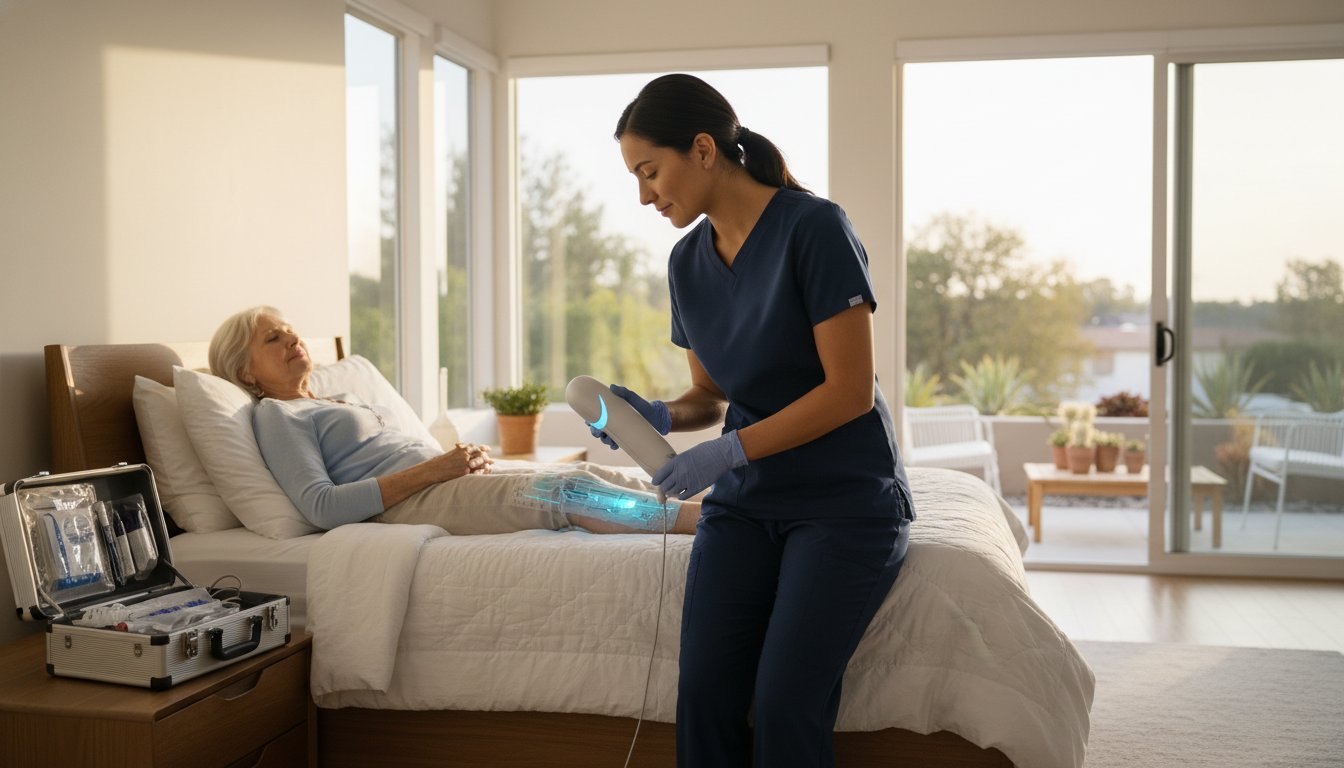
The belief that a deep, full-thickness wound requires a sterile hospital environment for successful closure is no longer the clinical standard. While the annual cost to the U.S. healthcare system for treating pressure injuries has reached $26.8 billion, the most effective path to recovery is increasingly found within the sanctuary of your own home. You're likely feeling the weight of managing a complex recovery while fearing the risks of sepsis or the logistical exhaustion of transporting an immobile loved one to a clinic. We recognize that treating stage 3 pressure ulcers at home feels daunting when you're balancing the need for clinical precision with the desire for a peaceful residential environment.
This guide empowers you to master the complexities of deep tissue healing by utilizing the same hospital-grade protocols and bio-engineered skin substitutes used in elite medical centers. You'll learn how to leverage advanced clinical strategies to achieve successful wound closure while avoiding the risks of hospitalization. We'll examine the 2026 "living guidelines" for wound management and detail how mobile specialist teams now deliver regenerative treatments like amniotic membrane grafts and sharp debridement directly to your bedside.
Key Takeaways
- Identify the specific clinical markers of Stage 3 injuries, such as subcutaneous tissue visibility and tunneling, that signal an immediate need for advanced intervention.
- Understand why chronic wounds often stall and how specialized debridement disrupts the bacterial biofilms that resist standard cleaning methods.
- Master the logistical framework for treating stage 3 pressure ulcers at home by integrating hospital-grade technology with personalized residential care plans.
- Learn to implement high-specification pressure offloading and select advanced dressings that manage exudate while maintaining an optimal biological environment for recovery.
- Discover how regenerative solutions like amniotic membrane grafts and bio-engineered skin substitutes provide the necessary scaffold to accelerate the closure of deep injuries.
Recognizing Stage 3 Pressure Ulcers: The Critical Turning Point for In-Home Care
Stage 3 injuries are deceptively deep. These wounds represent the precise moment a pressure injury evolves from a manageable surface irritation into a complex clinical challenge that involves the total loss of the skin's protective layers. When you're treating stage 3 pressure ulcers at home, the presence of subcutaneous fat is your primary indicator that the injury has breached the dermis. Unlike Stage 2 injuries, which often appear as shallow blisters or abrasions, Stage 3 ulcers present as a deep, crater-like wound where the yellow, fatty tissue becomes visible to the naked eye.
This stage is a critical threshold because it often involves "undermining" and "tunneling," two clinical phenomena that significantly complicate recovery. Undermining occurs when the tissue damage spreads beneath the skin's surface, creating a cavernous space that's larger than the visible opening. Tunneling extends this damage even further, carving narrow paths into the deeper layers of the body. Understanding these Pressure ulcer stages helps caregivers differentiate a Stage 3 injury from Stage 2 blisters or Stage 4 wounds that expose bone and tendon. This isn't merely a localized skin issue; it's a systemic vulnerability that places immense strain on the body's metabolic and immune resources.
Visual Red Flags: Slough, Eschar, and Wound Edges
A healing wound should look "beefy red" and moist, but Stage 3 ulcers often present with yellow, stringy slough or dark, leathery eschar. These aren't just scabs. They're biological barriers that harbor bacteria and prevent new tissue from forming. You might also notice rolled wound edges, known as epibole. This occurs when the skin's leading edge stops migrating across the wound bed, essentially signaling that the body has given up on the healing process. High levels of exudate, or drainage, further indicate that the wound is stuck in a state of chronic inflammation, requiring more than just a standard bandage to resolve.
When Home Care Must Shift to Clinical Intervention
There is a specific point of no return where traditional first aid is no longer sufficient for treating stage 3 pressure ulcers at home. When a wound stops showing signs of contraction or begins to emit a foul odor, the risk of sepsis becomes a tangible threat, particularly for elderly patients with compromised immune systems. Managing these complexities requires a transition from basic care to a specialist-led strategy. For those in the Southern California region, our Comprehensive Guide to Bed Sores & Ulcer Treatment in Southern California (2026) provides a roadmap for accessing bedside evaluations that bring hospital-grade precision into your residential setting.
Why Deep Pressure Injuries Fail to Heal Without Specialist Intervention
Standard wound hygiene often falls short because Stage 3 injuries are not merely surface level. They are complex, stagnant ecosystems. When treating stage 3 pressure ulcers at home, many caregivers rely on basic antiseptic washes, yet these fail to address the underlying biological stalemate. Chronic inflammation effectively pauses the natural four-stage healing process; hemostasis, inflammation, proliferation, and remodeling. This traps the wound in a destructive loop where tissue breakdown outpaces regeneration, making self-healing nearly impossible without clinical disruption.
Necrotic tissue acts as a physical fortress for pathogens. This dead tissue, whether it appears as yellow slough or black eschar, provides a nutrient-rich environment for bacteria while simultaneously blocking the delivery of oxygen and white blood cells. This is particularly problematic in anatomical regions with naturally poor micro-circulation. Consider these high-risk areas:
- The Sacrum: High pressure and thin tissue layers often lead to rapid deep-tissue compromise.
- The Heels: Minimal fatty padding and limited vascularity make these areas prone to non-healing eschar.
- The Hips (Trochanter): Friction and shear forces combine with poor blood flow to stall the proliferation phase.
The Biofilm Barrier: The Invisible Enemy
Bacterial colonies in deep ulcers don't just exist as individual cells. They form sophisticated, structured communities known as biofilms. A biofilm is a structured community of microorganisms that requires physical disruption to be removed. These colonies secrete a protective slime layer, an extracellular polymeric substance, that shields them from the body's immune system and topical antibiotics. Because these biofilms are essentially invisible to the naked eye, a wound may look "clean" while remaining heavily colonized. This is why specialist intervention, including surgical wound care techniques like sharp debridement, is often the only way to reset the wound bed and trigger a healing response.
The Danger of 'Wait and See' in Chronic Wound Management
Adopting a "wait and see" approach is a high-risk strategy for deep tissue injuries. Without active management, a Stage 3 ulcer can progress to Stage 4 or lead to osteomyelitis, a dangerous bone infection, in a matter of days. The psychological toll on family members is equally significant. Managing a non-healing wound without professional guidance creates a cycle of anxiety and exhaustion that impacts the entire household. While following basic at-home care for a pressure sore is a necessary foundation, it's rarely enough to overcome the biological barriers of a Stage 3 injury. If you're noticing a lack of progress in wound closure, exploring personalized clinical assessments can provide the clarity needed to prevent further systemic complications.
Hospital-Grade Wound Care at Home: The Healix360 Mobile Advantage
The transition from hospital discharge to residential recovery often creates a dangerous gap in clinical oversight. While traditional home health agencies provide essential nursing support, they frequently lack the specialized tools and procedural authorization required for treating stage 3 pressure ulcers at home. Healix360 bridges this divide by delivering hospital-grade wound care directly to your residence. Our model integrates board-certified specialists into your existing care team; this ensures that complex biological needs are met with surgical precision without the trauma of patient transport.
Coordination is the pillar of our methodology. We partner seamlessly with home health agencies, case managers, and hospital referral sources to provide a unified front against non-healing injuries. By performing bedside wound evaluations and developing personalized treatment plans, we empower caregivers with the data and clinical support they need to maintain a stable healing environment. This proactive partnership transforms the home from a passive recovery space into an active clinical setting where deep tissue closure becomes an attainable goal.
Mobile Procedural Excellence in Glendale and L.A.
In cities like Glendale and Los Angeles, the logistics of transporting an immobile senior to a wound clinic are often prohibitive and physically taxing. We solve this through mobile wound care that brings advanced interventions into the patient's bedroom. Our specialists perform bedside sharp debridement to remove necrotic tissue, a procedure typically reserved for an operating room. We also conduct wound culture and sensitivity testing on-site. This allows for targeted antibiotic therapy that addresses the specific bacterial strains within the wound bed, ensuring your treatment is as unique as your biological data.
Navigating Insurance and Medicare for At-Home Treatment
Advanced recovery shouldn't be a financial burden for families seeking the best outcomes. For qualified patients, Medicare Part B covers mobile specialist consultations for Stage 3 ulcers, which can result in no out-of-pocket costs for these elite services. Our administrative team manages the complexity of insurance billing for advanced regenerative grafts and bio-engineered skin substitutes. This approach offers a significant financial and emotional advantage over skilled nursing facility (SNF) stays. You receive specialist-level care while remaining in the comfort of your home, where the psychological benefits of a familiar environment can actually accelerate the biological healing process.

The 5 Essentials for Managing Stage 3 Ulcers in a Residential Setting
Managing a full-thickness injury in a residential environment requires a shift in mindset from traditional caregiving to active clinical management. When treating stage 3 pressure ulcers at home, success depends on a multi-dimensional strategy that addresses both the physical wound bed and the patient's systemic health. You aren't just changing bandages; you're orchestrating a complex biological recovery that requires precision, consistency, and high-level clinical data. This process begins with stabilizing the environment to prevent further tissue ischemia.
Effective moisture balance is the second pillar of home-based recovery. Stage 3 wounds often produce significant drainage, making exudate management a priority. Selecting the right advanced dressings, such as alginates for heavy drainage or specialized foams for moderate moisture, is vital. This balance prevents periwound maceration, where the surrounding healthy skin breaks down from excess moisture, while keeping the wound bed itself humid enough for cellular migration. Maintaining this equilibrium is a core component of treating stage 3 pressure ulcers at home successfully.
Infection surveillance must be proactive rather than reactive. In elderly patients, sepsis doesn't always present with a high fever or obvious redness. You must watch for "silent" signs of systemic distress: sudden confusion, an increased heart rate, or a subtle drop in blood pressure. These indicators often precede visible wound deterioration, making daily monitoring a non-negotiable task for the care team.
Advanced Offloading Techniques for 2026
Precision positioning is your most powerful tool against tissue breakdown. The "30-degree lateral tilt" method is the gold standard to protect the sacrum and trochanter from direct mechanical pressure. It's vital to remember that "donut" cushions are strictly prohibited; they actually restrict blood flow to the center of the wound, effectively starving the tissue of oxygen. In 2026, we utilize wearable sensors for position monitoring, providing real-time data to ensure the patient is moved according to their specific biological risk profile.
Healing from the Inside Out: The Nutrition Protocol
Tissue cannot rebuild without the necessary raw materials. We target a high-protein intake of 1.25 to 1.5 grams per kilogram of body weight to support collagen synthesis and cellular repair. Specific micronutrients like Arginine, Vitamin C, and Zinc are essential during the proliferative phase to strengthen new tissue and boost immune response. Because every patient's metabolic needs differ, consulting a dietitian is a core component of our mobile multidisciplinary approach. To ensure your home environment meets these rigorous clinical standards, request a bedside wound evaluation from our specialist team today.
Regenerative Solutions: How Healix360 Closes Deep Wounds in Southern California
Healing deep tissue requires more than protection; it requires active biological signaling to restart the body's stalled repair mechanisms. Treating stage 3 pressure ulcers at home has evolved into a sophisticated field of regenerative medicine where we no longer just manage symptoms. We now deploy bio-engineered skin substitutes that provide a physical scaffold for new tissue growth. These advanced materials mimic the structure of healthy dermis, allowing the body to bridge the gap in full-thickness injuries that would otherwise remain stagnant for months.
The integration of these technologies into a residential setting changes the trajectory of recovery. Our specialists develop personalized healing roadmaps that adapt to your specific systemic health markers, such as vascular efficiency and nutritional status. By bringing these clinical-grade solutions to the bedside, we eliminate the need for hospital-based surgical suites while maintaining the high standards of a dedicated wound center. This approach ensures that even the most recalcitrant wounds receive the cellular-level support necessary for complete closure.
The Power of Amniotic Allografts
Amniotic tissue represents the pinnacle of regenerative wound care. These grafts are rich in essential growth factors and cytokines that suppress inflammation and promote rapid cellular proliferation. During a routine mobile visit, our specialists apply these allografts directly to the wound bed in a painless process that requires no anesthesia. You can explore the science behind these interventions in our guide to advanced skin substitute treatments. This technology effectively "jumpstarts" wounds that have failed to respond to traditional dressings, providing the biological instructions your body needs to rebuild lost tissue layers.
Wound VAC (NPWT) Management at Home
Negative Pressure Wound Therapy, often called a Wound VAC, is a mechanical powerhouse for deep tissue recovery. The system uses controlled sub-atmospheric pressure to increase localized blood flow and physically pull infectious material away from the wound bed. This creates a synergy with sharp debridement; once the necrotic tissue is removed, the NPWT unit accelerates the formation of healthy granulation tissue. Training for caregivers is a core part of our service. We ensure you feel confident managing the portable unit between specialist visits, making hospital-grade technology a seamless part of your daily routine. This continuous therapy ensures the wound remains in an optimal state for healing twenty-four hours a day.
The Future of Wound Closure: Clinical Excellence in Your Residence
The path to recovery for a deep tissue injury is no longer defined by the walls of a hospital. You've seen how the combination of regenerative biology and meticulous offloading creates an environment where healing is inevitable. Treating stage 3 pressure ulcers at home is a process of precision; it requires the disruption of biofilms and the strategic application of advanced scaffolds. By prioritizing systemic health and clinical-grade interventions, you're not just managing a wound. You're restoring a standard of living that values both comfort and excellence.
Healix360 stands as your partner in this journey, bringing a visionary approach to bedside care across Southern California. As a Medicare Part B provider, our board-certified wound specialists apply advanced regenerative grafts directly in your residential setting. We translate the latest breakthroughs in science into an actionable roadmap for your recovery. Schedule a mobile wound evaluation with Healix360's Southern California specialists today. You don't have to navigate these complexities alone; expert care is ready to meet you exactly where you are.
Frequently Asked Questions
Is Stage 3 pressure ulcer healing possible at home?
Yes, clinical-grade healing is entirely achievable in a residential setting when managed by a specialist team. By utilizing mobile debridement and regenerative grafts, we bring the expertise of a wound center directly to the bedside. This approach avoids the trauma of transport while ensuring that treating stage 3 pressure ulcers at home meets the highest standards of medical precision and safety. You don't have to sacrifice quality for the comfort of a home environment.
How long does it typically take for a Stage 3 ulcer to heal?
Recovery typically spans one to four months, though individual systemic health and metabolic factors play a significant role in the timeline. Wounds that utilize bio-engineered skin substitutes often demonstrate accelerated closure compared to traditional dressings. Consistency in offloading and nutritional optimization is vital; any lapse in these core protocols can extend the healing duration by several weeks or lead to wound stagnation.
What are the first signs that a Stage 3 ulcer is infected?
Increased exudate, a foul odor, or localized heat around the wound edges are primary indicators of a developing infection. You should also monitor for "silent" signs such as sudden mental confusion or a loss of appetite, which are common in elderly patients. If the skin surrounding the injury becomes red or indurated, it suggests that bacteria have breached the localized area and require an immediate clinical assessment to prevent sepsis.
Does Medicare cover amniotic grafts and skin substitutes at home?
Medicare Part B frequently covers advanced regenerative treatments, including amniotic membrane grafts and bio-engineered skin substitutes, when they are medically necessary for chronic wounds. For qualified individuals, this coverage can result in no out-of-pocket costs for specialist-led mobile services. Our administrative team manages the verification process to ensure you can access these cutting-edge biological solutions without navigating complex insurance hurdles or facing unexpected financial burdens.
How often does a wound specialist need to visit for a Stage 3 injury?
A board-certified specialist typically performs a bedside evaluation once per week to assess progress and perform necessary procedures like sharp debridement. These visits complement the daily care provided by home health nursing teams or family caregivers. This rhythmic cadence of specialist oversight ensures that the treatment plan remains responsive to the wound's evolving biological environment, allowing for real-time adjustments to dressings and offloading strategies.
Can a Stage 3 pressure ulcer lead to amputation if not treated?
Untreated Stage 3 injuries can progress to osteomyelitis or systemic sepsis, which significantly increases the risk of limb loss. While amputation is more common with diabetic foot ulcers, a deep pressure injury on the heel can compromise the underlying bone structure. Early intervention with specialized debridement and infection control is the most effective strategy to preserve tissue integrity and avoid radical surgical outcomes in high-risk areas.
What is the difference between Stage 3 and Stage 4 bedsores?
The primary distinction lies in the depth of tissue involvement. Stage 3 ulcers involve full-thickness skin loss where subcutaneous fat is visible, but muscle, tendon, and bone remain covered. In contrast, Stage 4 injuries expose these deeper structures, often leading to bone infections. Both stages require specialist intervention, but treating stage 3 pressure ulcers at home focuses on preventing the injury from reaching that critical skeletal involvement.
What should I do if the wound starts smelling or leaking more?
Contact your wound specialist immediately to schedule a bedside evaluation and potential wound culture. An increase in drainage or a change in odor often signals a shift in the bacterial load or the development of a biofilm fortress. Avoid applying unprescribed ointments; instead, maintain your offloading protocol until a professional can adjust your dressing strategy based on the new clinical data and sensitivity testing results.


