
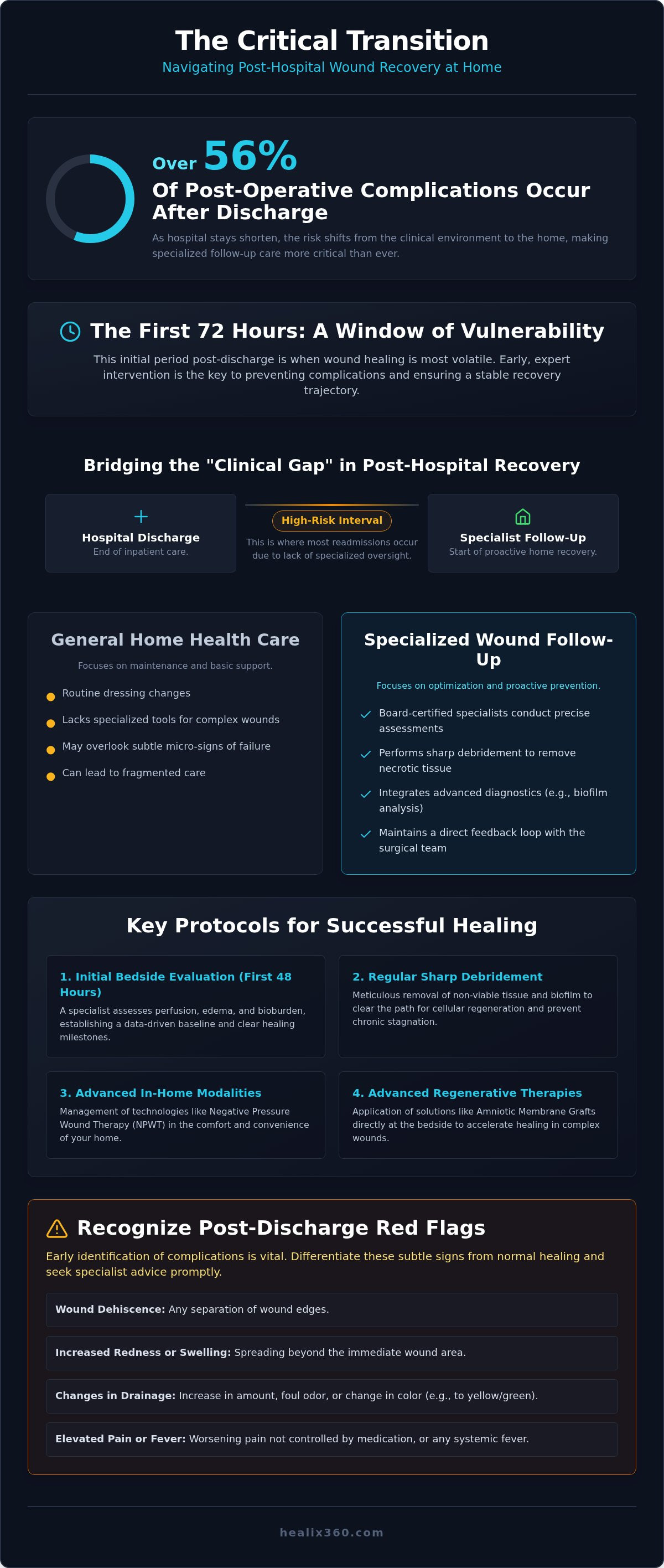
More than 56 percent of postoperative complications now occur after a patient has been sent home, a statistic that has risen as median hospital stays continue to shorten. It's understandable to feel a sense of vulnerability when the safety net of a clinical environment is replaced by complex dressing instructions and the logistical hurdle of traveling to a clinic while your mobility is limited. You should be able to prioritize your long term health and physical excellence without the fear of wound dehiscence or infection. Expert hospital discharge wound follow-up serves as a proactive, strategic layer that ensures your recovery remains on a precise and successful trajectory.
This article outlines how to navigate the critical transition from hospital to home with professional wound management strategies designed to accelerate your healing. We'll explore how you can access board certified specialists and advanced regenerative therapies like amniotic membrane grafts directly at your bedside. By understanding the latest 2026 clinical protocols and mobile care options, you can achieve a seamless recovery that prevents hospital readmission and restores your quality of life.
Key Takeaways
- Understand why the initial 72 hour window is the most critical period for ensuring wound stability.
- Learn how a structured hospital discharge wound follow-up establishes a professional baseline to prevent complications.
- Identify subtle red flags like wound dehiscence and learn to differentiate them from normal healing.
- Discover how advanced regenerative technologies, including amniotic membrane grafts, can be applied in your own home.
- Master the process of coordinating mobile specialist care to ensure a seamless transition from the hospital to your private residence.
What is Hospital Discharge Wound Follow-Up?
A successful recovery begins the moment you leave the surgical suite. Hospital discharge wound follow-up isn't just a check-in; it's a rigorous clinical protocol that involves precise assessment, sharp debridement when necessary, and the continuous adjustment of your individualized treatment plan. While many patients view discharge as the end of their medical journey, clinicians recognize it as the start of the "Transition of Care." The first 72 hours are particularly critical for wound stability. During this window, the wound healing process is at its most volatile, and early intervention can mean the difference between a seamless recovery and a return to the hospital.
Mobile specialist care has emerged as the modern gold standard for patients who face mobility challenges or live in the greater Los Angeles area. By bringing board-certified expertise directly to your bedside, we eliminate the physical strain of outpatient travel. This proactive approach ensures that your recovery remains data-driven and meticulously organized, providing a clear roadmap for your long-term health and physical excellence. It's a strategy that places you at the center of the journey, ensuring that your environment at home supports your biological recovery rather than hindering it.
The Clinical Gap in Post-Hospital Recovery
Home health agencies provide essential support, but general nursing staff often lack the specialized tools or advanced training required for complex surgical or chronic wounds. Fragmented care occurs when there's a delay between leaving the hospital and receiving expert wound management. We define the "Clinical Gap" as the high-risk interval between hospital discharge and the first intervention by a board-certified wound specialist. Without this bridge, subtle complications can quickly escalate into systemic issues. This gap is where most readmissions occur, making early specialist involvement a vital safeguard for your vitality.
Specialized vs. General Post-Op Care
Routine dressing changes focus on maintenance, but specialized follow-up focuses on optimization. Board-certified specialists possess the clinical mastery to identify micro-signs of failure, such as early biofilm formation or compromised perfusion, that a general practitioner might overlook. This level of precision is about more than just closing a wound; it's about protecting your mobility and long-term vitality. By integrating advanced diagnostics with a philosophy of proactive prevention, specialized care ensures that no detail of your systemic health is neglected. You aren't just healing; you're optimizing your path back to physical excellence.
Key Protocols for Successful Post-Discharge Healing
Precision is the hallmark of elite recovery. To achieve excellence in healing, we establish a baseline assessment the moment you arrive home. This protocol isn't a mere visual check; it's a data-driven integration of your hospital surgical notes into a dynamic, individualized treatment plan. Effective hospital discharge wound follow-up requires a unified strategy between your mobile specialist, primary care physician, and surgical team to ensure no clinical detail is overlooked. By aligning these perspectives, we create a cohesive roadmap that targets your specific biological needs.
Regular sharp debridement remains a cornerstone of this sophisticated process. By meticulously removing necrotic tissue and biofilm, we clear the path for cellular regeneration and prevent the stagnation that often leads to chronic status. We don't operate in a vacuum; our specialists maintain a constant feedback loop with your original surgical team. This ensures that the trajectory of your recovery aligns perfectly with the surgeon's intent, providing a seamless continuum of care that standard home health nursing often cannot provide on its own.
Initial Bedside Evaluation: The First 48 Hours
While Hospital discharge instructions provide a helpful starting point, the first 48 hours at home require a deeper level of clinical scrutiny. A board-certified specialist evaluates perfusion, manages edema, and assesses the bioburden of the site. We utilize wound culture and sensitivity testing to identify pathogens before they can trigger a systemic infection. This early data allows us to set realistic healing milestones, giving you and your family a clear, actionable roadmap for the weeks ahead. This level of hospital discharge wound follow-up ensures that every protocol is followed with clinical rigor.
Advanced Modalities in the Home Setting
Modern technology has moved beyond the hospital walls. We successfully manage negative pressure wound therapy (NPWT) in the comfort of your residence, ensuring the vacuum seal remains intact and effective. For those struggling with swelling, compression therapy is integrated to optimize blood flow and reduce pressure on the incision. When standard methods aren't enough, we utilize bio-engineered skin substitutes to provide the biological scaffold needed for rapid closure. These advanced modalities create a high-performance healing environment that traditional dressings simply can't match. If you're ready to secure your recovery with this level of precision, a bedside wound evaluation is the first step toward physical excellence.
Recognizing Post-Discharge Complications: Red Flags
Vigilance is your primary defense against recovery regression. While Caring for your wound after discharge provides a baseline for daily maintenance, you must also develop a keen eye for subtle physiological shifts that signal a stall in healing. A normal inflammatory response often presents as mild redness or warmth during the first few days of recovery. However, true infection, or cellulitis, typically involves spreading erythema, localized heat, and systemic symptoms like malaise. Distinguishing between these states requires clinical mastery, as early intervention is the only way to ensure your path toward physical excellence remains uninterrupted.
Necrotic tissue, specifically eschar, presents a unique challenge because it can mask underlying pathology. This dark, leathery layer might appear stable, but it often hides deep-seated bioburden or pocketing that prevents successful closure. Expert hospital discharge wound follow-up prioritizes the identification and removal of this tissue through sharp debridement. Without professional intervention, hidden pathogens can migrate toward the bone, leading to serious conditions like osteomyelitis. If you notice a persistent dark covering or an unusual odor, it's a signal that your healing has stalled and requires a strategic pivot in your treatment plan.
Wound Dehiscence: Causes and Prevention
Dehiscence, the separation of surgical edges, is a high-risk complication that often stems from excessive mechanical tension or poor tissue perfusion. Nutritional deficiencies or underlying edema in legs can weaken the structural integrity of the incision, making it susceptible to opening under pressure. If you observe a loosening stitch or a widening gap, immediate action is required. Our mobile specialists manage these scenarios at the bedside, utilizing advanced closure techniques and regenerative scaffolds to avoid the trauma of re-suturing in a traditional emergency room setting.
Infection and Bioburden Management
Managing bioburden is a sophisticated balancing act that goes beyond simple cleaning. Malodor and purulent drainage are clear indicators that the bacterial load has exceeded your body's natural defenses. We utilize wound culture and sensitivity testing to identify the exact microbial profile of your site. This data-driven approach allows for targeted therapy rather than broad-spectrum guesswork, ensuring your recovery stays on a steady, rhythmic path. Knowing when to call a mobile specialist, typically at the first sign of increased drainage or localized heat, prevents the need for an ER visit and preserves your long-term health outcomes.
Regenerative Solutions for Non-Healing Discharge Wounds
Healing is a complex biological sequence that requires precise signaling to reach completion. When this sequence is interrupted by underlying health conditions or surgical trauma, regenerative medicine provides the necessary roadmap to restart the process. As part of a sophisticated hospital discharge wound follow-up, our board-certified specialists evaluate whether your recovery has entered a stalled phase. By utilizing stem cell-derived factors, we can overcome biological stagnation and accelerate the transition from inflammatory response to tissue remodeling. Medicare Part B typically covers these advanced regenerative modalities for wounds that remain non-healing after 30 days of standard care, allowing you to access elite science without leaving your residence.
The focus is on physical excellence and long-term vitality. We don't just aim for closure; we aim for a high-performance recovery that restores your daily quality of life. This strategic approach ensures that no detail of your systemic health is overlooked, bridging the gap between clinical data and your lived experience. By identifying the specific biological needs of your tissue, we can implement a treatment plan that is both data-driven and meticulously organized.
Amniotic Allografts: The Biological Advantage
Amniotic tissue serves as a powerful biological scaffold for cellular regeneration. These amniotic membrane grafts are rich in growth factors and cytokines that actively suppress inflammation while preventing the formation of restrictive scar tissue. The application process is elegant and entirely painless, conducted right at your bedside during a routine mobile visit. This technology is particularly transformative for diabetic ulcer treatment and complex surgical sites where the body's natural regenerative capacity has been compromised.
Bio-engineered Skin Substitutes
Traditional dressings act as passive covers, but bio-engineered skin substitutes function as active lifestyle optimization partners. These advanced grafts are the preferred choice for patients with compromised vascularity, as they provide the structural support that damaged tissue can no longer maintain. Skin substitutes mimic the extracellular matrix to provide a structured environment for cellular migration and proliferation. By integrating these high-tech biologics into your hospital discharge wound follow-up plan, we ensure your recovery is supported by the latest breakthroughs in medical science. If your wound isn't progressing as expected, contact our specialists for a mobile evaluation to determine if regenerative therapy is the right strategic move for your recovery.
Coordinating Care with Healix360 in Southern California
Healix360 serves as the vital link between the sterile precision of the operating room and the sanctuary of your home. Transitioning out of a facility in Glendale or Los Angeles shouldn't mean a drop in clinical standards. Our hospital discharge wound follow-up protocol ensures that your surgeon's intent is carried out with meticulous accuracy at your bedside. We don't replace your existing support systems; instead, we integrate seamlessly with home health agencies and case managers to provide a level of specialized mastery that standard care often lacks.
By choosing a mobile specialist, you eliminate the logistical friction of traveling to outpatient clinics in Beverly Hills or surrounding Southern California areas while your mobility is compromised. We coordinate directly with your surgical team to ensure a unified strategy, providing the data-driven oversight necessary for long-term health outcomes. This proactive partnership allows you to focus on your recovery while we manage the complex biological data of your healing journey. Our presence in your home transforms a high-risk transition into a stable, well-organized path toward physical excellence.
Navigating Medicare and Insurance for Home Visits
Understanding the financial landscape of recovery is essential for peace of mind. Healix360 is a Medicare Part B provider, which means your specialist consultations and advanced treatments are often covered as part of your standard benefits. We handle the complex paperwork and coordination with your primary physician, removing the administrative burden from your shoulders. This streamlined approach reduces the financial and emotional stress of advanced wound care, making high-level medical expertise accessible within your own residence. By leveraging your existing coverage, we ensure that elite regenerative care remains a sustainable part of your recovery roadmap.
The Healix360 Patient Journey
Your journey toward physical excellence begins with a simple referral from your hospital or home health provider. From that initial contact, a board-certified specialist is assigned to your case, arriving at your home to conduct a comprehensive bedside evaluation. This isn't a one-time visit but a steady, rhythmic process of assessment, treatment, and optimization that continues until your healing goals are met. Having a dedicated expert monitor your progress ensures that no detail is overlooked and every milestone is achieved with clinical rigor. Schedule your mobile wound follow-up assessment with Healix360 today to secure your path to a full and vibrant recovery.
Secure Your Path to Physical Excellence
The transition from hospital to home represents a pivotal moment in your biological recovery. Success during this phase isn't a matter of chance; it's the result of a meticulously organized clinical strategy. By prioritizing professional hospital discharge wound follow-up, you bridge the gap between surgical intervention and long-term vitality. You've seen how specialized bedside assessments and regenerative technologies like amniotic membrane grafts can be integrated into your daily life to prevent complications and accelerate tissue remodeling. This data-driven approach transforms a high-risk period into a steady, rhythmic progression toward total-body health.
Our team provides the sophisticated oversight needed to navigate the complexities of post-surgical care without the physical strain of clinic visits. As a Medicare Part B provider with board-certified wound specialists serving Glendale and Los Angeles, we're dedicated to optimizing your recovery journey through scientific rigor and proactive care. Secure your expert post-discharge recovery with Healix360's mobile specialists today and ensure no detail of your healing is overlooked. You deserve a recovery that is as precise as it is restorative.
Frequently Asked Questions
How soon after hospital discharge should I have a wound follow-up?
Ideally, you should schedule your initial hospital discharge wound follow-up within 24 to 72 hours of returning home. This critical window allows a specialist to verify the integrity of the surgical site and establish a professional baseline before complications can arise. Early intervention during this high risk transition period is the most effective strategy for preventing infection and avoiding hospital readmission.
Does Medicare cover mobile wound care specialists visiting my home?
Medicare Part B typically covers mobile specialist visits when they're medically necessary for managing chronic or complex surgical wounds. As a Medicare Part B provider, Healix360 manages the clinical documentation and billing process to ensure your access to elite care is seamless. This coverage often extends to advanced bedside evaluations and regenerative treatments, allowing you to prioritize your health without a significant financial burden.
What is the difference between a home health nurse and a wound specialist?
A home health nurse provides essential general postoperative support, while a board certified wound specialist focuses exclusively on the complex biology of tissue repair. Specialists perform advanced procedures like sharp debridement and apply bio engineered grafts that general nursing staff aren't typically equipped to manage. We act as a high level strategic partner to your existing home health team, ensuring no detail of your recovery is overlooked.
Can advanced treatments like skin grafts be done at home?
Modern regenerative treatments, including amniotic membrane grafts and bio engineered skin substitutes, are successfully applied in the home setting. These sophisticated biologics provide the necessary scaffold for new tissue growth and are administered during a routine mobile visit. This bedside approach allows you to benefit from the latest breakthroughs in medical science while maintaining the comfort and safety of your private residence.
What should I do if my surgical wound starts to open (dehiscence)?
You should contact a specialist immediately if you observe any separation of the surgical edges or loosening of sutures. Professional hospital discharge wound follow-up can often resolve dehiscence at the bedside using advanced closure techniques and biological scaffolds. Taking proactive action at the first sign of a gap prevents the condition from worsening and helps you avoid a traumatic return to the emergency room.
How do I coordinate Healix360 visits with my existing home health agency?
Our team manages the entire coordination process with your home health agency and case manager to ensure a unified care plan. We communicate our clinical findings and treatment adjustments directly to your existing providers, creating a seamless continuum of care. This collaborative approach ensures that every aspect of your recovery is synchronized, providing a clear and organized roadmap toward your long term physical excellence.
Will Healix360 communicate with my surgeon in Los Angeles?
We maintain a transparent and constant feedback loop with your surgical team in Los Angeles or the surrounding Southern California areas. By sharing detailed clinical data and progress reports, we ensure that your home based recovery aligns perfectly with the original surgical intent. This high level communication preserves care continuity and provides your surgeon with the data driven confidence that your healing is on a successful trajectory.
What supplies do I need to have ready for a mobile wound care visit?
You don't need to provide any medical supplies or equipment for our specialists. We arrive fully equipped with all necessary clinical tools, including diagnostic technology, debridement instruments, and advanced regenerative biologics. We only ask that you have a well lit area where you can rest comfortably while we perform your evaluation and treatment, ensuring the process is as relaxing and efficient as possible.


