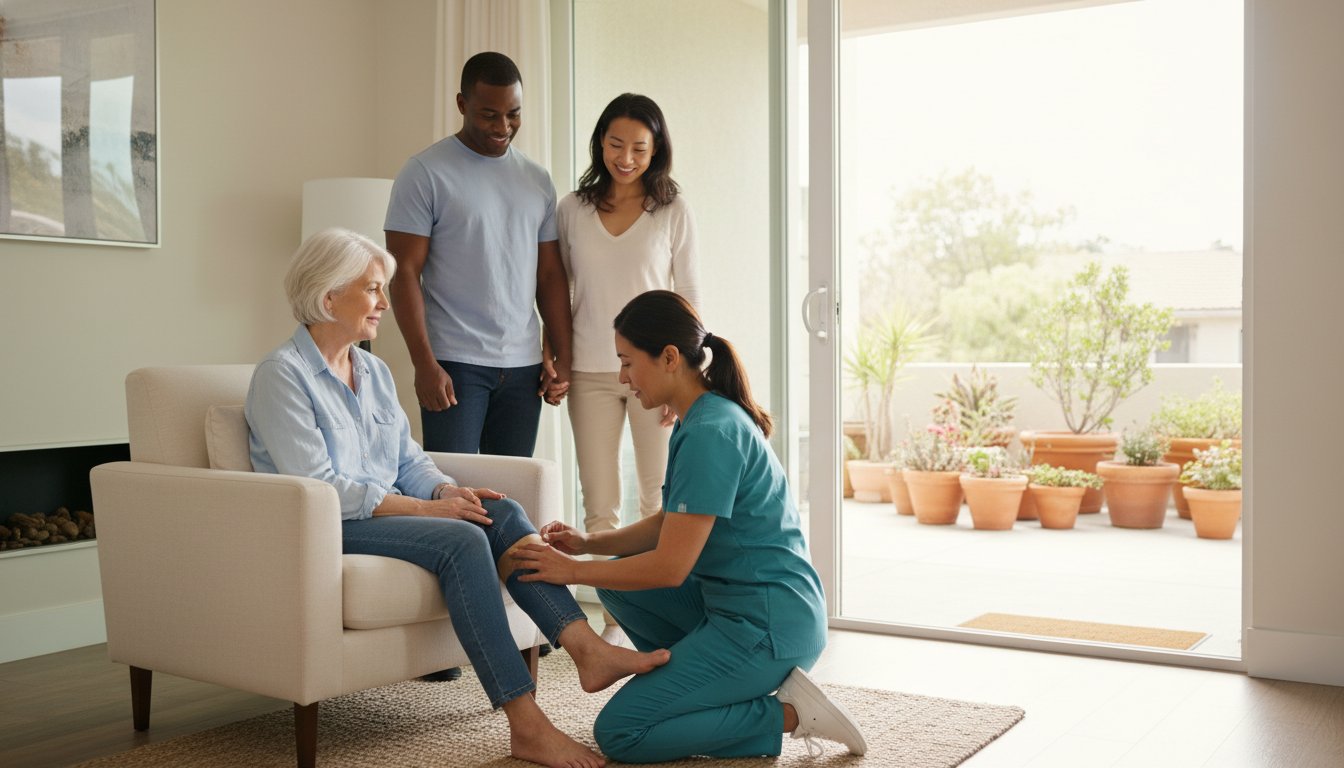
A study found that when a wound diagnosis was delayed by more than 12 weeks, the healing rate at three months was exactly 0.0%. This staggering statistic highlights why waiting for the next available clinic appointment isn't just an inconvenience; it's a clinical risk. You likely already feel the weight of this urgency, yet justifying at-home specialist care to family members can feel like an uphill battle against skepticism or financial concerns. It's natural for siblings or spouses to hesitate when they don't see the hidden complexities of a non-healing ulcer, but delay often leads to the very outcomes everyone fears most.
We understand that you want the best for your loved one while maintaining family harmony. This guide will help you bridge the gap between emotional concerns and medical necessity by highlighting clinical outcomes, safety protocols, and long-term cost savings. You'll learn how to build a unified care plan that provides access to advanced treatments like bio-engineered skin substitutes while effectively avoiding the $15,000 to $20,000 cost of a hospital readmission. We'll provide a clear, data-driven roadmap to transform a reactive approach into a proactive strategy for limb preservation and peace of mind.
Key Takeaways
- Identify the critical clinical threshold where general home health ends and specialized interventions, such as amniotic membrane grafts and bio-engineered skin substitutes, become medically necessary.
- Acquire a data-driven framework for justifying at-home specialist care to family by contrasting proactive mobile visits with the physical and financial risks of hospital-acquired infections.
- Understand how silent wound progression can compromise long-term vitality and why expert bedside assessments are the definitive tool for preventing systemic complications.
- Utilize a five-step communication strategy to resolve caregiving conflicts and build a unified family consensus around a proactive, limb-preserving treatment plan.
- Discover how mobile specialist services integrate hospital-grade regenerative technology into the home environment, ensuring elite care is accessible throughout Southern California.
The Hidden Risks of Delaying Specialist Wound Care at Home
Specialist at-home care is a sophisticated medical intervention that brings hospital-grade clinical expertise directly to the patient's bedside. It transcends the traditional scope of skilled nursing care at home by focusing on advanced regenerative science and proactive limb preservation. For many, the primary challenge lies in justifying at-home specialist care to family members who may view a chronic wound as a minor setback that simply requires more time. However, a wound is a dynamic biological system; when it stalls, the body begins losing a critical race against systemic infection.
A chronic wound rarely stays stagnant. It either heals or it degrades, often through a "silent" progression that remains invisible to the untrained eye until it triggers sudden sepsis. When you're justifying at-home specialist care to family, it's essential to frame the conversation around limb preservation rather than mere "wound cleaning." Cleaning is a maintenance task, but preservation is a clinical strategy designed to prevent the catastrophic loss of mobility and independence.
Why 'Wait and See' is a Dangerous Strategy
The biological reality of a non-healing wound involves the formation of biofilm and necrotic tissue. These microscopic barriers act like a shield, protecting bacteria and preventing even the best topical ointments from reaching the wound bed. Without specialist debridement, the wound remains trapped in a state of chronic inflammation. Clinical data suggests a strict 30-day window; if a wound doesn't show significant improvement within one month, it requires an expert's intervention to avoid permanent damage. This is especially critical in Southern California, where the diabetic population faces a disproportionately high risk of lower-limb amputation when specialized care is delayed.
The Caregiver's Burden: When Love Isn't Enough
Family caregivers often operate under a cloud of high-stakes anxiety. While love provides the motivation for care, it doesn't provide the training necessary to identify the subtle transition from a Stage 2 to a Stage 3 or 4 pressure ulcer. Attempting to manage complex dressings without professional oversight can lead to an "accidental neglect" cycle where the caregiver feels responsible for the wound's failure to close. Introducing a specialist doesn't replace the caregiver; it empowers them. By providing a professional clinical roadmap, a specialist reduces the daily fear of "doing it wrong" and shifts the focus back to the patient’s total-body health and long-term vitality.
Specialist Wound Care vs. General Home Health: The Clinical Gap
While general home health agencies provide invaluable support for daily living and basic medical monitoring, there's a distinct clinical boundary between a registered nurse's general duties and a specialist's advanced interventions. A generalist often focuses on medication management and standard dressing changes. In contrast, a wound care specialist brings a diagnostic depth that allows for the identification of underlying vascular or metabolic issues that a generalist might overlook. This level of specialized intervention aligns with broader healthcare trends that Improve Outcomes, Lower Costs by shifting complex medical decision-making into the home environment.
A primary factor in justifying at-home specialist care to family is the access to bedside surgical tools and diagnostic precision. General home health providers typically lack the specialized equipment and licensure required for sharp debridement, a process necessary to remove necrotic tissue that prevents healing. Furthermore, specialists utilize wound culture and sensitivity testing to identify specific bacterial strains. This ensures that any prescribed antibiotics are targeted and effective, rather than relying on broad-spectrum treatments that may contribute to resistance or fail to address the root infection.
Advanced Tools for Non-Healing Wounds
Specialized mobile care introduces regenerative modalities that aren't available through standard nursing visits. Amniotic allografts and bio-engineered skin substitutes stimulate cellular growth in wounds that have remained stalled for weeks or months. For patients with complex, deep, or highly exudative wounds, Negative Pressure Wound Therapy (NPWT) can be managed at the bedside to accelerate tissue granulation. For families exploring these options, following an advanced skin substitute guide can provide the clinical context needed to understand how these technologies bridge the gap between chronic stagnation and active recovery.
The Role of Board-Certified Specialists
Clinical mastery is particularly vital when managing diabetic neuropathic ulcers or venous insufficiency. These conditions require nuanced medical decision-making, such as the precise application of multi-layer compression therapy to manage edema and restore healthy circulation. Specialists don't replace your existing home health team; they coordinate with them to fill the medical gap, providing the advanced oversight necessary for high-risk patients. When you're justifying at-home specialist care to family, it's helpful to explain that this partnership ensures no detail of the patient's biological data is overlooked. Partnering with advanced wound care specialists allows for a seamless transition from hospital-level care to the comfort of home, ensuring that elite medical strategy is always within reach.
Justifying the Investment: The ROI of In-Home Medical Consultations
Financial clarity is often the final hurdle in building family consensus. When you're justifying at-home specialist care to family, it's vital to shift the perspective from immediate cost to long-term value preservation. A single emergency room visit for a suspected infection can trigger a cascade of expenses. Ambulance transport, high facility fees, and intensive diagnostic tests often exceed the cost of multiple proactive specialist visits. Beyond the direct invoice, the hidden clinical cost of a hospital stay includes exposure to multi-drug resistant organisms like MRSA or C. diff. By maintaining the patient in their own environment, you eliminate these environmental risks while ensuring elite medical oversight is present at the bedside.
The return on investment also extends to the family's collective time and emotional energy. Consider the logistical burden of transporting a non-ambulatory patient to a traditional wound clinic. It often requires specialized transport, multiple family members to assist, and a full day away from professional or personal commitments. Mobile care restores this time to the family. It allows you to maintain your daily rhythm while knowing your loved one is receiving advanced treatments, such as bio-engineered skin substitutes, without the trauma of frequent travel. This proactive approach isn't just about wound healing; it's about protecting the family's quality of life.
Preventing the 'Hospital Seesaw'
The "hospital seesaw" describes an exhausting cycle for elderly patients where poor wound management at home leads to a crisis, followed by a hospital admission, only for the cycle to repeat upon discharge. Bedside evaluations break this pattern. By addressing issues like pressure injuries before they reach a critical stage, specialists stabilize the patient's health and prevent traumatic transport. For families managing these conditions, our comprehensive guide to bed sores provides the clinical data needed to recognize when a wound requires urgent, specialized intervention to avoid a $15,000 to $20,000 hospital readmission.
Southern California Insurance & Medicare Realities
Understanding the landscape of Medicare Part B is easier when you recognize that specialist wound care is billed as a professional medical service. Unlike general custodial care, procedures such as sharp debridement and the application of amniotic membrane grafts are frequently covered as essential medical treatments. This distinction is crucial for justifying at-home specialist care to family members who may worry about out-of-pocket expenses. In Los Angeles and surrounding counties, Healix360 coordinates directly with private payers and Medicare to streamline the billing process. This transparency allows caregivers to focus on the healing journey rather than navigating complex paperwork, ensuring that high-level science remains financially accessible.

5 Steps to Building Family Consensus for Mobile Care
Building family consensus requires a strategic shift from emotional debate to clinical evidence. When you're justifying at-home specialist care to family, it's helpful to follow a structured roadmap that prioritizes the patient's long-term vitality over short-term hesitation. By following these five steps, you can transform a difficult conversation into a unified plan for limb preservation.
- Step 1: Gather the clinical facts. Document the wound's dimensions, its duration, and any signs of stagnation such as increased odor or persistent inflammation. Data provides a neutral ground for discussion.
- Step 2: Present the 'Alternative Cost'. Contrast the investment in a mobile consultation with the $15,000 to $30,000 cost of a serious infection requiring hospitalization. Proactive care is always more cost-effective than reactive crisis management.
- Step 3: Highlight the comfort factor. Explain that healing occurs more efficiently in a familiar environment where stress levels are lower and the patient's daily rhythm is preserved.
- Step 4: Propose a trial period. Suggest a single baseline evaluation to establish a professional assessment of the wound's trajectory. This reduces the pressure of making a permanent decision immediately.
- Step 5: Use a professional third party. Introduce an elite partner like Healix360 to provide the medical justification. Let the specialists carry the weight of the clinical recommendation.
Scripts for Difficult Conversations
"I understand you're worried about the cost of bringing in a specialist, but this isn't just about a wound; it's about protecting Mom's ability to stay mobile and independent." This reframes the service as a lifestyle optimization tool rather than a sign of decline. If a parent is resistant to "strangers" in the house, emphasize that these specialists are clinical partners who work alongside their existing doctors to ensure they stay out of the hospital. By focusing on longevity and physical excellence, you shift the narrative away from illness and toward vitality.
Using Data to Neutralize Emotion
Traditional gauze is a passive barrier that often fails to address the underlying cellular stalls of a chronic ulcer. In contrast, advanced modalities like bio-engineered skin substitutes actively stimulate the body's regenerative processes to close wounds that have remained open for months. Presenting the family with a clear surgical wound care roadmap helps everyone visualize the path from chronic injury to full recovery. By documenting the wound's lack of progress under the current plan, you provide the evidence needed to transition to a more sophisticated, data-driven approach. To begin this transition, you can request a bedside wound evaluation to gain a definitive clinical baseline for your loved one.
Healix360: Southern California’s Visionary Mobile Wound Strategy
Healix360 represents the intersection of cutting-edge science and personalized patient care. We operate as the elite clinical partner for complex wound management in Glendale and the greater Los Angeles area. By delivering hospital-grade interventions like sharp debridement and Negative Pressure Wound Therapy (NPWT) directly to the home, we eliminate the barriers that often stall the healing process. When you're justifying at-home specialist care to family, it's powerful to point out that we don't just "manage" wounds; we apply regenerative medicine, including amniotic membrane grafts and bio-engineered skin substitutes, to trigger the body's natural repair mechanisms at the cellular level.
Our methodology relies on seamless coordination. We don't replace your loved one’s existing medical team; we enhance it. By partnering with home health agencies, case managers, and primary physicians, we ensure that every specialist intervention is part of a cohesive, total-body health strategy. This collaborative approach is essential for preventing serious complications like sepsis or amputation, focusing instead on life-changing outcomes that restore physical excellence and independence. We bridge the gap between laboratory data and daily quality of life, making high-level medical concepts feel attainable and actionable.
Expertise That Comes to You
Clinical mastery shouldn't be limited by a patient’s ability to travel. Our board-certified specialists provide bedside evaluations in homes from Beverly Hills to Glendale, adapting every treatment plan to the specific living environment of the individual. This localized, high-tech approach ensures that patients across Southern California have access to the same level of care found in top-tier medical centers. For a deeper look at how we navigate the regional landscape, our Southern California specialist guide details the specific modalities available to residents in 2026.
Your Next Steps Toward Healing
The journey toward recovery begins with a single, data-driven assessment. When justifying at-home specialist care to family, the most effective first step is scheduling a bedside evaluation to establish a baseline. To prepare for the first consultation, gather a list of current medications, previous wound treatments, and any recent lab results. Our specialists will use this data to build a personalized roadmap focused on long-term vitality. We accept Medicare Part B, Medicare Advantage, and Medi-Cal, often resulting in no out-of-pocket costs for qualified patients. Proactive care is an investment in your family's future peace of mind. Book a consultation with a Healix360 specialist today to bring visionary wound care directly to your door.
Securing a Future of Mobility and Vitality
Choosing advanced mobile care is a definitive commitment to your loved one’s long-term independence and physical excellence. We've explored how the clinical gap between general maintenance and specialist regeneration can determine whether a chronic wound heals or leads to systemic risk. By focusing on data-driven outcomes and the inherent safety of the home environment, justifying at-home specialist care to family becomes a shared mission for vitality rather than a point of logistical conflict. You're shifting the narrative from managing an illness to actively pursuing a professional roadmap for recovery.
You don't have to navigate this complex biological journey without an elite guide. As a Medicare Part B provider, Healix360 brings board-certified wound specialists and advanced regenerative technology, including amniotic grafts, directly to the bedside. This partnership ensures that no detail of the patient's health is overlooked, effectively preventing the trauma of hospital readmissions. Schedule a Bedside Wound Evaluation with Our Specialists to establish a professional baseline and reclaim your family's peace of mind. True healing is attainable when cutting-edge science meets the comfort and stability of home.
Frequently Asked Questions
Is at-home specialist wound care covered by Medicare?
Yes, at-home specialist wound care is typically covered by Medicare Part B as a professional medical service. Unlike custodial home care, these interventions are categorized as essential medical treatments for chronic conditions. Healix360 is a Medicare-compliant provider, and for many qualified patients, these advanced services may be available with no out-of-pocket costs. This financial accessibility is a key factor when justifying at-home specialist care to family members who are concerned about the cost of private medical interventions.
Can a mobile wound specialist perform surgery or debridement at home?
Our board-certified specialists are equipped to perform sharp debridement and other advanced procedures directly at the patient's bedside. This process involves the precise removal of necrotic or infected tissue, which is essential for stimulating the body's natural healing response. By performing these interventions in a familiar environment, we eliminate the need for traumatic transport to a surgical center. This ensures that elite clinical care remains accessible and comfortable for the individual while maintaining their daily rhythm.
How do I know if my loved one needs a specialist or just a nurse?
A specialist is required when a wound fails to show significant improvement within a 30-day window or exhibits complex signs like deep tissue exposure. While general nurses provide excellent maintenance, specialists offer advanced modalities such as amniotic membrane grafts and bio-engineered skin substitutes. If you notice persistent inflammation, unusual odor, or stalling in the healing process, it indicates a clinical gap that only a board-certified wound specialist can bridge with a targeted, data-driven treatment plan.
What happens during the first Healix360 bedside medical consultation?
The initial bedside consultation involves a comprehensive evaluation of the wound’s dimensions, tissue health, and underlying vascular status. Our specialist will review the patient’s full medical history and may perform wound culture and sensitivity testing to identify specific bacterial strains. This data-driven assessment allows us to create a personalized treatment roadmap focused on long-term vitality. We also use this time to answer family questions, providing the clinical clarity needed for collective peace of mind and informed decision-making.
Can mobile wound care help prevent an amputation for a diabetic patient?
Proactive mobile wound care is a primary strategy for limb preservation in diabetic patients. By addressing neuropathic ulcers early with advanced treatments like Negative Pressure Wound Therapy (NPWT), we can prevent the systemic infections that lead to catastrophic outcomes. Our specialists focus on restoring circulation and managing the wound bed at a cellular level, which significantly reduces the risk of amputation. This proactive approach transforms a reactive "wait-and-see" attitude into a definitive recovery plan for physical excellence.
What if my family member refuses to let a specialist into the home?
Resistance is often rooted in a desire for privacy or a fear of medical escalation. When justifying at-home specialist care to family members who are hesitant, it's effective to frame the visit as a "partnership" rather than an intrusion. Propose a single baseline evaluation to ensure the patient's comfort and safety. Emphasize that the goal is to keep them in their own home longer by avoiding the hospital, which often aligns with their personal desire for independence and stability.
How does Healix360 work with our existing home health agency?
Healix360 operates in seamless collaboration with your existing home health agency, case managers, and primary physicians. We fill the specialized medical gap by performing advanced procedures like sharp debridement and graft applications that general agencies aren't licensed to provide. Your current nursing team continues to manage daily care and medications while we provide the high-level clinical oversight and regenerative technology required to close complex wounds. This partnership ensures a comprehensive, total-body health strategy where no detail is overlooked.
What areas of Los Angeles and Southern California do you serve?
Healix360 provides mobile advanced wound care services across a wide geographic region in Southern California. Our board-certified specialists visit patients in Los Angeles, Orange, Riverside, San Bernardino, Ventura, Santa Barbara, Kern, San Luis Obispo, and San Diego counties. Whether you are located in Glendale, Beverly Hills, or the surrounding communities, our elite medical team brings hospital-grade technology directly to your door. This ensures that high-level science and life-changing outcomes are accessible throughout the region.


