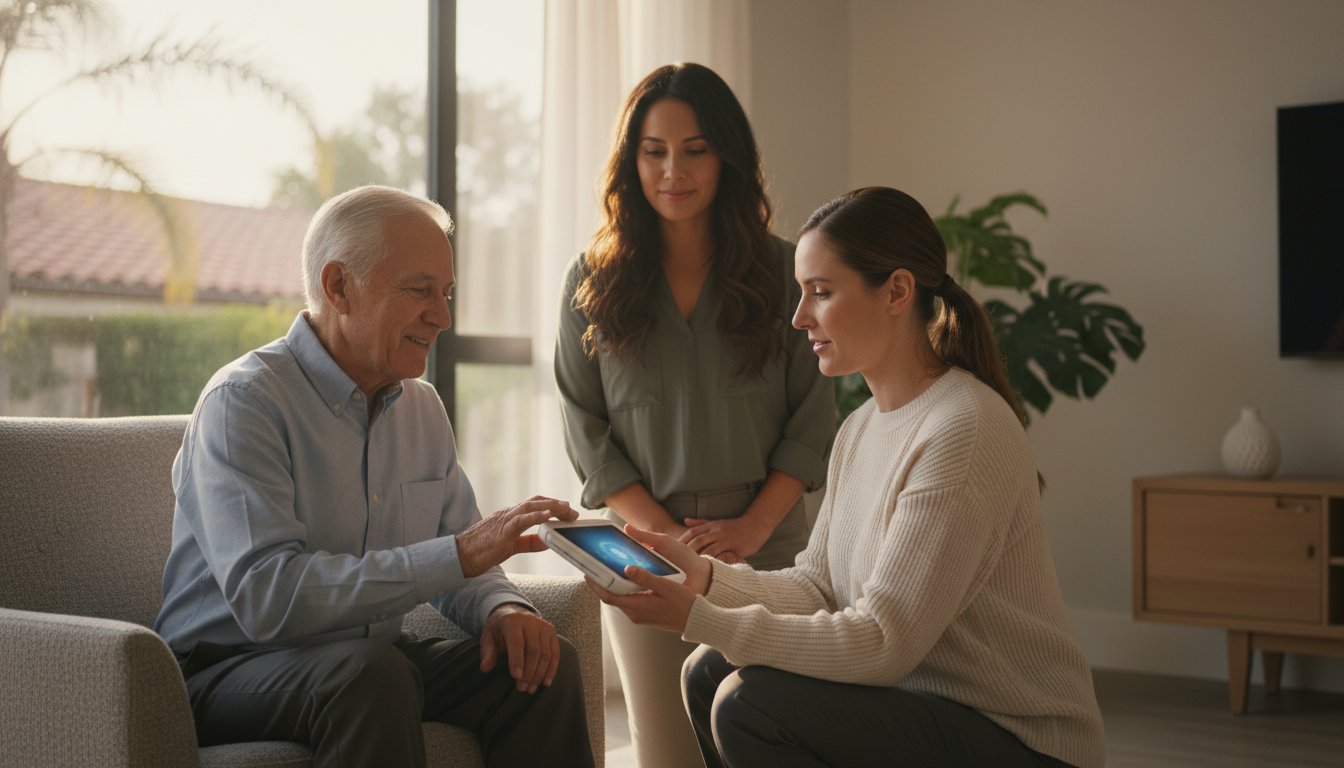
The meticulous daily ritual of cleaning and re-bandaging your parent's wound may be providing a false sense of security while masking a lack of biological progress. When your priority is ensuring my parent gets the best wound treatment, it's vital to distinguish between basic maintenance and active recovery. You've likely spent weeks managing dressings and navigating the logistical strain of clinic visits, yet the wound remains stubbornly unchanged. It's an exhausting cycle, especially when complex medical jargon leaves you feeling more confused than comforted about the actual path to healing.
You don't have to settle for passive bandage maintenance when advanced regenerative science is available at the bedside. This guide will show you how to identify the subtle signs of a stalling wound and how to secure hospital-grade treatments, such as amniotic membrane grafts and bio-engineered skin substitutes, without leaving your home. We'll outline a proactive roadmap to faster healing times and expert specialist oversight. This approach helps your parent avoid unnecessary hospitalizations while reclaiming the physical excellence they deserve. By shifting from reactive care to a data-driven strategy, you can ensure their recovery is managed with the precision of a visionary specialist.
Key Takeaways
- Identify the critical two-to-four-week window where a stalled wound requires a shift from basic maintenance to specialized clinical intervention.
- Elevate your advocacy by ensuring my parent gets the best wound treatment through precise diagnostic assessments and personalized recovery roadmaps.
- Explore how mobile advanced wound care eliminates the trauma of transport by delivering high-tech solutions like Negative Pressure Wound Therapy (NPWT) to the home.
- Understand the transformative potential of regenerative medicine, including bio-engineered skin substitutes that restore tissue integrity at a cellular level.
- Learn how to integrate mobile specialist care into your existing home health routine while leveraging Medicare-compliant coverage models.
Understanding the Standard of Care vs. Specialist Wound Healing
Healing is a biological process, but recovery is a strategic outcome. For many caregivers, the daily routine of cleaning a wound and applying fresh gauze feels like progress. However, there's a distinct line between passive maintenance and active clinical resolution. Ensuring my parent gets the best wound treatment requires moving beyond the surface level to understand why some injuries simply stop improving. When a wound stalls, it's often because the body's natural repair mechanisms have been interrupted by systemic factors or local barriers that simple bandaging cannot address.
Seniors face unique physiological hurdles that often disrupt the stages of wound healing. As we age, our cellular response slows down; circulation may be compromised, and the body's ability to synthesize new tissue becomes less efficient. This creates a biological predisposition for slower healing cycles, where a minor scrape can quickly escalate into a chronic issue. In this context, a wound care specialist acts as a visionary strategist. They look past the bandage to analyze the underlying systemic health and cellular environment, creating a roadmap for tissue regeneration rather than just wound management.
When is a Wound Considered Non-Healing?
A wound is generally classified as chronic if it fails to show significant improvement after 30 days of standard care. While the initial two-to-four-week window is a critical warning period, the Medicare Part B criteria specifically define a chronic wound as one that hasn't responded to at least 30 days of documented standard treatment. You should watch for these specific visual red flags:
- Stagnant Size: The wound dimensions haven't decreased over several consecutive dressing changes.
- Increased Exudate: There's a noticeable increase in fluid drainage or a change in its consistency.
- Foul Odor: A persistent smell often indicates a high bacterial load or an underlying infection.
- Discolored Tissue: The presence of yellow, black, or dusky gray tissue suggests a lack of healthy blood flow and oxygen.
These signs indicate that the wound is trapped in the inflammatory phase. It won't close without specialized intervention designed to restart the biological clock of healing.
The Limitations of General Home Health Nursing
General home health nurses provide invaluable support, but their role is often restricted by the scope of their existing medical orders. They typically focus on wound maintenance, which includes cleaning and basic dressing changes. They don't always carry the specialized equipment required for advanced procedures like sharp debridement or Negative Pressure Wound Therapy (NPWT). Ensuring my parent gets the best wound treatment involves bringing in a specialist who uses diagnostic-led care, such as wound culture and sensitivity testing, to identify the precise barriers to recovery. This proactive approach transitions the patient from a cycle of "bandage management" to a focused path of physical excellence and life-changing outcomes.
Evaluating Your Parent’s Current Wound Treatment Plan
Assessing the efficacy of a medical plan requires a shift from passive trust to active verification. You might feel hesitant to question a long-standing physician, but ensuring my parent gets the best wound treatment often necessitates a more forensic approach to their care. Many caregivers assume that standard dressing changes are enough; however, if the wound hasn't significantly reduced in size over 30 days, the current protocol is likely failing to address the underlying biological barriers. It's not a reflection of your care, but rather a sign that the wound environment has become stagnant.
A sophisticated treatment plan should be data-driven and dynamic. It should include regular wound culture and sensitivity testing to identify the specific bacterial profile of the injury. Without this data, clinicians are essentially guessing which topical agents or antibiotics will be effective. If your current provider hasn't performed a culture in the last month, the plan is incomplete. You can advocate for a more precise approach by requesting a mobile specialist evaluation to audit the current strategy and introduce advanced diagnostic tools.
The Role of Sharp Debridement in 2026
Sharp debridement is the cornerstone of restarting the biological healing clock. It's a precise procedure where a specialist removes necrotic, non-viable tissue that acts as a physical and chemical barrier to new growth. Unlike simple cleaning, which only removes surface debris, sharp debridement prepares the wound bed for cellular migration and the application of regenerative grafts. Mobile specialists now perform this advanced procedure safely at the bedside, ensuring that the wound is always in an optimal state for recovery without the trauma of a hospital trip.
Key Questions to Ask Your Current Provider
To determine if the current team is operating at the highest clinical level, you must ask targeted questions that demand specific answers. Don't settle for "it takes time." Instead, use these inquiries to gauge their strategy:
- "What is the specific physiological reason this wound is stalled?" Demand an explanation that goes beyond age or general health; look for mentions of biofilm, poor perfusion, or inflammatory stalling.
- "Are we candidates for regenerative grafts or NPWT?" If these advanced modalities aren't being discussed for a chronic wound, your parent isn't receiving the gold standard of care.
- "How are we managing underlying factors like edema or nutrition?" Healing is systemic. A plan that only focuses on the wound site is ignore the biological foundation required for tissue synthesis.
By ensuring my parent gets the best wound treatment through these rigorous evaluations, you move from being a bystander to a visionary advocate for their physical excellence.
Advanced Technologies: Bringing the Wound Center to the Bedside
Hospital-grade technology is no longer confined to the sterile corridors of a dedicated wound center. For caregivers, the logistical burden of transporting a frail senior to a clinic often creates more stress than the treatment itself. Transitioning to mobile wound care eliminates this trauma, allowing for the delivery of sophisticated diagnostics and treatments directly to the bedside. Ensuring my parent gets the best wound treatment means choosing a model that prioritizes patient comfort without sacrificing clinical rigor. By bringing the specialist and their advanced toolkit to your home, you ensure that high-tech interventions are integrated into your parent's daily environment.
This mobile approach is particularly effective for managing complex bed sores and ulcers. These injuries require meticulous monitoring and a level of precision that general home health often cannot provide. Specialists utilize advanced bedside evaluations to assess tissue health and microbial load in real time. This ensures that every adjustment to the treatment plan is backed by objective data rather than guesswork. Healing requires precision.
Negative Pressure Wound Therapy (Wound VAC) at Home
Negative Pressure Wound Therapy (NPWT) acts as a powerful healing accelerator by applying controlled sub-atmospheric pressure to the wound site. This process effectively removes excess interstitial fluid and infectious materials while simultaneously increasing localized blood flow to the tissue. In 2026, modern NPWT devices have evolved into lightweight, portable units that allow patients to remain mobile within their homes. However, the efficacy of a "Wound VAC" depends entirely on specialist oversight. A board-certified clinician must manage the pressure settings and dressing changes to prevent complications and ensure the therapy is actively promoting granulation. It's a sophisticated system that demands expert calibration.
Managing Vascular Complications and Edema
Chronic wounds in the lower extremities are frequently driven by underlying circulatory issues that basic bandages cannot fix. Persistent edema in legs creates high pressure within the tissue, which eventually leads to the breakdown of skin and the formation of venous ulcers. Ensuring my parent gets the best wound treatment involves a comprehensive strategy that includes professional compression therapy to manage this fluid buildup. Specialists must carefully balance moisture levels; a wound that is too dry won't heal, but one that is too wet from uncontrolled edema will macerate and expand. This level of moisture balance and vascular management is the hallmark of advanced specialist care, bridging the gap between laboratory data and daily quality of life.

Regenerative Medicine: The Gold Standard for Non-Healing Wounds
Regenerative science represents the pinnacle of modern wound care. While previous sections of this guide focused on removing barriers like necrotic tissue or biofilm, regenerative medicine shifts the focus toward active reconstruction. Ensuring my parent gets the best wound treatment requires looking beyond traditional ointments toward skin substitutes and amniotic grafts. These advanced biologics act as a three-dimensional scaffold. They provide the structural support and signaling molecules necessary for new skin cells to migrate and thrive across a previously stagnant wound bed.
Safety and ethics are foundational to these biological breakthroughs. Amniotic allografts are meticulously sourced from healthy donors following scheduled Cesarean sections. This process is entirely non-invasive and ensures no harm to the mother or child. The resulting tissue is a rich reservoir of cytokines and essential proteins naturally designed to protect and repair. If your parent's current treatment plan has stalled for more than 30 days, it's time to consult with a mobile specialist who can bring these regenerative solutions directly to your parent's bedside.
Amniotic Membrane Grafts: A Biological Breakthrough
Healing requires a precise biological environment. Amniotic membrane grafts provide this by delivering a high concentration of growth factors that accelerate the body's natural repair cycle. The application process is remarkably simple and painless, often performed in minutes during a routine bedside visit. Beyond just closing the wound, these grafts are highly effective at reducing localized inflammation and chronic pain. By calming the inflammatory response, they allow the body to move out of a chronic state and back into a healthy healing trajectory. This is proactive care that prioritizes both clinical outcomes and your parent's daily comfort.
Bio-engineered Skin Substitutes for Chronic Ulcers
Traditional "wet-to-dry" gauze dressings are increasingly viewed as an outdated standard for chronic injuries. They often do more harm than good by pulling away healthy new cells during dressing changes. In contrast, bio-engineered skin substitutes are sophisticated cellular products designed to mimic the complex structure of human skin. These grafts are particularly vital in diabetic ulcer treatment, where the risk of infection and complications is significantly higher. By providing an immediate biological cover, these grafts can prevent limb loss in high-risk patients and restore long-term vitality. They represent a visionary shift from merely "covering" a wound to fundamentally rebuilding the skin's integrity.
Transitioning to a Mobile Wound Care Specialist in Southern California
Moving from general maintenance to specialist-led recovery shouldn't be a logistical hurdle for your family. Ensuring my parent gets the best wound treatment often requires a collaborative model where mobile specialists and existing home health agencies work in tandem rather than in isolation. This seamless coordination means your parent's current nursing team continues their vital daily support while a board-certified specialist provides the high-level diagnostic oversight and advanced procedures, such as sharp debridement and graft applications, that are essential for resolving chronic injuries. This partnership transforms the home into a sophisticated healing environment, providing you with the peace of mind that every aspect of the wound's biology is being managed by an expert strategist.
How Mobile Specialist Care Works with Medicare
Understanding the financial framework of advanced care is essential for long-term planning. Mobile wound care specialists operate under a different model than general home health agencies. These specialists bill Medicare Part B directly for their professional services, much like a visit to a doctor's office. A critical distinction in this model is that the patient doesn't need to meet "homebound" criteria to receive specialist consultations at the bedside. This provides greater flexibility for seniors who may be mobile but find clinic visits physically or emotionally taxing. By utilizing this Medicare-compliant structure, you gain access to elite clinical expertise with full financial transparency, ensuring that the focus remains entirely on physical excellence and tissue regeneration.
The Healix360 Approach to Personalized Longevity
The journey toward resolution begins with a comprehensive bedside wound evaluation. During the initial visit, a specialist performs a deep-dive assessment of the wound bed, vascular health, and systemic factors that may be hindering progress. This isn't a brief check-in; it's the creation of a personalized wound care treatment plan that serves as a roadmap for the weeks ahead. We don't operate in a vacuum. A dedicated communication loop ensures your parent's primary care physician is kept informed of every breakthrough and adjustment in the strategy. This integrated approach ensures that ensuring my parent gets the best wound treatment is a shared goal across the entire medical team.
You don't have to navigate the complexities of chronic wound management alone. By choosing a specialist who prioritizes data-driven diagnostics and regenerative science, you're taking the most important step toward restoring your parent's quality of life. It's time to move past the cycle of stagnant healing and embrace a future defined by proactive care and measurable results. If you're ready to secure a higher standard of recovery for your loved one, contact a mobile specialist today to schedule a comprehensive bedside evaluation and begin the transition to advanced healing.
Empowering Your Parent’s Path to Physical Excellence
Healing a chronic wound requires a transition from passive maintenance to a data-driven, strategic resolution. You've learned how to identify the critical thirty-day window where standard care often fails and how advanced technologies like Negative Pressure Wound Therapy can accelerate the recovery process. By prioritizing regenerative science and specialist oversight, you move beyond the limitations of traditional home health toward a future defined by tissue integrity and long-term vitality.
When you commit to ensuring my parent gets the best wound treatment, you're securing a higher standard of clinical precision. Our team of board-certified wound specialists serves as a Medicare Part B provider, delivering advanced regenerative grafts directly to your parent's home to restart the healing clock. This visionary approach removes the trauma of transport and places your loved one's recovery in expert hands. You have the power to change the trajectory of their health journey.
Secure a specialist bedside evaluation for your parent today and take the first step toward a successful resolution. Your parent deserves a roadmap designed for excellence; it's time to begin their recovery with the precision of modern medicine.
Frequently Asked Questions
How do I know if my parent’s wound is infected or just healing slowly?
An infected wound typically presents with active symptoms such as spreading redness, localized heat, pus, or a systemic fever. Stagnant healing is characterized by a lack of progress where the wound size remains unchanged for weeks without these acute inflammatory signs. If you notice a foul odor or increased pain, it's a signal that the bacterial load has shifted from colonization to an active infection that requires immediate diagnostic testing.
Does Medicare cover advanced skin substitutes and amniotic grafts at home?
Medicare Part B generally covers these advanced biological treatments when they're medically necessary and administered by a qualified specialist. Ensuring my parent gets the best wound treatment involves leveraging these benefits to access regenerative grafts that were once only available in hospital settings. These products are reclassified as incident-to supplies, meaning they're part of the specialist's clinical intervention during a mobile bedside visit.
Can a wound specialist come to an assisted living facility in Glendale?
Yes, mobile specialists provide bedside evaluations and advanced treatments directly within assisted living facilities and private residences in Glendale. This model eliminates the physical strain of transporting a senior to an outpatient clinic, which can often cause further tissue trauma. By bringing hospital-grade equipment to the facility, the specialist ensures that your parent receives consistent, high-level care in a familiar and comfortable environment.
What is the difference between a wound care nurse and a wound care specialist?
A wound care nurse typically focuses on the vital daily maintenance and dressing changes required for wound hygiene. A wound care specialist is a board-certified provider who acts as a visionary strategist, performing advanced procedures like sharp debridement and graft applications. Choosing a provider with this level of expertise is essential for ensuring my parent gets the best wound treatment and moves beyond passive maintenance toward active tissue regeneration.
How often should a non-healing wound be debrided?
Most chronic wounds require sharp debridement once a week to remove necrotic tissue and biofilm that block the healing process. This regular maintenance "restarts" the biological clock by creating a clean, bleeding wound bed that is receptive to growth factors and regenerative grafts. Your specialist will determine the exact frequency based on the rate of tissue accumulation and the overall progress of the personalized treatment plan.
What happens if a pressure ulcer reaches Stage 4?
A Stage 4 pressure ulcer is a severe injury that has progressed through the skin to expose underlying muscle, tendons, or bone. This stage carries a high risk of bone infection or systemic sepsis, requiring aggressive specialist intervention and advanced modalities like Negative Pressure Wound Therapy. At this level of severity, the focus shifts to intensive tissue reconstruction and strict pressure offloading to prevent life-threatening complications.
Can advanced wound care prevent my parent from needing an amputation?
Advanced regenerative treatments and vascular management are primary tools for successful limb salvage in high-risk patients. By utilizing bio-engineered skin substitutes and amniotic grafts, specialists can close wounds that have failed traditional therapies, significantly reducing the risk of infection-led amputations. Early intervention with these sophisticated biologics provides a biological scaffold that encourages the growth of healthy new tissue even in compromised environments.
How do I get a referral for mobile wound care services in Los Angeles?
You can request a referral for mobile specialist services through your parent's primary care physician or a hospital discharge planner in Los Angeles. Alternatively, you may contact a mobile wound care provider directly to initiate a bedside evaluation and assessment. This initial visit allows the specialist to coordinate with your existing home health agency and primary doctor to ensure a seamless transition into an advanced healing roadmap.


