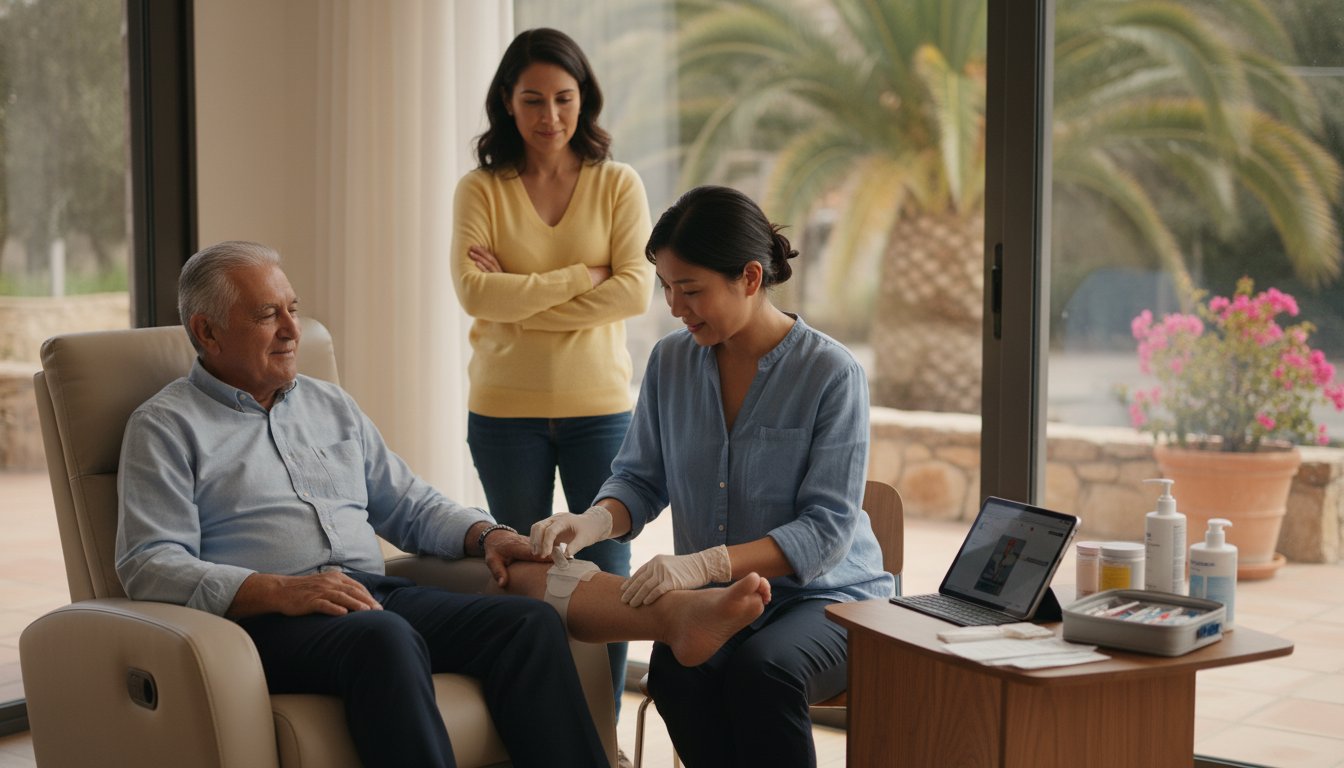
The most effective clinical environment for complex wound recovery isn't a sterile hospital wing; it's the familiar comfort of your own living room. While we've long associated advanced medicine with centralized facilities, the logistical exhaustion of gurney van transport and the persistent threat of hospital-acquired infections have shifted the paradigm toward home-based excellence. Successfully coordinating in-home wound care for a loved one now requires a strategic integration of specialized expertise and regenerative technology that was once reserved for elite wound centers.
You'll learn how to navigate the 2026 Medicare landscape, including the recent shift to flat-rate reimbursement for skin substitutes, while securing access to amniotic membrane grafts and professional debridement without leaving the house. Preventing a hospital readmission, which currently costs between $15,000 and $20,000 on average, is no longer just about basic monitoring. It's about proactive, high-tech intervention. This guide provides a clear roadmap for Southern California families to achieve rapid wound closure through professional coordination that replaces logistical stress with clinical precision and quiet confidence.
Key Takeaways
- Discover how physician-led mobile services are redefining recovery by bringing specialized clinical expertise directly into the residential setting.
- Explore the efficacy of bio-engineered skin substitutes and amniotic grafts that enable hospital-grade healing right at the bedside.
- Master the logistics of coordinating in-home wound care for a loved one to eliminate the physical and financial burden of gurney van transport.
- Understand the specific role of Medicare Part B in securing advanced treatments while maintaining seamless synergy with your existing home health agency.
- Learn how a data-driven approach to wound management reduces caregiver burnout and prioritizes your family's long-term vitality.
The Evolution of Mobile Wound Care: Why Families are Choosing Home-Based Recovery
Recovery is no longer tethered to the hospital corridor. Advanced mobile wound care represents a sophisticated, physician-led clinical service that brings the specialized capabilities of a wound center directly to the patient's residence. This transition isn't just about convenience; it's a strategic shift in how we approach the wound healing process. By 2026, residential-based specialized medicine has become the gold standard for managing chronic conditions, allowing patients to bypass the clinical coldness of traditional facilities.
When coordinating in-home wound care for a loved one, you're choosing an environment that actively supports biological recovery. Healing in a familiar space reduces psychological stress and stabilizes the autonomic nervous system, which directly translates to more efficient physical tissue repair. Healix360 serves as the essential bridge in this journey. We transform the period after hospital discharge into a proactive era of long-term vitality, ensuring that the transition home is a step toward excellence rather than a compromise in care quality.
Distinguishing Specialist Care from General Home Health
General home health provides vital support, yet it often lacks the granular focus required for complex, non-healing wounds. A board-certified wound specialist brings a different level of diagnostic rigor to the bedside. During a bedside evaluation, our experts perform a high-level assessment that goes beyond simple dressing changes. These mobile medical consultations involve direct physician oversight, ensuring every treatment decision is rooted in the latest clinical data. This level of specialization is what differentiates a routine visit from an elite medical intervention.
The Clinical Shift Toward Residential Excellence
The home environment offers a significant advantage in infection control. By remaining at home, patients drastically reduce their exposure to hospital-acquired infections like MRSA, which are often prevalent in high-traffic clinical settings. This "Hospital at Home" trend is particularly effective for managing diabetic and pressure ulcers where stability is paramount. We view each personalized treatment plan as a precision roadmap; it's a data-driven strategy designed to navigate the complexities of chronic wound management while prioritizing the individual's comfort and safety. This approach ensures that the highest standards of clinical excellence are maintained in the most supportive setting possible.
Clinical Superiority: Bringing Regenerative Medicine to the Bedside
The standard of care for chronic wounds has transcended simple gauze and antiseptic. High-performance medical outcomes are no longer confined to the four walls of a specialized hospital wing; instead, the home has become a primary platform for sophisticated biological interventions. When coordinating in-home wound care for a loved one, it's essential to understand that residential treatment now includes the same regenerative technologies found in elite wound centers. This evolution ensures that patients receive the most advanced science available without the physical tax of medical transport.
Bio-engineered skin substitutes represent a pinnacle of modern wound science. These cellular products provide a biological scaffold that encourages the body's natural healing mechanisms to re-engage. By applying these substitutes at the bedside, specialists can jumpstart the healing process in wounds that have remained stagnant for months. For a comprehensive look at how these technologies function, you can explore our advanced skin substitute guide. Beyond grafts, precision is maintained through sharp debridement. This specialized procedure involves the surgical removal of non-viable tissue and is safely performed at home by board-certified specialists to clear the path for new cellular growth.
Regenerative Grafts and Biological Substitutes
Amniotic membrane grafts utilize rich concentrations of growth factors to stimulate tissue growth at the cellular level. These therapies, alongside stem cell-based interventions, are now accessible outside traditional clinics, offering a sophisticated alternative to standard dressings. Amniotic allografts serve as a powerful catalyst for rapid wound closure. By integrating these biological tools into a home-based setting, we provide a proactive roadmap for tissue regeneration that prioritizes long-term vitality.
Advanced Diagnostics and Bedside Monitoring
Data-driven care is the foundation of infection prevention. Understanding Medicare coverage for home health services helps families realize that advanced diagnostics, such as wound culture and sensitivity testing, are often covered components of skilled care. These tests are critical for identifying pathogens early and preventing systemic issues like sepsis. Our specialists also possess the expertise to manage Negative Pressure Wound Therapy (NPWT), or "Wound VACs," within a residential layout. Our specialists can help you develop a personalized wound care treatment plan that leverages these high-tech solutions. By meticulously tracking healing trajectories, we provide the clinical oversight necessary to prevent avoidable amputations and ensure a steady path toward recovery.
The Family ROI: Calculating the Emotional and Economic Benefits
Clinical excellence delivers a return on investment that extends far beyond the wound bed. While traditional medical models focus solely on the biological healing of the patient, coordinating in-home wound care for a loved one addresses the systemic health of the entire household. The most immediate benefit is the elimination of secondary costs. These hidden financial and physical drains accumulate rapidly when a patient must be transported to a centralized clinic. In regions like Los Angeles and Glendale, the logistical burden of arranging gurney van transport for multiple weekly visits is staggering, often leading to physical exhaustion for the patient and a significant logistical strain for the family.
Home-based care consistently outperforms the travel-to-clinic model by prioritizing stability and consistency. When a patient remains in their own environment, they avoid the physiological stress of transport, which can spike cortisol levels and impede the body's natural regenerative processes. Our approach integrates family education as a core pillar of the treatment plan. By teaching you the nuances of daily wound hygiene and monitoring, we ensure that the healing trajectory remains steady between professional visits. This collaborative model turns the home into a high-performance recovery center where every detail is optimized for the patient's long-term vitality.
Economic Advantages of Mobile Specialist Consultations
Precision medicine at home is a strategic financial choice. Understanding Medicare coverage for home health care is essential for families navigating these options. Medicare Part B generally covers professional wound assessments and advanced treatments in the residence, making elite care accessible without the overhead of facility fees. Proactive intervention is also the most effective way to avoid the astronomical costs of complications. Preventing a single hospital readmission, which can cost between $15,000 and $20,000, provides a clear economic justification for choosing a specialist-led mobile service. By avoiding gurney transport fees and emergency room visits, families can reallocate their resources toward long-term wellness and physical excellence.
Empowering the Family Caregiver
Professional partnership is the most effective antidote to caregiver burnout. When you're coordinating in-home wound care for a loved one, the weight of responsibility can feel overwhelming. Our specialists alleviate this burden by providing a clear clinical roadmap. We translate complex biological data into actionable daily steps, replacing the "fear of the unknown" with transparent, data-driven communication. Witnessing professional clinical progress in a home setting provides a profound psychological boost. It transforms the caregiver's role from one of anxious observation to one of empowered participation. This sense of mastery over the recovery process is a vital component of the family's collective well-being.

Navigating the Logistics: Medicare, Coordination, and Southern California Care
Logistics are the invisible architecture of successful healing. While previous sections detailed the biological advantages of home-based medicine, the actual process of coordinating in-home wound care for a loved one requires a clear understanding of the healthcare ecosystem. A common point of confusion for families is the distinction between general home health and specialist mobile wound care. Mobile wound care functions as a professional medical consultation service, similar to visiting a specialist's office, but delivered at the bedside. This model allows for elite interventions like sharp debridement and regenerative grafts that standard home health agencies may not be equipped to provide.
Effective coordination creates a synergy between various care providers. Our specialists don't replace your existing home health agency or skilled nursing facility staff; instead, we partner with them to elevate the clinical standard. By providing the specialized oversight necessary for chronic or non-healing wounds, we ensure that every dressing change and assessment aligns with a high-level diagnostic strategy. For a deeper look at how these partnerships function within the Los Angeles landscape, our mobile wound care specialist guide offers specific regional context for 2026.
Medicare and Insurance Coverage for 2026
The financial landscape for advanced wound care has evolved significantly. As of January 1, 2026, Medicare has established a flat national reimbursement rate of approximately $127.28 per square centimeter for most skin substitute products. These are now classified as "incident-to" supplies rather than biologics, which changes how they're billed under Medicare Part B. This professional billing structure allows families to access high-value items like amniotic allografts with clinical transparency. For those managing specific conditions, our diabetic ulcer treatment guide provides granular details on coverage and treatment pathways for chronic ulcers.
Southern California Coordination: From Glendale to Beverly Hills
Navigating the L.A. County healthcare network requires local expertise and a visionary strategy. Healix360 operates as a premium guide across Southern California, ensuring a seamless transition from hospital discharge back to the home environment. We maintain active partnerships with assisted living communities and skilled nursing facilities from Glendale to Beverly Hills, acting as the data-driven bridge that maintains care continuity. To prepare for your first specialist evaluation, families should have the following ready:
- Current Medicare Part B and secondary insurance information.
- A comprehensive list of all current medications and supplements.
- Recent hospital discharge summaries or clinical notes from the primary physician.
- A clear, well-lit path to the patient's bedside to facilitate a thorough evaluation.
Precision in preparation leads to excellence in outcomes. If you're ready to transition your loved one's recovery to a professional home-based model, you can schedule a bedside wound evaluation with our board-certified specialists to begin your personalized roadmap to healing.
The Healix360 Advantage: Elite Wound Care for Your Loved Ones
Choosing a partner for clinical recovery is a decision that impacts the long-term vitality of your entire family. Healix360 operates at the intersection of scientific rigor and human-centric warmth, providing a level of care that transcends traditional home health models. When coordinating in-home wound care for a loved one, you deserve a team that views health as a strategic asset. Our philosophy is rooted in a data-focused approach, ensuring that every biological marker is tracked and every treatment is optimized for physical excellence. By exclusively serving Southern California, our board-certified specialists bring a deep understanding of the local medical landscape to your doorstep.
Our methodology focuses on a precision roadmap designed to navigate the complexities of chronic wound management. This isn't just about cleaning a wound; it's about engineering the ideal environment for tissue regeneration. By prioritizing proactive prevention and advanced biological interventions, we help families take a decisive step toward recovery. This strategic oversight is essential for preventing serious complications, such as amputations, which often result from fragmented care or delayed specialist intervention.
Why Families in Southern California Trust Healix360
Aggressive early intervention is the cornerstone of our clinical strategy. We don't wait for complications to arise; we utilize high-tech diagnostics to proactively manage the healing environment from day one. By integrating Negative Pressure Wound Therapy (NPWT) and regenerative grafts directly into the residential setting, we bring the sophistication of a modern medical facility to the bedside. This combination of clinical mastery and quiet confidence allows families to feel secure in the knowledge that no detail is overlooked. Our specialists maintain a visionary focus on long-term outcomes, ensuring that the path to healing is both efficient and sustainable.
Next Steps: Starting the Healing Journey
The transition to elite home-based care is designed to be seamless and organized. Starting the process involves a thorough bedside evaluation where our L.A.-based team assesses the specific clinical needs of your loved one. We manage the heavy lifting of professional coordination, including the necessary documentation and direct communication with your existing primary care physician to ensure a unified strategy. This proactive step toward specialized wound management allows you to focus on your family's well-being while we manage the technical roadmap to recovery. Partner with Southern California’s elite mobile wound care specialists. Schedule your consultation at Healix360.com.
Strategic Healing in the Residential Ecosystem
Advanced wound science has fundamentally redefined the home as a primary platform for clinical excellence. You've seen how integrating bio-engineered skin substitutes and amniotic grafts at the bedside can accelerate tissue repair without the physiological stress of frequent hospital visits. By coordinating in-home wound care for a loved one, you're not just choosing convenience; you're adopting a data-driven strategy that prioritizes rapid closure and long-term vitality. Professional intervention at home eliminates the logistical exhaustion of medical transport while placing your family's health at the center of a sophisticated clinical roadmap.
Our team of board-certified wound specialists operates as a dedicated Medicare Part B provider, ensuring that elite medical consultations remain accessible and transparent. We bridge the gap between complex biological data and your daily quality of life, providing the expert oversight necessary to prevent systemic complications through advanced regenerative technology. It's time to replace the fear of the unknown with the quiet confidence of professional mastery. Schedule a professional bedside evaluation with our Southern California specialists today. You have the power to transform the recovery journey into a period of proactive healing and renewed physical excellence.
Frequently Asked Questions
Is in-home wound care as effective as a specialized hospital clinic?
Mobile wound care is often more effective because it delivers the same board-certified expertise and regenerative technology without the physiological stress of medical transport. By treating patients in their own environment, we eliminate the risk of hospital-acquired infections like MRSA. Our specialists bring advanced tools, such as bio-engineered skin substitutes and sharp debridement, directly to the bedside to ensure clinical outcomes match or exceed facility-based standards.
Does Medicare cover advanced treatments like skin substitutes at home?
Medicare Part B covers medically necessary skin substitutes and amniotic grafts when administered by a qualified specialist. As of January 1, 2026, most skin substitutes are classified as incident-to supplies with a flat national reimbursement rate of approximately $127.28 per square centimeter. This regulatory shift ensures that high-tech regenerative medicine remains accessible for patients recovering in a residential setting rather than a traditional clinic.
How often will a wound specialist visit our home in Los Angeles?
Visit frequency is determined by a personalized wound care treatment plan tailored to the patient's specific healing trajectory. Most patients receive specialist consultations once per week for procedures such as sharp debridement, graft application, or diagnostic assessments. These visits are strategically timed to monitor cellular progress and adjust the clinical roadmap, ensuring that coordinating in-home wound care for a loved one remains a proactive and steady process.
What types of wounds can be treated by a mobile specialist?
Our board-certified specialists treat a comprehensive range of chronic and non-healing wounds that require advanced clinical intervention. This includes diabetic foot ulcers, pressure injuries, and venous or arterial ulcers. We also manage complex surgical wounds and traumatic injuries that have failed to respond to standard care. By utilizing specialized diagnostics like wound culture and sensitivity testing, we address the underlying biological barriers to recovery.
Do we need a referral from a primary doctor to start mobile wound care?
We work in direct partnership with your primary care physician to ensure a unified and seamless recovery strategy. While we manage the clinical paperwork and coordination, a collaborative approach is essential for maintaining care continuity and Medicare compliance. Our team facilitates the communication necessary to integrate specialized wound management into the patient's broader health goals, making the transition to mobile care efficient and organized.
What should our family prepare before the first mobile wound care visit?
Families should prepare a comprehensive list of current medications, insurance information, and any recent hospital discharge summaries. It's also helpful to ensure a clear, well-lit path to the patient's bedside to facilitate a thorough evaluation. Having these details ready allows our specialists to focus on the clinical assessment and begin the process of coordinating in-home wound care for a loved one with immediate precision.
Can mobile wound care help prevent amputations for diabetic patients?
Aggressive early intervention and the use of regenerative grafts are primary strategies for preventing avoidable amputations in diabetic patients. By utilizing advanced diagnostics and Negative Pressure Wound Therapy (NPWT), we can identify and treat infections before they become systemic. Meticulous tracking of the wound's healing trajectory allows us to intervene with precision, protecting the patient's long-term mobility and physical excellence through data-driven care.
How does Healix360 coordinate with our existing home health nurse?
We function as a specialist partner to your existing home health agency rather than a replacement. Your home health nurse typically manages daily dressing changes and routine monitoring, while our specialists provide the high-level procedures and diagnostic oversight required for complex cases. This synergy ensures that the patient benefits from both consistent daily support and the advanced clinical expertise necessary for non-healing wound resolution.


