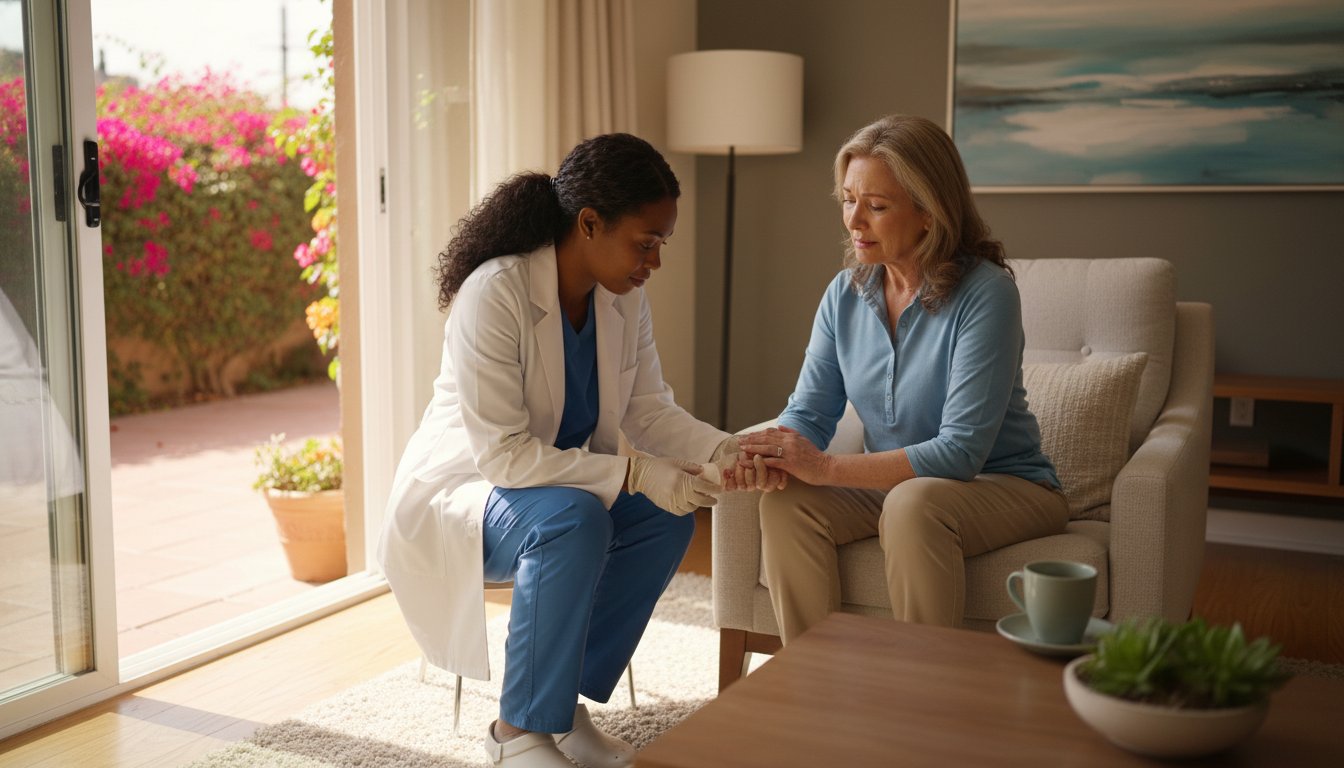
Did you know that 78% of caregivers reported feeling total burnout in 2025, with nearly 90% experiencing constant anxiety over their loved one's health? Caring for a non-healing wound is an immense emotional and physical weight that often feels like a full-time medical job you never applied for. You are likely exhausted from the constant worry of infection or the physical strain of frequent repositioning. We understand that this level of pressure isn't sustainable for your own well-being or the patient's recovery.
This guide explores how reducing caregiver stress with in-home wound care isn't just about convenience; it's about deploying advanced regenerative technology and clinical expertise directly to your bedside to accelerate healing. By integrating professional mobile services, you can transition from a stressed medical monitor back to a supportive family member. We will examine how mobile specialists use bio-engineered skin substitutes and personalized treatment plans to shift the clinical burden from your shoulders to ours, restoring your peace of mind while ensuring faster wound closure through expert validation.
Key Takeaways
- Understand how professional intervention shifts your role from a clinical monitor back to a supportive family member, effectively reducing caregiver stress with in-home wound care.
- Learn why specialized debridement and biofilm detection are essential for resolving chronic wounds that standard home-based dressing changes cannot address.
- Discover how regenerative technologies, such as amniotic grafts, accelerate healing and reduce the physical burden of frequent, complex wound monitoring.
- Identify the distinct advantages of mobile wound specialists over traditional home health nursing, including access to advanced Medicare-compliant modalities.
- Explore how data-driven, personalized treatment plans restore long-term vitality and peace of mind by prioritizing clinical excellence at the bedside.
The Invisible Weight: Why Chronic Wound Care Triggers Caregiver Burnout
The burden of chronic wound care is an invisible weight that transforms a home into a high-stakes clinical environment. This shift defines the caregiver burden, where the emotional toll of watching a loved one struggle with diabetic ulcers or bedsores is compounded by the technical demands of medical management. When you're tasked with performing complex procedures without formal training, the resulting clinical anxiety is pervasive. You aren't just applying a bandage; you're making critical decisions about wound drainage, color changes, and odor. This constant state of vigilance leads to profound decision fatigue. Is that redness a sign of healing or the onset of infection? Such questions haunt the daily routine of millions of family members.
The physical labor involved is equally taxing. Preventing pressure injuries requires a rigorous schedule of repositioning and offloading that demands significant physical strength and precision. This labor often leads to caregiver injuries and long-term exhaustion. By prioritizing reducing caregiver stress with in-home wound care, you can offload these clinical responsibilities to specialists who possess the data-driven insights necessary for recovery. This strategic intervention allows you to focus on emotional support while experts manage the biological complexities of the wound.
The Psychological Impact of Non-Healing Wounds
Slow healing progress often creates a paralyzing sense of helplessness for the entire family. When a wound stagnates for weeks, the fear of missing subtle indicators of sepsis or necrosis becomes a constant mental drain. You may find yourself transitioning from a supportive family member to an unpaid medical technician, a shift that fundamentally alters your relationship with your loved one. The warmth of companionship is frequently replaced by the sterile, stressful routine of monitoring biological data. This erosion of the personal bond is one of the most significant, yet least discussed, costs of long-term home care.
When 'Doing It Yourself' Becomes a Liability
Managing Stage 3 or 4 ulcers at home without professional oversight is a significant clinical liability. Simple cleaning and standard bandages are rarely sufficient for complex diabetic foot care where the risk of limb loss is a daily reality. The high stakes of improper dressing changes can lead to rapid bacterial colonization that remains invisible to the untrained eye. Beyond the patient's risk, the hidden cost of this "do it yourself" approach includes your own personal health decline and missed professional opportunities. Reducing caregiver stress with in-home wound care ensures that high-achieving families can maintain their quality of life while ensuring their loved ones receive elite, specialized treatment.
Clinical Risks of DIY Management vs. Professional Mobile Intervention
Clinical outcomes depend on precision. While a standard bandage protects the surface, it does little to address the underlying biological barriers that prevent a wound from closing. Many families fall into the "bandage approach," which involves repetitive cleansing and dressing changes that fail to address deep-seated issues like biofilm or slough. By prioritizing reducing caregiver stress with in-home wound care, you shift from reactive patching to proactive clinical management. This transition is vital because mobile specialists bring diagnostic tools directly to the bedside, identifying bacterial loads that are invisible to the untrained eye. Performing wound culture and sensitivity testing at the home allows for targeted therapy, eliminating the guesswork that frequently leads to hospital readmissions.
The stakes of wound management are exceptionally high. Without professional oversight, a seemingly stable wound can deteriorate into a systemic emergency within hours. Advanced diagnostics and regular clinical assessments serve as an early warning system. These interventions are designed to prevent or relieve caregiver stress by replacing uncertainty with data-driven confidence. When a specialist validates that a wound is healing correctly, the emotional burden on the family lifts significantly. You can learn more about how mobile advanced wound care services provide this level of security during our personalized bedside evaluations.
The Necessity of Professional Debridement
Removing necrotic tissue is a fundamental requirement for healing that cannot be safely performed by a layman. Sharp debridement involves the skilled removal of non-viable tissue to expose healthy, bleeding beds that are capable of regeneration. This process essentially resets the "healing clock" of a chronic wound, moving it from a stagnant state back into an active repair phase. Simple cleansing cannot replace this surgical precision. Laypeople often lack the tools and training to distinguish between healthy granulation and stubborn slough, making professional intervention a clinical necessity rather than a luxury.
Infection Control: Beyond Hand Washing
Infection control in a home setting requires more than just basic hygiene. Specialists utilize sterile techniques and advanced anti-microbial dressings that maintain a balanced moisture environment while suppressing bacterial growth. We are trained to recognize the early markers of deep-tissue infection, such as subtle changes in periwound temperature or specific exudate patterns, before they become systemic. This level of vigilance provides a safety net for the patient and ensures the caregiver isn't left alone to manage complex medical risks. Reducing caregiver stress with in-home wound care means knowing that a professional is monitoring every biological variable to ensure a safe, steady recovery.
Advanced Modalities: How Regenerative Medicine Simplifies Daily Care
Regenerative medicine represents the frontier of biological optimization. It utilizes advanced cellular scaffolds to trigger rapid tissue integration, effectively bypassing the stagnant phases of chronic wound healing. These technologies represent a paradigm shift in reducing caregiver stress with in-home wound care by drastically lowering the frequency of required interventions. Instead of the daily anxiety associated with manual dressing changes, skin substitutes and amniotic grafts provide a stable environment that can often remain undisturbed for several days. Professional oversight ensures that these advanced tools are applied with precision, which is a core component of improving patient outcomes with caregiver training and specialist support.
The acceleration effect of these modalities is profound. While traditional methods might take months to show significant progress, regenerative grafts can often close complex wounds in a matter of weeks. This speed isn't just a clinical victory; it's a lifestyle restoration for the family. By reaching wound closure faster, you reduce the total duration of the caregiving journey, preventing the long-term burnout that often accompanies chronic illness. Our approach focuses on deploying these high-tech solutions at the bedside, ensuring that the most advanced science is accessible without the logistical strain of hospital visits.
Amniotic Membrane Grafts: Science-Backed Stress Relief
Amniotic grafts serve as a biological blueprint for new skin growth. These tissues are naturally rich in growth factors and cytokines that recruit the body's own regenerative cells to the injury site. Beyond the structural benefits, these grafts are known for their ability to significantly reduce localized wound pain. When the patient's pain levels are managed through biological excellence, the caregiver's emotional burden lightens. Fewer dressing changes mean your daily schedule is no longer dictated by a medical checklist, allowing you to reclaim quality time with your loved one.
Wound VAC and Compression Therapy at Home
Managing complex drainage is often the most daunting part of home-based care. Negative Pressure Wound Therapy (NPWT), commonly known as a Wound VAC, automates this process by maintaining a controlled vacuum that removes excess fluid and infectious material. When we combine this with professional-grade compression to manage edema in legs, the physiological environment for healing is optimized. Our mobile specialists handle all equipment settings and maintenance. This ensures the technology works for the patient without adding another layer of "medical chores" to your daily routine.

Navigating the System: Medicare and Mobile Care in Southern California
Accessing elite medical care shouldn't be a logistical burden for families already managing the complexities of chronic illness. Understanding how to utilize mobile wound care through established insurance channels is a critical step in reducing caregiver stress with in-home wound care. Many families are surprised to learn that advanced specialist visits are often covered under Medicare Part B. This coverage allows you to access board-certified experts without the physical and emotional exhaustion associated with transporting a non-ambulatory patient to a traditional wound center. By bringing the clinic to the bedside, we eliminate the external stressors that often hinder a patient's recovery and a caregiver's peace of mind.
It's vital to distinguish between general "Home Health" services and "Mobile Specialists." While home health agencies provide essential nursing support and assistance with daily living, they often lack the specialized equipment and authority to perform advanced procedures like sharp debridement or the application of bio-engineered skin substitutes. We function as a strategic partner to your existing care team, including home health agencies, case managers, and hospital referral sources. This collaborative model ensures that while the patient receives daily nursing care, our specialists provide the high-level clinical interventions necessary to drive wound closure.
Understanding Medicare Part B Coverage
Mobile wound care is typically billed as a specialist consultation, similar to a doctor's office visit. A significant advantage of this model is the lack of "homebound" requirements that often restrict access to traditional home health nursing. Because our services fall under Medicare Part B, patients can receive elite specialist care regardless of their ability to leave the home independently. Our dedicated billing specialists manage the intricate documentation and Medicare-compliant paperwork, ensuring that the financial aspect of care is as seamless as the clinical delivery. This administrative support is a core component of our strategy for reducing caregiver stress with in-home wound care.
Local Access to Glendale and L.A. Specialists
In the vibrant but logistically challenging Southern California landscape, local expertise matters. We provide direct access to board-certified specialists across Los Angeles, Glendale, and Beverly Hills, ensuring that premium care is never more than a phone call away.
- Glendale: Specialized support for residents navigating recovery after hospital discharge.
- Beverly Hills: Discrete, high-end clinical management delivered in the comfort of your residence.
- Los Angeles: Comprehensive mobile interventions for patients with complex diabetic or venous ulcers.
Restoring Quality of Life: The Healix360 Approach to Caregiver Support
Healix360 understands that a chronic wound affects the entire household ecosystem. Our methodology prioritizes clinical rigor alongside compassionate delivery, ensuring that your home remains a sanctuary rather than a makeshift clinic. We don't just treat a site of injury; we optimize the environment where healing happens. By reducing caregiver stress with in-home wound care, we create a sustainable path toward recovery that respects your time and energy. Each personalized treatment plan is engineered to balance the patient's biological needs with the caregiver's daily capacity, ensuring that no one is left to manage these complexities in isolation.
Communication is the cornerstone of our strategy. We maintain a precise loop of information that keeps you informed without causing diagnostic fatigue. You'll receive clear, rhythmic updates on healing trajectories, allowing you to step back from the role of a clinical monitor. This clarity is essential for restoring your quality of life. It allows you to focus on the emotional support that only a family member can provide, while we handle the intricate technical details of wound management. Our goal is to replace your daily anxiety with quiet confidence in a proven medical process.
A Roadmap to Wound Closure
We establish concrete milestones for diabetic ulcer treatment and other chronic conditions. Our specialists use digital imaging and objective data to track every millimeter of progress, providing you with a transparent view of the recovery journey. This data-driven transparency eliminates the "fear of the unknown" that often triggers caregiver burnout. When you can see the evidence of healing through professional validation, the mental weight of uncertainty lifts. You're no longer guessing about the status of a wound; you're following a validated roadmap toward long-term health outcomes.
Taking the First Step Toward Relief
Requesting a bedside evaluation is the first step toward reclaiming your peace of mind. During the initial visit, our specialist will conduct a comprehensive assessment and review the patient's medical history within the comfort of your residence. You don't need to prepare complex medical summaries; simply ensure the patient is accessible and comfortable. We're here to partner with you. Reducing caregiver stress with in-home wound care begins the moment you decide to bring in elite, mobile support. You don't have to manage this complex biological journey alone. We invite you to transition from a medical technician back to a loved one, trusting your family's health to our visionary strategists.
Reclaiming Your Role: From Medical Technician to Supportive Loved One
Reclaiming your quality of life starts with a strategic shift from clinical anxiety to specialized certainty. We've explored how advanced regenerative grafts and professional debridement accelerate healing, effectively bypassing the months of stagnation common in chronic wound management. By integrating these elite modalities at your bedside, we handle the complex biological data so you can focus on personal connection. Reducing caregiver stress with in-home wound care isn't just a convenience; it's a clinical partnership designed to restore the vitality of your entire household.
As a Medicare Part B provider, Healix360 brings board-certified wound specialists and advanced regenerative grafts directly to your residence in Southern California. This model ensures that no detail of your loved one's health is overlooked while removing the physical burden of transport and the mental weight of constant clinical monitoring. It's time to offload the medical chores and return to what matters most.
Schedule a Bedside Wound Evaluation with Healix360 Today to begin your personalized roadmap to recovery. You don't have to navigate this complex journey alone; excellence in wound care is now available in the comfort of your home. We're here to provide the expertise you need and the peace of mind you deserve.
Frequently Asked Questions
Is in-home wound care as effective as a hospital wound center?
Mobile specialists utilize the same high-tech modalities found in elite outpatient centers, including bio-engineered skin substitutes and sharp debridement. Delivering these advanced treatments at the bedside often produces superior results because it eliminates the physical exhaustion of transport. By maintaining the patient in a stable, stress-free environment, we optimize the physiological conditions necessary for rapid tissue integration.
How often does a mobile wound specialist visit the home?
Visit frequency is dictated by your personalized treatment plan, though most patients receive specialist care on a weekly basis. During these visits, we perform essential procedures such as sharp debridement or the application of regenerative grafts. This consistent clinical oversight is a foundational element in reducing caregiver stress with in-home wound care, as it replaces family guesswork with professional certainty.
Does Medicare cover advanced treatments like skin substitutes at home?
Medicare Part B typically covers advanced mobile wound care services, including bio-engineered skin substitutes and specialist consultations. These interventions are billed as specialist visits rather than traditional home health nursing, which often expands access for patients who aren't strictly homebound. Our billing experts manage all Medicare-compliant documentation to ensure your focus remains on recovery rather than insurance paperwork.
What should I do if I suspect my loved one's wound is infected?
You should contact your specialist immediately if you notice increased periwound redness, localized heat, or a change in odor. We can perform bedside wound culture and sensitivity testing to identify the specific bacterial load and adjust the clinical roadmap accordingly. This proactive diagnostic strategy is designed to intercept infections before they escalate into systemic emergencies or hospital readmissions.
Can Healix360 work with my existing home health nursing agency?
We function as a strategic partner to your existing home health nursing team to provide a comprehensive care ecosystem. While your nursing agency manages daily dressing changes and general monitoring, our specialists perform advanced clinical procedures like amniotic graft applications. This collaboration ensures that reducing caregiver stress with in-home wound care is achieved through a multi-disciplinary, elite medical strategy.
Do I need a doctor's referral to start mobile wound care services?
A referral from a primary care physician or a hospital discharge planner is generally required to initiate Medicare-compliant specialist services. We work closely with your healthcare providers to coordinate the transition of care and secure necessary documentation. If you're unsure of the next step, our team can help you navigate the referral process during your initial inquiry.
How does regenerative medicine speed up the healing of bedsores?
Regenerative medicine utilizes amniotic membrane grafts to provide a biological scaffold that recruits the body's own healing cells to the injury site. These grafts contain essential growth factors that trigger tissue integration in deep pressure injuries, often closing wounds in weeks rather than months. This technology essentially resets the healing clock, moving stagnant wounds back into an active repair phase.
What areas of Southern California do your mobile specialists cover?
Our board-certified specialists provide direct bedside care throughout Los Angeles, Glendale, and Beverly Hills. We maintain a localized focus within these Southern California communities to ensure a rhythmic and reliable schedule for our patients. This geographic specialization allows us to deliver premium clinical interventions with the precision and speed that high-achieving families expect.


