
Imagine you're sitting in your living room in Riverside, staring at a surgical incision that looks slightly more inflamed than it did yesterday. The thought of navigating heavy Inland Empire traffic to reach Loma Linda University Health or Riverside University Health feels physically and emotionally exhausting while you're trying to heal. Managing post-surgical complications at home Inland Empire shouldn't be a source of constant anxiety or clinical guesswork. We understand the stress of interpreting complex discharge instructions regarding wound drainage while fearing a potential hospital readmission.
This article provides the professional clarity you need to identify early warning signs of surgical site infections and monitor your progress with confidence. You'll learn how advanced medical interventions, including bedside sharp debridement and regenerative amniotic grafts, are now accessible without leaving your home. We will preview specialized recovery pathways that bypass the hospital waiting room and utilize hospital-grade technology to ensure a faster, safer return to health. By understanding these options, you can focus on recovery rather than the logistics of medical transport.
Key Takeaways
- Identify early warning signs of surgical site infections and wound dehiscence to prevent complications within the high-risk 30-day recovery window.
- Streamline the process of managing post-surgical complications at home Inland Empire by utilizing mobile specialists who deliver advanced clinical treatments directly to your residence.
- Understand the clinical distinction between standard home health monitoring and specialized interventions like sharp debridement or amniotic membrane grafts.
- Implement a dedicated "Clean Zone" and rigorous hygiene protocols to maintain a safe, clinical environment for post-operative wound care.
- Avoid the physical strain of traveling to regional hospitals by accessing board-certified wound specialists who provide Medicare-compliant bedside evaluations.
Post-Surgical Recovery in the Inland Empire: Risks and Realities
The period following a surgical procedure is a delicate phase where the high-intensity monitoring of a hospital environment shifts to the patient's residence. Industry data suggests that approximately 20% of patients encounter medical issues within the first 30 days of discharge. This month-long window represents the highest risk for developing a Surgical Site Infection (SSI) or other wound-related setbacks. Managing post-surgical complications at home Inland Empire requires a specialized approach that bridges the clinical gap between acute hospital care and full functional independence.
Patients transitioning from major regional centers like Loma Linda University Medical Center or Riverside University Health System often find the shift abrupt. While discharge instructions provide a baseline for care, the lack of immediate physician oversight can lead to undetected issues. Geographic sprawl and local environmental factors further complicate this transition, making professional, mobile wound assessments a necessity for safe recovery.
Inland Empire Geographic and Climate Challenges
The vast layout of Riverside and San Bernardino counties presents unique logistical hurdles. Heavy congestion on the 91 and 215 freeways makes traveling for a brief follow-up appointment a multi-hour ordeal. For a post-operative patient, this physical strain can increase blood pressure and stress, potentially hindering the healing process. Additionally, the Inland Empire's characteristic heat and low humidity can cause medical adhesives to fail or dressings to dry out prematurely. Mobile medical consultations eliminate these stressors by bringing board-certified specialists directly to the patient's bedside, ensuring dressing integrity is maintained in a controlled environment.
Defining 'Complication' vs. Normal Healing
Distinguishing between the body's natural inflammatory response and a developing infection is critical for early intervention. Patients should expect certain symptoms during the initial stages of recovery:
- Mild, localized swelling around the incision site.
- Bruising that gradually changes color from purple to yellow.
- Tenderness that responds well to prescribed analgesics.
However, when managing post-surgical complications at home Inland Empire, caregivers must watch for red flags. Systemic symptoms like a fever over 101°F, foul-smelling discharge, or "tracking" redness that spreads away from the wound indicate a need for immediate specialist evaluation. Early detection prevents localized infections from escalating into systemic sepsis, which remains a leading cause of hospital readmission in Southern California. Professional wound culture and sensitivity testing can be performed at home to identify specific pathogens before they compromise the entire surgical outcome.
Identifying Common Post-Op Complications at Home
Successful recovery depends on your ability to distinguish between the body's natural inflammatory response and a developing clinical issue. Managing post-surgical complications at home Inland Empire requires a high level of vigilance, as early detection often dictates the speed of your return to health. Patients and caregivers must look past the surface of the dressing to evaluate the structural integrity and biological status of the incision site.
The Warning Signs of Wound Dehiscence
One of the most concerning post-operative events is wound dehiscence. Patients frequently report a distinct "popping" or "giving way" sensation during routine movements, such as coughing, sneezing, or transitioning from a seated position. This sensation often precedes visible separation of the skin layers. You might notice a sudden surge in drainage. While a small amount of clear, straw-colored serous fluid is typical, a heavy volume or the presence of cloudy, purulent discharge suggests a failure of the internal or external closure. Wound dehiscence is the mechanical failure of wound closure requiring immediate specialist assessment.
Clinical Infection Markers: Beyond the Surface
Differentiating between localized redness and spreading cellulitis is vital for preventing systemic illness. Clinicians often recommend the "Rule of Redness": use a surgical marker to gently trace the border of the pink or red area around the incision. If the erythema expands beyond this boundary within 12 to 24 hours, the infection is likely progressing. Look for systemic indicators such as fever, chills, or a sudden onset of malaise. These symptoms suggest the body's immune system is no longer localizing the issue. Utilizing wound culture and sensitivity testing allows for the identification of specific pathogens, ensuring that antibiotic therapy is targeted and effective rather than general.
Fluid Buildup and Necrotic Tissue
Fluid accumulation under the skin can create tension that compromises sutures and staples. A hematoma is a collection of blood that typically feels firm and may appear as a deep purple or black mass. In contrast, a seroma is a pocket of clear fluid that feels like a soft, fluctuant balloon under the skin. Both conditions may require professional drainage to prevent secondary infections. Additionally, keep a close watch for necrotic tissue. This dead tissue often appears as dark, leathery "eschar" or thick, yellow "slough." Because necrotic tissue stops the healing clock and provides a breeding ground for bacteria, it must be addressed by a specialist. If you observe these changes, securing bedside wound evaluations can provide the clinical expertise needed to manage these complications without the stress of a hospital return.
Advanced Wound Care vs. Standard Home Health
Standard home health agencies provide essential nursing support, but there is often a clinical ceiling to the services a generalist nurse can perform. While these agencies focus on medication management and basic vitals, managing post-surgical complications at home Inland Empire frequently requires the specialized skills of a board-certified wound specialist. The primary distinction lies in the ability to perform advanced procedures at the bedside that would otherwise require a trip to a surgical center. Standard nursing visits are designed for monitoring; specialist visits are designed for active medical intervention.
One critical intervention is sharp debridement. This process involves the precise removal of necrotic tissue and bioburden that physically prevents new skin from forming. While a general home health nurse might apply a dressing, a specialist uses clinical tools to restart the healing process. From a logistical standpoint, specialized mobile care is billed under Medicare Part B. This is separate from the home health benefit, meaning patients can receive expert wound care alongside their existing home health services without a conflict in coverage. This collaborative model ensures the patient receives both general support and specialized wound expertise.
When to Upgrade to a Mobile Specialist
If a surgical incision shows no measurable progress within 14 days, it's time to seek a specialist's evaluation. Stalled healing is often a sign that underlying factors are at play. Complex comorbidities like diabetes or peripheral vascular disease significantly impair the body's ability to repair tissue. For high-risk individuals, our diabetic ulcer treatment guide details how specialized protocols address these specific healing barriers. Managing post-surgical complications at home Inland Empire becomes significantly more complex when these comorbidities are present, necessitating a higher level of clinical oversight.
Technology at the Bedside: Grafts and NPWT
Advanced mobile care introduces hospital-grade regenerative technology into the home environment. Bio-engineered skin substitutes and amniotic membrane grafts represent a shift from passive protection to active biological healing. Amniotic allografts provide a biological scaffold to significantly reduce healing time for stalled surgical wounds. Additionally, specialists manage Negative Pressure Wound Therapy (NPWT), commonly known as Wound VACs, ensuring these complex systems function correctly to remove excess fluid and promote granulation tissue. This level of intervention ensures that even the most difficult post-op complications are managed with clinical rigor without requiring the patient to leave their residence.
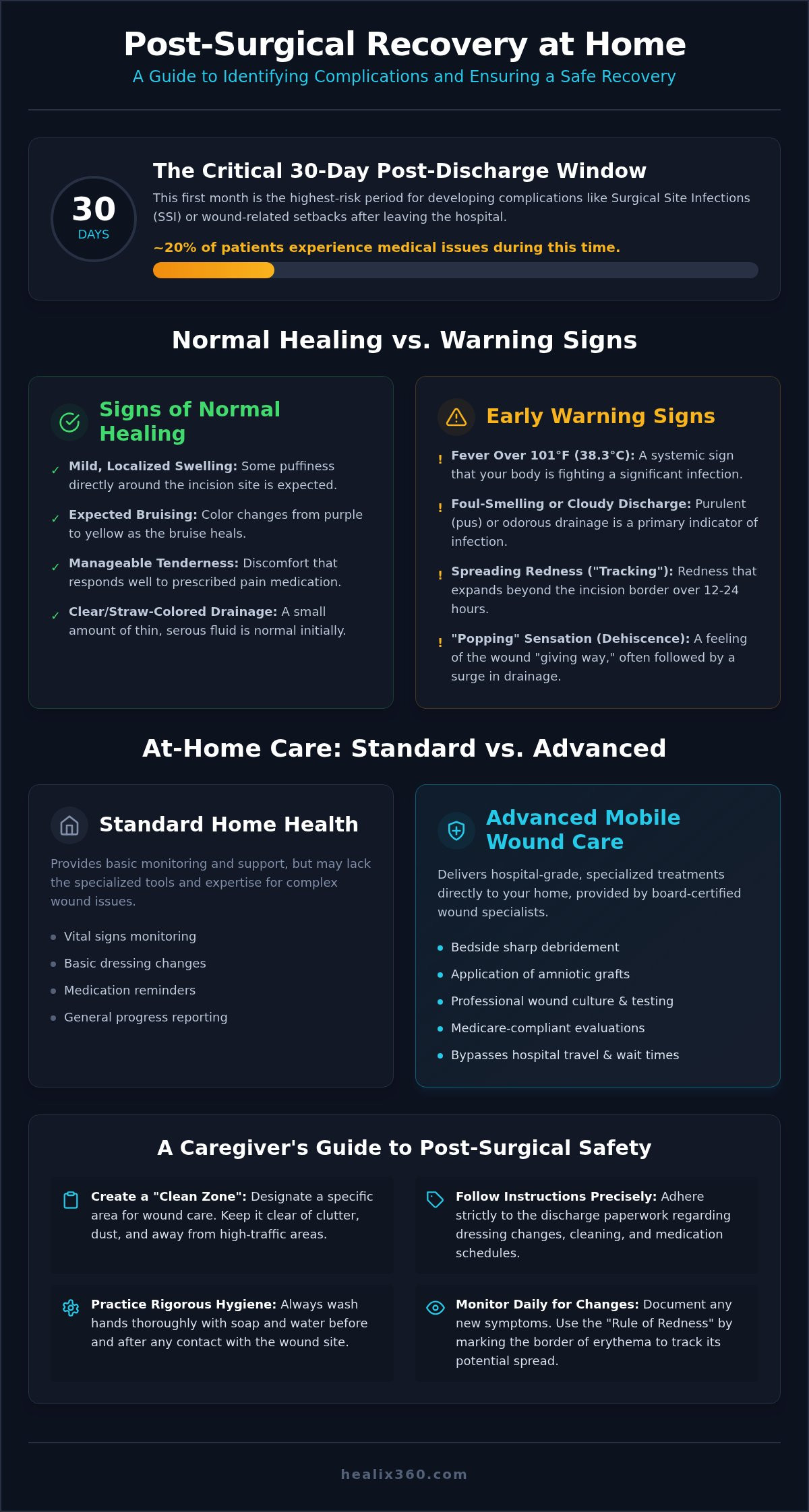
A Caregiver's Guide to Post-Surgical Safety
Caregivers serve as the primary clinical observers during the recovery process. Your role is to maintain a sterile environment and monitor subtle biological changes that might indicate a setback. Effectively managing post-surgical complications at home Inland Empire requires transforming a standard residential space into a controlled recovery zone. By implementing professional-grade protocols, you can significantly reduce the risk of environmental contamination and mechanical wound trauma.
Establishing a "Clean Zone" is the first step in clinical safety. This should be a dedicated, clutter-free workspace used exclusively for dressing changes and specialist visits. Ensure this area has high-intensity lighting and is away from high-traffic household zones or pets. Rigorous hand-hygiene remains the most effective defense against infection. Family members must use medical-grade antimicrobial soap and wear personal protective equipment (PPE), such as disposable gloves, whenever the wound is exposed.
Documentation is equally vital for tracking progress. We recommend taking daily photographs of the incision site under consistent lighting to identify trends in tissue color or swelling. Maintain a log that records pain levels, temperature, and the volume of drainage. Nutritional support also plays a critical role in collagen synthesis and tissue repair. Post-operative patients require a high-protein diet to provide the amino acids necessary for building new skin. Finally, manage mobility by encouraging light circulation exercises that don't put mechanical strain on the incision site.
Environmental Control in the Inland Empire
The geography of Southern California introduces specific challenges for wound integrity. In high-desert areas like Victorville or Hesperia, managing indoor air quality is essential to prevent fine dust from settling into open wounds. Keep windows closed during high-wind events and utilize HEPA air purifiers within the patient's room. Temperature regulation is another priority; excessive heat in the Inland Empire can cause sweating under occlusive dressings, which creates a moist environment where bacteria thrive. Maintaining a cool, dry indoor climate prevents the maceration of the skin surrounding the surgical site.
The Caregiver's Red Flag Checklist
Perform a daily 5-point inspection to ensure recovery remains on track. Evaluate the wound for foul odors, changes in tissue color (such as darkening or bright redness), escalating pain levels, increased drainage, and localized heat. If you observe any of these red flags, it's often more effective to call a mobile wound specialist directly for a bedside assessment rather than waiting for a general home health nurse. To prepare for these visits, have the patient's medication lists and hospital discharge papers ready for review. If you notice persistent issues during your daily checks, securing professional mobile wound care services can provide the advanced intervention needed to avoid a hospital readmission.
Healix360: Advanced Mobile Wound Care in the Inland Empire
Healix360 delivers hospital-grade medical interventions directly to residences across Riverside and San Bernardino counties. Our mobile model is designed specifically for patients who require specialized oversight but wish to avoid the physical and logistical strain of traveling to regional outpatient clinics. Managing post-surgical complications at home Inland Empire is made safer through our team of board-certified wound specialists who bring advanced regenerative technology to your bedside. We act as a specialized layer of care, working in direct partnership with your existing home health agency and surgical team to ensure clinical continuity.
Our status as a Medicare Part B provider simplifies the consultation process for families and providers. Because our services are billed under the professional fee schedule rather than the home health nursing benefit, patients can access our expertise without interrupting their standard home health "episodes." This collaborative approach allows us to provide the high-level clinical interventions necessary for complex surgical wounds while the home health team manages general recovery needs and medication management. We provide the specialized tools and expertise that generalist agencies often cannot offer at the home level.
Regenerative Solutions for Non-Healing Wounds
When a surgical incision fails to close through standard methods, we utilize advanced biological interventions to restart the healing process. We specialize in the application of amniotic membrane grafts for post-operative patients. These bio-engineered grafts provide a biological scaffold that promotes rapid tissue regeneration and reduces the risk of long-term scarring or dehiscence. Our specialists also perform bedside sharp debridement, safely clearing away necrotic tissue and bacterial bioburden in the comfort of your living room. This procedure eliminates the need for a stressful trip to a San Bernardino surgical center or operating room for minor wound revisions. Every treatment plan is personalized, taking into account the specific surgical procedure performed and the patient's unique vascular and nutritional status.
Starting Your Recovery Journey Today
Initiating specialized care is a straightforward process for Inland Empire families, case managers, and hospital referral sources. We accept referrals directly and coordinate with your surgeon to ensure our treatment aligns with your original surgical goals. During your first bedside evaluation, a Healix360 specialist conducts a comprehensive wound assessment, performs any necessary diagnostic testing, and establishes a clear clinical pathway for your recovery. You'll receive a thorough explanation of every procedure and a collaborative discussion regarding your healing milestones. To secure expert oversight for your recovery, contact Healix360 to schedule your mobile wound assessment in the Inland Empire today.
Secure Your Post-Surgical Recovery Path
The critical 30-day window following surgery requires more than just passive monitoring; it demands clinical vigilance and specialized expertise. Identifying early indicators of infection or mechanical failure ensures that localized issues don't escalate into systemic complications. By integrating advanced interventions like sharp debridement and regenerative grafts into your recovery plan, you bypass the logistical hurdles of Inland Empire traffic and the stress of hospital readmission.
Healix360 bridges the gap between acute hospital discharge and functional independence. As a Medicare Part B provider, we deploy board-certified wound specialists who deliver hospital-grade care directly to your residence. Effectively managing post-surgical complications at home Inland Empire is possible when you have access to advanced regenerative grafts and physician-led oversight without leaving your living room.
Don't leave your healing to chance or wait for a minor concern to become a clinical emergency. You can schedule a bedside wound evaluation with Healix360 to secure the specialized support your recovery deserves. Our team is ready to provide the clinical rigor and personalized attention required for a faster, safer return to health.
Frequently Asked Questions
What are the most common signs of a surgical wound infection?
Common clinical markers of a surgical site infection include expanding erythema, localized warmth, and the presence of purulent exudate. Patients should monitor for a foul odor or systemic indicators like a fever exceeding 101°F. If you observe "tracking" redness that moves away from the incision, it indicates a spreading infection that requires immediate medical evaluation. Early detection is vital for preventing systemic complications such as sepsis during the recovery period.
Does Medicare Part B cover mobile wound care visits in the Inland Empire?
Medicare Part B covers mobile wound care consultations and procedures when performed by qualified specialists. This coverage applies to professional medical assessments and advanced treatments conducted in your residence or an assisted living facility. Because these services are billed under the professional fee schedule, they don't conflict with standard home health nursing benefits. This ensures that managing post-surgical complications at home Inland Empire remains financially accessible for eligible Medicare beneficiaries.
How do I know if my surgical incision is opening (dehiscence)?
Wound dehiscence is characterized by the partial or total separation of the surgical incision layers. Patients often report a "popping" or "tearing" sensation during movement, followed by a sudden increase in serosanguinous drainage. Upon inspection, you may see visible gaps between the skin edges or the underlying tissue. This mechanical failure of the wound closure is a clinical emergency that necessitates a prompt evaluation by a board-certified wound specialist.
Can a mobile wound specialist perform debridement at my home?
Board-certified wound specialists can safely perform sharp debridement at the patient's bedside. This procedure involves the precise removal of necrotic tissue, slough, and bacterial bioburden that inhibits the natural healing process. By clearing this non-viable tissue in a residential setting, we eliminate the need for patients to travel to a surgical center. This intervention effectively restarts the healing clock for stalled or complicated surgical wounds by creating a clean wound bed.
What is an amniotic graft and how does it help post-surgical wounds?
An amniotic membrane graft is a regenerative medical product derived from placental tissue. It serves as a biological scaffold that provides essential growth factors and cytokines to promote rapid tissue repair. These grafts are particularly effective for stalled surgical wounds because they reduce inflammation and accelerate the formation of healthy granulation tissue. Our specialists apply these bio-engineered skin substitutes during mobile visits to improve healing outcomes for complex or non-healing post-operative cases.
How does Healix360 work with my existing home health nurse?
Healix360 functions as a specialized clinical layer that works alongside your existing home health agency. While your home health nurse manages general recovery and medication, our specialists focus exclusively on advanced wound diagnostics and procedural interventions. We coordinate treatment plans with your nurse and surgeon to ensure clinical continuity. This collaborative model provides the high-level expertise needed for managing post-surgical complications at home Inland Empire without disrupting established nursing schedules.
When should I call a wound specialist instead of my surgeon?
You should contact a mobile wound specialist if the incision shows no measurable progress for 14 days or if localized issues like slough or hematomas appear. While your surgeon focuses on the overall success of the procedure, wound specialists focus on the biological environment of the skin. If you experience severe hemorrhaging or major structural failure, contact your surgeon immediately. For chronic non-healing issues, a specialist provides more focused, frequent bedside management.
Are mobile wound care services available in Riverside and San Bernardino counties?
Mobile wound care services are fully available throughout Riverside and San Bernardino counties. Healix360 serves the entire Inland Empire region, including cities such as Riverside, San Bernardino, Moreno Valley, and Victorville. Our clinicians travel directly to private residences, assisted living communities, and skilled nursing facilities. This regional coverage ensures that patients across the Inland Empire can access advanced regenerative treatments without the physical burden of navigating Southern California's heavy highway traffic.


