
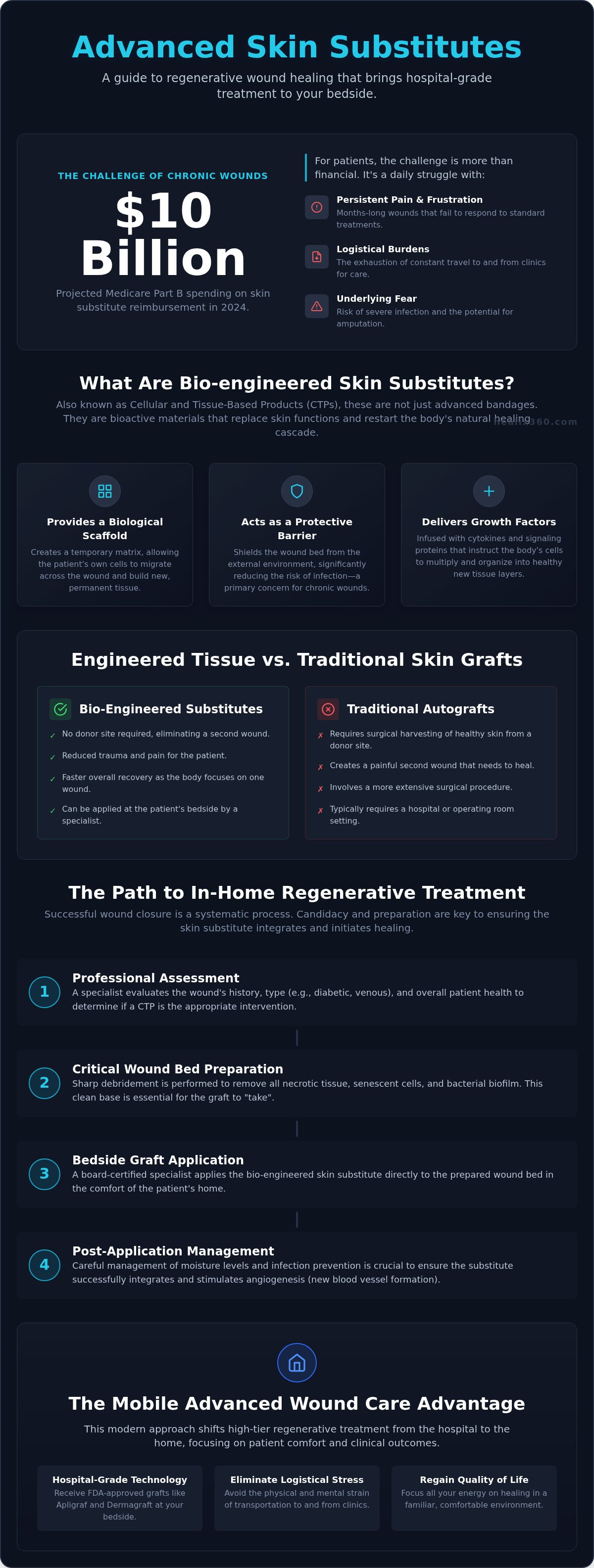
With Medicare Part B spending on skin substitute reimbursement reaching $10 billion in 2024, the medical community has recognized the critical need for advanced regenerative solutions. If you've been struggling with a wound that hasn't healed for months, you're likely familiar with the exhaustion of constant travel to clinics and the underlying fear of amputation. It's frustrating when standard treatments fail and the logistics of care become as painful as the injury itself. You aren't alone in seeking a more accessible path to recovery.
Advanced bio-engineered skin substitutes for chronic wounds offer a clinical breakthrough that brings hospital-grade technology directly to your bedside. This 2026 mobile care guide explains how regenerative medicine accelerates healing for non-responsive ulcers and helps you determine if you're a candidate for in-home treatment. We'll examine the latest CMS reimbursement standards, specific FDA-approved grafts like Apligraf and Dermagraft, and how mobile specialists facilitate wound closure without the stress of facility-based logistics. Understanding these options is the first step toward preventing infection and regaining your quality of life.
Key Takeaways
- Understand how advanced medical tissues replace skin functions and stimulate natural healing to resolve long-standing, non-responsive wounds.
- Discover how bio-engineered skin substitutes for chronic wounds interact with the body's extracellular matrix to restart the healing process in stalled ulcers.
- Learn the clinical differences between acellular and cellular grafts, including the regenerative properties of placental-based amniotic membrane allografts.
- Identify the essential steps for treatment candidacy, including the necessity of professional sharp debridement and wound assessment before graft application.
- Explore the logistical benefits of mobile advanced wound care, which brings specialized regenerative treatments directly to patients' bedsides across Glendale and Los Angeles County.
What are Bio-engineered Skin Substitutes for Chronic Wounds?
Bio-engineered skin substitutes for chronic wounds represent a significant advancement in regenerative medicine. These are not merely sophisticated bandages; they are advanced medical tissues engineered to replace the physical and biological functions of the skin. By providing a structural framework, these products stimulate the body's natural healing mechanisms to close wounds that have failed to respond to standard care. The medical field often refers to these as cellular and tissue-based products (CTPs), a category that has evolved significantly from the early days of basic Artificial Skin applications.
For many patients, a wound becomes "stalled" when the natural inflammatory process doesn't transition into tissue rebuilding. This plateau often occurs in diabetic ulcers or venous insufficiency. Bio-engineered materials intervene by providing a biological scaffold. This scaffold acts as a temporary matrix, allowing the patient's own cells to migrate across the wound bed and begin the work of permanent tissue synthesis. It's a bridge between a non-healing state and complete wound closure.
The Science of Regenerative Healing
Bio-engineered skin substitutes are bioactive materials that mimic human skin to close complex wounds. Beyond serving as a physical scaffold, these materials provide a protective barrier that reduces the risk of infection, a primary concern for chronic wound patients. They are infused with growth factors and cytokines, which are signaling proteins that communicate with the body's cells. These proteins effectively restart the healing process by instructing cells to multiply and organize into new, healthy tissue layers.
Engineered Tissue vs. Traditional Skin Grafts
The primary advantage of engineered tissue over traditional skin grafts is the elimination of a donor site. In a standard autograft, a surgeon must harvest healthy skin from a separate part of the patient's body, creating a second wound that requires its own recovery period. Bio-engineered options bypass this painful requirement entirely. This results in several benefits for the patient:
- Reduced trauma: There is no secondary surgical site to manage or keep clean.
- Faster recovery: Without the need for extensive surgery, the body can focus all its energy on closing the primary wound.
- Bedside convenience: Because these substitutes don't require surgical harvesting, board-certified specialists can apply them during a mobile visit.
This transition from the operating room to the bedside is a hallmark of modern mobile advanced wound care. It allows patients to receive high-tier regenerative treatment in the comfort of their home, avoiding the logistical stress of clinic visits while still achieving clinical-grade wound closure.
How Skin Substitutes Accelerate Chronic Wound Closure
Chronic wounds often enter a state of metabolic stasis where the natural healing process simply stops. This "stalled wound" problem occurs when the inflammatory phase persists too long, leading to high levels of destructive enzymes that break down healthy tissue. Bio-engineered skin substitutes for chronic wounds intervene by providing a fresh biological blueprint. These materials interact directly with the extracellular matrix (ECM), offering a scaffold that promotes cellular migration and proliferation. By replacing the damaged ECM, these substitutes help the body's own cells move across the wound bed to close the injury.
The success of these advanced materials depends heavily on the preparation of the wound bed. Performing sharp debridement is a critical prerequisite. This clinical procedure removes necrotic tissue, senescent cells, and bacterial biofilm that would otherwise prevent the skin substitute from integrating. Once the wound is debrided, specialists must carefully manage moisture and infection levels. A balanced environment ensures the substitute "takes" successfully and begins the regenerative process without interference from localized bacteria.
Stimulating the Wound Bed
Once applied, bio-engineered substitutes actively stimulate the wound bed to encourage angiogenesis, which is the formation of new blood vessels. This increased blood flow is vital for delivering oxygen and nutrients to the site of the injury. These materials also work to reduce the chronic inflammation that prevents epithelialization, or the growth of new skin. For many patients, the substitute also acts as a biological bandage. It covers sensitive nerve endings, which can significantly reduce the pain often associated with deep ulcers or exposed tissue.
Clinical Indications for Advanced Grafts
Clinicians typically follow the "30-day rule" when managing complex injuries. If a wound hasn't shown at least 50% reduction in size after four weeks of standard care, it's time to transition to advanced skin substitute treatments. This proactive shift is essential for preventing long-term complications like bone infections or tissue death. These grafts are particularly effective for diabetic ulcer treatment and venous stasis ulcers, where underlying vascular issues often prevent the body from healing on its own. If your current treatment plan isn't producing results, a mobile bedside assessment can determine if your wound is ready for regenerative intervention.
Types of Bio-engineered Substitutes and Grafts
The clinical selection of bio-engineered skin substitutes for chronic wounds depends on the specific biological requirements of the wound bed. These materials are generally categorized into acellular and cellular substitutes. Acellular products serve as a structural matrix, often composed of collagen or silicone, providing a scaffold for the patient's own cells to populate. Cellular substitutes are more complex, containing living human cells like fibroblasts or keratinocytes. These living cells actively produce essential cytokines and growth factors, making them highly effective for wounds that have failed to respond to passive treatments.
Choosing the correct cellular or tissue-based product (CTP) requires a thorough assessment of the wound’s pathology. A specialist evaluates the wound depth, location, and the patient's vascular status to determine which material will integrate most effectively. This precision in selecting bio-engineered skin substitutes for chronic wounds allows for superior outcomes in home-based care, particularly for patients who don't have the mobility to visit a traditional wound center.
Amniotic Allografts: The Gold Standard in Regeneration
Amniotic membrane allografts have emerged as a premier choice for non-healing wounds due to their unique biological properties. Derived from donated placental tissue, these grafts are naturally rich in regenerative proteins and possess inherent anti-inflammatory and anti-microbial characteristics. This makes them particularly effective for managing edema in legs where chronic swelling often leads to painful venous ulcers. Clinical data consistently shows a high success rate when using amniotic tissue to close deep diabetic neuropathic ulcers, as the graft helps suppress the chronic inflammation that typically stalls healing.
Biological Scaffolds and Synthetic Options
Beyond human-derived tissues, specialists often utilize biological scaffolds sourced from bovine or porcine collagen. These matrices mimic the human extracellular matrix, providing a durable foundation for new tissue growth. Synthetic skin options are also available, primarily used for temporary protection in large traumatic wounds. These synthetics prevent fluid loss and infection while the wound bed is prepared for a more permanent graft. The role of the specialist is to identify the specific CTP that matches the patient’s pathology, whether they're dealing with a surgical wound or a pressure injury.
- Wound Depth: Deep ulcers may require a multi-layered scaffold to build volume.
- Location: Wounds on high-friction areas like the heel or ankle need more durable, adherent materials.
- Vascular Status: The level of blood flow determines whether a cellular or acellular approach is most appropriate.
Patient Candidacy and the Treatment Process
Determining candidacy for bio-engineered skin substitutes for chronic wounds begins with a detailed bedside evaluation. Our board-certified specialists analyze the wound's history, current dimensions, and the quality of the surrounding tissue. If a wound has remained non-responsive to standard dressings for more than 30 days, we initiate the preparation phase. This critical step involves sharp debridement to remove biofilm and necrotic debris, followed by wound culture testing. Ensuring the wound bed is clean and free of active infection is mandatory for the graft to integrate successfully with the patient's existing tissue.
The application procedure is a streamlined, 30-minute clinical event performed in the comfort of the patient's home or facility. Patients typically remain in their own bed or chair throughout the process. The specialist prepares the site, applies the bio-engineered tissue, and secures it with advanced secondary dressings. Post-application care is the final pillar of success. It requires strict adherence to offloading protocols to protect the site from pressure, alongside compression therapy to manage localized edema. These steps ensure the new tissue remains undisturbed during the initial stages of cellular migration.
Who is a Candidate for Skin Substitutes?
Ideal candidates include individuals suffering from non-healing bed sores or ulcers that have stalled in the inflammatory phase. Patients with diabetes or compromised vascular health often see the most significant benefits from these regenerative interventions. However, there are specific contraindications to consider. If a patient has an untreated bone infection or severely restricted arterial blood flow, these conditions must be managed before applying bio-engineered skin substitutes for chronic wounds. Our team coordinates with primary physicians to ensure the patient is physiologically ready for advanced grafting.
The Mobile Treatment Timeline
Healing is a clinical progression rather than a single event. While some superficial wounds may close after a single application, complex or deep ulcers often require multiple grafts spaced over several weeks to achieve full closure. We monitor this progress using digital imaging and consistent bedside assessments to document tissue growth and volume reduction. Between specialist visits, the role of the caregiver is essential. They must ensure the protective dressings remain intact and the wound environment stays stable. If you're ready to transition from standard care to regenerative medicine, you can request a mobile bedside evaluation to begin your personalized treatment plan.
Mobile Advanced Wound Care in Southern California
While traditional wound care models often require patients to visit specialized hospital suites for advanced procedures, Healix360 has shifted this paradigm. We deliver bio-engineered skin substitutes for chronic wounds directly to the patient’s residence or facility. This mobile approach is particularly beneficial for residents in Glendale and Los Angeles who face mobility challenges or significant transport logistics. By bringing regenerative medicine to the bedside, we eliminate the "clinic fatigue" that often leads to missed appointments and stalled healing. Our board-certified specialists provide the same level of clinical rigor found in a surgical center without the associated stress of travel.
The application of bio-engineered skin substitutes for chronic wounds is a highly specialized task that requires precise clinical judgment. As a Medicare Part B provider, Healix360 coordinates closely with insurance carriers to ensure that high-value grafts are accessible to those who need them most. We handle the complex documentation required for Medicare compliance, allowing patients and their families to focus on recovery rather than administrative hurdles. Our team ensures that each treatment plan aligns with the latest clinical standards and regulatory requirements.
Serving Los Angeles and Glendale Communities
Our commitment to Southern California’s aging population centers on providing expert care where it is most effective. We frequently collaborate with home health agencies and case managers to provide seamless post-surgical care. By intervening at the bedside with advanced therapies like amniotic membrane grafts, we significantly reduce the risk of hospital readmissions. Expert wound management prevents local infections from escalating into systemic issues that would otherwise require emergency intervention or inpatient stays. We act as a dependable bridge between the hospital and the home.
Next Steps: Scheduling a Mobile Assessment
Initiating care with a mobile wound specialist is a straightforward process. Physicians, home health agencies, or family members can refer a patient for a comprehensive bedside evaluation. During this initial visit, our specialist determines if the wound meets the clinical criteria for advanced tissue application. We require specific documentation regarding the wound's history and previous treatment attempts to ensure Medicare-compliant skin substitute application. This thorough approach guarantees that every patient receives a personalized treatment plan tailored to their unique pathology. If you are a candidate for regenerative medicine, you can Contact Healix360 to schedule your bedside wound assessment today.
Advancing Your Recovery with Bedside Regenerative Medicine
The integration of bio-engineered skin substitutes for chronic wounds has transformed the outlook for patients struggling with non-responsive ulcers. By utilizing advanced biological scaffolds and amniotic membrane grafts, these treatments address the underlying cellular stalls that prevent natural closure. Receiving this level of specialized care no longer requires the physical and emotional toll of frequent clinic visits. Mobile advanced wound care brings the gold standard of regenerative medicine directly to your home or facility, ensuring that clinical excellence is accessible to those with limited mobility.
Healix360 operates as a dedicated Medicare Part B Provider with a team of Board-Certified Wound Specialists. We are committed to serving the communities of Glendale, Los Angeles, and Southern California with hospital-grade technology delivered at the bedside. Our focus remains on accelerating wound closure and preventing severe complications through early, expert intervention. This comprehensive approach ensures that patients receive high-tier medical support in the environment where they're most comfortable.
If you or a loved one are ready to explore the benefits of mobile regenerative care, take the next step toward healing today. Schedule a Mobile Wound Specialist Consultation to receive a professional evaluation and a personalized treatment plan. You don't have to manage a chronic wound alone.
Frequently Asked Questions
Are bio-engineered skin substitutes covered by Medicare Part B?
Yes, bio-engineered skin substitutes for chronic wounds are generally covered by Medicare Part B when specific clinical criteria are met. Healix360 is a Medicare Part B provider and coordinates coverage for these advanced treatments across Southern California. Medicare typically requires documentation that the wound hasn't responded to standard care for at least 30 days. We manage the necessary administrative paperwork to ensure these high-value regenerative materials remain accessible for our patients.
Do I need surgery in a hospital to receive a skin substitute graft?
No, you don't need to visit a hospital or surgical suite to receive these advanced treatments. Healix360 specializes in mobile advanced wound care, bringing regenerative technology directly to your home or facility in Los Angeles and Glendale. Our board-certified specialists apply these grafts during a streamlined bedside procedure. This model eliminates the stress of medical transport while maintaining the same clinical standards as an inpatient setting.
How long does it take for a chronic wound to heal with a skin substitute?
Healing times vary based on the wound's size and the patient's underlying health. While bio-engineered skin substitutes for chronic wounds significantly accelerate the closure process compared to standard dressings, complete healing often takes several weeks. Many patients see substantial progress within 4 to 6 weeks of the first application. We monitor progress through digital imaging and regular assessments to ensure the wound remains on a positive trajectory.
Is the application of a skin substitute painful?
The application process is generally not painful and is performed at your bedside. Because these substitutes act as a biological bandage, they often provide relief by covering exposed nerve endings. Before application, the specialist performs sharp debridement to prepare the site, which is handled with care to minimize discomfort. Most patients find the procedure much less traumatic than traditional surgical skin grafting, which requires a donor site.
What is the difference between an amniotic graft and a traditional skin graft?
A traditional skin graft requires surgery to harvest healthy skin from another part of your body, creating a second wound site. In contrast, an amniotic membrane graft uses donated placental tissue naturally rich in growth factors and anti-inflammatory proteins. There's no donor site required. These allografts are applied directly to the wound bed during a mobile visit, making them a less invasive option for elderly patients.
Can skin substitutes be used on infected wounds?
Advanced substitutes shouldn't be applied to wounds with an active, uncontrolled infection. We prioritize clearing localized infections through wound culture and sensitivity testing before graft application. Once the bacterial load is managed and the wound bed is properly prepared, the skin substitute can be safely applied. These materials then help protect the site from future infections by providing a biological barrier and stimulating the natural immune response.
How many applications of a skin substitute are typically required?
The number of applications depends on the complexity and severity of the injury. While some superficial wounds might close after a single application, deep or long-standing chronic ulcers often require multiple grafts to achieve full closure. These are typically spaced one to two weeks apart. Our specialists evaluate the wound at each visit to determine if an additional application is necessary to maintain regenerative momentum and ensure closure.
Why is debridement necessary before applying a bio-engineered substitute?
Sharp debridement is essential because it removes necrotic tissue and bacterial biofilm that block healing. A bio-engineered substitute requires direct contact with a healthy, vascularized wound bed to successfully integrate and stimulate new growth. Without debridement, the graft cannot effectively interact with the body's cells. This preparation ensures the highest possible success rate for graft incorporation and eventual wound closure in a home or facility setting.


