
Imagine waking up to find the bandage on your lower leg is soaked through again, while the persistent ache of a weeping sore makes the thought of a long trip to a wound clinic feel overwhelming. For many patients, the physical toll of traveling for specialized care is often as taxing as the condition itself. You likely feel frustrated by the slow progress of traditional dressings and the confusion surrounding what Medicare will actually cover for bedside visits. It's a common struggle, but your recovery shouldn't be limited by your mobility or transportation challenges.
This guide demonstrates how professional at-home venous ulcer treatment now brings hospital-grade regenerative medicine directly to your bedside. You'll discover how board-certified specialists utilize the 18 Medicare-approved skin substitutes and advanced compression therapy to close non-healing wounds effectively. We will preview the significant 2026 CMS reimbursement changes, the mandatory four-week conservative care requirements, and the specific ways mobile clinical teams coordinate with home health agencies to prevent infections. By the end of this article, you'll understand how to access expert medical interventions that reduce swelling and promote visible healing without leaving your home.
Key Takeaways
- Professional wound specialists now provide hospital-grade medical interventions directly at the bedside, eliminating the physical burden of traveling to traditional outpatient clinics.
- Discover how advanced at-home venous ulcer treatment utilizes bio-engineered skin substitutes and amniotic grafts to restart the healing process in chronic, non-healing leg sores.
- Understand the 2026 Medicare Part B reimbursement landscape, including the mandatory four-week conservative care requirement and the list of 18 approved regenerative products.
- Learn why clinical components such as medical-grade compression therapy and sharp debridement are essential for reducing venous hypertension and preventing severe infections.
- Identify practical home management strategies, including specific leg elevation techniques and nutritional support, to optimize tissue repair and long-term recovery.
Understanding Venous Ulcers and the Need for Professional Intervention
Venous ulcers are open sores that typically develop on the lower leg, often just above the ankle. These lesions are a direct consequence of chronic venous insufficiency (CVI), a condition where damaged or weakened valves in the leg veins fail to return blood to the heart effectively. This failure leads to Understanding Venous Ulcers through the lens of pathophysiology, specifically the pooling of blood in the lower limbs. Patients frequently report a persistent sensation of leg heaviness, visible swelling, and a distinct reddish-brown skin discoloration known as hemosiderin staining.
A wound is clinically defined as chronic when it fails to progress through the normal stages of healing within 4 to 6 weeks. Attempting "DIY" care with standard adhesive bandages or over-the-counter ointments is often insufficient for these complex injuries. Improper management can lead to severe complications, such as cellulitis or deep tissue infections, which may eventually require hospitalization. Professional at-home venous ulcer treatment offers a safer alternative by bringing specialized clinical oversight directly to the patient's bedside.
Why Venous Ulcers Struggle to Heal
The primary barrier to recovery is venous hypertension, which refers to high pressure within the leg veins. This pressure forces fluid into the surrounding soft tissues, causing significant edema. This fluid buildup creates a localized environment where oxygen and essential nutrients cannot reach the wound bed. Without adequate oxygenation, cellular repair stalls. For those dealing with persistent swelling, our guide on managing edema in legs provides additional vascular context for maintaining long-term health and preventing ulcer recurrence.
When to Transition from Home First Aid to Specialist Care
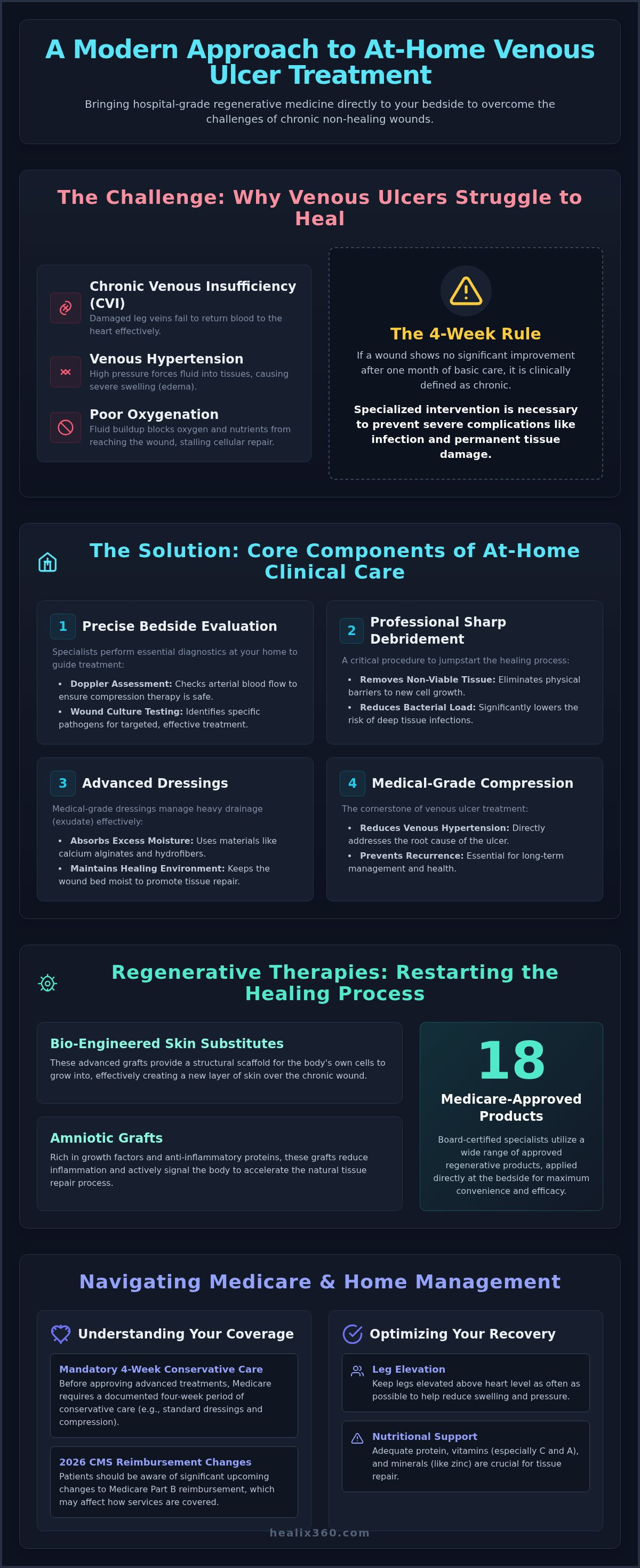
Determining when to seek professional intervention is vital for preventing permanent tissue damage. You should monitor for specific red flags, including increased wound drainage, a foul odor, or redness that spreads to the surrounding skin. Clinical guidelines emphasize the "4-week rule"; if a wound shows no significant improvement after a month of basic care, specialized intervention is necessary. Waiting and seeing often allows the ulcer to enlarge, making eventual recovery more difficult and increasing the risk of secondary infections. Expert at-home venous ulcer treatment ensures that advanced therapies are initiated before these complications arise.
The Core Components of Clinical At-Home Venous Ulcer Treatment
Effective at-home venous ulcer treatment begins with a precise clinical evaluation conducted at the bedside. Specialists use portable handheld Doppler devices to assess arterial blood flow, ensuring that high-pressure compression therapy is safe for the individual. Unlike general first aid, professional care involves specific wound culture and sensitivity testing. This diagnostic step allows clinicians to identify specific pathogens and prescribe targeted treatments instead of relying on broad-spectrum antibiotics, which can lead to bacterial resistance. Managing heavy wound drainage, or exudate, is equally critical for success. Specialists select advanced dressings, such as calcium alginates or hydrofibers, that absorb excess moisture while maintaining a moist environment conducive to tissue repair. This approach aligns with authoritative venous ulcer self-care instructions regarding the maintenance of a clean and protected wound environment.
The Role of Professional Sharp Debridement
Chronic wounds often contain necrotic or devitalized tissue that acts as a physical barrier to new cell growth. Professional sharp debridement involves the surgical removal of this non-viable material using sterile instruments. When performed by a qualified wound debrider, this process jumpstarts the inflammatory phase of healing and significantly reduces the bacterial load. Mobile specialists perform this procedure safely in the home setting, ensuring the wound bed is properly prepared for advanced regenerative therapies. Removing this biofilm is a prerequisite for any graft or skin substitute application.
Advanced Compression Systems
While standard support stockings provide basic relief, clinical recovery requires multi-layer compression systems. These specialized wraps apply graduated pressure to the lower leg, effectively reducing venous hypertension and pushing fluid back into the circulatory system. Specialists must calibrate this pressure carefully. If a patient has mixed arterial disease, excessive pressure can be dangerous. Clinicians also monitor the skin integrity under these wraps to prevent the development of new pressure injuries. This level of technical oversight is why many families choose to partner with mobile wound specialists for their long-term recovery needs.
By integrating these clinical components, mobile providers transform the home into a high-functioning treatment center. This structured approach addresses both the visible wound and the underlying vascular issues simultaneously. It's this combination of diagnostic precision and physical intervention that sets professional care apart from basic home dressing changes. Establishing this clinical foundation is the first step toward utilizing more advanced regenerative technologies.
Regenerative Therapies: Skin Substitutes and Amniotic Grafts at Home
When conservative measures like compression and debridement don't achieve wound closure within the mandatory four-week window, regenerative medicine becomes the gold standard for at-home venous ulcer treatment. These advanced therapies move beyond simply covering a wound; they actively interact with the wound bed to restart the biological healing clock in dormant tissue. By introducing cellular components to a chronic site, clinicians can overcome the inflammatory barriers that often stall recovery in patients with vascular insufficiency. This specialized approach is particularly effective for large or deep ulcers that have failed to respond to standard first aid.
Bio-engineered Skin Substitutes vs. Traditional Dressings
Bio-engineered skin substitutes are cellular-based products that mimic the physiological structure and function of human skin. While traditional dressings focus primarily on moisture balance and protection, these bio-engineered scaffolds provide a physical barrier while releasing essential healing proteins and cytokines. This clinical intervention often reduces the need for daily dressing changes that can irritate the surrounding skin. Instead, specialists apply a graft once a week or as clinically indicated. This frequency minimizes trauma to the fragile new tissue forming at the wound edges and provides a more stable environment for cell migration.
Bedside Application of Amniotic Allografts
Amniotic allografts are a specialized subset of regenerative medicine derived from placental tissue, known for their high concentration of natural growth factors. A mobile specialist prepares the wound bed through sharp debridement before carefully placing the sterile graft directly onto the ulcer at the patient's bedside. These are FDA-regulated, sterile medical products sourced through rigorous quality-control protocols to ensure patient safety. Residents in Los Angeles and Glendale can access these advanced skin substitute treatments through mobile clinical teams, avoiding the logistical stress of hospital visits. The application is quick, typically painless, and requires no specialized equipment beyond what the specialist brings to the home.
The integration of these grafts into a home-based plan leads to superior clinical outcomes. Patients typically report a noticeable reduction in localized pain because the graft protects exposed nerve endings and reduces inflammation. More importantly, these therapies demonstrate significantly faster closure times compared to standard dressings alone. The resulting skin quality is also more resilient, which helps prevent future breakdown and recurrence in the same area. This level of specialized care ensures that even complex, non-healing wounds receive the best possible chance at full recovery within a residential setting.
Managing the Home Environment for Successful Recovery
Effective at-home venous ulcer treatment relies heavily on maintaining a clinical environment within the residence. While specialists provide advanced interventions, the daily management of the limb determines the speed of recovery. Proper leg elevation is the most critical daily task. Patients should position their legs above the level of the heart for at least 30 minutes, three to four times a day. This use of gravity reduces venous hypertension and assists the return of blood to the heart, which directly decreases the pressure at the wound site. Without consistent elevation, even the most advanced grafts may struggle to integrate with the wound bed.
Tissue repair requires specific metabolic fuel. Clinical evidence supports a diet high in lean protein to rebuild cellular structures, while Vitamin C and Zinc are essential for collagen synthesis and skin integrity. Caregivers must also protect the periwound skin. Chronic drainage, or "weeping," can lead to skin maceration, where the surrounding tissue becomes waterlogged and breaks down. Using medical-grade barrier creams as directed by your specialist prevents this secondary damage and ensures the ulcer does not expand into healthy tissue.
The Caregiver’s Role in Edema Management
Caregivers are vital for ensuring compliance with compression therapy. Multi-layer wraps or garments can be difficult for patients to manage alone due to limited mobility or strength. Beyond physical assistance, caregivers should encourage "ankle pumps" to stimulate the calf muscle pump. This simple movement mimics the action of walking and helps move fluid out of the lower leg. If a dressing becomes saturated or shifts significantly, you should contact your mobile specialist for a bedside assessment rather than attempting to reapply clinical wraps yourself. Consistency in these daily habits prevents the recurrence of swelling that stalls the healing process.
Preventing Secondary Infections
Maintaining a sterile field is paramount when managing chronic sores at home. Family members should practice rigorous hand hygiene before and after any contact with the patient's bandages. Early identification of cellulitis can prevent a minor infection from escalating into a medical emergency. Watch for localized warmth, increased tenderness, and redness that spreads beyond the original wound margins. A fever often indicates a systemic response and requires immediate clinical attention. If an infection is suspected, your provider will perform wound culture and sensitivity testing to ensure the correct antibiotic is prescribed. To begin your clinical recovery journey, you can request a bedside wound evaluation from our board-certified team.
Mobile Wound Care in Southern California: Accessing Healix360
Healix360 addresses the critical gap in clinical accessibility by bringing board-certified wound specialists directly to residences throughout Los Angeles and Glendale. This specialized model eliminates the significant mobility and transportation barriers that often prevent patients from receiving consistent at-home venous ulcer treatment. By operating as a mobile clinical unit, the team provides hospital-grade interventions, including amniotic membrane grafts and sharp debridement, without requiring the patient to navigate the logistical challenges of a traditional wound clinic. Our focus remains on delivering high-standard care that prioritizes patient comfort and clinical integrity.
Our clinical team functions as a specialized extension of the patient's existing medical network. We work in close partnership with home health agencies, case managers, and primary care physicians to ensure a unified approach to recovery. This coordination is essential for preventing complications like sepsis or deep tissue infections that frequently lead to hospital readmissions. If a patient’s condition requires input from vascular surgeons or podiatrists, our specialists facilitate those multidisciplinary connections while maintaining the continuity of bedside care. This collaborative environment ensures that all aspects of the patient's vascular and systemic health are addressed simultaneously.
Medicare and Insurance Coverage for At-Home Treatment
Healix360 operates as a dedicated Medicare Part B provider, which is a significant advantage for seniors and eligible individuals in Southern California. Medicare Part B generally covers 80% of the approved costs for medically necessary wound care services delivered in the home. Our administrative team assists with the complex documentation required to establish medical necessity, ensuring that patients meet the specific criteria for advanced regenerative procedures. This professional billing oversight is particularly valuable following the 2026 CMS rule changes regarding skin substitute reimbursement. We ensure that high-complexity treatments remain accessible while minimizing the administrative burden for the patient and their family.
Scheduling a Bedside Evaluation in Glendale or Los Angeles
Starting the recovery process is a streamlined clinical procedure. During the initial bedside evaluation, a specialist conducts a thorough assessment of the wound’s etiology, bacterial load, and vascular status. Establishing a professional at-home venous ulcer treatment plan ensures that the wound is managed with diagnostic precision from the first day. This visit results in a personalized healing plan that serves as a roadmap for the coming weeks. The plan specifies the exact types of advanced dressings, the required frequency of debridement, and the timing for regenerative graft applications. This structured path provides families with clear expectations for visible wound healing and infection prevention.
Contact Healix360 today to schedule your mobile wound assessment
Advancing Your Recovery with Specialized Bedside Care
Recovery from chronic leg sores requires moving beyond basic dressings to a structured clinical plan. By integrating advanced compression, sharp debridement, and regenerative skin substitutes, you can overcome the biological barriers that stall healing. Professional at-home venous ulcer treatment ensures that these hospital-grade interventions are delivered safely and effectively in the comfort of your residence. This approach addresses both the immediate wound and the underlying vascular pressure that prevents long-term closure.
As a board-certified Medicare Part B provider, Healix360 specializes in applying amniotic membrane grafts and managing complex vascular wounds for residents in Los Angeles and Glendale. Our mobile clinical team handles the documentation and coordination with your existing healthcare providers, allowing you to focus entirely on your recovery. You don't have to navigate the pain and logistical stress of frequent clinic visits alone. Expert medical intervention is available without the need for transportation.
Schedule a Professional At-Home Wound Evaluation with Healix360 today to begin your journey toward lasting tissue repair and improved mobility. We're ready to bring expert clinical care directly to your bedside.
Frequently Asked Questions
Does Medicare cover at-home venous ulcer treatment?
Medicare Part B typically covers 80% of the approved costs for medically necessary wound care services provided at the bedside. As a specialized Medicare Part B provider, Healix360 works with patients to ensure all clinical documentation meets federal guidelines for at-home venous ulcer treatment. This coverage includes professional consultations, sharp debridement, and the application of bio-engineered skin substitutes for non-healing sores that meet specific clinical criteria after conservative care.
What is the difference between a home health nurse and a mobile wound specialist?
A home health nurse provides general nursing services such as monitoring vitals and performing basic dressing changes. In contrast, a mobile wound specialist from Healix360 is a board-certified professional authorized to perform advanced clinical procedures. These include sharp debridement, amniotic membrane grafting, and diagnostic wound cultures. We often collaborate with home health agencies to provide the specialized surgical and regenerative interventions that general nursing teams aren't equipped to perform.
How long does it take for a venous leg ulcer to heal with professional care?
Healing times vary significantly based on the size of the ulcer and the patient's overall vascular health. While standard care might take months or fail entirely, professional at-home venous ulcer treatment using regenerative grafts often accelerates closure. Most chronic wounds require a consistent clinical plan spanning several weeks. Specialists monitor progress during each visit to adjust compression levels and ensure the wound bed remains free of necrotic tissue and infection.
Can skin substitutes be applied in a private home or assisted living facility?
Yes, advanced skin substitutes and amniotic grafts can be safely applied in private residences, assisted living facilities, and skilled nursing facilities. Healix360 brings the necessary sterile equipment and specialized medical products directly to the patient's bedside. This mobile approach allows individuals with limited mobility in Los Angeles and Glendale to receive hospital-grade regenerative medicine without the physical strain of visiting an outpatient wound center or surgical suite.
What happens if a venous ulcer is left untreated?
Leaving a venous ulcer untreated can lead to severe medical complications, including localized cellulitis, deep tissue infections, and bone infections. Chronic venous hypertension continues to damage the surrounding skin, often causing the ulcer to expand in size and depth. Without professional intervention to manage the bacterial load and reduce edema, the risk of systemic infection or sepsis increases significantly. Timely clinical care is essential for preventing these outcomes and avoiding potential amputations.
Are amniotic grafts safe for elderly patients with multiple health conditions?
Amniotic grafts are generally considered safe and effective for elderly patients because the application process is non-invasive and performed at the bedside. These FDA-regulated, sterile medical products are derived from placental tissue and contain natural growth factors that stimulate healing without requiring systemic medications. Specialists at Healix360 conduct a thorough medical evaluation before application to ensure the therapy is appropriate for patients with complex histories or multiple co-morbidities.
Do I need a referral to see a mobile wound care specialist in Southern California?
While many patients are referred to Healix360 by their primary care physician or a hospital discharge planner, you can also contact us directly for an initial evaluation. We coordinate closely with your existing healthcare network to ensure all treatments are medically necessary and documented for insurance purposes. Our team serves patients throughout Southern California, focusing on providing accessible, specialized wound management for those who find it difficult to travel to traditional clinics.
How often will a specialist need to visit for venous ulcer treatment?
The frequency of visits depends on the complexity of the wound and the specific treatment plan developed during your initial evaluation. Typically, specialists visit once or twice a week to perform sharp debridement, change advanced dressings, or apply regenerative grafts. These regular assessments allow the clinical team to monitor for signs of infection and adjust compression therapy as the swelling in the lower leg begins to subside.


