
You might assume that advanced regenerative medicine is reserved for specialized inpatient surgical centers, but for many patients, the opposite is true. If you're struggling with a chronic diabetic foot ulcer or a persistent pressure injury, the frustration of slow healing is often compounded by the physical exhaustion of traveling to a wound clinic. You deserve a treatment plan that prioritizes both clinical excellence and your personal comfort.
We understand that the cost of modern healthcare is a significant source of anxiety for many families. It's reassuring to know that medicare coverage for amniotic membrane grafts is well-established under Part B for patients who meet specific clinical milestones. As of January 1, 2026, Medicare has streamlined its reimbursement model, classifying these regenerative grafts as "incident-to" supplies to ensure more predictable access to care.
In this guide, you'll learn exactly how to qualify for these advanced treatments and how to verify if your specific graft is among the 18 nationally covered products. We'll also explain how residents in Los Angeles and Glendale can access these grafts at home through Healix360's mobile wound care services, eliminating the need for difficult travel while maintaining the highest clinical standards.
Key Takeaways
- Amniotic membrane grafts function as a biological scaffold to jumpstart the healing process for chronic diabetic and venous ulcers.
- Understand the specific medical necessity criteria for medicare coverage for amniotic membrane grafts, including the requirement for 30 days of documented standard care failure.
- Discover how mobile wound care services allow residents in Southern California to receive advanced regenerative treatments directly at their bedside.
- Learn about the 2026 Medicare Part B billing requirements, including relevant CPT codes and patient responsibility for the 20% coinsurance.
- Find out how Healix360 manages the complex coordination of Medicare documentation and professional clinical assessments for non-healing wounds.
What is an Amniotic Membrane Graft and Does Medicare Cover It?
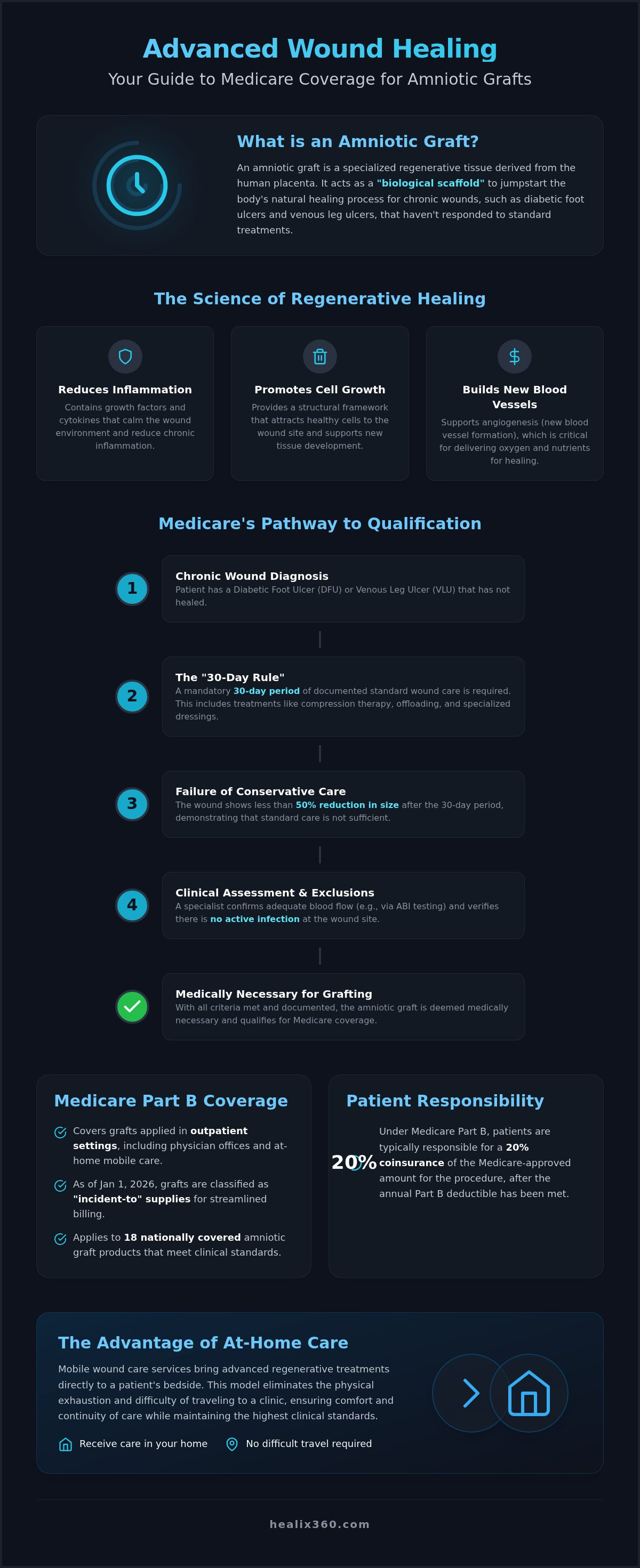
An amniotic membrane graft is a specialized regenerative tissue derived from the innermost layer of the human placenta. Unlike traditional synthetic dressings, these grafts are biological in nature and function as a "biological scaffold." In the context of advanced wound care, they provide a structural framework that jumpstarts the body's natural healing processes. This is particularly effective for chronic ulcers that have stalled during the inflammatory phase and haven't responded to standard treatments.
Medicare generally categorizes these advanced treatments under the umbrella of Skin Substitutes or Cellular and Tissue-Based Products (CTPs). For many patients, medicare coverage for amniotic membrane grafts is a vital component of their recovery plan. Medicare Part B provides coverage for these grafts when they're used to treat specific chronic wounds, such as diabetic foot ulcers or venous leg ulcers, provided that standard conservative treatments haven't achieved significant healing over a documented period.
The Science of Regenerative Healing
The clinical efficacy of amniotic tissue stems from its rich concentration of growth factors, cytokines, and essential proteins. These biological components work together to modulate the wound environment. They effectively reduce localized inflammation and provide a natural barrier against infection. While traditional dressings primarily serve to protect the wound from external contaminants, an amniotic graft actively interacts with the patient's own cells. It promotes the migration of healthy cells to the wound site and supports the development of new blood vessels. This active biological role makes these grafts superior for non-healing wounds that don't respond to standard gauze or foam applications.
Medicare Part B vs. Part A for Grafts
Understanding the distinction between Medicare Part A and Part B is essential for patients seeking these treatments. Medicare Part A typically covers amniotic grafts if they're applied during a formal inpatient hospital stay. However, most modern wound care occurs in the outpatient setting. Medicare Part B covers the professional application of these grafts in physician offices or through specialized mobile medical services.
Healix360 operates as a Medicare Part B provider, specializing in delivering these advanced regenerative treatments directly to patients in Southern California. Because our specialists provide care at the patient's bedside, the service falls under Part B outpatient professional services. This model ensures that medicare coverage for amniotic membrane grafts remains accessible to those who find it physically difficult to travel to a traditional wound center. By providing these grafts in the home setting, we help maintain continuity of care while utilizing the same advanced technology found in major hospital systems.
Medicare Medical Necessity Criteria for Amniotic Grafts
Medicare guidelines for regenerative medicine are rigorous and evidence-based. Securing medicare coverage for amniotic membrane grafts requires clear documentation that simpler, more conservative treatments haven't achieved the desired clinical outcome. This process begins with the "30-Day Rule," which serves as a mandatory waiting period during which standard care must be prioritized and its results meticulously recorded.
Patients must undergo at least 30 days of documented standard wound care without significant progress before a graft is considered medically necessary. Coverage is primarily focused on chronic conditions like Diabetic Foot Ulcers (DFU) and Venous Leg Ulcers (VLU). To qualify, a specialist must provide precise wound measurements and a vascular assessment, typically through Ankle-Brachial Index (ABI) testing, to confirm the area has enough blood flow to support healing. Medicare generally excludes coverage if there's an active infection at the site or if the patient's circulation is too compromised to allow the biological scaffold to integrate.
Defining 'Failure of Conservative Care'
Standard conservative care involves several specific interventions depending on the wound type. This includes offloading for diabetic ulcers to remove pressure, compression therapy for venous ulcers to improve circulation, and the use of specialized moisture-retentive dressings. Medicare defines a "failure of care" as a wound that hasn't achieved at least a 50% reduction in size over four consecutive weeks of these treatments. Clinical records must also demonstrate that professional wound debridement was performed. This surgical cleaning of the wound bed is a non-negotiable prerequisite for successful graft application.
Specific ICD-10 Diagnosis Codes
Accurate medical coding is the foundation of a successful Medicare claim. Specialists must use specific ICD-10 codes that precisely describe the wound's etiology, such as diabetic neuropathic ulcers or chronic venous hypertension with ulceration. Each code must reflect the exact anatomical location and the severity of the tissue damage. In Southern California, our clinical team ensures every bedside assessment meets the strict documentation standards established by Noridian, the regional Medicare Administrative Contractor. If you're unsure whether your current diagnosis meets these requirements, our specialists can perform a bedside wound evaluation to determine your clinical eligibility for advanced regenerative therapy.
Mobile Wound Care: Receiving Grafts at Home in Southern California
The medical landscape in 2026 has shifted decisively toward patient-centered delivery, particularly in the field of regenerative medicine. Patients are no longer required to endure the physical and emotional strain of frequent trips to a hospital-based wound center to access high-tier treatments. Medicare Part B guidelines now clearly support the "Place of Service" rules that allow for the application of cellular and tissue-based products within a patient's residence. This regulatory framework ensures that medicare coverage for amniotic membrane grafts is fully accessible for homebound individuals or those with significant mobility challenges.
Receiving advanced grafts at home offers distinct clinical advantages. It significantly reduces the risk of exposure to healthcare-associated infections, which is a critical concern for immunocompromised patients with chronic ulcers. Furthermore, eliminating the stress of transport prevents the accidental "unloading" or trauma to the wound site that often occurs during vehicle transfers. Healix360 coordinates closely with Home Health Agencies (HHAs) and case managers to ensure that the graft application is part of a seamless, comprehensive recovery plan. While the HHA manages daily dressing changes and general nursing, our specialists step in to perform the advanced regenerative procedures.
Glendale and Los Angeles Mobile Services
Our mobile wound care program brings hospital-grade technology directly to residences throughout Glendale and the greater Los Angeles area. Healix360 utilizes specialized, portable equipment designed for sterile bedside graft application, ensuring that the environment meets the necessary clinical standards for regenerative therapy. This service extend beyond private homes to include assisted living and skilled nursing facilities, providing a higher level of specialized care than is typically available through general facility nursing staff.
The Role of Board-Certified Specialists
Applying an amniotic membrane is a precise clinical procedure that requires the expertise of a board-certified specialist. It isn't a task for a generalist nurse; the success of the treatment depends on the specialist's ability to properly prepare the wound bed and ensure the graft is perfectly apposed to the tissue. Our team specializes in diabetic ulcer treatment and chronic wound management, focusing on the technical nuances of graft "take." By performing follow-up assessments at the bedside, we can monitor the integration of the biological scaffold and make real-time adjustments to the treatment plan, which is essential for securing the full benefits of medicare coverage for amniotic membrane grafts.
Understanding Billing: CPT Codes and Out-of-Pocket Costs
Navigating the financial aspects of regenerative medicine requires a clear understanding of how Medicare categorizes these procedures. Securing medicare coverage for amniotic membrane grafts involves specific coding that differs significantly from other medical specialties. While many online resources mistakenly reference ocular codes like CPT 65778, these are strictly for eye procedures. For chronic wound care, specialists utilize the 15271 to 15278 series of CPT codes.
CPT 15271 is the primary code used for the application of a graft to the first 25 square centimeters of a wound. If the wound is larger, additional add-on codes are applied. Medicare Part B typically covers 80% of the approved amount for these services once the annual deductible has been met. The patient is responsible for the remaining 20% coinsurance. For many individuals, supplemental insurance, often called Medigap, covers this remaining balance in full. Traditional Medicare Part B generally doesn't require prior authorization for these grafts, though it's important to verify if you're enrolled in a Medicare Advantage plan, as those private insurers often have their own pre-service review requirements.
HCPCS Q-Codes for the Graft Material
Billing for these advanced treatments is a two-part process that separates the professional service from the biological material. While the CPT code covers the specialist's time and expertise, the actual skin substitute material is billed using HCPCS Level II Q-codes. These specific codes identify the exact manufacturer and type of amniotic tissue used during the procedure. This dual-billing structure ensures clinical transparency and helps prevent surprise medical bills by clearly itemizing the professional application and the specialized biological supply used at the bedside.
Steps to Verify Your Coverage
We follow a methodical process to ensure your treatment is fully authorized before care begins. The first step involves a formal bedside wound assessment by a Healix360 specialist to document the wound's history and current status. Next, our clinical team confirms that your specific diagnosis meets the Local Coverage Determination (LCD) guidelines established by Noridian for the California region. We then perform a direct verification of your Medicare or Advantage plan benefits to identify any potential out-of-pocket costs. Once eligibility is confirmed, we coordinate with your home health agency to schedule the in-home application. If you have questions about your specific plan, contact our billing specialists for a complimentary benefit verification.
Why Choose Healix360 for Amniotic Grafting in 2026?
Healix360 stands as a specialized provider dedicated to bridging the gap between advanced clinical technology and patient convenience. We focus on the high-stakes mission of limb salvage, particularly for diabetic patients where chronic wounds pose a significant risk of amputation. Our expertise in amniotic allografts is matched by our administrative proficiency in managing the complexities of medicare coverage for amniotic membrane grafts. By handling the rigorous documentation and billing requirements, we allow patients and their families to focus entirely on the healing process.
Our clinical model is built on the foundation of medical authority and quiet confidence. We understand that a non-healing wound is more than a physical ailment; it's a source of profound anxiety. Our board-certified specialists provide not only the technical application of the graft but also the reassurance that comes from a structured, professional treatment plan. We deliver these personalized plans directly to your door throughout Southern California, ensuring that the highest standard of regenerative medicine is accessible regardless of your mobility status.
Advanced Technology, Local Touch
We utilize the latest bio-engineered skin substitutes to treat complex bed sores and ulcers. Our commitment to the Southern California community spans from Beverly Hills to Glendale, providing a localized service that understands the specific needs of our regional patient population. We don't operate in isolation. Our specialists maintain a collaborative approach with your existing primary care physicians and home health agencies. This ensures that our regenerative interventions are integrated into your broader medical history and long-term health goals.
Schedule Your In-Home Assessment
Initiating your path to recovery is a straightforward process designed to minimize patient stress. A bedside evaluation allows our specialists to perform a comprehensive wound assessment and begin the precise documentation process required for medicare coverage for amniotic membrane grafts. This initial visit is clinical and thorough, focusing on wound etiology, size, and vascular health.
To prepare for your first specialist visit, please have your current list of medications, insurance cards, and any recent vascular study results or laboratory reports ready for review. Having this information available helps our team expedite the verification of your benefits and the development of your personalized care plan. Contact Healix360 today to verify your Medicare coverage for advanced wound care.
Secure Your Path to Advanced Wound Recovery
Accessing regenerative medicine no longer requires the physical strain of frequent clinic visits. It's clear that medicare coverage for amniotic membrane grafts is a robust benefit for patients with chronic ulcers who meet the 30-day standard care milestone. By utilizing these biological scaffolds, you're choosing a treatment path focused on limb salvage and active tissue regeneration rather than basic wound management.
Healix360 simplifies the process by serving as a dedicated Medicare Part B provider. Our Southern California mobile specialists bring clinical expertise and specialized equipment directly to your bedside in Los Angeles and Glendale. We manage the complex coordination of billing and medical documentation so you can focus on your recovery without administrative stress. You don't have to navigate the challenges of a non-healing wound alone.
Schedule Your In-Home Wound Assessment with Healix360 to begin your healing journey today. Our regenerative medicine experts are ready to provide the specialized care you deserve in the comfort of your own home.
Frequently Asked Questions
Is an amniotic membrane graft considered surgery by Medicare?
Medicare classifies the application of an amniotic membrane graft as a surgical procedure. It's billed using CPT codes 15271 through 15278, which are located in the surgical section of the medical coding manual. Although our specialists perform this procedure at your bedside without the need for an operating room, it still requires professional tissue handling and precise site preparation to ensure successful integration.
How many amniotic grafts will Medicare pay for per wound?
Medicare typically covers up to 10 graft applications per wound within a single 12 week treatment episode. Coverage depends on documented clinical progress. If a wound doesn't show a 50% reduction in size after a series of applications, Medicare may require a re-evaluation of the treatment plan. Our specialists meticulously document every visit to ensure your care remains compliant with these utilization limits.
Does Medicare Advantage cover amniotic grafts the same as Original Medicare?
Medicare Advantage plans are required by law to provide the same level of coverage as Original Medicare. This means medicare coverage for amniotic membrane grafts is available through private Advantage plans. However, these plans often require prior authorization before the procedure begins. Our administrative team handles this verification process directly with your insurer to confirm your specific benefits and any applicable co-payments before we start treatment.
Can I get amniotic grafts for a pressure ulcer (bedsore)?
Yes, Medicare covers amniotic grafts for stage 3 and stage 4 pressure ulcers that have failed to heal through standard conservative care. These grafts are highly effective for deep tissue injuries that have stalled in the inflammatory phase. We perform a thorough bedside evaluation to confirm that the pressure injury meets the medical necessity criteria, including the requirement for 30 days of documented standard wound care failure.
What is the difference between a skin substitute and an amniotic graft?
An amniotic graft is a specific type of biological skin substitute. While the term "skin substitute" includes a broad range of synthetic and bio-engineered materials, amniotic grafts are derived from human placental tissue. They're preferred by many specialists because they contain natural growth factors and cytokines. These biological components actively promote cellular migration and reduce inflammation in a way that many synthetic alternatives cannot match.
Do I need a referral to see a Healix360 wound specialist for a graft?
You don't always need a formal referral to begin the process, but we prefer to coordinate with your primary care physician or home health agency. This collaborative approach ensures that medicare coverage for amniotic membrane grafts is seamlessly integrated into your existing medical plan. We'll perform an initial bedside assessment to determine if you meet the clinical requirements for regenerative therapy and handle all the necessary medical documentation.
What happens if Medicare denies coverage for the graft?
If a claim is denied, it's usually because the documentation didn't sufficiently prove a "failure of conservative care." Our clinical team is expert at managing these administrative challenges. We focus on providing the detailed wound measurements and vascular studies required by Noridian, the California Medicare contractor. If a denial occurs, we can manage the appeals process by providing the specific clinical evidence needed to support medical necessity.
Is the application of the graft painful for the patient?
The application of the amniotic tissue itself is generally painless as it's placed directly onto the wound bed. Most patient discomfort is associated with the preliminary debridement, which is the process of cleaning the wound to remove dead tissue. Our specialists are trained to perform this bedside procedure with care, using localized numbing agents when necessary to ensure you're as comfortable as possible during the treatment process.


