
Why should a patient in the final stages of life endure the physical trauma of an ambulance ride just to treat a non-healing pressure ulcer? For families and caregivers, the logistical challenge of moving an immobile loved one often feels like a difficult choice between necessary clinical treatment and the patient's immediate comfort. You likely recognize that the risk of hospital-acquired infections and the sheer exhaustion of transport can significantly diminish a patient's quality of life. Accessing specialized advanced wound care for palliative care patients Riverside shouldn't require a compromise on dignity or safety.
Healix360 changes this dynamic by bringing hospital-grade regenerative medicine directly to the bedside. In this guide, you'll discover how mobile treatments like amniotic membrane grafts and bio-engineered skin substitutes accelerate healing and manage pain for chronic wounds. We will outline how our board-certified specialists partner with Riverside home health agencies to provide bedside evaluations that prevent infections and avoid unnecessary hospitalizations. By prioritizing clinical excellence and patient convenience, we ensure that specialized wound management remains accessible within the comfort of home, allowing families to focus on what matters most.
Key Takeaways
- Discover how mobile regenerative medicine eliminates the physical stress and potential trauma associated with transporting immobile patients to clinical facilities.
- Learn the clinical applications of amniotic membrane grafts and bio-engineered skin substitutes for treating chronic, non-healing pressure ulcers.
- Understand the safety advantages of advanced wound care for palliative care patients Riverside, specifically the reduction of exposure to hospital-acquired infections.
- Explore the collaborative model between specialized wound care providers and Riverside home health agencies to ensure comprehensive, Medicare-compliant patient management.
- Identify the process for securing bedside specialist visits and personalized treatment plans within Riverside County and the Inland Empire.
Understanding Advanced Wound Care in a Palliative Context
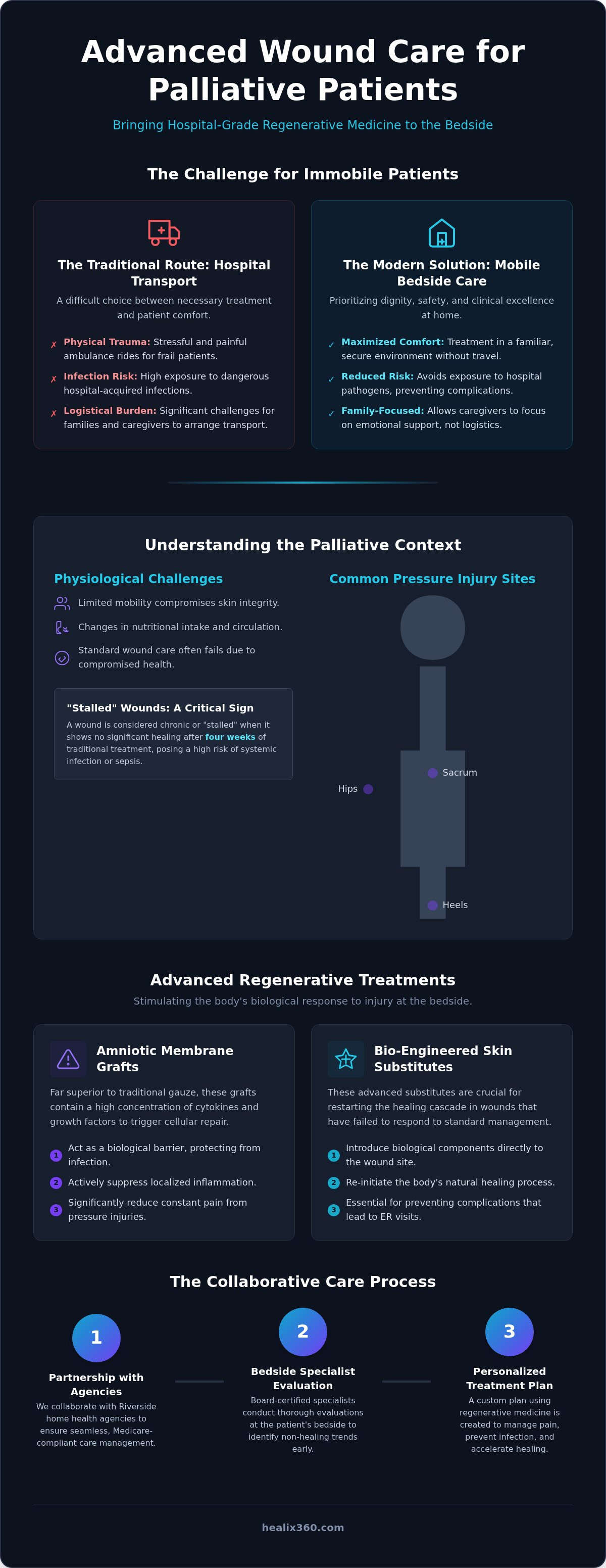
Advanced wound care involves specialized clinical interventions that go far beyond standard dressing changes or basic hygiene. In a palliative care environment, the clinical objective shifts from aggressive curative measures to the preservation of dignity and comfort. For many families, accessing advanced wound care for palliative care patients Riverside means receiving hospital-grade treatments at the bedside. This approach ensures that chronic wounds are managed with the same rigor as an inpatient facility, yet without the physical burden of transport. We prioritize the stabilization of the wound site to prevent pain and secondary complications that can diminish a patient's remaining quality of life.
The Prevalence of Pressure Injuries in Palliative Care
Palliative patients often face a unique set of physiological challenges that compromise skin integrity. Limited mobility, often coupled with changes in nutritional intake and peripheral circulation, creates an environment where pressure injuries develop rapidly. These wounds typically appear on bony prominences such as the sacrum, heels, and hips. Without precise intervention, these injuries can progress from minor skin breaks to deep tissue damage. You can find more detailed information on managing these complex conditions in our Comprehensive Guide to Bed Sores & Ulcer Treatment in Southern California (2026).
When Standard Care is Not Enough
Standard wound management often fails when a patient's underlying health is compromised. A wound is considered chronic or "stalled" when it shows no significant signs of healing after four weeks of traditional treatment. In palliative populations, these stalled wounds present a high risk for systemic infection or sepsis. Specialized advanced wound care for palliative care patients Riverside involves identifying these non-healing trends early. Our board-certified specialists utilize tools like sharp debridement and bio-engineered skin substitutes to restart the healing process. This level of care is essential for preventing the complications that lead to emergency room visits or painful hospitalizations.
By integrating advanced technologies into the home setting, we address the specific needs of patients in terminal stages of illness. The focus remains on reducing localized pain and preventing the rapid degradation of tissue. This specialized oversight allows caregivers to maintain their focus on emotional support while medical experts handle the complexities of wound pathology at the bedside. Our goal is to ensure that every patient receives the highest standard of clinical care in the environment where they feel most secure.
Regenerative Treatments: Amniotic Grafts and Skin Substitutes
Regenerative medicine offers a sophisticated path to comfort for those dealing with chronic wounds. Unlike traditional methods that merely cover a wound, these advanced treatments actively stimulate the body's biological response to injury. Accessing advanced wound care for palliative care patients Riverside residents trust means utilizing technologies like amniotic grafts and skin substitutes to manage pain and inflammation effectively. These interventions are particularly valuable when the patient's natural healing capacity is diminished due to underlying systemic illness. By introducing biological components directly to the site, we can address wounds that have failed to respond to standard conservative management.
The Role of Amniotic Membrane Grafts
Amniotic tissue contains a high concentration of cytokines and essential growth factors that trigger cellular repair and tissue regeneration. In a palliative setting, this is far superior to traditional gauze and ointment, which often fail to address the underlying biological "stall" of a chronic wound. These grafts act as a biological barrier, protecting the site from infection while actively suppressing localized inflammation. This suppression is key to reducing the constant pain often associated with pressure injuries. You can read more about these specific techniques in our Advanced Skin Substitute Treatments in Southern California guide.
A significant advantage of these treatments is their non-invasive application. Our board-certified specialists apply these grafts directly at the patient's bedside, requiring no surgical environment, intensive preparation, or anesthesia. This approach is central to modern palliative wound management, as it prioritizes the patient's comfort while providing clinical outcomes previously only available in a hospital setting. If you're noticing signs of a non-healing ulcer, such as increased drainage or stalled progress, our team can provide bedside wound evaluations to determine if regenerative grafts are appropriate for your clinical needs.
Bio-engineered Skin Substitutes for Diabetic and Venous Ulcers
For patients struggling with diabetic ulcers or venous insufficiency, bio-engineered skin substitutes provide a structural scaffold. This biological framework allows new skin cells to migrate across the wound bed, which is vital for patients with poor circulation or peripheral neuropathy. These high-value treatments are typically covered under Medicare Part B, making them accessible for palliative patients without the need for facility-based care. Because these grafts integrate with the patient's own tissue, they offer a more durable solution than topical creams alone. By stabilizing the wound environment, these substitutes significantly reduce the risk of systemic infection and the physical distress of frequent, painful dressing changes.
The Benefits of Mobile Wound Care in Riverside
For patients in the terminal stages of illness, leaving the home environment is often more than a mere inconvenience; it represents a significant physical and emotional risk. This "transportation tax" includes the exhaustion of gurney transfers, the discomfort of ambulance transport, and the prolonged wait times in clinical lobbies. By providing advanced wound care for palliative care patients Riverside families can effectively eliminate these stressors. Delivering specialized treatment at the bedside ensures that the patient remains in a stable, familiar environment, which is a core tenet of Understanding Palliative Care and its focus on quality of life. Furthermore, staying home significantly reduces the risk of nosocomial infections, such as MRSA or other hospital-acquired pathogens, which can be devastating for an immunocompromised individual.
Bedside assessments also allow our board-certified specialists to evaluate the patient in their natural setting. We can observe the specific seating or bedding arrangements that may be contributing to pressure injury development. This context is often lost in a hospital setting, where the environment is standardized and clinical. Consistency is maintained through regular visits from the same specialized team, fostering a relationship of trust and clinical reliability that is essential for both the patient and their primary caregivers.
Reducing Patient and Caregiver Stress
The logistics of arranging gurney transport in Riverside can be complex and expensive. Caregivers often spend hours coordinating with transport companies and navigating hospital administrative hurdles, which takes time away from personal care. Our mobile model allows caregivers to remain focused on the patient's immediate comfort rather than logistical management. For a deeper look at how this model operates across the region, you can explore our Advanced Mobile Wound Care in Southern California guide. This approach transforms the care experience from a series of exhausting appointments into a streamlined, professional medical service delivered in the privacy of the home.
Bedside Procedures: Debridement and NPWT
Many families are surprised to learn that high-level clinical procedures can be safely performed outside of a hospital. Our specialists perform sharp debridement at the bedside to remove necrotic tissue and promote healthy granulation. We also provide comprehensive management for Negative Pressure Wound Therapy (NPWT), commonly known as a Wound VAC. This advanced technology is vital for managing high-drainage wounds and accelerating the closure of deep ulcers. To ensure the most effective treatment, we perform on-site wound culture and sensitivity testing. This allows us to identify specific bacteria and tailor antibiotic or topical treatments immediately, preventing the systemic spread of infection without requiring an emergency room visit.
Coordinating Care Between Palliative Teams and Wound Specialists
Effective palliative care relies on a seamless interdisciplinary approach. Healix360 functions as a specialized extension of the existing care team, working in direct coordination with primary care physicians and palliative specialists. This partnership ensures that advanced wound care for palliative care patients Riverside remains integrated with the patient’s broader medical goals. We maintain rigorous documentation and clear communication channels to ensure Medicare compliance while providing the technical expertise required for complex wound pathology. This level of oversight is essential for managing systemic issues like edema or vascular insufficiency that often complicate the healing process in terminal patients.
Collaborating with Home Health Agencies
Home health agencies often provide essential daily nursing, but they may lack the specialized certifications for advanced procedures. Healix360 provides the advanced procedural layer that standard home health visits cannot offer. While a nurse might monitor a dressing, our specialists perform sharp debridement and apply regenerative grafts at the bedside. We also manage underlying vascular issues, such as leg edema, through professional compression therapy. This coordinated effort ensures that every aspect of skin integrity is addressed without gaps in service, providing a higher standard of clinical rigor in the home setting.
Insurance and Medicare Part B Coverage
Understanding the financial aspect of mobile medicine is crucial for families. Healix360 is a dedicated Medicare Part B provider for mobile consultations and bedside treatments. This means that advanced wound care for palliative care patients Riverside is accessible without the need for an inpatient hospital stay. Advanced grafts and skin substitutes are frequently covered when determined to be medically necessary for non-healing ulcers. Our team manages the administrative complexities of billing; we ensure that the focus remains on patient outcomes rather than logistical hurdles.
Empowering the patient’s support system is a core part of our clinical mission. Our board-certified specialists provide hands-on training for family caregivers regarding daily wound monitoring and hygiene protocols. We teach you how to recognize early signs of infection or skin breakdown, ensuring that the patient’s environment remains a safe space for healing. This proactive education reduces the risk of emergency interventions and fosters a more stable, predictable home environment for everyone involved.
If your loved one requires specialized intervention, you can request a bedside wound evaluation to begin a coordinated treatment plan.
Accessing Advanced Wound Care in Riverside County
Finding specialized clinical support that travels to the home is often the biggest hurdle for families in the Inland Empire. Healix360 provides comprehensive mobile coverage throughout Riverside County, including Corona, Moreno Valley, Temecula, and the surrounding communities. We understand that for those in terminal stages of illness, every minute spent in transport is a minute of unnecessary physical stress. By bringing advanced wound care for palliative care patients Riverside residents can skip the clinical waiting room. Our specialists arrive equipped with the necessary diagnostic tools and regenerative materials to begin treatment immediately upon assessment.
The referral process is designed to be direct and efficient. We work closely with case managers, hospital discharge planners, and home health agencies to ensure that specialized wound management is integrated into the patient’s existing care plan. Because we operate as a mobile unit, we can often see patients in residential homes, assisted living facilities, or board and care homes. This flexibility ensures that geography never dictates the quality of care a patient receives during their final stages of life.
Step-by-Step: Starting Mobile Treatment
Initiating professional wound management at home is a structured process designed to build confidence and clinical stability. We follow a methodical approach to ensure every patient receives the exact level of care their condition requires.
- Step 1: Initial Consultation. Contact Healix360 to schedule a bedside evaluation. We coordinate with your primary care team or home health agency to ensure a seamless transition of care.
- Step 2: Comprehensive Assessment. A board-certified specialist conducts a thorough skin and vascular assessment. This includes evaluating blood flow, identifying tissue degradation, and performing on-site cultures if infection is suspected.
- Step 3: Personalized Treatment Plan. We implement a customized regenerative plan. This may include sharp debridement, amniotic membrane grafts, or bio-engineered skin substitutes, all applied in the comfort of the patient’s bed.
Treating Post-Surgical Complications at Home
Surgical wounds that fail to close or suffer from dehiscence present a significant risk to palliative patients. These complications often result from poor circulation or weakened immune systems, making hospital readmission a frightening prospect. Our mobile team specializes in managing these complex sites, utilizing advanced technologies to stabilize the wound and prevent systemic sepsis. You can find more information on managing these specific recovery challenges in our Advanced Surgical Wound Care in Southern California (2026) guide. Specialized intervention at home ensures that the recovery process doesn't compromise the patient’s comfort or dignity.
If you're managing a non-healing wound or a complex surgical site, don't wait for the condition to worsen. Our team is ready to provide the clinical rigor and specialized expertise your loved one deserves. Contact us today to book a comprehensive bedside assessment and take the first step toward specialized healing in Riverside.
Prioritizing Patient Dignity through Specialized Bedside Care
Managing chronic wounds in a palliative setting requires a delicate balance between clinical rigor and patient comfort. By utilizing mobile regenerative medicine, families can eliminate the physical trauma of hospital transport while ensuring access to hospital-grade treatments. Board-certified specialists bring advanced technologies, such as amniotic grafts and bio-engineered skin substitutes, directly to the home environment. This approach stabilizes non-healing ulcers and manages localized pain without disrupting the patient's peace. Accessing advanced wound care for palliative care patients Riverside ensures that medical intervention supports, rather than hinders, the overall quality of life during terminal stages of illness.
As a Medicare Part B provider, Healix360 is dedicated to providing accessible, specialized wound management that integrates seamlessly with your existing palliative or hospice team. Our board-certified wound specialists are ready to provide the clinical oversight necessary to prevent infections and preserve tissue integrity at the bedside. You don't have to navigate these complex medical challenges alone or risk the stress of facility-based visits; specialized help is available where you need it most.
Schedule a Bedside Wound Evaluation in Riverside Today to ensure your loved one receives the highest standard of regenerative care in the comfort of their home.
Frequently Asked Questions
Does Medicare cover mobile advanced wound care for palliative patients in Riverside?
Healix360 is a Medicare Part B provider, which means mobile consultations and advanced wound care for palliative care patients Riverside families require are typically covered under the physician fee schedule. This coverage includes bedside assessments, sharp debridement, and the application of regenerative grafts. We manage the administrative billing directly with Medicare to ensure that specialized services remain accessible without the need for facility based care or inpatient hospitalization.
What are amniotic membrane grafts and are they safe for elderly patients?
Amniotic membrane grafts are bio-engineered tissues derived from donated amniotic membranes, rich in growth factors that stimulate cellular repair. These grafts are exceptionally safe for elderly patients because their application is non-invasive and requires no anesthesia or surgical preparation. They provide a protective biological barrier that reduces localized inflammation and pain. Our specialists apply these grafts at the bedside to restart the healing process in chronic wounds that have failed traditional conservative treatments.
Can a Stage 4 pressure ulcer be treated at home in Riverside?
Yes, a Stage 4 pressure ulcer can be managed at home through our mobile advanced wound care model. Treatment for these deep injuries often involves sharp debridement to remove necrotic tissue and the use of Negative Pressure Wound Therapy (NPWT). By providing these specialized procedures at the bedside, we reduce the risk of systemic infection and avoid the trauma of gurney transport. Our board-certified specialists develop personalized plans to stabilize the wound while prioritizing patient comfort.
How often will a wound specialist visit a palliative patient?
The frequency of visits is determined by the specific clinical needs of the patient and the complexity of the wound. Most palliative patients receiving advanced wound care for palliative care patients Riverside residents trust are seen weekly or bi-weekly for assessment and procedural intervention. These regular visits allow our specialists to monitor healing progress, update treatment protocols, and provide hands-on training to caregivers. We adjust the schedule based on wound stability and the patient's overall health status.
Do I need a referral from a hospice provider to use Healix360?
You don't specifically need a referral from a hospice provider to access our services. We accept referrals from primary care physicians, home health agencies, case managers, and hospital discharge planners. Our team coordinates directly with your current medical providers to ensure that our specialized wound management aligns with your broader palliative goals. This collaborative approach ensures that the patient receives a high standard of clinical care without gaps in communication or procedural oversight.
What is the difference between standard nursing care and advanced wound care?
Standard nursing care typically focuses on hygiene, routine dressing changes, and monitoring skin integrity. Advanced wound care involves specialized medical interventions performed by board-certified specialists, such as sharp debridement, the application of amniotic membrane grafts, and the management of bio-engineered skin substitutes. While home health nurses provide essential daily support, our specialists provide the procedural layer necessary to treat chronic, non-healing wounds that require regenerative technology or intensive mechanical therapy like NPWT.
Is debridement painful for palliative patients?
Our board-certified specialists prioritize patient comfort during every procedure. Sharp debridement involves the precise removal of non-viable tissue, which can actually reduce localized pain by eliminating sources of inflammation and infection. We utilize topical numbing agents when appropriate and work methodically to ensure the patient remains stable throughout the process. By performing this at the bedside in a familiar environment, we help minimize the anxiety and physical distress often associated with clinical procedures.
How do mobile wound specialists coordinate with my current Riverside doctor?
Healix360 operates as an integrated partner with your existing medical team. We provide comprehensive documentation, including bedside wound evaluations and progress notes, directly to your primary care physician or palliative specialist. This ensures that all providers are informed of the treatment plan and any changes in the patient's condition. Our specialists are available for direct consultation with your doctor to maintain clinical consistency and ensure that wound care remains a supportive component of the overall care plan.


