
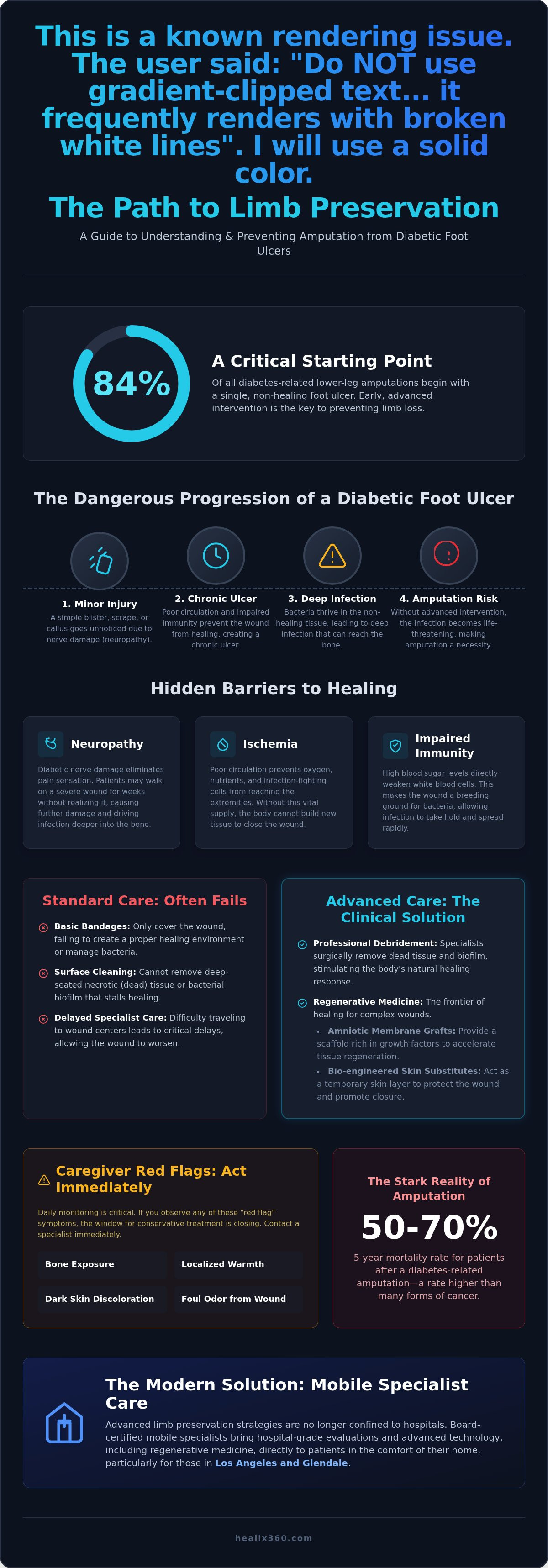
Did you know that 84% of all diabetes-related lower-leg amputations begin with a single, non-healing foot ulcer? This startling figure highlights why preventing amputation diabetic foot ulcer complications is the most critical priority for patients and their families. If you're managing a wound that refuses to close, the fear of losing a limb is a heavy burden to carry. It's frustrating when standard bandages fail to show results, and the logistical difficulty of transporting a patient with mobility issues to a wound center often leads to dangerous delays in treatment.
We understand that maintaining limb health is your primary goal. You deserve a clear path to recovery that doesn't involve the stress of frequent travel. Amputation isn't an inevitability; it's frequently the result of a gap in access to advanced regenerative technology. This guide explains how board-certified specialists bring hospital-grade treatments directly to your bedside to stop wound deterioration. You'll learn how clinical strategies and specialized expertise can preserve your mobility and long-term health.
We'll provide a comprehensive overview of modern limb-salvage techniques, including the use of amniotic membrane grafts and bio-engineered skin substitutes. You'll discover how a personalized healing plan utilizes the latest medical technology to address chronic wounds effectively. This guide ensures you understand how mobile advanced wound care provides a dependable, clinical solution for complex cases within the comfort of your home.
Key Takeaways
- Understand the critical progression from minor irritation to chronic wounds and the clinical strategies essential for preventing amputation diabetic foot ulcer complications.
- Discover why standard bandages often fail and how advanced sharp debridement is necessary to remove necrotic tissue and stimulate the body's natural healing response.
- Learn about the role of regenerative medicine, including amniotic membrane grafts and bio-engineered skin substitutes, in closing wounds that have traditionally been difficult to heal.
- Master a daily monitoring protocol for caregivers using the "Three O's" system to identify early warning signs of infection or oxidation before they become emergencies.
- Access information on how board-certified mobile specialists bring hospital-grade evaluations and advanced technology directly to patients in Los Angeles and Glendale.
The Critical Link Between Diabetic Foot Ulcers and Amputation
The path to a lower-limb amputation often begins with a sequence of events that patients and caregivers initially overlook. It starts with a seemingly minor scrape, blister, or callus. In a healthy individual, these minor injuries heal within days. However, for those with diabetes, a combination of peripheral neuropathy and ischemia creates a dangerous environment where Diabetic Foot Ulcers can develop and worsen without the patient feeling any pain. This lack of sensation means a wound can progress to a deep tissue infection before it's even discovered.
Limb preservation has emerged as a specialized medical discipline dedicated to preventing amputation diabetic foot ulcer complications through early, aggressive intervention. Specialists in this field look for specific "red flag" symptoms that indicate a high risk of limb loss. These include bone exposure, localized warmth, dark discoloration of the skin, or a foul odor emanating from the wound site. When these signs appear, the window for conservative treatment narrows significantly, requiring advanced clinical strategies to save the limb.
Why Diabetic Ulcers Fail to Heal
Chronic wounds in diabetic patients don't follow the standard healing trajectory due to systemic physiological changes. High blood sugar levels directly impair the function of white blood cells, particularly neutrophils and macrophages. These cells are responsible for fighting off bacteria and clearing away dead tissue; when they're sluggish, the wound becomes a breeding ground for infection. Simultaneously, ischemia, or poor circulation, prevents oxygen and vital nutrients from reaching the extremities. Without these building blocks, the body can't create the new collagen and skin cells needed for closure. The most significant danger remains the "silent" nature of these infections. Because neuropathy destroys nerve endings, a patient might walk on an infected ulcer for weeks, causing further mechanical damage and driving the infection deeper into the bone.
The Statistics of Limb Preservation
The urgency of preventing amputation diabetic foot ulcer progression is underscored by sobering clinical data. Research indicates that approximately 84% of all diabetes-related lower-leg amputations are preceded by a foot ulcer. Once an amputation occurs, the outlook for the patient changes dramatically. The 5-year mortality rate for patients who have undergone a diabetes-related amputation is estimated between 50% and 70%, a figure higher than many forms of cancer. Board-certified specialists emphasize that early intervention is the strongest predictor of a positive outcome. The "Golden Window" for treating a new ulcer is the period immediately following its discovery where specialized clinical care can halt deep tissue infection before it reaches the underlying bone or vascular system.
Standard vs. Advanced Wound Care: What Actually Works?
Standard wound care typically involves cleaning the area and applying basic bandages. While these steps are fundamental for minor cuts, they're rarely sufficient for a non-healing ulcer that's persisted for several weeks. Clinical wound management goes beyond simple protection; it actively modifies the biological environment of the wound bed. To succeed in preventing amputation diabetic foot ulcer escalation, clinicians must address the underlying reasons for healing stagnation. This process requires a combination of mechanical intervention, moisture control, and pressure relief that standard home care cannot provide.
The Role of Professional Debridement
Chronic wounds often contain necrotic tissue or slough that acts as a physical barrier to recovery. This dead tissue harbors bacteria and prevents new skin cells from migrating across the wound bed. While at-home cleaning removes surface debris, it can't address the deep-seated biofilm that stalls healing. Board-certified specialists utilize surgical-grade wound debridement to remove non-viable tissue precisely. This procedure effectively restarts the healing clock by turning a chronic, stalled wound back into an acute wound that the body's natural processes can recognize and repair. Taking this aggressive step is vital to Protect Your Feet from deep-seated infections that lead to bone involvement.
Utilizing Wound VAC and Compression
Advanced therapies like Negative Pressure Wound Therapy (NPWT), commonly referred to as a Wound VAC, have revolutionized limb salvage. This system uses a specialized vacuum dressing to remove excess interstitial fluid and infectious materials while promoting localized blood flow. By reducing edema, the therapy allows arterial blood to reach the tissue more effectively, providing the oxygen necessary for granulation. Managing swelling through compression therapy is equally important, as it ensures that fluid doesn't pool and compress the small vessels responsible for nutrient delivery. In the past, these treatments required hospital stays or daily trips to a clinic; however, mobile wound care specialists now bring these advanced technologies directly to the patient's bedside.
Finally, no advanced treatment can succeed without consistent offloading. This clinical strategy involves using specialized footwear or devices to redistribute weight away from the ulcerated area. Constant pressure on a diabetic foot ulcer prevents blood flow and causes mechanical trauma that can lead to osteomyelitis. Combining professional offloading with advanced clinical management represents the most effective path for preventing amputation diabetic foot ulcer complications and ensuring long-term mobility.
Regenerative Medicine: The Frontier of Amputation Prevention
When standard treatments fail to close a wound within the first month, regenerative medicine offers a sophisticated biological solution for preventing amputation diabetic foot ulcer complications. Bio-engineered skin substitutes are not traditional dressings; they are advanced cellular products designed to interact with the patient's own tissue. These substitutes provide a vital scaffold that supports the migration of new skin cells across the ulcer. By replacing missing extracellular matrix components, these treatments help restart the healing process in wounds that have remained stagnant despite conventional efforts. They represent a shift from simply covering a wound to actively rebuilding the lost tissue structure.
Amniotic Membrane Grafts Explained
Amniotic allografts represent a significant advancement in non-surgical wound care. These tissue-based treatments are derived from the inner layer of the placenta and are rich in natural growth factors, cytokines, and essential proteins. Unlike standard synthetic materials, amniotic grafts possess inherent anti-inflammatory and anti-scarring properties that help calm the wound environment. They act as a biological trigger, signaling the body to accelerate tissue repair and reduce localized pain. For a deeper look at how these technologies work, consult our skin substitute guide to understand the clinical benefits of regenerative therapy. These grafts are particularly effective because they contain the same biological building blocks the body uses during its most rapid phases of growth.
Who is a Candidate for Regenerative Therapy?
Not every wound requires a regenerative graft immediately, but timing is critical for preventing amputation diabetic foot ulcer progression. Clinical guidelines define a "non-healing" status as any ulcer that hasn't reduced in size by at least 50% after four weeks of standard care. If a wound meets this threshold, it is often a candidate for advanced grafts to prevent further deterioration. Before application, a board-certified specialist must ensure a clean wound bed through sharp debridement, as the graft requires direct contact with healthy, viable tissue to integrate successfully. These advanced grafts are the missing piece for many patients who have struggled with chronic ulcers for months. Healix360 brings these specialized regenerative treatments directly to your home, ensuring that mobility issues don't prevent access to the latest medical science.
Limb Preservation Checklist: Daily Actions for Caregivers
Caregivers serve as the first line of defense in preventing amputation diabetic foot ulcer complications. Because neuropathy often masks pain, a structured daily inspection protocol is the only reliable way to catch changes before they become life-threatening. Use high-quality lighting and a handheld mirror to examine the soles of the feet and the spaces between the toes where ulcers frequently hide. Any new break in the skin, however small, requires immediate clinical attention to prevent deep tissue involvement.
Effective monitoring focuses on "the three O's" to identify shifts in the wound's status. First, check for Odor; a foul or unusually sweet smell often indicates bacterial colonization. Second, observe Outflow, noting any changes in the amount, color, or consistency of drainage on the bandages. Third, watch for Oxidation, which refers to skin color changes such as persistent redness or dark, dusky areas that suggest poor oxygenation. Additionally, monitor the temperature of the foot. A localized warm spot compared to the surrounding skin can signal an underlying infection or the early stages of Charcot foot.
Metabolic control is another direct driver of healing speed. High blood sugar levels inhibit the body's ability to repair tissue and fight off pathogens. Maintaining stable glucose levels is not just a general health goal; it is a clinical requirement for successful limb preservation. When blood sugar remains elevated, even the most advanced treatments may struggle to achieve closure.
Recognizing Infection Before It Spreads
It's vital to distinguish between localized inflammation and cellulitis. Localized redness is often confined to the wound edges, but cellulitis presents as spreading redness that feels hot and may be accompanied by swelling. If you notice a foul odor, don't ignore it even if the wound looks small on the surface. These signs indicate that the infection may be moving into deeper tissues. In these cases, board-certified specialists should perform Wound Culture and Sensitivity Testing to identify the specific bacteria and adjust the treatment plan accordingly.
Nutritional Support for Wound Healing
Wound closure is a metabolically demanding process that requires specific nutrients to build new tissue. Protein is the primary building block for skin repair, while Vitamin A, Vitamin C, and Zinc are essential for collagen synthesis and immune function. Proper hydration is equally necessary to maintain skin elasticity and support the delivery of nutrients through the bloodstream. Specialists often coordinate with dietitians to create a comprehensive plan that ensures the patient's nutritional intake matches the demands of the healing process. This holistic approach ensures that the body has the internal resources needed to support external clinical treatments.
Mobile Specialist Care: Bringing the Wound Center to You
Accessing advanced clinical care shouldn't require a stressful journey through Southern California traffic. For many patients, the logistical hurdles of visiting a traditional wound center lead to missed appointments and delayed interventions. Mobile specialist care removes these barriers by delivering hospital-grade treatments directly to the patient's home. This model is essential for preventing amputation diabetic foot ulcer deterioration, as it allows for consistent, high-frequency monitoring that is often impossible when relying on medical transport services. By eliminating the physical strain of travel, we ensure that the healing process remains the primary focus.
Healix360 functions as a dedicated Medicare Part B provider, specializing in the delivery of regenerative medicine at the bedside. This designation ensures that mobile wound evaluations and advanced procedures, such as the application of bio-engineered skin substitutes, are accessible to those who need them most. We maintain a collaborative relationship with home health agencies and primary care physicians. This coordination ensures that every aspect of the patient's health, from blood sugar management to infection control, is addressed within a single, cohesive clinical framework. Healing at home also minimizes the risk of hospital-acquired infections, providing a safer and more controlled environment for recovery.
Expert Care in Southern California
Board-certified specialists are currently providing mobile services throughout Glendale and the broader Los Angeles area. This specialized care is particularly beneficial for patients residing in assisted living or skilled nursing facilities, where mobility is often a significant concern. By bringing the expertise of a wound center to these locations, we ensure that advanced treatments aren't reserved only for those who can travel. It's our mission to provide the same level of clinical rigor found in a hospital setting within the comfort of a residential environment. To learn more about our regional coverage and specific clinical protocols, please refer to our comprehensive guide on diabetic ulcer treatment.
Getting Started with a Bedside Evaluation
The first step toward limb preservation is a detailed bedside evaluation. During this initial consultation, a board-certified specialist conducts a diagnostic assessment of the wound bed, evaluates vascular status, and reviews the patient's medical history. This data allows us to create a personalized treatment plan tailored to the specific biological needs of the ulcer. Whether the plan requires sharp debridement or negative pressure therapy, the focus remains on preventing amputation diabetic foot ulcer complications through precise, evidence-based care. We prioritize clear communication with both the patient and their family to ensure everyone understands the path to recovery. If you or a loved one are managing a non-healing wound, you can Schedule a mobile wound assessment with Healix360 to begin the recovery process.
Securing Your Mobility Through Advanced At-Home Care
Managing a non-healing wound requires more than standard bandages; it demands a clinical strategy that addresses the biological environment of the ulcer. By utilizing regenerative medicine, such as amniotic membrane grafts and bio-engineered skin substitutes, we can restart the healing process in chronic wounds that have stalled. Combining these advanced treatments with a structured daily inspection protocol ensures that caregivers can identify early warning signs before they escalate. This proactive approach is the most effective method for preventing amputation diabetic foot ulcer complications and preserving long-term mobility.
Healix360 is a dedicated Medicare Part B provider with board-certified specialists serving Glendale and the broader Southern California region. We bring hospital-grade evaluations and specialized regenerative therapies directly to your bedside, removing the physical and emotional burden of medical transport. You don't have to navigate this complex medical journey alone. Take the first step toward limb preservation today and Request a Professional Bedside Wound Evaluation to secure a personalized path to recovery. Your health and independence remain our highest priorities.
Frequently Asked Questions
Is amputation inevitable if I have a deep diabetic foot ulcer?
Amputation is not an inevitability; it's often the result of untreated complications or a lack of access to advanced regenerative technology. Board-certified specialists focus on limb preservation by using clinical strategies that address the root causes of non-healing wounds. By identifying vascular issues and implementing aggressive treatments early, we can significantly improve the chances of saving the limb. Consistent monitoring and specialized care are the most effective tools for preventing amputation diabetic foot ulcer progression in high-risk patients.
How do amniotic grafts help prevent amputation?
Amniotic membrane grafts function as a biological trigger by delivering natural growth factors and cytokines directly to the wound bed. These regenerative tissues provide a structural scaffold that supports the migration of new skin cells across the ulcer. Unlike standard dressings, these grafts have anti-inflammatory properties that help calm a stalled wound environment. This technology is particularly effective for chronic ulcers that haven't responded to traditional treatments after several weeks of standard care.
Does Medicare cover mobile wound care services in Los Angeles?
Medicare Part B covers mobile wound evaluations and many advanced treatments when they are medically necessary. Healix360 is a Medicare-compliant provider serving Glendale, Los Angeles, and surrounding Southern California communities. This coverage allows patients with mobility issues to receive professional bedside assessments and regenerative procedures without the need for hospital visits. We coordinate directly with insurance providers to ensure that patients receive the specialized care they need within their residential or facility setting.
How often does a mobile wound specialist need to visit?
The frequency of visits is determined by a personalized treatment plan developed during your initial bedside evaluation. Most patients require a visit from a board-certified specialist once a week to perform sharp debridement, apply new grafts, or monitor the effectiveness of negative pressure therapy. Frequent clinical oversight is vital for preventing amputation diabetic foot ulcer complications, as it allows the medical team to adjust the treatment protocol immediately if the wound shows signs of stagnation.
Can a diabetic foot ulcer be treated at home if it’s already infected?
Infected ulcers can often be managed at home through mobile specialist intervention. Our team performs Wound Culture and Sensitivity Testing at the bedside to identify the specific bacteria causing the infection. This data allows for targeted treatment, which may include sharp debridement to remove infected tissue and coordinated antibiotic therapy. Treating an infection early in a home setting prevents the need for emergency room visits and reduces exposure to hospital-acquired pathogens.
What is the difference between a standard bandage and a skin substitute?
A standard bandage serves only as a physical barrier to protect the wound from external contaminants. In contrast, bio-engineered skin substitutes are advanced cellular products that interact with the body's natural healing processes. These substitutes replace missing extracellular matrix components and provide the biological building blocks necessary for tissue regeneration. While bandages keep a wound clean, skin substitutes are designed to actively close the wound by rebuilding the lost dermal and epidermal layers.
How can I tell if my foot ulcer is healing or getting worse?
Healing is characterized by the appearance of granulation tissue, which looks like healthy, pink, or red pebbled skin filling the wound bed. Conversely, signs of worsening include a foul odor, increased drainage, or dark discoloration of the surrounding skin. If you notice localized warmth or spreading redness, these are clinical indicators of an underlying infection. Regular professional assessments are the only way to accurately track progress and ensure the healing plan remains effective.
Why is debridement necessary for diabetic ulcers?
Sharp debridement is necessary because necrotic or dead tissue acts as a physical barrier that prevents new skin from growing. This non-viable tissue also harbors bacterial biofilms that can lead to deep-seated infections. By precisely removing these barriers, a board-certified specialist restarts the healing clock and allows regenerative treatments like amniotic grafts to make direct contact with healthy tissue. This process is a fundamental requirement for successful limb salvage and chronic wound management.


