
The most effective way to prevent a hospital stay isn't found in a clinic waiting room, but in the precision of the care delivered at the bedside. Achieving successful sacral pressure ulcer treatment at home requires a shift from reactive cleaning to a proactive, data-driven strategy for tissue recovery. You deserve a care plan that prioritizes both clinical excellence and the sanctuary of the home environment.
We understand the emotional weight and technical confusion that often accompany long-term wound management. It's difficult to navigate the complexities of dressing selection and infection prevention while managing the logistical stress of patient transport. This guide provides a clear, sophisticated roadmap to stabilize healing and prevent wound progression effectively.
You'll learn the essential protocols for professional-grade home care and discover when advanced mobile specialist intervention is necessary for optimal recovery. We will preview the latest 2026 Medicare-covered regenerative treatments, such as bio-engineered skin substitutes, and explain how hospital-grade outcomes are now attainable directly at the bedside.
Key Takeaways
- Understand why the sacrum is uniquely vulnerable to shear force and how to mitigate tissue damage through intentional positioning.
- Implement a robust protocol for sacral pressure ulcer treatment at home by prioritizing strict offloading schedules and advanced moisture management.
- Explore the science of regenerative healing, including how bio-engineered skin substitutes accelerate tissue recovery without a hospital visit.
- Recognize the clinical red flags of wound progression, from localized visual changes to systemic signs that require immediate specialist intervention.
- Discover how mobile wound care specialists bridge the gap between traditional home health and advanced clinical expertise in Southern California.
Understanding Sacral Pressure Ulcers: Why the Tailbone is at Risk
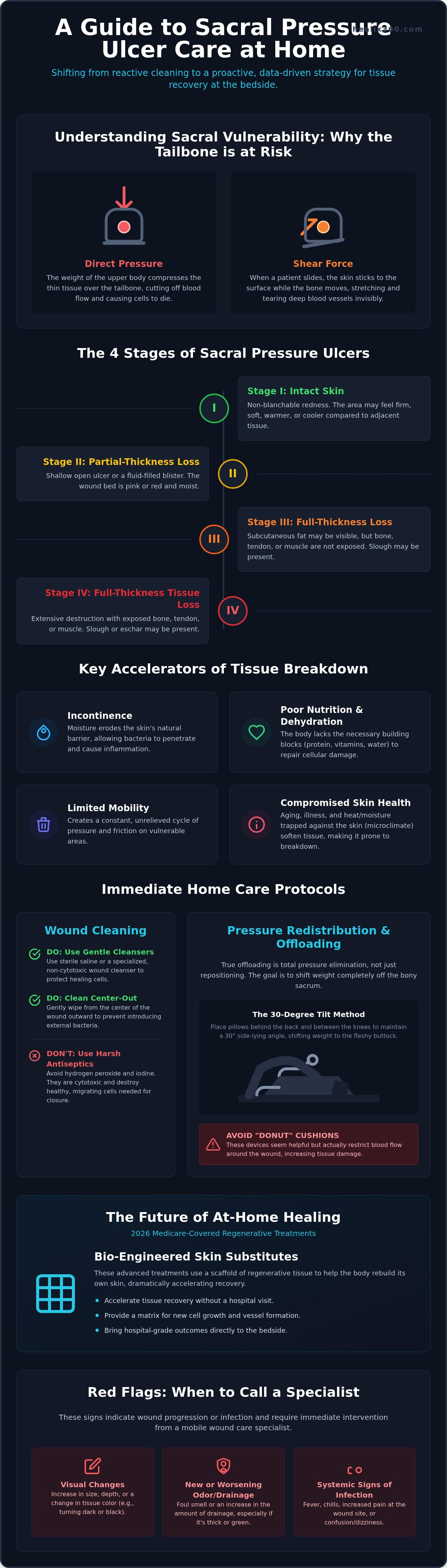
The sacrum is the epicenter of pressure injuries for a reason. It's the physiological junction where the weight of the upper body meets the resistance of a bed or chair. A sacral pressure ulcer is a localized injury to the skin or underlying soft tissue, typically over the tailbone, resulting from intense or prolonged pressure. While many general health resources provide a comprehensive overview of pressure ulcers, the sacral region requires a more specialized understanding of mechanical forces to manage effectively.
One of the most destructive forces in this area is shear. When a patient slides down in bed, the skin often stays anchored to the sheets while the underlying bone moves downward. This stretching and tearing of deep blood vessels causes significant damage before any redness even appears on the surface. It's a primary reason why sacral pressure ulcer treatment at home becomes complex; you're not just fighting vertical pressure, you're fighting the invisible effects of gravity and friction.
Skin health is also dictated by the microclimate. Heat and moisture trapped against the tailbone soften the tissue, making it much more susceptible to breakdown. This creates a perfect storm for tissue failure, especially when the skin is already compromised by age or illness. Recognizing the progression is vital for early intervention:
- Stage I: Non-blanchable redness where the skin remains intact but feels different than surrounding tissue.
- Stage II: Partial-thickness loss appearing as a shallow open ulcer or a fluid-filled blister.
- Stage III: Full-thickness tissue loss where subcutaneous fat may be visible.
- Stage IV: Extensive destruction where bone, tendon, or muscle is directly exposed.
Anatomy of the Sacrum and Wound Development
The anatomy of the pelvic region is particularly unforgiving. Unlike the fleshy gluteal muscles, the layer of fat over the sacrum is incredibly thin, providing minimal cushioning against the hard surface of the bone. When you sit or lie supine for extended periods, this thin tissue is squeezed, and blood flow is immediately compromised. Under current 2026 clinical standards, a sacral pressure injury is defined as a localized area of cellular death caused by ischemic hypoxia and mechanical deformation of the pelvic soft tissue.
Common Risk Factors for Sacral Breakdown
Incontinence is a major accelerator of tissue death in the pelvic region. Moisture-associated skin damage (MASD) erodes the skin's natural barrier, allowing bacteria to penetrate more easily and causing inflammation. This is often compounded by poor nutrition and dehydration, which leave the body without the necessary building blocks to repair cellular damage. When limited mobility is added to the equation, the constant cycle of pressure and friction quickly turns minor irritation into a chronic wound. Successful sacral pressure ulcer treatment at home requires you to address these systemic vulnerabilities with the same precision used to treat the wound itself.
Immediate Home Protocols for Sacral Pressure Ulcers
Stabilizing a wound requires a disciplined approach to the environment surrounding the injury. For effective sacral pressure ulcer treatment at home, your first priority is neutralizing the mechanical forces that caused the breakdown. While standard home treatment protocols for bedsores emphasize general hygiene, sacral wounds demand a specialized focus on moisture control and pressure diversion. You must act as a guardian of the tissue's recovery environment.
Cleaning the wound is a delicate clinical task. Avoid harsh antiseptics like hydrogen peroxide or iodine, as these substances are cytotoxic and can destroy the healthy, migrating cells needed for closure. Instead, use sterile saline or a specialized wound cleanser. When cleaning, always wipe gently from the center of the wound outward toward the edges to prevent introducing external bacteria into the healing bed. This simple shift in technique protects the fragile granulation tissue forming at the base of the ulcer.
Pressure Redistribution and Offloading
True offloading is more than just moving the patient; it's about total pressure elimination. We recommend the 30-degree tilt method for side-lying. By placing pillows behind the back and under the thighs at a 30-degree angle, you shift weight onto the fleshy part of the buttock and away from the bony sacrum. It's vital to avoid 'donut' cushions. These devices actually restrict blood flow to the center of the wound and increase pressure at the edges, which can accelerate tissue death. Instead, utilize high-specification foam or low-air-loss mattresses that redistribute weight across a broader surface area.
Hygiene and Moisture Barriers
Moisture is a double-edged sword in wound care. While a wound bed should remain moist to heal, the surrounding skin must stay dry to prevent maceration. For patients dealing with incontinence, use pH-balanced cleansers that don't strip the skin's natural oils. Apply a thick layer of a zinc-based or dimethicone-based barrier cream to the intact skin surrounding the ulcer to shield it from digestive enzymes and moisture. Choosing the right dressing is equally important. High-drainage wounds require alginates or foams that can absorb fluid, while drier wounds may benefit from hydrogels that donate moisture. If the complexity of these dressing choices feels daunting, a mobile wound care specialist can provide a personalized assessment to ensure your supply kit matches the wound's current needs.
Consistency is your most powerful tool. A missed turning cycle or an unaddressed moisture event can undo days of progress. By maintaining a rigorous schedule and using the correct clinical materials, you create the stability necessary for the body's natural regenerative processes to take hold.
Advanced Regenerative Treatments: Bringing the Clinic to Your Bedside
The shift from basic maintenance to active regeneration marks a significant turning point in the recovery journey. While traditional dressings provide a passive barrier, bio-engineered skin substitutes represent a modern evolution in sacral pressure ulcer treatment at home. These advanced materials act as a biological scaffold, encouraging the body's own cells to migrate and rebuild damaged tissue. By integrating Evidence-based pressure ulcer treatment standards with bedside technology, we can now achieve clinical closure rates that were once only possible in specialized surgical suites.
Amniotic membrane grafts have revolutionized the management of non-healing wounds by addressing the cellular environment itself. These grafts are exceptionally rich in cytokines and growth factors that naturally reduce inflammation and stimulate the proliferative phase of healing. During a mobile medical visit, a specialist applies the graft directly to the prepared wound bed, where it begins to jumpstart the biological processes necessary to close complex Stage 3 and 4 ulcers. This intervention is often the missing link for patients who've seen little progress with standard gauze or foam dressings.
Negative Pressure Wound Therapy (NPWT), commonly known as a Wound VAC, is another sophisticated tool now available in the home setting. This system uses a specialized vacuum dressing to promote localized blood flow, remove excess interstitial fluid, and physically pull the edges of the wound together. It's an highly effective method for managing high-drainage sacral wounds while simultaneously reducing the frequency of traumatic dressing changes for the patient.
Amniotic Grafts and Regenerative Medicine
The science of amniotic tissue is rooted in its unique ability to modulate a stalled wound environment. By delivering a concentrated dose of regenerative proteins, these grafts help overcome the cellular fatigue common in chronic sacral injuries. The application process is seamless and non-invasive, performed by board-certified specialists who bring the necessary equipment directly to your bedside. This approach ensures that even the most vulnerable individuals can access elite medical breakthroughs without the physical and emotional trauma of medical transport. It turns a stationary recovery into a proactive healing event.
Professional Bedside Debridement
True healing cannot begin in the presence of non-viable tissue. Necrotic tissue, which often appears as hard black eschar or yellow stringy slough, acts as a physical barrier and a primary breeding ground for biofilm and bacteria. Professional sharp debridement is the precise, surgical removal of this material using specialized instruments. This is a critical distinction from simple wound cleaning; it requires a specialist’s eye to preserve healthy tissue while aggressively removing the obstacles to recovery. You can learn more about why necrotic tissue must be removed by a specialist to understand how this procedure resets the wound's biological clock. By clearing the path for new growth, debridement transforms a stagnant sacral pressure ulcer treatment at home into a dynamic environment ready for regenerative success.
Recognizing Red Flags: When Home Care is Not Enough
Vigilance is the cornerstone of effective sacral pressure ulcer treatment at home. While daily protocols maintain the environment, you must recognize when the biological battle shifts beyond the capabilities of basic care. A wound that fails to show measurable signs of closure after two to four weeks isn't just stagnant; it's a clinical signal that the underlying pathology requires specialist intervention. Ignoring these indicators can lead to systemic complications that transcend the localized injury site.
One of the most significant risks for deep sacral wounds is osteomyelitis, a severe infection of the bone. Because the sacrum has so little soft tissue coverage, an advancing ulcer can reach the bone relatively quickly. Unlike superficial infections, osteomyelitis requires intensive, targeted treatment to prevent permanent damage. If you notice the wound is deepening or if the patient experiences localized bone pain, the situation has likely moved beyond standard home management.
Signs of Clinical Infection
Distinguishing between expected serous drainage and purulent discharge (pus) is a vital skill. Serous fluid is typically clear or light yellow, whereas pus is thick, opaque, and often accompanied by a distinct, foul odor. You should also be aware of crepitus, a "crunchy" or "crackling" sensation under the skin around the wound site. This indicates the presence of gas-producing bacteria and is a medical emergency. Systemic red flags include:
- Fever or persistent chills
- New or worsening mental confusion (delirium)
- Spreading redness (erythema) that feels warm to the touch
- Increased swelling or "induration" (hardness) around the wound edges
The Danger of Deep Tissue Injury
Wounds covered in black eschar or thick yellow slough are often classified as "unstageable." This doesn't mean the wound is minor; it means the true depth is hidden from view. Without professional intervention to clear this debris, it's impossible to assess the risk to underlying structures. Deep sacral wounds are a primary gateway to sepsis, a life-threatening systemic response to infection. It's helpful to prioritize professional oversight early, especially when Understanding the risks of surgical wound complications and how they mirror the progression of chronic pressure injuries.
Targeted treatment relies on data rather than guesswork. A mobile specialist can perform wound culture and sensitivity testing at the bedside to identify the specific pathogens present in the tissue. This ensures that any prescribed antibiotics are precisely matched to the infection, reducing the risk of antibiotic resistance and accelerating the path to closure. If you observe a darkening of the wound tissue or a sudden increase in pain, don't wait for the condition to escalate; request a mobile specialist evaluation to secure a definitive clinical roadmap.
Mobile Wound Care in Southern California: The Healix360 Solution
The final phase of a successful recovery journey is ensuring that the clinical expertise required for complex healing is accessible where it matters most. Healix360 bridges the gap between traditional medicine and modern lifestyle optimization by bringing board-certified wound specialists directly to homes across Southern California. By choosing professional sacral pressure ulcer treatment at home, you eliminate the logistical burden of clinical visits while maintaining a standard of care that rivals any stationary facility.
Our specialists don't work in isolation. We prioritize a highly coordinated ecosystem of care, acting as a visionary strategist between home health agencies, case managers, and the patient's family. This collaborative approach ensures that every member of the care team is aligned with the personalized treatment plan, from daily moisture management to the application of advanced regenerative grafts. Whether you are in Glendale, Los Angeles, or the surrounding communities, our mobile units arrive fully equipped to perform diagnostic assessments and therapeutic procedures at the bedside.
Hospital-Grade Care Without the Hospital
One of the most profound benefits of our service is the preservation of patient dignity and physical comfort. For elderly or immobile individuals, medical transport is often a source of significant physical trauma and emotional distress. We provide an elite alternative by delivering high-tech interventions, such as sharp debridement and amniotic membrane grafts, in the sanctuary of your own environment. You can explore our guide to mobile wound care services in Southern California to see how we translate laboratory-level science into actionable bedside results. This model of care ensures that advanced sacral pressure ulcer treatment at home is not just a convenience, but a clinical advantage that promotes faster, more stable closure.
Medicare and Insurance Coordination
Navigating the financial landscape of 2026 healthcare requires precision and transparency. Healix360 is a dedicated Medicare Part B provider, ensuring that our advanced treatments remain accessible to those who need them most. In 2026, once the annual Medicare Part B deductible of $283 is satisfied, patients are typically responsible for a 20% coinsurance for our specialist services. We manage the complexities of billing for Medicare and major private insurance plans, allowing families to focus entirely on the healing process.
Our specialists do more than just treat a wound; they create a long-term healing roadmap rooted in data and proactive prevention. This includes utilizing the latest 2026 flat-rate reimbursement models for bio-engineered skin substitutes to ensure you receive the most effective regenerative materials available. We invite you to take the first step toward physical excellence and life-changing outcomes. Schedule a professional bedside wound assessment today and experience the confidence of having elite clinical mastery delivered directly to your door.
Securing Your Path to Advanced Recovery
Mastering the complexities of sacral pressure ulcer treatment at home requires a shift from basic maintenance to proactive clinical management. By prioritizing precise offloading techniques and maintaining a vigilant eye for systemic red flags, you create the necessary stability for tissue regeneration. It’s important to remember that you don't have to navigate this journey alone; professional-grade healing is no longer confined to the hospital environment.
Healix360 provides a sophisticated bridge to recovery through our Southern California specialist network. As a Medicare Part B provider, we bring advanced regenerative grafts and expert bedside assessments directly to your home. This approach ensures that your loved one receives elite care while remaining in the comfort of their own sanctuary. We invite you to take the next step toward physical excellence and long-term vitality through our data-driven protocols.
Request an Advanced Mobile Wound Care Consultation
Your dedication to excellence in care is the most powerful catalyst for a successful recovery. We're here to provide the clinical mastery you need to achieve the best possible outcomes and restore quality of life.
Frequently Asked Questions
Can a sacral pressure ulcer be cured at home without surgery?
Yes, many sacral pressure ulcers can be successfully closed at home without traditional surgical intervention. By utilizing advanced mobile services like bio-engineered skin substitutes and amniotic grafts, specialists can reset the wound environment to promote natural closure. This proactive approach avoids the trauma of hospital-based surgery while achieving clinical success through a structured, data-driven treatment plan tailored to the patient's specific physiological needs.
How do I clean a deep tailbone wound properly?
Proper cleaning requires sterile saline or a pH-balanced wound cleanser to protect fragile granulation tissue. You should always wipe gently from the center of the wound outward to the edges; this prevents the introduction of external bacteria into the healing bed. Avoid cytotoxic substances like hydrogen peroxide or iodine, as these can stall the recovery process by damaging the healthy cells necessary for tissue repair.
What is the best dressing for a sacral pressure sore with high drainage?
High-drainage wounds require super-absorbent dressings such as calcium alginates or specialized foam layers. These materials effectively manage excess moisture while protecting the surrounding skin from maceration. For complex cases, a mobile specialist might recommend Negative Pressure Wound Therapy to physically remove fluid and stimulate localized blood flow, ensuring the sacral pressure ulcer treatment at home remains stable and conducive to cellular growth.
Does Medicare pay for a wound specialist to come to my house in California?
Yes, Medicare Part B typically covers mobile advanced wound care services in California when they're deemed medically necessary. Once you meet your annual deductible, Medicare generally covers 80% of the approved amount for specialist consultations and bedside procedures. This allows residents in Southern California to access elite clinical mastery, including regenerative grafts and debridement, without the financial anxiety often associated with advanced medical care.
How often should I turn a patient with a sacral ulcer?
The clinical standard for offloading is a turning schedule of at least every two hours. This frequency is essential to restore blood flow to the sacral tissues and prevent further ischemic damage. Utilizing the 30-degree tilt method ensures that pressure is redistributed to the fleshier parts of the buttocks, allowing the tailbone area to remain completely free from mechanical stress during the recovery phase.
What are the signs that a sacral ulcer is healing?
Positive indicators of healing include the appearance of "beefy red" granulation tissue and a measurable reduction in the wound's dimensions. You'll also notice a decrease in drainage and the development of new, pinkish epithelial tissue at the wound edges. These visual cues signal that the biological environment is stabilizing and that your sacral pressure ulcer treatment at home is effectively moving the tissue toward total closure.
What happens if a sacral pressure ulcer reaches the bone?
When a pressure injury reaches the bone, it can lead to osteomyelitis, a serious bone infection that requires immediate specialist intervention. This condition often necessitates targeted antibiotic therapy guided by precise wound cultures and sensitivity testing. Mobile specialists can manage these high-risk scenarios at the bedside, preventing the infection from becoming systemic or leading to sepsis, which is a life-threatening response to untreated deep-tissue damage.
Is an amniotic graft better than a traditional bandage for a bed sore?
Amniotic grafts offer a significant advantage over traditional bandages because they're active regenerative tools rather than passive barriers. These grafts are rich in growth factors and cytokines that actively reduce inflammation and jumpstart the body's natural healing processes. While a bandage merely protects the site, an amniotic graft transforms the cellular environment, making it the preferred choice for closing stubborn or non-healing Stage 3 and 4 ulcers.


