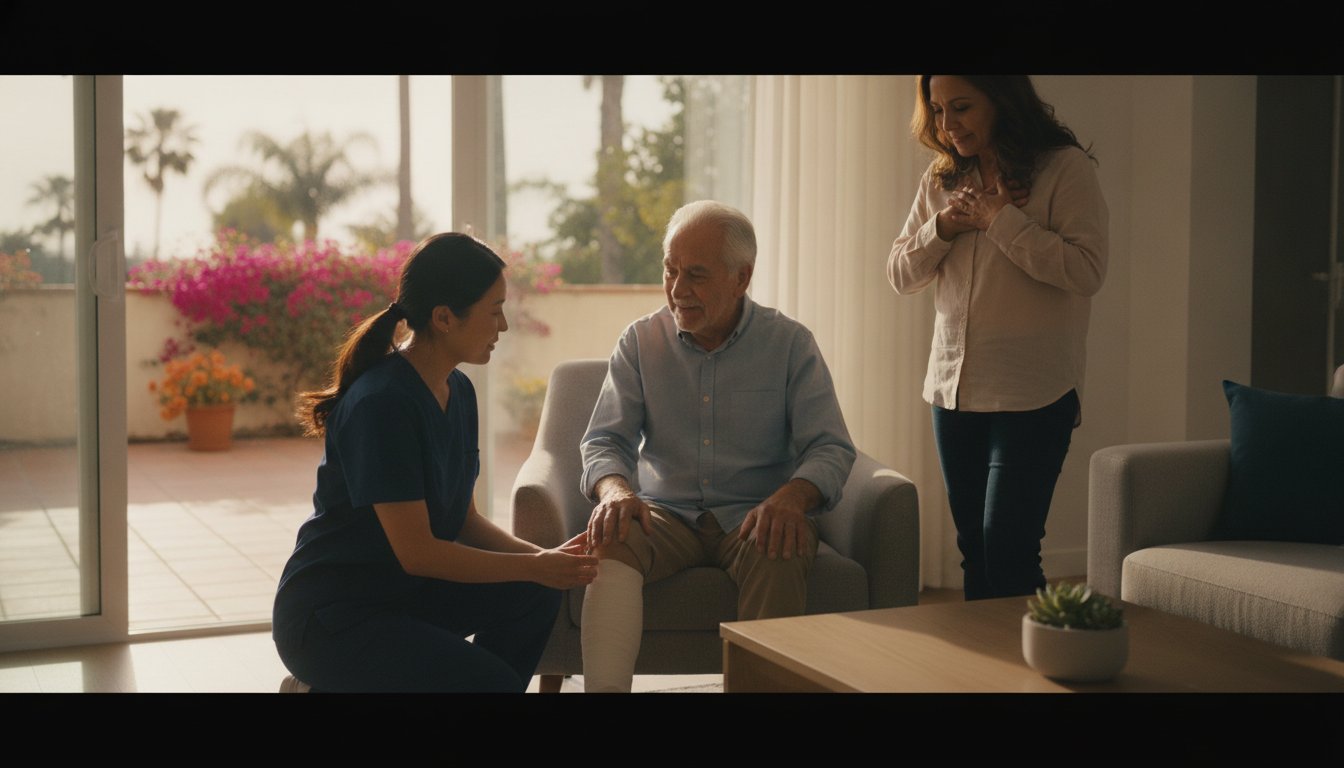
Nearly 8.2 million Americans are currently navigating the complexities of non-healing injuries, a figure that highlights a quiet epidemic affecting households across the country. For those providing support for families dealing with chronic wounds, the true cost isn't just found in medical bills; it's seen in the 4.6 million workdays lost annually to caregiving demands. It's a heavy burden to carry, especially when the fear of complications like infection is compounded by the physical exhaustion of transporting an immobile patient through Los Angeles traffic.
We believe that high-level clinical outcomes shouldn't require the stress of a hospital commute. You're likely seeking a strategy that prioritizes both the patient's recovery and your own peace of mind. This guide will help you navigate the emotional and physical challenges of caregiving while accessing advanced, in-home medical solutions that accelerate healing. We'll explore a clear roadmap for daily management, including how to access mobile specialists and utilize modern regenerative therapies to move from a state of constant worry to one of proactive recovery.
Key Takeaways
- Identify the signs of caregiver burnout and learn how to shift from reactive monitoring to a proactive, specialist-led recovery plan.
- Master the art of the home care station and discover why specific nutritional choices are non-negotiable for cellular repair.
- Explore how breakthroughs in regenerative medicine can jumpstart healing in wounds that have remained static for months.
- Access vital support for families dealing with chronic wounds by leveraging Medicare Part B coverage for advanced mobile medical services.
- Reduce the physical and emotional strain of transport by bringing hospital-grade wound evaluations and treatments directly into your living room.
The Hidden Impact: Understanding Caregiver Burden in Chronic Wound Care
Caring for a non-healing injury is rarely a static experience. It is a dynamic, often exhausting commitment that extends far beyond the mechanics of dressing changes. For those providing support for families dealing with chronic wounds, the "caregiver burden" isn't just a clinical term; it's a daily reality characterized by hyper-vigilance. You aren't just a family member anymore; you've become a frontline monitor for signs of sepsis, necrosis, or stalled healing. This 24/7 cycle of observation creates a unique form of psychological friction. Before you can manage the wound, you must understand the pathology. Learning What is a Chronic Wound? helps clarify why these injuries don't follow a standard healing timeline, often requiring months of specialized intervention.
The impact ripples through the entire home ecosystem. Financial resources are often diverted toward specialized supplies, while the emotional weight of seeing a loved one in pain can lead to a sense of collective trauma. If you feel overwhelmed, know that your reaction is a logical response to a complex medical challenge. You are effectively managing a specialized clinical environment within your own living space, a task that would challenge even trained professionals without the right support systems in place.
Recognizing the Signs of Caregiver Burnout
Burnout often arrives quietly. You might notice your sleep patterns shifting or a persistent sense of fatigue that coffee can't fix. These physical symptoms are frequently joined by emotional red flags like sudden irritability, withdrawal from social circles, or feelings of hopelessness. It's a biological reality that your own health is the foundation of the patient's recovery. This isn't just a feeling; the strain is documented by an estimated 4.6 million lost workdays per year attributed to chronic wound care. When a caregiver's vitality declines, the quality of daily wound management often follows, which can stall the patient's progress.
The Psychology of the Chronic Wound
Providing consistent support for families dealing with chronic wounds requires more than just clinical knowledge; it demands emotional resilience. The visual and sensory aspects of a wound can create deep social isolation. Odor and visibility often make families hesitant to invite guests over, shrinking their support network when they need it most. Managing the "waiting game" of a diabetic or pressure ulcer requires a shift in perspective. You aren't just waiting for a scab to form; you're supporting a complex cellular reconstruction. Moving from a state of crisis management to a sustainable, data-driven strategy is essential for achieving the physical excellence your loved one deserves.
Practical Strategies for Managing Chronic Wounds at Home
Establishing a sterile and organized care station is the first step toward clinical excellence at home. Chronic wound management is as much about biology as it is about logistics; a dedicated space ensures that all necessary supplies are within reach and remain uncontaminated. This station should be well-lit and stocked with specialized dressings, saline solutions, and antimicrobial agents. Practical support for families dealing with chronic wounds begins with this structured environment, as it reduces the chaos of daily care and allows you to focus on the precision of the treatment itself.
Nutrition is the silent engine of tissue regeneration. Without adequate protein and hydration, the body lacks the raw materials required to rebuild complex cellular structures. We recommend prioritizing high-quality proteins and ensuring consistent fluid intake to optimize blood viscosity and nutrient delivery to the wound site. Data drives recovery, so maintaining a detailed wound log is essential. By tracking the size, color, and drainage levels of the injury, you provide your specialist with a clear narrative of the healing trajectory. If you find yourself struggling with the weight of these responsibilities, resources like the Caregiver Support Line offer specialized guidance for managing your own well-being while maintaining these high standards of care.
Daily Care Checklist for Families
Precision during dressing changes is vital to avoid secondary tissue trauma. Always cleanse the area gently and monitor for red flags such as increased warmth, foul odors, or spreading redness. Effective offloading and positioning are equally critical; even the most advanced treatments can be undermined by persistent pressure on the injury site. Utilizing specialized cushions and frequent repositioning schedules helps maintain the integrity of the surrounding skin.
Empowering the Patient in Their Own Recovery
Providing support for families dealing with chronic wounds also involves nurturing the patient's agency. Encouraging safe mobility improves systemic circulation, which is a primary driver of localized healing. Managing the mental health aspect of chronic illness is just as important as the physical treatment. By setting realistic, data-backed milestones, you can maintain family motivation and keep the focus on long-term vitality. Partnering with Healix360 can help bridge the gap between home-based efforts and professional clinical oversight, ensuring your loved one remains on the most efficient path to recovery.
Advanced Medical Options: Reducing the Caregiving Duration
Regenerative medicine is the catalyst for healing. It transforms the trajectory of care from a cycle of maintenance to a path of resolution. For those providing support for families dealing with chronic wounds, the most significant breakthrough in 2026 is the migration of hospital-grade technology to the patient's bedside. This shift isn't merely about convenience; it's about deploying sophisticated biological tools that turn a "static" wound into a "healing" one. Utilizing skin substitutes allows specialists to jumpstart the body's natural repair mechanisms, significantly reducing the overall duration of the caregiving journey.
While home-based chronic wound care training is a critical component of daily management, the integration of regenerative therapies provides the biological momentum necessary for total closure. By introducing these advanced scaffolds, we bypass the limitations of traditional care and address the underlying cellular deficiencies that cause wounds to stall.
Regenerative Therapies: Amniotic Grafts and Stem Cells
Amniotic allografts represent the pinnacle of modern wound science. These grafts provide a biological scaffold rich in growth factors and cytokines, effectively recruiting the body's own cells to rebuild lost tissue. The benefit for families is measurable. Faster closure means fewer dressing changes, reduced pain, and a quicker return to normalcy. These treatments are particularly effective for stubborn diabetic ulcers, where compromised circulation often prevents standard healing. When we apply these advanced scaffolds, we're not just covering a wound; we're architecting a recovery.
Debridement and Infection Control
Clinical success often requires a clean slate. Professional sharp debridement is the essential process of removing necrotic tissue and biofilm that act as barriers to healing. Without this intervention, even the most expensive dressings will fail. Specialists use targeted wound cultures to identify specific bacterial strains, allowing for a precise antimicrobial strategy. This level of expert intervention is what prevents the revolving door of hospital readmissions. It provides the high-level support for families dealing with chronic wounds that is required to maintain a safe, infection-free environment at home. Expert debridement ensures that every subsequent treatment is applied to a receptive, healthy wound bed, maximizing the efficacy of every clinical visit.

Navigating Support and Resources in Southern California
Southern California presents a unique set of logistical challenges that can complicate even the most diligent recovery plan. In a region where a ten-mile commute through Los Angeles traffic can consume over an hour, the physical act of transporting an immobile patient to a wound center becomes a significant barrier to clinical excellence. Mobile medical services bypass these geographic hurdles, ensuring that high-level care remains consistent regardless of external conditions. Providing effective support for families dealing with chronic wounds in areas like Glendale and the San Fernando Valley requires a shift toward these home-based models, where the specialist comes to you.
Coordination is the bedrock of long-term health outcomes. By aligning with Home Health Agencies (HHAs) across Los Angeles County, families can create a seamless care continuum that includes both daily nursing visits and specialized wound interventions. This collaborative approach ensures that no detail of the patient's biological data is overlooked. It's also vital to integrate local respite care into your strategy; giving family caregivers a scheduled break is a clinical necessity, not a luxury. Maintaining your own vitality is the only way to ensure the patient's recovery remains on a steady, upward trajectory.
Medicare and Insurance Advocacy for Families
Understanding the financial architecture of wound care is essential for reducing domestic stress. Medicare Part B often covers mobile medical consultations when "at-home" medical necessity is clearly established by a specialist. This coverage isn't just about convenience; it's about providing hospital-grade assessments in the safest possible environment. We recommend choosing providers who accept Medicare assignment to minimize out-of-pocket expenses. A mobile specialist can often act as an advocate, coordinating billing with private payers and ensuring that advanced regenerative treatments remain accessible within your existing coverage framework.
Building Your Local Support Network
You don't have to manage this journey in isolation. Leveraging social workers and case managers can help you architect a long-term plan that includes everything from nutritional support to emotional counseling. Southern California offers a robust network of caregiver support groups, both online and in-person, which provide a vital space for shared experience and practical advice. In this ecosystem, your mobile specialist serves as the "quarterback" of the care team, synthesizing data from various sources to refine the individualized treatment plan. To begin building this professional support structure in your own home, you can schedule a mobile wound evaluation with Healix360 today.
Healix360: Professional Support Delivered to Your Door
Healix360 redefines the recovery experience by bringing elite clinical intervention directly to the patient's environment. We understand that effective support for families dealing with chronic wounds requires more than just clinical skill; it demands a logistical strategy that preserves the family unit's quality of life. By choosing mobile wound care, you're opting for a system designed to eliminate the friction of traditional medical models. Our board-certified specialists provide advanced treatment for bed sores and ulcers in the setting where the patient feels most secure. This collaborative approach ensures we aren't just treating a wound. We're empowering you with precision-driven care and data-backed confidence.
Our model is specifically tailored for families who view health as their most valuable asset. We provide a visionary roadmap that translates complex biological data into actionable daily steps, ensuring every aspect of the recovery is optimized for physical excellence. By integrating high-tech diagnostics with a human-centric philosophy, we offer the comprehensive support for families dealing with chronic wounds that's necessary to achieve life-changing outcomes. Precision drives recovery. We act as your strategic partner, bridging the gap between clinical data and your daily quality of life.
Why Mobile Care is the Best Choice for Families
The trauma of transporting an immobile or elderly patient through Southern California's complex traffic patterns often outweighs the benefit of the visit itself. Mobile care eliminates this physical and emotional toll entirely. Trust accelerates healing. By receiving consistent attention from the same specialist, families build a rapport that's impossible to achieve in a rotating hospital environment. These visits also serve as a platform for real-time education. You'll observe exactly how to manage daily care and monitor progress, turning each bedside evaluation into a masterclass in home-based recovery.
Getting Started with Healix360 in Southern California
Beginning your partnership with Healix360 is a streamlined, professional process. Our intake system handles referrals from home health agencies, case managers, or family members with meticulous efficiency. During the initial bedside wound evaluation, our specialists conduct a comprehensive assessment of the injury and the patient's systemic health. This data forms the foundation of a personalized treatment plan that prioritizes rapid healing and long-term vitality. If you're ready to transition from survival mode to a specialist-led strategy, Request a mobile wound care consultation today.
A Vision for Regenerative Recovery at Home
Recovery is no longer a journey you must walk alone in a clinical vacuum. By integrating structured home management with the latest breakthroughs in regenerative science, you've moved from reactive monitoring to a proactive healing strategy. You now understand that the right support for families dealing with chronic wounds involves a synergy of specialized nutrition, advanced scaffolds like amniotic grafts, and the logistical freedom of mobile medical services. This comprehensive approach ensures that every biological detail is optimized for the best possible outcome.
We're here to serve as your strategic partner in this process. As a Medicare Part B Provider, our team of board-certified wound specialists brings hospital-grade precision, including regenerative amniotic grafts, directly to your bedside. It's time to prioritize both the patient’s physical excellence and your own well-being. Schedule a Professional In-Home Wound Assessment and take the first step toward a future defined by vitality rather than limitation. You have the tools and the expertise at your disposal; let's begin the path to closure together.
Frequently Asked Questions
Does Medicare cover at-home wound care specialists?
Yes, Medicare Part B generally covers mobile wound care services when medical necessity is established. This is a critical component of support for families dealing with chronic wounds, as it ensures access to specialists without the burden of transport. Most qualifying patients encounter no out-of-pocket costs after meeting their deductible. This coverage allows for advanced treatments to be delivered directly to the bedside, maintaining the family's financial stability while pursuing clinical excellence.
How often does a mobile wound specialist need to visit?
Visit frequency is determined by the complexity of the injury and the specific regenerative protocols being used. Most patients receive visits once a week or every other week for sharp debridement and graft application. This structured cadence ensures that the wound bed remains receptive to healing and that any deviations from the recovery roadmap are addressed immediately. Your specialist will provide a clear schedule during the initial bedside assessment.
What is the best way to prevent caregiver burnout when managing chronic wounds?
The most effective way to prevent burnout is to delegate clinical complexity to a professional mobile team. By accessing specialized support for families dealing with chronic wounds, you reduce the psychological weight of constant monitoring. It's vital to remember that your vitality is a clinical asset. Utilizing respite care and structured daily logs allows you to move from a state of crisis to a manageable, data-driven recovery process.
Can advanced treatments like skin substitutes be applied at home?
Hospital-grade regenerative treatments like amniotic membrane grafts and bio-engineered skin substitutes are now fully accessible at home. These advanced therapies provide the biological momentum necessary to close stubborn injuries that have failed traditional care. Applying these scaffolds in a home setting preserves the patient's comfort and avoids the physical stress of travel. This ensures that the body's resources are focused entirely on tissue regeneration rather than the exhaustion of transit.
What are the warning signs that a wound needs urgent specialist attention?
Urgent specialist attention is required if you observe spreading redness, increased local temperature, or a noticeable change in odor. These symptoms often signal a localized infection or the presence of a bacterial biofilm that prevents healing. Other red flags include increased pain or a sudden change in the color of the wound bed. Professional debridement and culture testing are necessary to resolve these issues before they lead to systemic complications.
How do I coordinate mobile wound care with my existing home health agency?
Your mobile specialist will manage the communication with your home health agency to ensure a unified treatment strategy. This collaboration involves sharing clinical notes and aligning on dressing change protocols to maintain a consistent environment for the wound. By acting as the clinical lead, the specialist ensures that both the agency nursing staff and the family are working toward the same recovery milestones. This partnership simplifies the caregiving experience for the family.
Is mobile wound care available in Glendale and surrounding LA areas?
Mobile wound care is widely available across Glendale, the San Fernando Valley, and throughout Los Angeles County. Our services are specifically designed to meet the needs of Southern California families who face significant transportation hurdles. By bringing board-certified expertise to your door, we ensure that specialized care is never delayed by traffic or mobility issues. This local availability allows for consistent, high-frequency monitoring that is essential for complex recovery.
How can I improve the healing speed of a loved one’s diabetic ulcer?
Accelerating the closure of a diabetic ulcer involves a combination of pressure offloading, optimized nutrition, and regenerative medicine. High-protein diets and glycemic control are foundational, but stubborn ulcers often require amniotic grafts to jumpstart cellular repair. Professional debridement is also essential to remove non-viable tissue. These advanced interventions, delivered at the bedside, transform the wound environment and significantly reduce the time required for total closure and recovery.


